
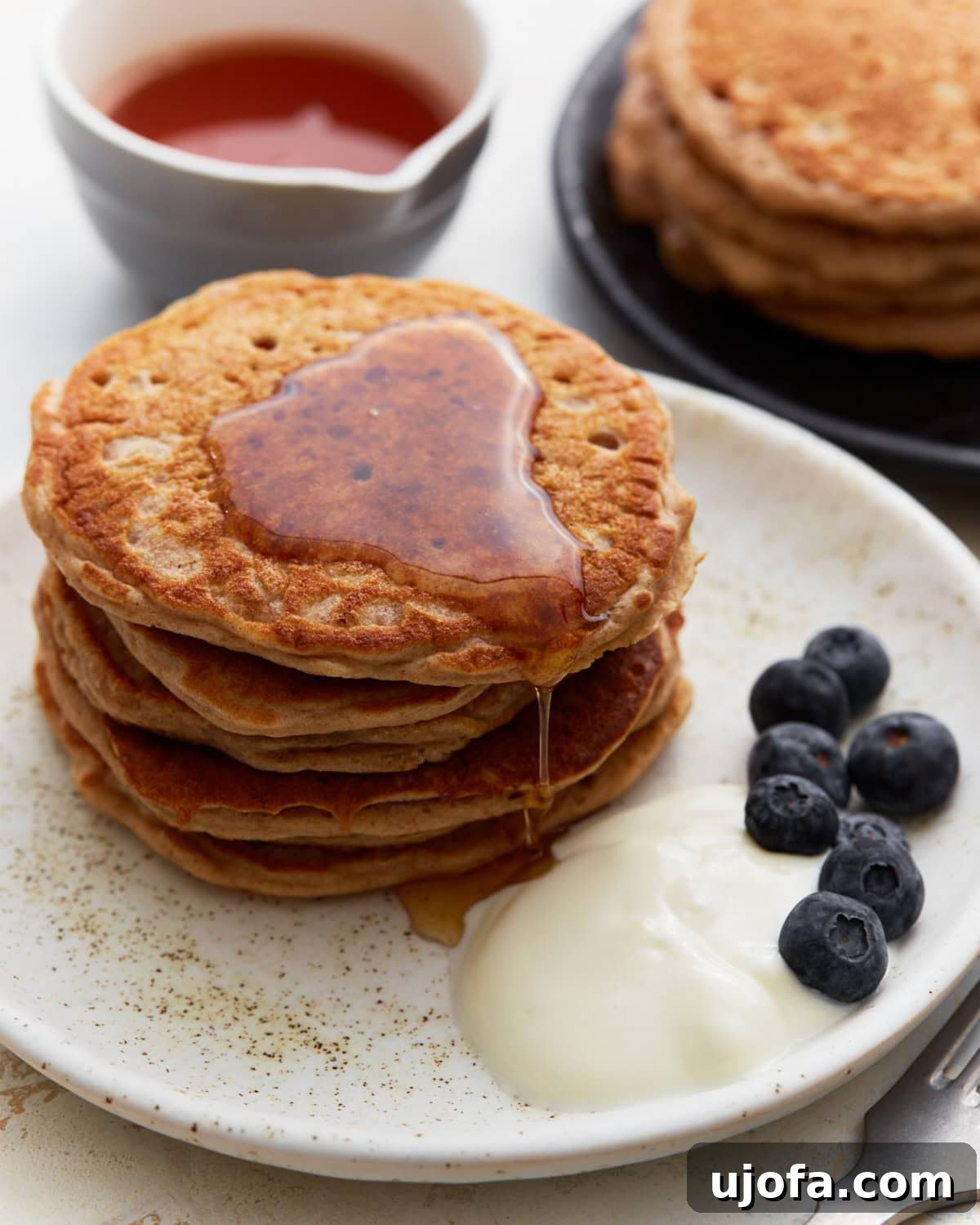
Buckwheat pancakes have effortlessly risen to become a staple in my breakfast repertoire. There’s a certain magic in their nutty, earthy flavor that elevates my morning routine, transforming a simple meal into a delightful experience. What truly sets them apart is their unique texture: they are wonderfully hearty yet surprisingly light, striking the perfect balance between a truly filling and deeply satisfying meal. Whether I’m layering them with fresh seasonal fruit, a generous drizzle of golden maple syrup, or a crunchy sprinkle of my favorite nuts, these pancakes never fail to hit the spot, making every bite a pure joy.
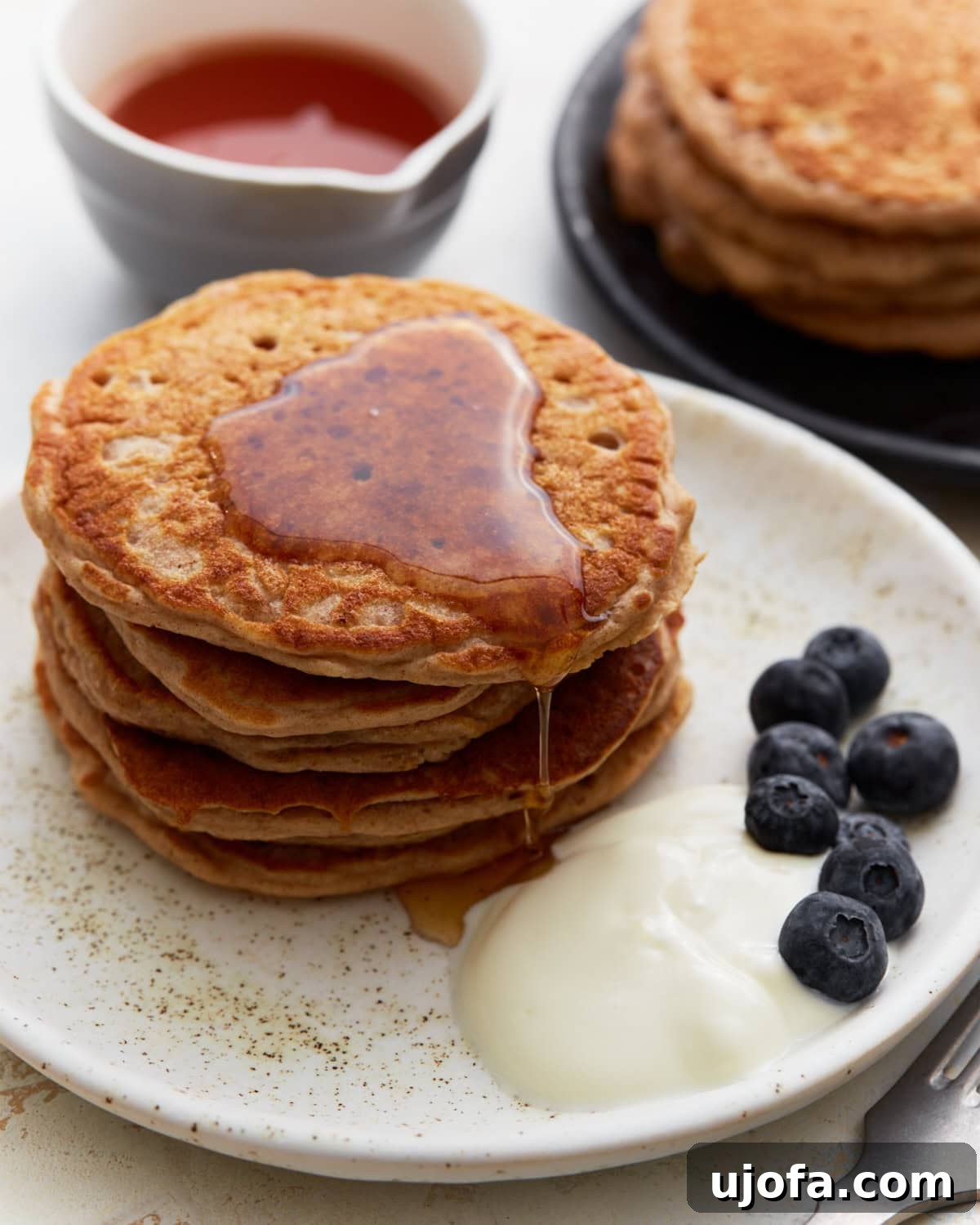
Easy Buckwheat Pancakes: A Wholesome Gluten-Free Breakfast
This recipe for buckwheat pancakes is a delightful twist on my beloved gluten-free pancakes, and I can assure you, they are every bit as delicious! What makes these pancakes truly special, and a personal favorite, is that buckwheat is naturally gluten-free. This means I can enjoy them without any concern for gluten sensitivities, making them a perfect choice for anyone following a gluten-free diet. Beyond their health benefits, these pancakes are incredibly easy and quick to prepare, requiring just about 20 minutes from start to finish. They offer the comforting feeling of an indulgent treat, yet they’re packed with wholesome goodness, leaving me energized and content, perfectly primed to tackle whatever the day brings.
Why You’ll Love These Buckwheat Pancakes
Buckwheat is often mistakenly thought of as a grain, but it’s actually a fruit seed related to rhubarb and sorrel, making it a pseudocereal. This distinction is crucial because it means buckwheat is inherently gluten-free, providing a fantastic alternative for those with celiac disease or gluten intolerance. But the benefits don’t stop there. Buckwheat is a nutritional powerhouse, rich in fiber, protein, and essential minerals like magnesium, manganese, and phosphorus. It also boasts a lower glycemic index compared to traditional wheat flour, which can help regulate blood sugar levels, contributing to sustained energy throughout your morning.
Beyond its health credentials, buckwheat imparts a distinctive, earthy flavor profile to these pancakes that is truly unique and deeply satisfying. It’s a flavor that pairs beautifully with both sweet and savory toppings, offering incredible versatility. The resulting texture is a robust yet tender pancake that holds up well, whether you’re enjoying it fresh off the griddle or reheating it later. Plus, the simplicity of this recipe ensures that a wholesome, homemade breakfast is always within reach, even on busy weekdays.
Buckwheat Pancakes
Sabine Venier
8 pancakes
5 mins
15 mins
20 mins
Share by Email
Print Recipe
Ingredients
- 1 cup buckwheat flour
- 1 teaspoon baking powder
- 1/2 teaspoon baking soda
- 1/4 teaspoon salt
- 1 large egg, (Substitution: use a flax egg or Bob’s Red Mill egg replacer for vegan option)
- 1 1/4 cups buttermilk (Substitution: use dairy-free buttermilk for a vegan alternative)
- 2 tablespoons unsalted butter, melted (Substitution: use dairy-free butter or coconut oil for vegan option)
- 1 tablespoon sugar (Substitution: 1 tablespoon of honey or maple syrup for a natural sweetener)
- 1/2 teaspoon vanilla extract
Instructions
- In a large bowl, whisk together the buckwheat flour, baking powder, baking soda, and salt until well combined.
- In a separate medium bowl, whisk together the egg, buttermilk, melted butter, sugar, and vanilla extract until smooth.
- Pour the wet ingredients into the dry ingredients. Stir gently with a whisk or spatula until the batter is just smooth, being careful not to overmix. A few small lumps are perfectly fine. Let the batter rest for 5 minutes; this allows the flour to fully hydrate and the leavening agents to activate.
- While the batter rests, preheat a non-stick skillet or griddle over medium heat. Lightly grease the cooking surface with a small amount of butter or oil.
- Once hot, pour approximately 1/4 cup of batter onto the pan for each pancake. Cook for 2 to 3 minutes, or until you see bubbles forming on the surface and the edges appear set.
- Using a spatula, carefully flip each pancake and cook for an additional 1 to 2 minutes on the other side, until golden brown and cooked through.
- Serve the buckwheat pancakes warm with your favorite toppings such as maple syrup, extra butter, fresh fruits, or yogurt.
Notes
- Homemade Buttermilk: Easily create your own buttermilk by mixing 1 ¼ cups of regular milk (dairy or dairy-free alternative) with 1 tablespoon of white vinegar or lemon juice. Let it sit for 5–10 minutes until it slightly curdles before adding to your wet ingredients.
- Adjusting Buckwheat Flavor: Buckwheat flour has a distinct, earthy, and sometimes slightly bitter flavor. For a milder taste, you can opt for light buckwheat flour, or mix it with another gluten-free flour, such as oat flour, in a 50/50 ratio. This can soften the intense buckwheat notes.
- Batter Consistency: Buckwheat flour is highly absorbent. If your batter appears too thick after resting, gradually add more buttermilk, 1 tablespoon at a time, stirring gently until it reaches a smooth, pourable consistency suitable for pancakes.
- Flavor Customization: Feel free to customize your pancakes with delightful mix-ins! Consider adding a handful of fresh blueberries, chocolate chips, finely chopped nuts, or a dash of cinnamon or nutmeg to the batter for an extra layer of flavor.
- Vegan Adaptation: To make these pancakes fully vegan, substitute the large egg with a flax egg (1 tbsp ground flaxseed mixed with 3 tbsp water, let sit for 5 mins) or a commercial egg replacer. Use dairy-free buttermilk and dairy-free butter or coconut oil instead of regular butter.
Nutrition Information
Serving: 1 pancake
Calories: 114 kcal
Carbohydrates: 14g
Protein: 4g
Fat: 5g
Saturated Fat: 3g
Polyunsaturated Fat: 0.4g
Monounsaturated Fat: 1g
Trans Fat: 0.1g
Cholesterol: 35mg
Sodium: 244mg
Potassium: 147mg
Fiber: 2g
Sugar: 4g
Vitamin A: 183IU
Calcium: 83mg
Iron: 1mg
Nutrition information is automatically calculated and should be used as an approximation.
Additional Info
Breakfast, Brunch
American, Healthy
How to Make Perfect Buckwheat Pancakes: A Step-by-Step Guide
Achieving fluffy, golden-brown buckwheat pancakes is simpler than you think. Follow these visual steps to ensure success every time, from gathering your ingredients to plating your delicious breakfast.
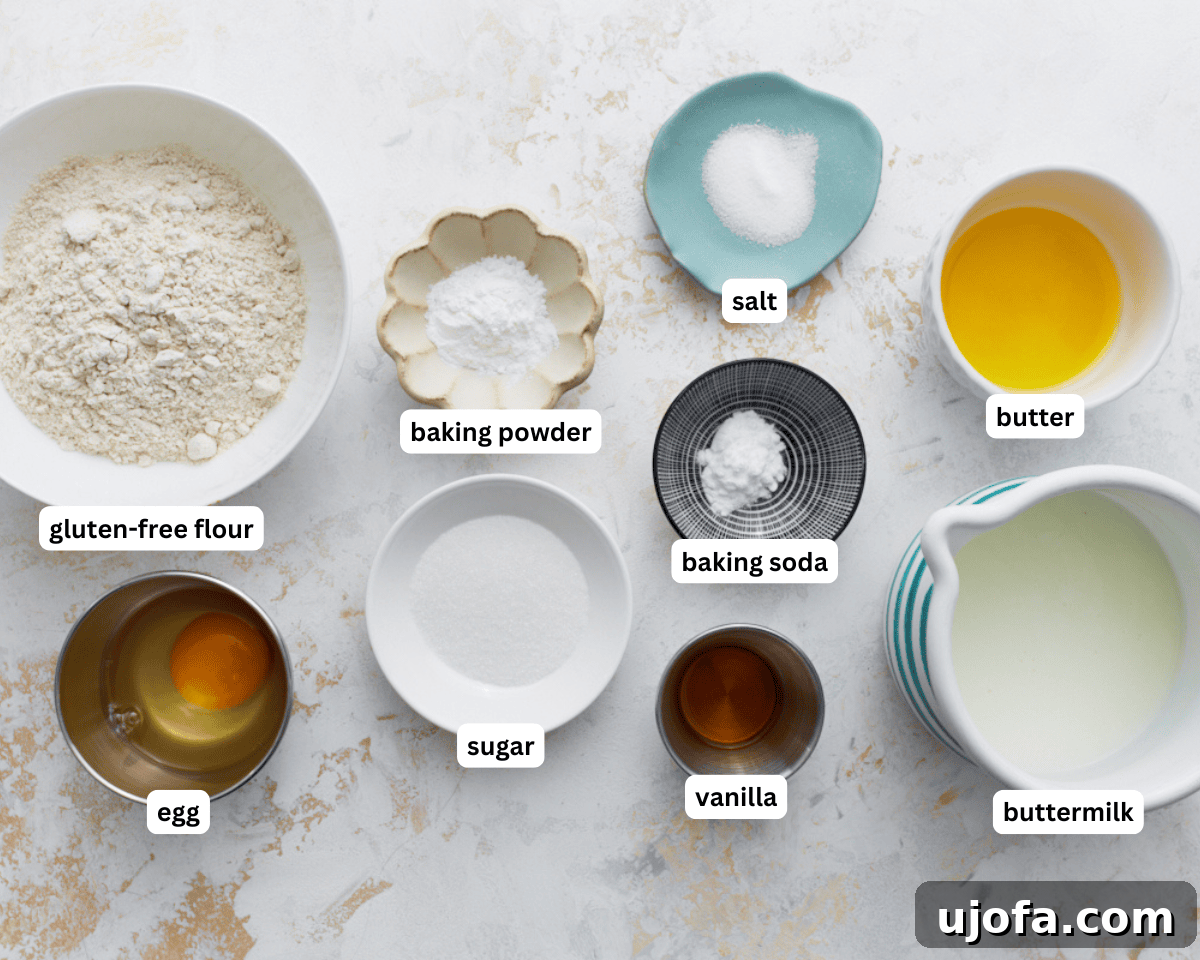
Step 1: Gather Your Ingredients. Before you begin, lay out all your ingredients on the counter. This not only ensures you have everything you need but also brings cold ingredients like eggs and buttermilk to room temperature, which helps create a smoother batter and more evenly cooked pancakes. Ensure your measuring cups and spoons are ready.
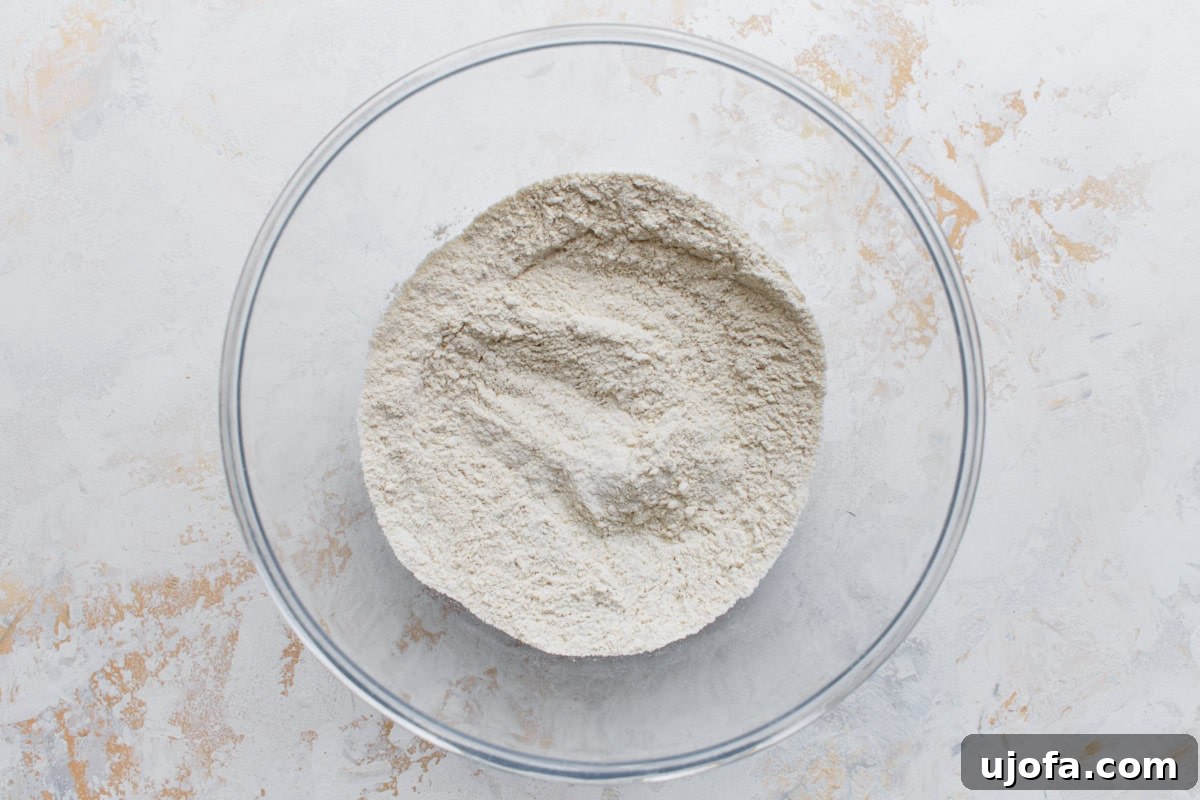
Step 2: Mix the Dry Ingredients. In a spacious mixing bowl, combine 1 cup of buckwheat flour with 1 teaspoon of baking powder, ½ teaspoon of baking soda, and ¼ teaspoon of salt. Use a whisk to thoroughly blend these dry components. This step is crucial for distributing the leavening agents evenly, ensuring your pancakes rise beautifully and have a consistent texture.
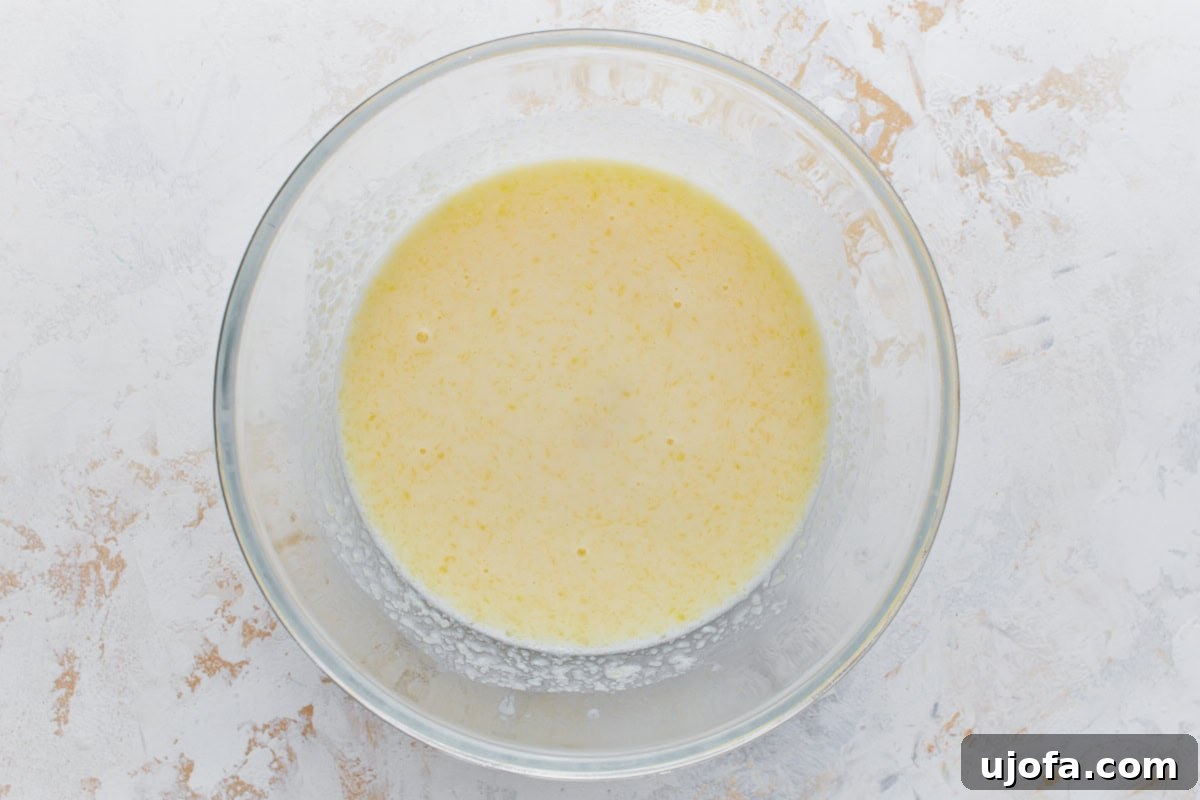
Step 3: Combine the Wet Ingredients. In a separate bowl, whisk together 1 large egg, 1 ¼ cups of buttermilk (or your dairy-free alternative), 2 tablespoons of melted unsalted butter (or dairy-free substitute), 1 tablespoon of sugar (or natural sweetener like maple syrup), and ½ teaspoon of vanilla extract. Whisk until all these ingredients are smoothly integrated, creating a homogenous liquid mixture.
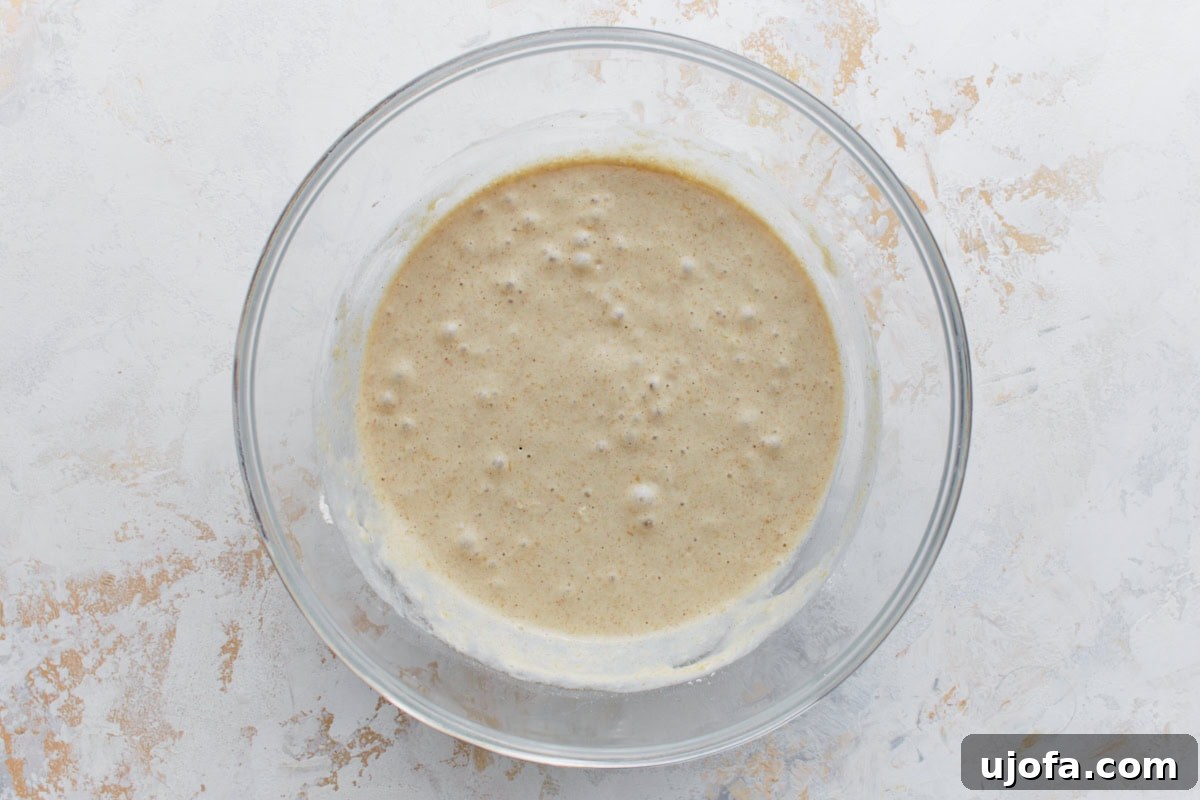
Step 4: Combine Wet and Dry Ingredients, Then Rest. Gently pour the wet mixture into the bowl containing the dry ingredients. Stir using a whisk or spatula just until the ingredients are combined and a smooth batter forms. Be careful not to overmix, as this can lead to tough pancakes. Allow the batter to rest for 5 minutes. This crucial resting period allows the buckwheat flour to absorb the liquids fully and the leavening agents to begin working, resulting in fluffier pancakes.
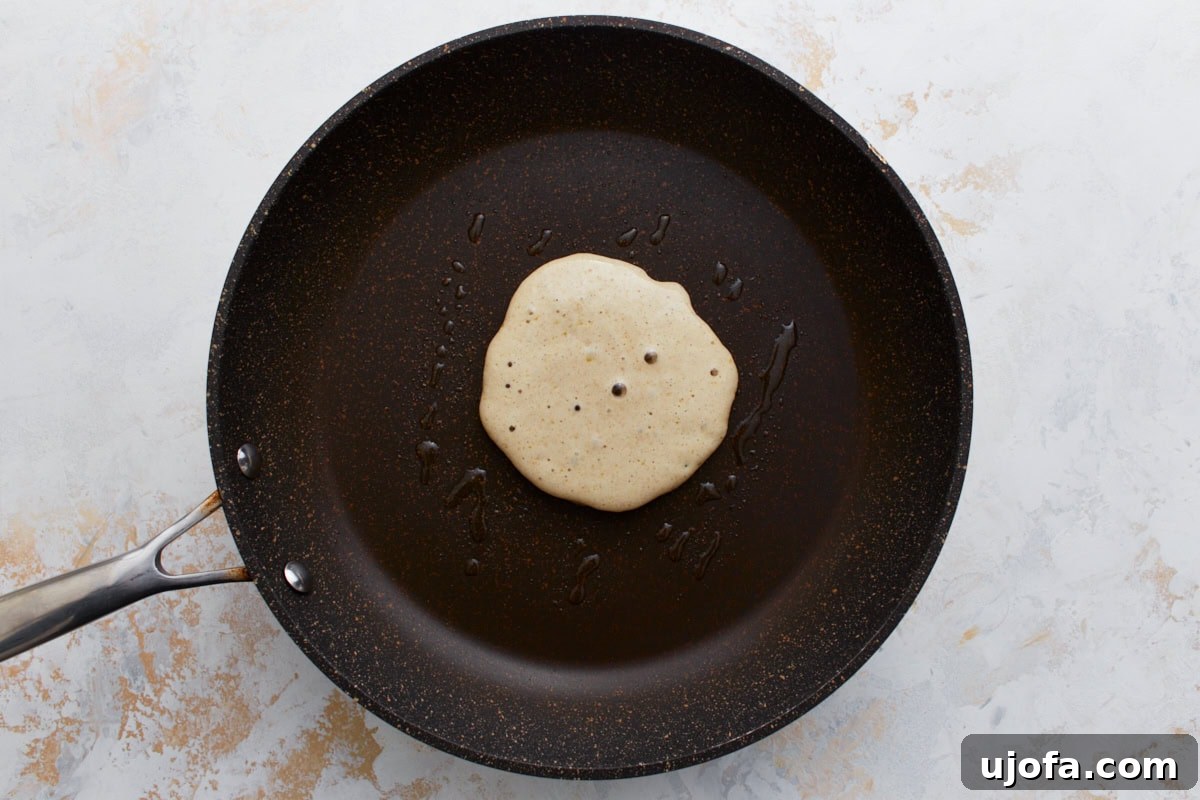
Step 5: Cook the Pancakes. Heat a non-stick skillet or griddle over medium heat. Lightly grease the surface with a small amount of butter or oil. Once heated, pour about ¼ cup of batter for each pancake onto the pan. Cook for 2–3 minutes on the first side, or until you notice small bubbles forming consistently on the surface and the edges appear slightly dry. This indicates it’s time to flip.
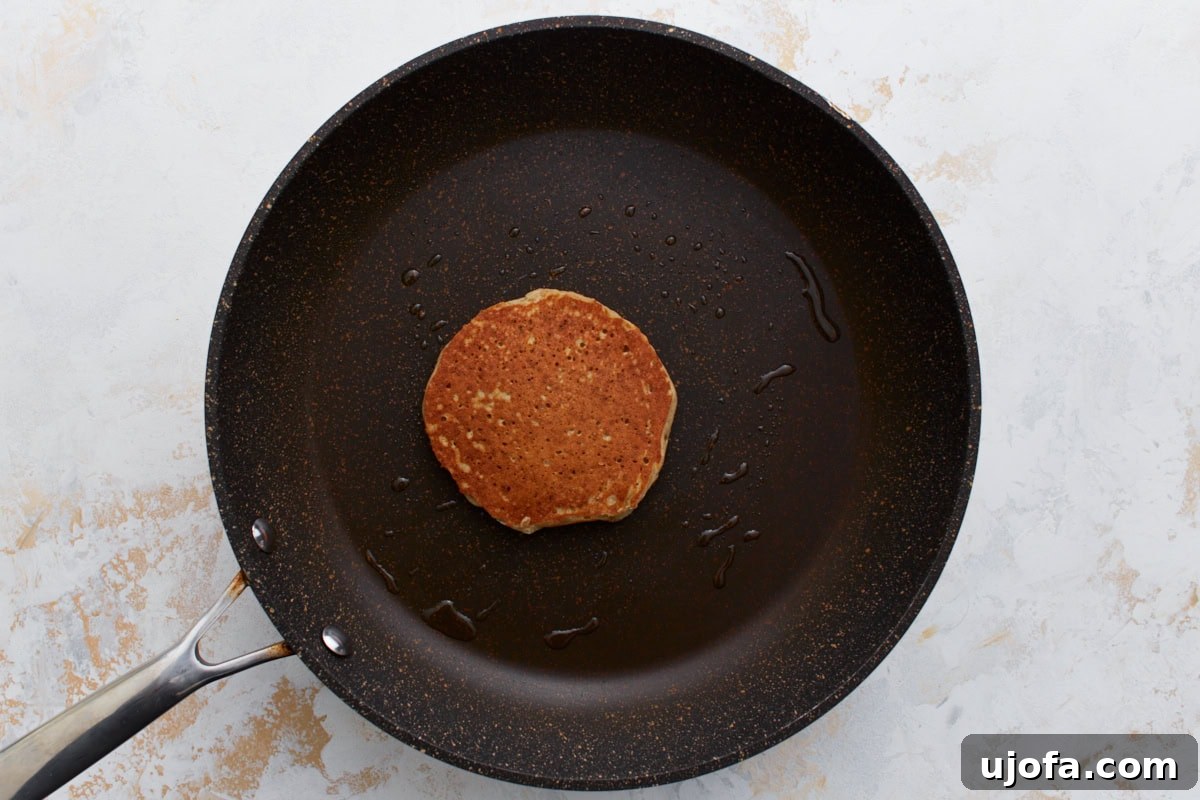
Step 6: Flip and Finish Cooking. Carefully flip each pancake with a spatula. Cook for another 1–2 minutes on the second side, until it reaches a beautiful golden-brown color and is cooked through. Repeat this process with the remaining batter, greasing the pan lightly between batches as needed to prevent sticking.
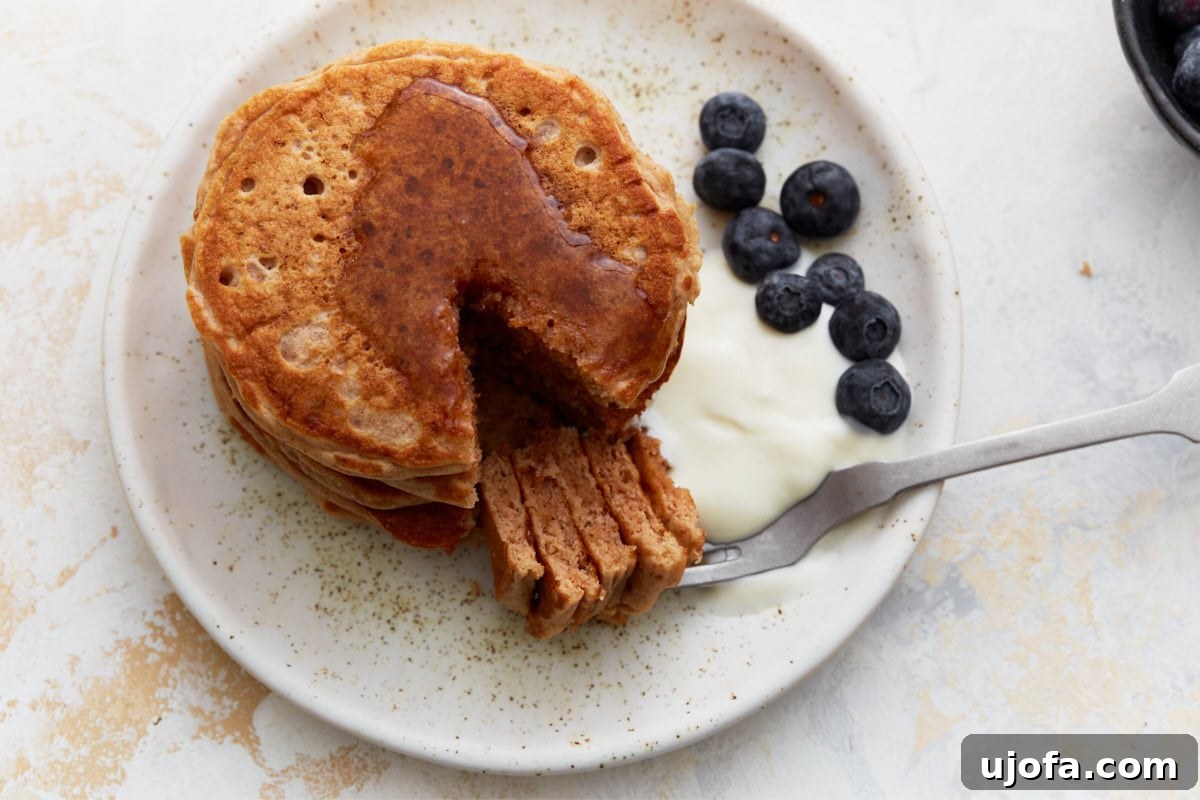
Step 7: Serve and Savor. Once cooked, serve your warm buckwheat pancakes immediately. Pile them high and adorn them with your preferred toppings. Whether it’s a dollop of butter, a cascade of fresh fruit, a swirl of creamy yogurt, or the classic pour of maple syrup, these pancakes are ready to be savored! Enjoy every wholesome, delicious bite!
Serving Suggestions for Buckwheat Pancakes
One of the best things about these buckwheat pancakes is their incredible versatility, making them a fantastic canvas for a wide array of toppings and accompaniments. My personal go-to involves a generous drizzle of pure maple syrup and a vibrant handful of fresh berries like blueberries, raspberries, or sliced strawberries, which add a natural sweetness and burst of color. For those seeking a heartier, more decadent touch, I highly recommend topping them with a rich homemade cashew cream, a sprinkle of finely chopped pecans or walnuts for added crunch, or a smooth smear of almond or peanut butter for a protein boost.
Don’t limit these pancakes to just sweet pairings! They are surprisingly delicious with savory toppings, too. Imagine them topped with a perfectly fried or poached egg, a sprinkle of crumbled feta or goat cheese, and a dash of freshly ground black pepper. For a truly unique brunch experience, try them with some smoked salmon and a dollop of dill cream cheese. The earthy notes of the buckwheat provide a wonderful contrast to savory flavors, making them a delightful option for any meal of the day.
Storage and Reheating Instructions
These buckwheat pancakes are excellent for meal prepping, allowing you to enjoy a quick, healthy breakfast even on the busiest mornings. You can prepare the batter ahead of time; simply store it in an airtight container in the refrigerator for up to 12 hours. Before cooking, give the batter a gentle stir to reincorporate any settled ingredients.
Once cooked, leftover pancakes can be stored in an airtight container in the fridge for up to 3 days, maintaining their delicious flavor and texture. For longer storage, you can freeze them for up to 2 months. To freeze, arrange cooled pancakes in a single layer on a baking sheet until solid, then transfer them to a freezer-safe bag or container with parchment paper between each pancake to prevent sticking. When you’re ready to enjoy them, reheat individual pancakes in a toaster for a crispy exterior, a microwave for a soft and warm result, or gently warm them in a skillet over low heat until heated through.
Frequently Asked Questions About Buckwheat Pancakes
Q: Is buckwheat truly gluten-free?
A: Yes, buckwheat is naturally gluten-free. Despite its name, it’s not a type of wheat and is botanically a fruit seed, making it safe for individuals with celiac disease or gluten sensitivity.
Q: Can I use a different type of flour?
A: While this recipe is specifically designed for buckwheat flour, you can experiment with other gluten-free flours. For a milder buckwheat flavor, you can use light buckwheat flour or combine it with oat flour or gluten-free all-purpose flour in a 50/50 ratio. Keep in mind that different flours absorb liquids differently, so you might need to adjust the buttermilk quantity.
Q: How do I prevent my pancakes from sticking to the pan?
A: Ensure you are using a good quality non-stick skillet or griddle. Also, lightly greasing the pan with butter, oil, or cooking spray before each batch is crucial. Make sure the pan is preheated to medium heat; too low and they won’t brown, too high and they’ll burn before cooking through.
Q: Can I make these pancakes dairy-free?
A: Absolutely! To make them dairy-free, simply substitute regular buttermilk with a dairy-free alternative (like almond milk or soy milk mixed with vinegar) and use dairy-free butter or coconut oil instead of unsalted butter.
Q: What’s the best way to get fluffy pancakes?
A: Several factors contribute to fluffy pancakes:
- Don’t overmix the batter; mix only until just combined. Overmixing develops gluten (even in gluten-free flours to some extent) and can lead to tough pancakes.
- Allow the batter to rest for 5-10 minutes. This gives the leavening agents time to activate and the flour to fully hydrate.
- Ensure your baking powder and baking soda are fresh and active.
- Cook over medium heat; consistent heat allows for even rising and browning.
Discover More Delicious Gluten-Free Pancake Recipes
If you’ve fallen in love with these buckwheat pancakes, you’re in for a treat! Our kitchen is always bubbling with new ways to make breakfast exciting and delicious, especially for those seeking gluten-free options. Explore some of our other fantastic pancake recipes, each offering a unique flavor and texture profile to brighten your mornings:
- Gluten-Free Banana Pancakes: Sweet, fluffy, and naturally flavored with ripe bananas, these are a family favorite.
- Almond Flour Pancakes: For a low-carb, high-protein option that’s incredibly tender and satisfying.
- Banana Oatmeal Pancakes: A hearty and wholesome blend of oats and banana for sustained energy.
- Oatmeal Pancakes: Simple, nutritious, and incredibly comforting, perfect for any day of the week.
Final Thoughts on Your New Favorite Breakfast
These gluten-free buckwheat pancakes are more than just a recipe; they’re an invitation to transform your breakfast into a wholesome, satisfying, and utterly delicious experience. With their unique nutty flavor, hearty texture, and impressive nutritional profile, they offer a perfect start to any day. Whether you’re new to gluten-free cooking or a seasoned enthusiast, this easy-to-follow recipe ensures perfect results every time. Don’t hesitate to experiment with toppings and customizations to make them truly your own. We encourage you to try this recipe, share your creations, and discover the joy of a truly nourishing breakfast!