
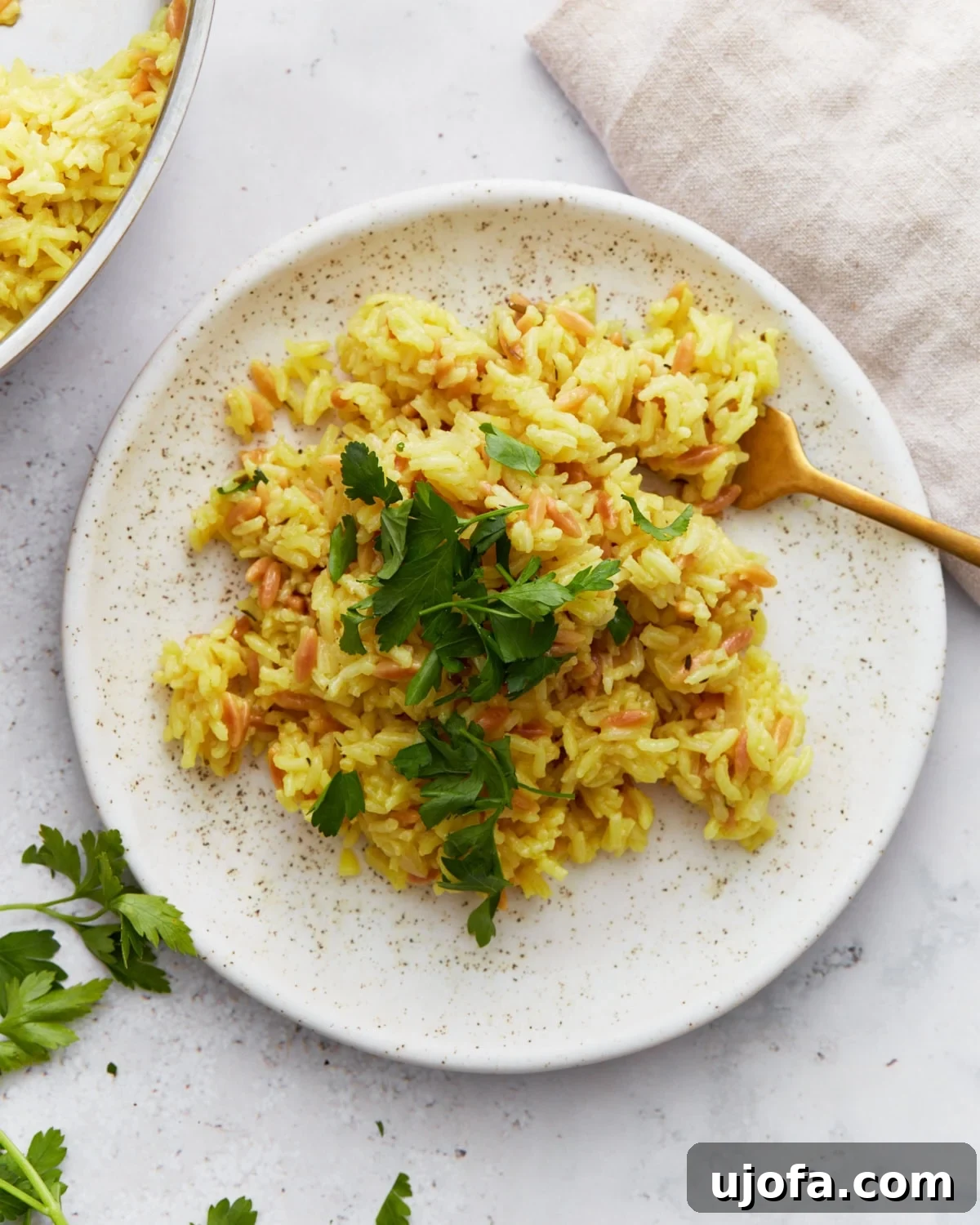
There are some dishes that evoke a comforting sense of nostalgia, and for many, traditional rice pilaf holds a special place. Growing up, the boxed version of this beloved side dish was a household staple, known for its unique blend of fluffy rice and those delightfully larger, toasted ‘rice’ pieces that were actually pasta. However, for those navigating a gluten-free lifestyle, this classic comfort food often becomes a cherished memory rather than a current plate. Fortunately, the quest for a delicious, authentic-tasting gluten-free alternative ends here. This homemade gluten-free rice pilaf masterfully captures all the rich, cozy flavors and tender textures of the original, without a trace of wheat. Featuring perfectly toasted gluten-free pasta combined with light, fluffy long-grain rice, all simmered together with a medley of warm, aromatic spices, this recipe delivers a satisfying side dish in just 25 minutes. It’s the ideal accompaniment for bustling weeknight meals and impressive enough for your most festive holiday gatherings.
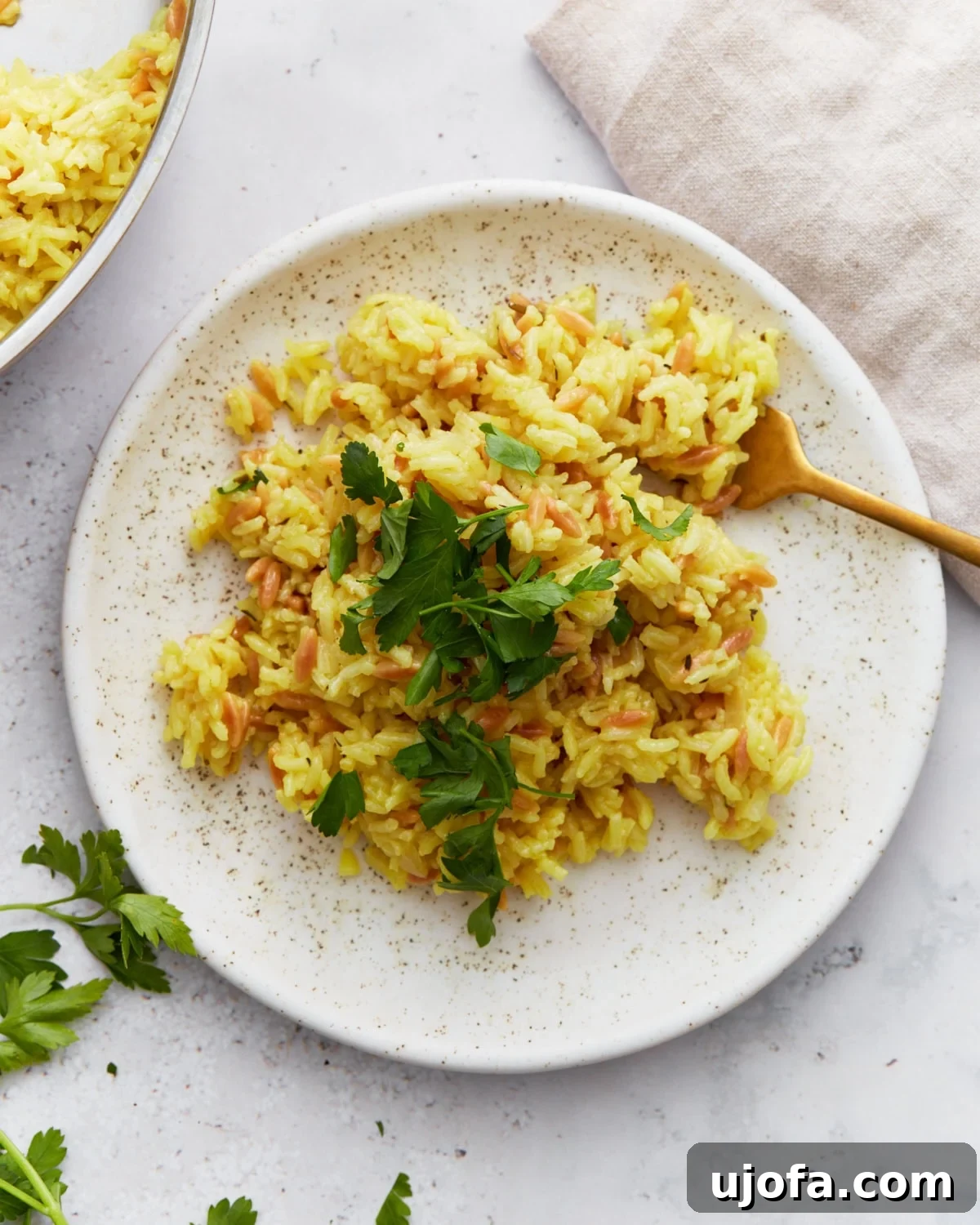
Crafting this incredible gluten-free rice pilaf is surprisingly simple, relying on readily available pantry staples. The star ingredients include versatile gluten-free orzo, premium long-grain rice, and a carefully selected blend of spices that work in harmony to replicate that unforgettable classic pilaf flavor. The secret to its depth of taste lies in toasting the orzo first, a crucial step that infuses the dish with a subtle, yet distinct, nutty aroma and texture. Complementing this, sautéed garlic and onion provide a savory foundation, adding layers of aromatic goodness that make every bite truly satisfying. This recipe isn’t just a budget-friendly and cozy side; it feels like a special culinary treat, elevating any meal. Moreover, its inherent versatility makes it a joy to customize. Feel free to experiment by swapping in your favorite spices, tossing in sautéed mushrooms or sweet peas, adding a delightful crunch with slivered almonds, or finishing with a bright squeeze of lemon juice just before serving. The possibilities are endless, ensuring this pilaf perfectly suits your palate and preferences.
Why Choose Gluten-Free Rice Pilaf?
Embracing a gluten-free lifestyle often means reimagining classic dishes. Traditional rice pilaf typically includes wheat-based pasta, making it off-limits for individuals with celiac disease or gluten sensitivity. This recipe provides a fantastic solution, allowing everyone to enjoy the rich, savory flavors and satisfying texture of pilaf without dietary compromise. Beyond its gluten-free nature, this pilaf offers numerous advantages:
- **Digestibility:** For many, avoiding gluten can lead to better digestion and reduced discomfort.
- **Flavor Profile:** The carefully selected spices and the toasted gluten-free orzo deliver a flavor that is incredibly authentic and satisfying, often surprising those who expect a compromise.
- **Quick & Easy:** Designed for modern living, this pilaf comes together quickly, making it a perfect choice for busy households who crave homemade quality without the lengthy prep time.
- **Versatility:** Its neutral yet rich base pairs beautifully with a wide array of proteins and vegetables, making it a flexible addition to any meal plan.
- **Health-Conscious:** Made with whole grains and fresh aromatics, it’s a wholesome alternative to many processed side dishes.
Tips for Success: Mastering Your Gluten-Free Rice Pilaf
Achieving perfectly fluffy and flavorful gluten-free rice pilaf is simple with these key tips:
- **Toast the Pasta for Texture & Flavor:** A crucial step often overlooked! Toasting the gluten-free pasta (orzo or broken spaghetti) in olive oil before adding any liquid is essential. This not only imparts a delightful nutty flavor but also helps the pasta maintain its al dente texture, preventing it from becoming mushy when cooked with the rice. Keep a close eye on it, stirring frequently, until it’s a rich golden brown.
- **Rinse Your Rice Thoroughly:** Don’t skip this! Rinsing long-grain rice under cold water until the water runs clear is vital for removing excess starch. This practice ensures your pilaf turns out light and fluffy, with distinct grains, rather than a sticky, clumpy mess.
- **Avoid Overcooking:** Precision matters with rice and pasta. Follow the recommended simmering times closely. Overcooking can lead to mushy grains and a less desirable texture for both the rice and the orzo.
- **The Importance of Resting:** Once cooking is complete, resist the urge to immediately lift the lid. Allowing the rice pilaf to sit off the heat, covered, for a few minutes (at least 5-10 minutes) is critical. This steam-rest period allows the grains to finish absorbing any remaining liquid and steam, resulting in a lighter, fluffier texture and ensuring each bite is perfectly cooked.
- **Adjust Liquid as Needed:** If, after the initial simmering and resting period, your rice still feels a bit too firm or undercooked but the liquid is fully absorbed, don’t panic. Add a small splash more broth (about ¼ cup at a time), cover again, and continue to cook on low heat for a few more minutes until tender. Different types of rice or even varying humidity can affect absorption rates.
- **Use a Tight-Fitting Lid:** A tight seal is essential for trapping steam, which cooks the rice evenly and efficiently. If your lid isn’t perfectly snug, you can place a piece of foil over the pot before covering it with the lid to create a better seal.
Gluten-Free Rice Pilaf
Sabine Venier
4
servings
10
25
35
Pin Recipe
Share by Email
Print Recipe

Step-by-step photos can be seen below the recipe card.
Equipment
-
1 saucepan (with a tight-fitting lid)
Ingredients
-
1
cup
long-grain white rice, such as basmati or jasmine -
2
tablespoons
olive oil -
1/4
cup
gluten-free orzo pasta, or spaghetti, broken into 1-inch pieces -
1/4
cup
onion, diced -
1
clove
garlic, minced -
2
cups
chicken broth, Use veggie broth for a vegetarian version -
1/4
teaspoon
salt -
1/4
teaspoon
black pepper -
1/4
teaspoon
turmeric -
1/4
teaspoon
dried thyme - Optional: fresh parsley for serving
Instructions
-
Rinse the long-grain rice under cold running water until the water becomes perfectly clear. This essential step removes excess starch, which is key to preventing stickiness and ensuring a fluffy pilaf. Drain the rinsed rice exceptionally well and set it aside.
-
In a medium saucepan, heat the olive oil over medium heat.
-
Add the gluten-free orzo or broken gluten-free spaghetti to the hot oil. Toast the pasta for 2–3 minutes, stirring continuously, until it achieves a beautiful golden-brown color. This step develops a rich, nutty flavor.
-
Stir in the diced onion and sauté for 3–4 minutes until it has softened and turned translucent. Then, add the minced garlic and cook for an additional 30 seconds, just until it becomes wonderfully fragrant, being careful not to burn it.
-
Add the well-drained, rinsed rice to the pan. Stir it gently to combine with the orzo and aromatics, and cook for another 1–2 minutes. This brief cooking helps to lightly toast the rice grains.
-
Pour in the chicken broth (or vegetable broth for a vegetarian option). Stir in the salt, black pepper, turmeric, and dried thyme. Bring the mixture to a rolling boil over medium-high heat.
-
Once boiling, reduce the heat to very low, cover the saucepan tightly with a lid, and let it simmer undisturbed for 15–18 minutes. The rice and pasta should be tender, and all the liquid should be fully absorbed. Resist the urge to lift the lid during this time!
-
Remove the saucepan from the heat but keep it covered. Let it sit undisturbed for another 5 minutes. This resting period allows the steam to evenly distribute, resulting in perfectly fluffy pilaf.
-
Finally, uncover the pilaf and gently fluff it with a fork. Serve immediately, garnished with fresh chopped parsley if desired, and enjoy!
Notes
- **Brown Rice Variation:** If you prefer to use brown rice, please note that it requires a longer cooking time. You will need to add an extra 1/2 cup of broth and increase the simmering time to approximately 35–40 minutes, or until tender and liquid is absorbed.
- **Pasta Choices:** Gluten-free orzo or broken gluten-free spaghetti are highly recommended for the best texture and classic appearance. For optimal results, choose a gluten-free pasta made from rice, corn, or quinoa. Thin rice noodles can also be used as an alternative, but adjust cooking time as they may cook faster.
- **Flavor Boost:** For an extra layer of flavor, consider adding a pinch of dried dill or a bay leaf to the broth while simmering. Remove the bay leaf before serving.
- **Vegetarian Option:** As mentioned in the ingredients, easily make this recipe vegetarian or vegan by substituting chicken broth with a high-quality vegetable broth.
Nutrition
Calories: 295kcal
Carbohydrates: 50g
Protein: 6g
Fat: 8g
Saturated Fat: 1g
Polyunsaturated Fat: 1g
Monounsaturated Fat: 5g
Cholesterol: 2mg
Sodium: 592mg
Potassium: 97mg
Fiber: 1g
Sugar: 1g
Vitamin A: 6IU
Vitamin C: 1mg
Calcium: 23mg
Iron: 1mg
Nutrition information is automatically calculated and should only be used as an approximation.
Additional Info
Side Dish
Tried this recipe?
Mention @mamaknowsglutenfree or tag #mamaknowsglutenfree!
How to Make Gluten-Free Rice Pilaf: A Step-by-Step Visual Guide
Follow these easy steps with accompanying photos to create a flawless gluten-free rice pilaf that will impress every time.
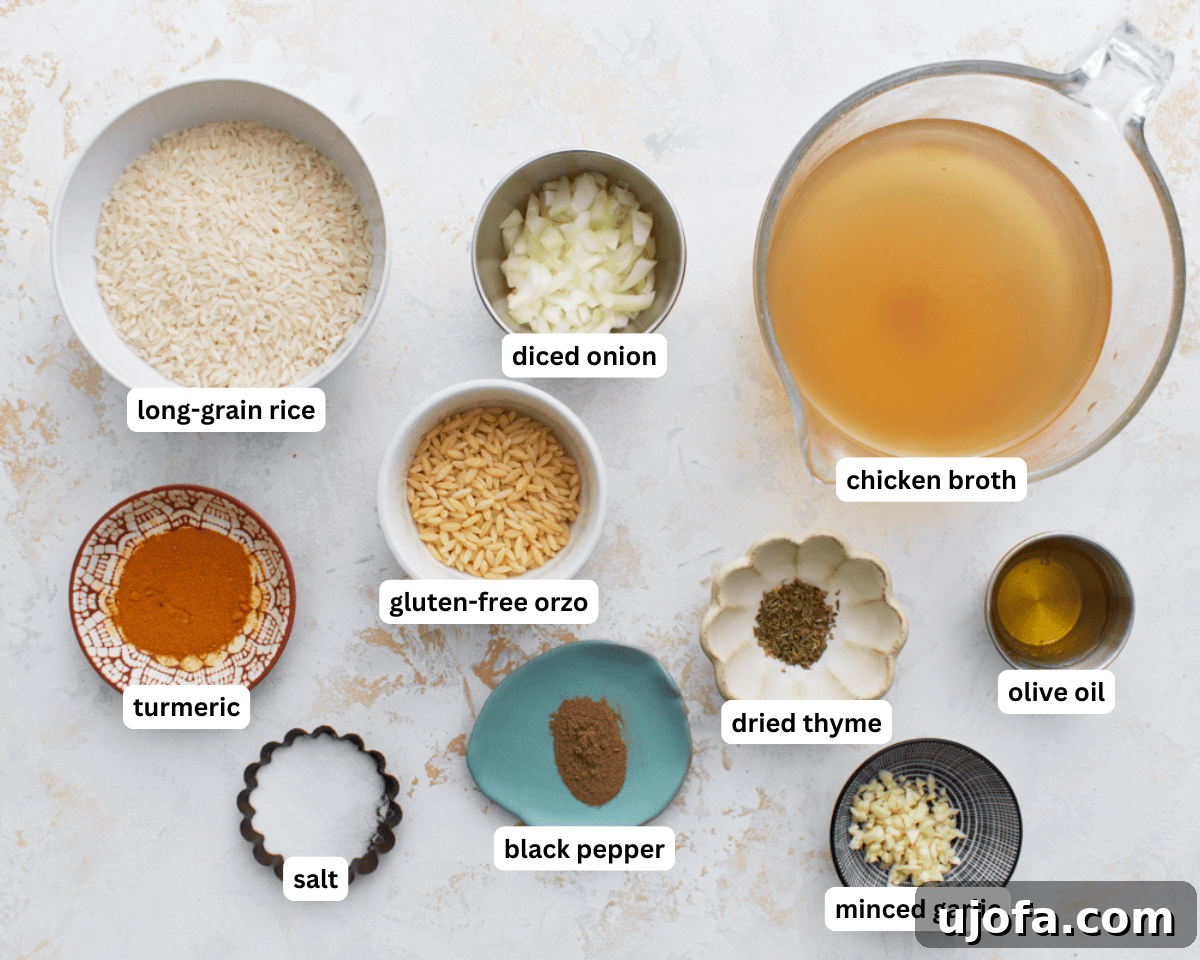
Step 1: Gather Your Ingredients. Ensure all your ingredients are measured and ready before you begin cooking. This mise en place makes the cooking process smooth and efficient, crucial for a quick 25-minute side dish.
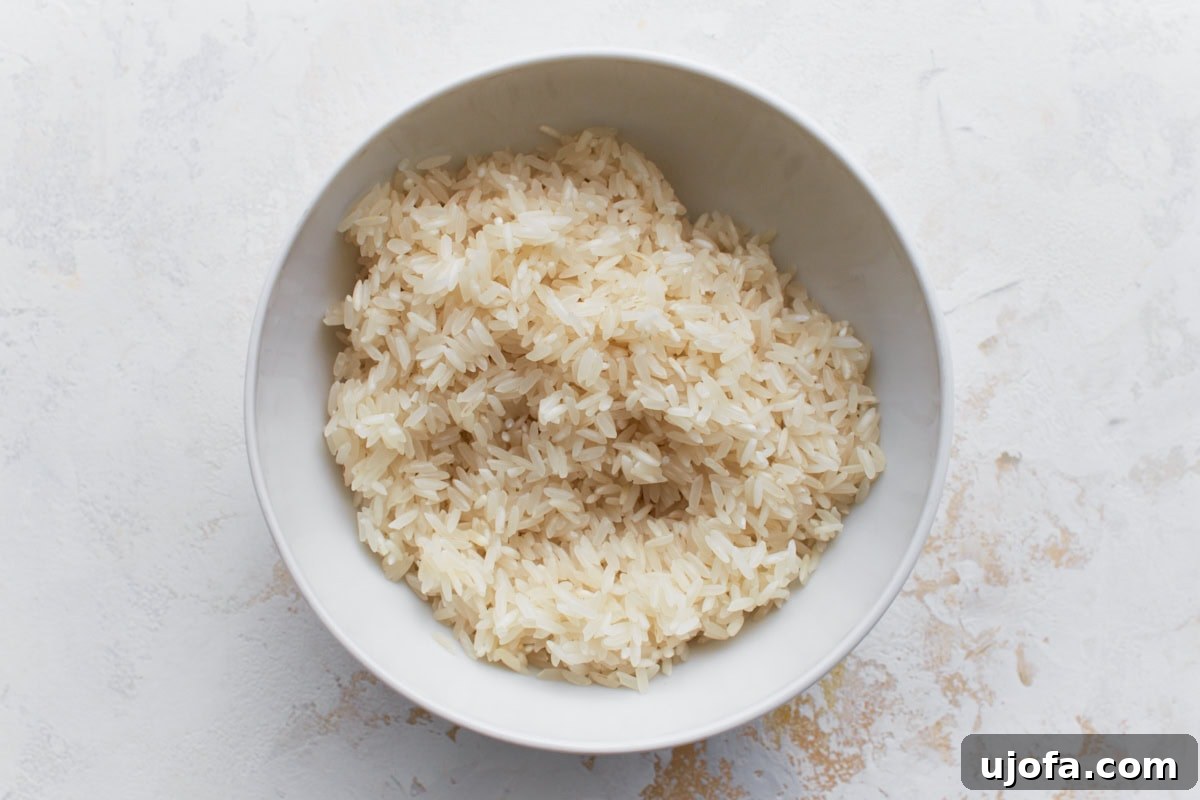
Step 2: Rinse the Rice. Place 1 cup of long-grain white rice (such as basmati or jasmine) in a fine-mesh sieve and rinse it under cold running water. Continue rinsing until the water that drains from the bottom of the sieve is completely clear. This crucial step removes excess starch, which is vital for achieving a light, fluffy, and non-sticky pilaf. Once rinsed, drain the rice thoroughly and set it aside.
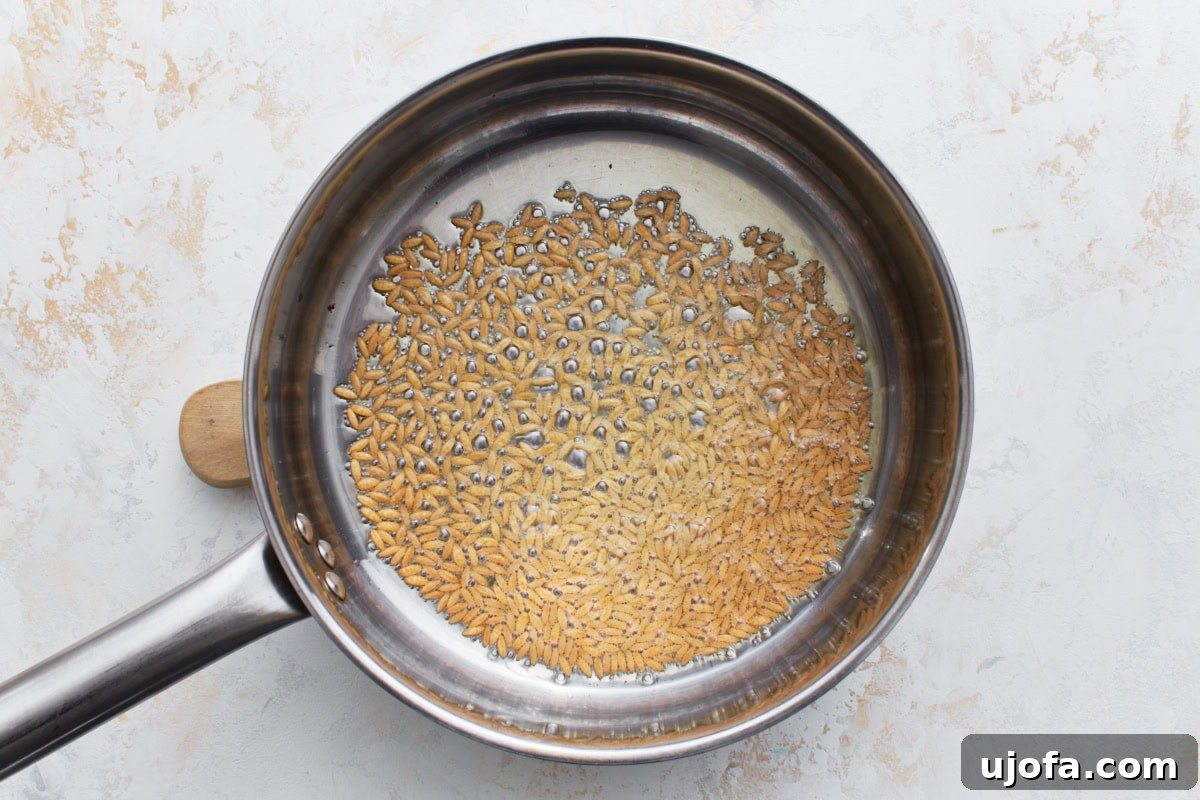
Step 3: Toast the Orzo. In a medium saucepan, heat 2 tablespoons of olive oil over medium heat until shimmering. Add the ¼ cup of gluten-free orzo pasta (or broken 1-inch pieces of gluten-free spaghetti) to the hot oil. Cook, stirring constantly with a wooden spoon or spatula, for 2–3 minutes until the pasta turns a beautiful, light golden-brown color. This toasting step develops a delightful nutty flavor and helps the pasta maintain its shape and texture during cooking.
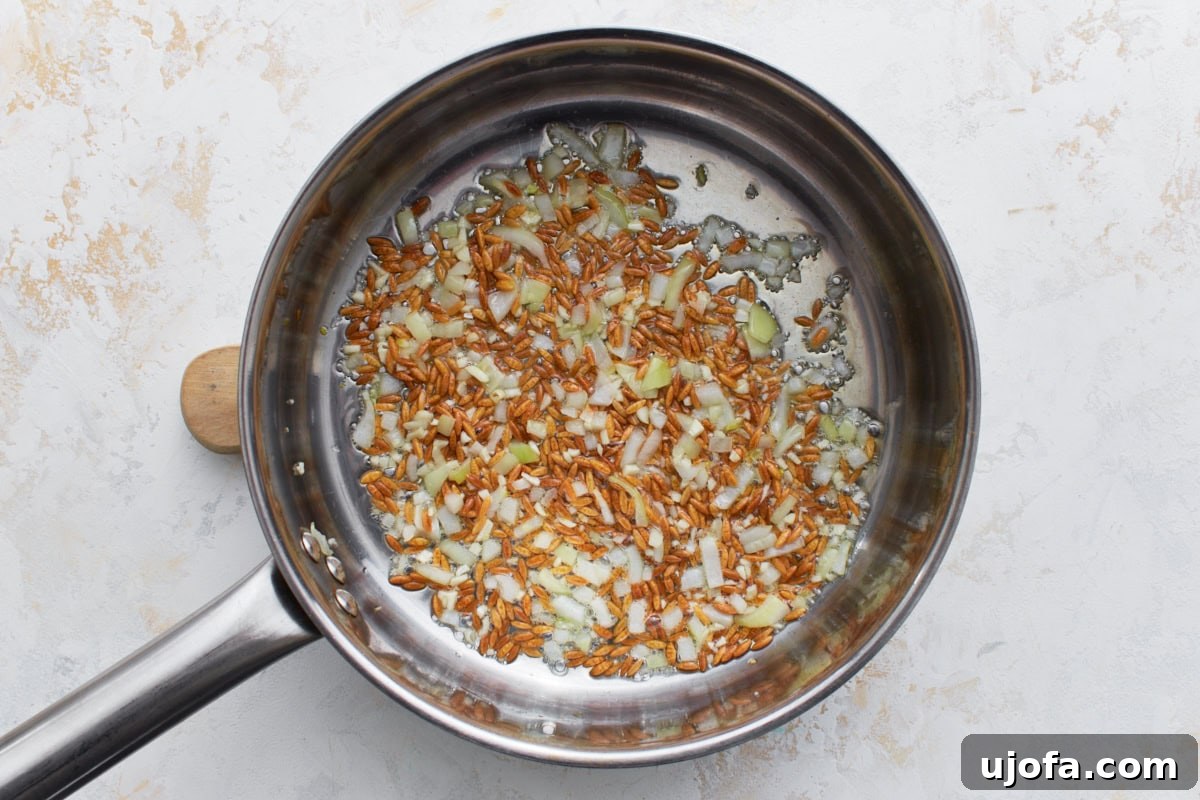
Step 4: Sauté the Aromatics. To the pan with the toasted orzo, add ¼ cup of diced onion. Sauté, stirring occasionally, for 3–4 minutes until the onion softens and becomes translucent. Next, add 1 minced garlic clove and cook for an additional 30 seconds, stirring continuously, just until the garlic becomes fragrant. Be careful not to let the garlic brown or burn, as this can lead to a bitter taste.
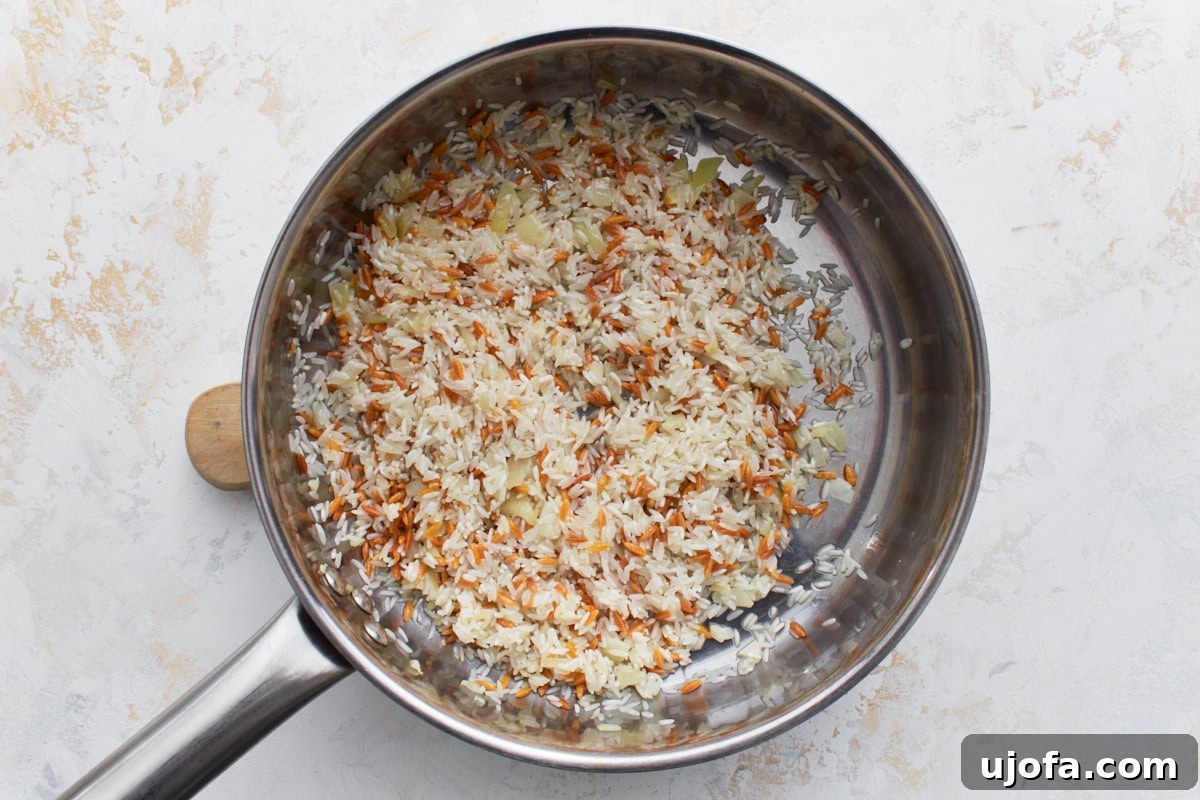
Step 5: Stir in the Rice. Add the 1 cup of thoroughly washed and drained long-grain rice to the pan. Stir it gently to combine with the toasted orzo, onions, and garlic. Cook for another 1-2 minutes, allowing the rice grains to lightly toast and coat themselves in the flavorful oil mixture. This step also helps develop more complex flavors.
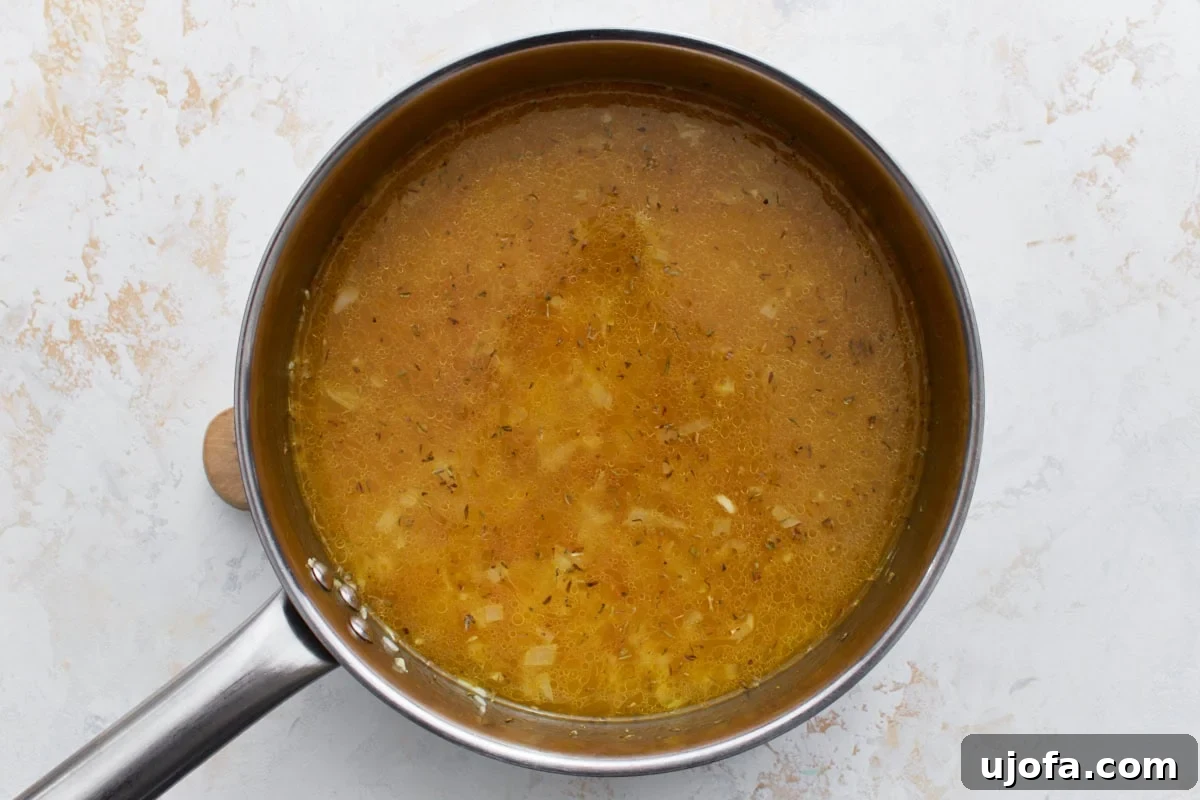
Step 6: Simmer to Perfection. Pour in 2 cups of chicken broth (or vegetable broth for a vegetarian version). Add ¼ teaspoon of salt, ¼ teaspoon of black pepper, ¼ teaspoon of turmeric, and ¼ teaspoon of dried thyme. Stir everything together to combine the spices evenly. Bring the mixture to a full boil over medium-high heat. Once boiling, immediately reduce the heat to very low, cover the pan tightly with its lid, and simmer for 15–18 minutes. During this time, the rice and pasta will become tender, and the liquid will be fully absorbed. It’s crucial not to lift the lid during simmering to retain all the steam.
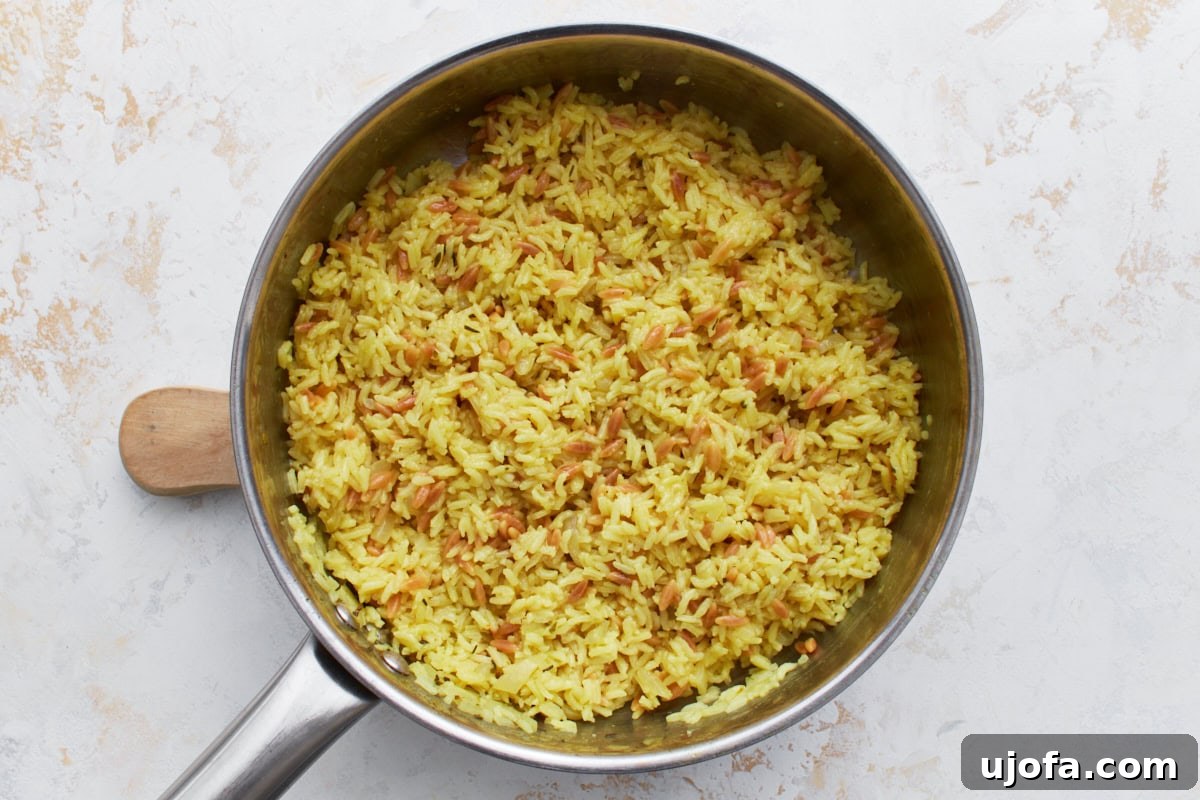
Step 7: Rest the Pilaf. Once the simmering time is complete, remove the saucepan from the heat, but keep the lid on. Let the pilaf sit, undisturbed and covered, for an additional 5 minutes. This vital resting period allows the steam to redistribute throughout the rice and pasta, resulting in an even fluffier texture and preventing the pilaf from becoming gummy.
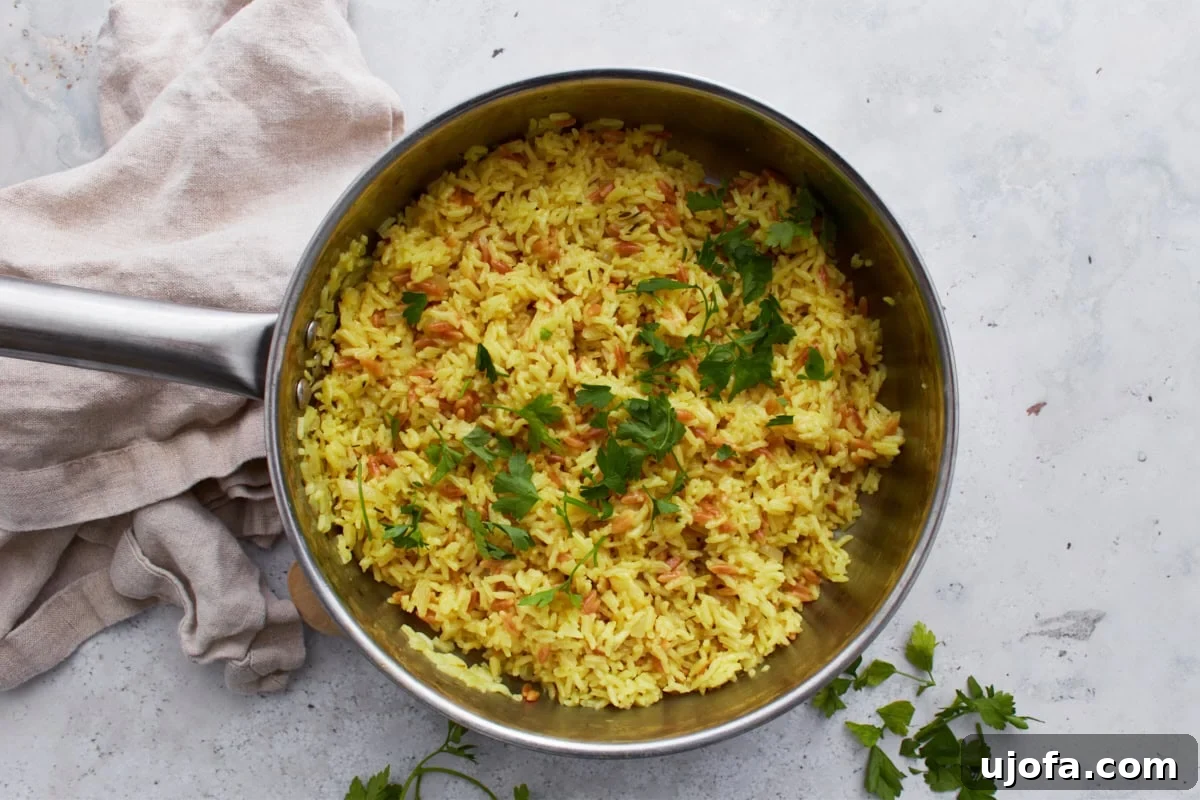
Step 8: Fluff and Serve. After the resting period, remove the lid and gently fluff the pilaf with a fork. This separates the grains and enhances its light texture. Transfer the pilaf to serving bowls or a platter, and if desired, top it generously with fresh chopped parsley for a burst of color and fresh flavor. Serve immediately with your favorite main dishes and enjoy this perfectly seasoned, gluten-free delight!
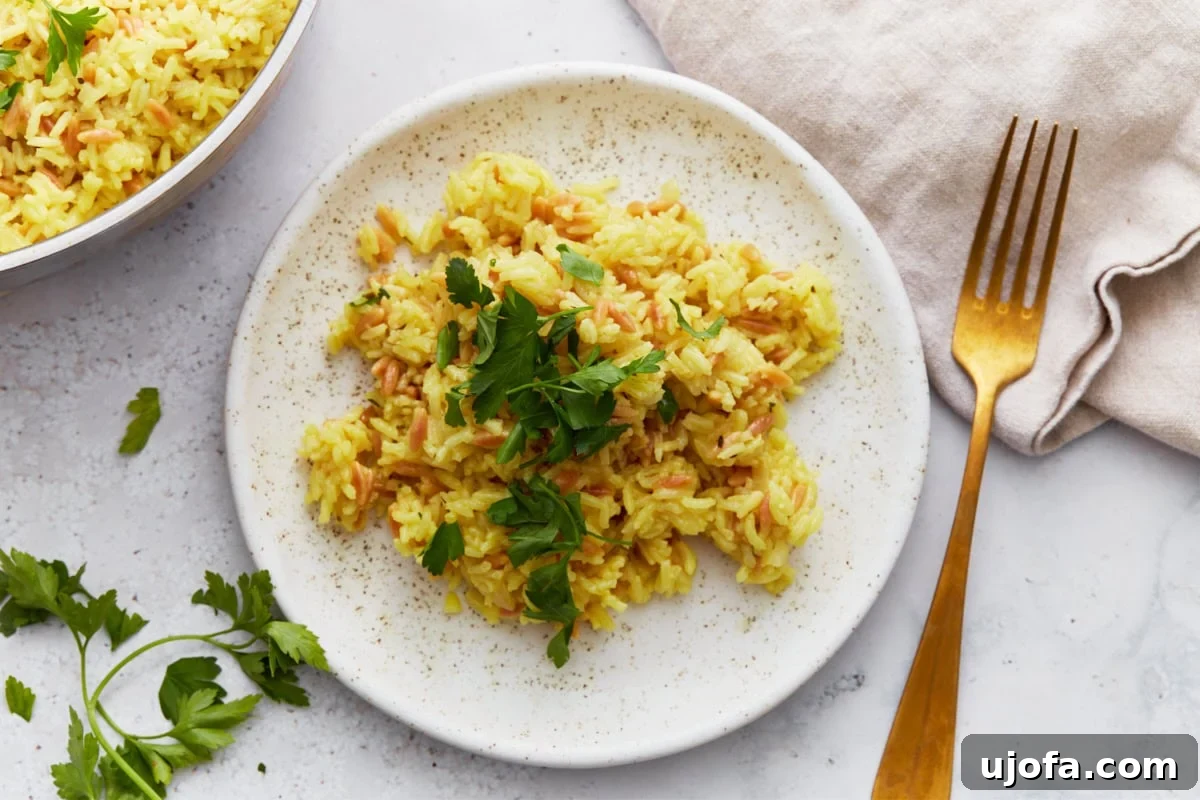
Serving Suggestions for Your Gluten-Free Rice Pilaf
This versatile gluten-free rice pilaf makes a wonderful complement to a wide range of main courses, enhancing any meal with its aromatic flavors and comforting texture. Its delicate yet savory profile allows it to pair beautifully with both simple and elaborate dishes. I personally adore serving this pilaf alongside perfectly grilled chicken breasts or tender, roasted salmon – it acts like a sponge, soaking up all the delicious juices and rounding out the meal flawlessly. It’s also a natural and traditional fit for Mediterranean-style mains, such as succulent lamb kabobs, creamy homemade hummus, or a refreshing dollop of dairy-free tzatziki. For an added layer of texture and flavor, consider stirring in some sautéed vegetables like spinach or bell peppers, or a handful of crunchy toasted nuts like pine nuts or slivered almonds, just before serving. You can even transform it into a quick, wholesome grain bowl by adding your favorite lean protein (such as chickpeas or grilled halloumi), fresh herbs like mint or cilantro, and a drizzle of a light vinaigrette or lemon-tahini dressing. This pilaf truly is a canvas for culinary creativity!
Storage Instructions & Meal Prep Tips
Proper storage ensures you can enjoy the deliciousness of this gluten-free rice pilaf for days to come, making it an excellent candidate for meal prep.
- **Refrigeration:** To store any leftover pilaf, allow it to cool completely to room temperature first. Then, transfer it to an airtight container and refrigerate for up to 4 days. Storing it properly helps maintain its flavor and prevents spoilage.
- **Reheating:** When you’re ready to enjoy your leftovers, reheat the pilaf gently. For best results, place it in a saucepan over low to medium heat, adding a splash of chicken broth or water (1-2 tablespoons per serving) to rehydrate the rice and prevent it from drying out. Stir occasionally until heated through. Alternatively, you can reheat it in the microwave in a microwave-safe dish, covering it loosely and stirring halfway through.
- **Freezing for Longer Storage:** This gluten-free rice pilaf freezes exceptionally well, making it perfect for convenient meal prep. Once cooked and cooled, divide the pilaf into single-serving portions in freezer-safe airtight containers or heavy-duty freezer bags. It can be stored in the freezer for up to 3 months.
- **Thawing and Reheating from Frozen:** When you’re ready to eat a frozen portion, transfer it from the freezer to the refrigerator and allow it to thaw overnight. Once thawed, reheat it using the stovetop or microwave methods described above, adding a small amount of liquid to restore its texture.
Frequently Asked Questions (FAQs)
Here are some common questions you might have about making gluten-free rice pilaf:
- **Can I use any type of rice?** While long-grain white rice like basmati or jasmine is recommended for its fluffy texture, you can experiment with other types. As noted, brown rice will require more liquid and a longer cooking time (around 35-40 minutes). Avoid short-grain sticky rice as it won’t give the desired pilaf texture.
- **What if I don’t have gluten-free orzo?** Gluten-free spaghetti, broken into 1-inch pieces, is an excellent substitute and often more readily available. Thin gluten-free rice noodles can also work, but be mindful that their cooking time might be slightly different. Look for pasta made from rice, corn, or quinoa for the best results.
- **Is this recipe vegetarian or vegan-friendly?** Yes, it can easily be made vegetarian by using vegetable broth instead of chicken broth. For a vegan version, ensure your gluten-free pasta is egg-free (most are, but always check labels).
- **Can I add vegetables to the pilaf?** Absolutely! This pilaf is very customizable. You can sauté finely diced carrots, celery, or bell peppers along with the onion and garlic. Green peas or corn can be stirred in during the last few minutes of simmering, or after the pilaf has rested.
- **How can I add more flavor?** Beyond the suggested spices, a pinch of saffron steeped in a bit of warm broth can add a luxurious color and aroma. A squeeze of fresh lemon juice at the end brightens the flavors. Toasted nuts (pine nuts, almonds) or dried fruits (currants, cranberries) can also add wonderful complexity.
More Delicious Gluten-Free Side Dishes to Explore
If you loved this gluten-free rice pilaf, you’re in for a treat! Discover more fantastic gluten-free sides that are perfect for any occasion:
- Creamy Gluten-Free Mashed Potatoes
- Hearty Gluten-Free Green Bean Casserole
- Classic Gluten-Free Potato Salad
- Irresistible Gluten-Free Garlic Bread
- Savory Gluten-Free Stuffing