
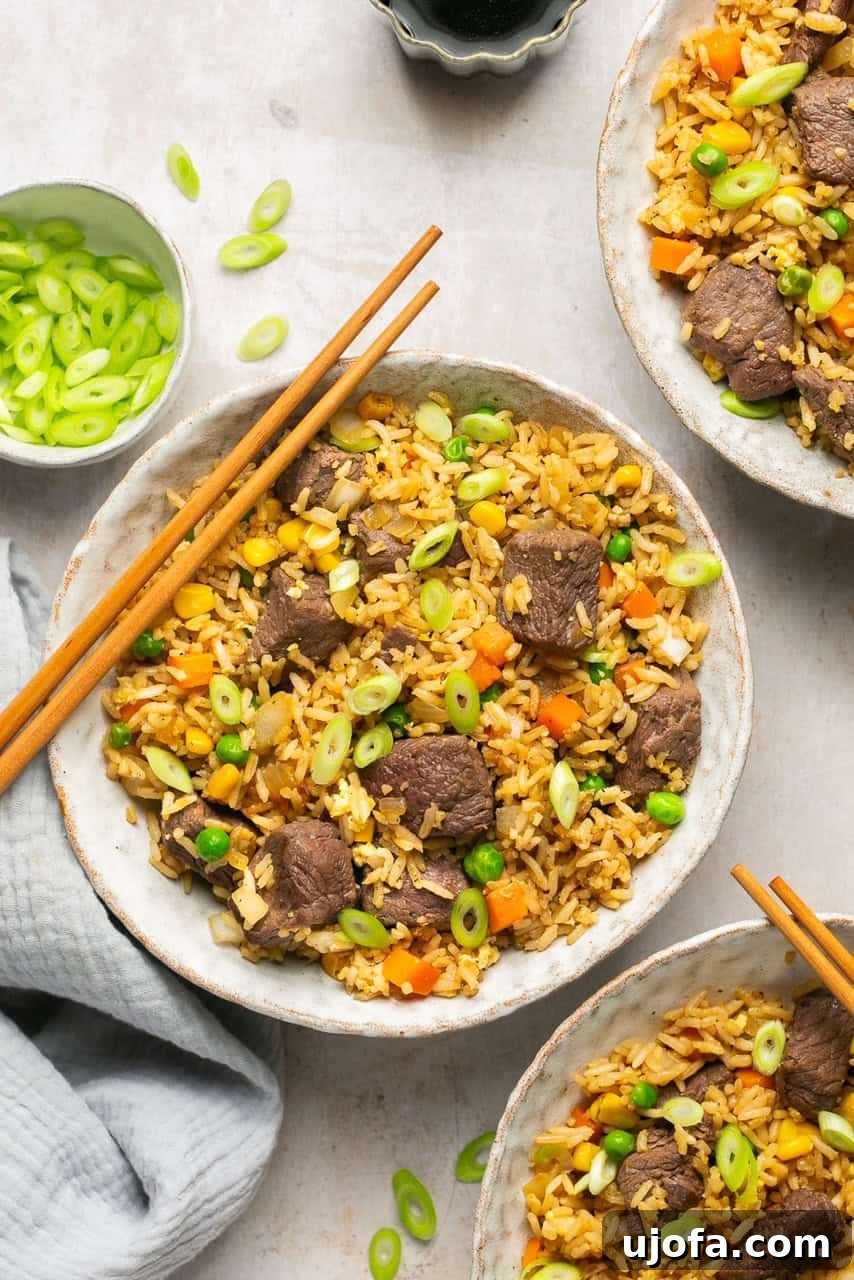
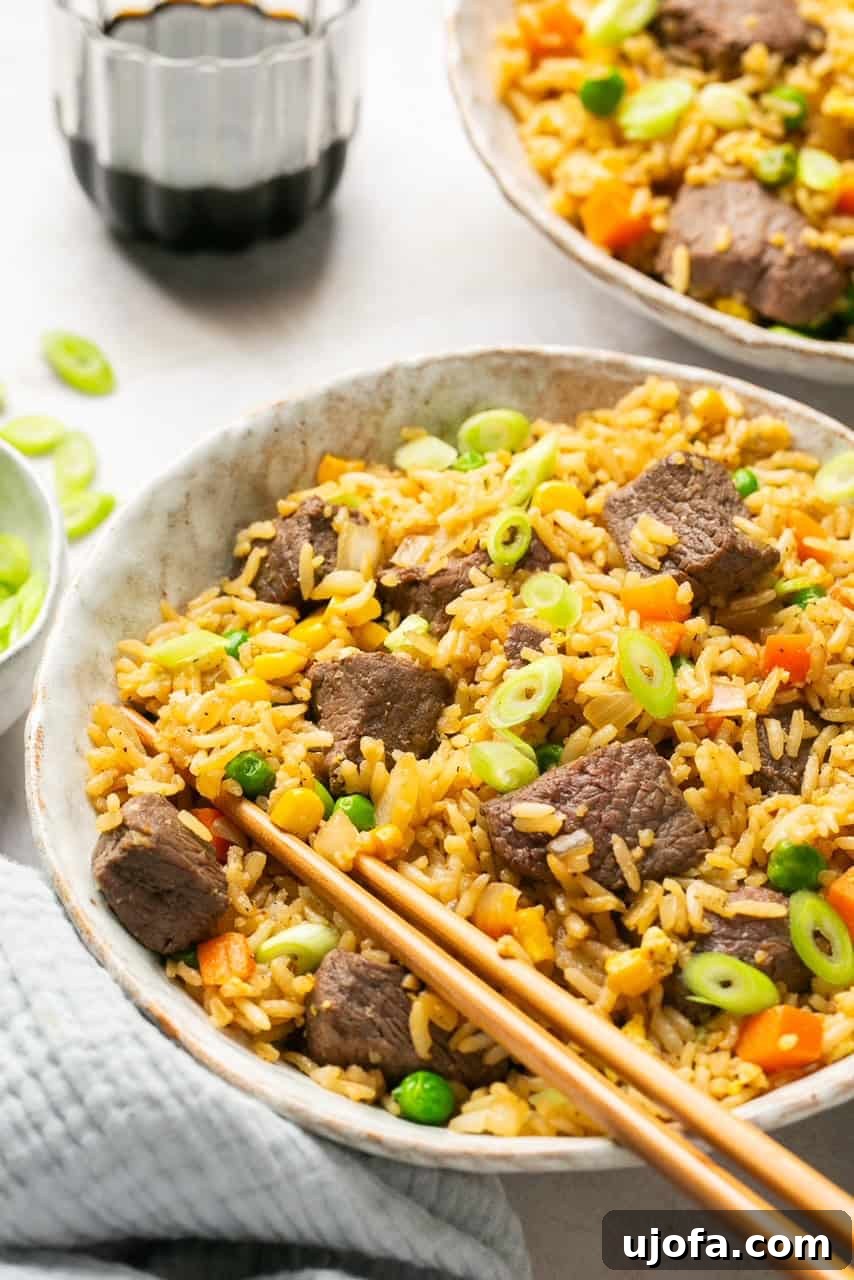
Unlock the secret to incredible, restaurant-quality steak fried rice right in your own kitchen! This effortless, Asian-inspired recipe transforms simple ingredients like leftover rice, fresh or frozen vegetables, fluffy eggs, and tender steak cubes into a robust and flavorful meal. It’s a wonderfully filling dish, bursting with authentic taste, and completely gluten-free. Get ready to enjoy Hibachi-style fried rice without leaving your home!
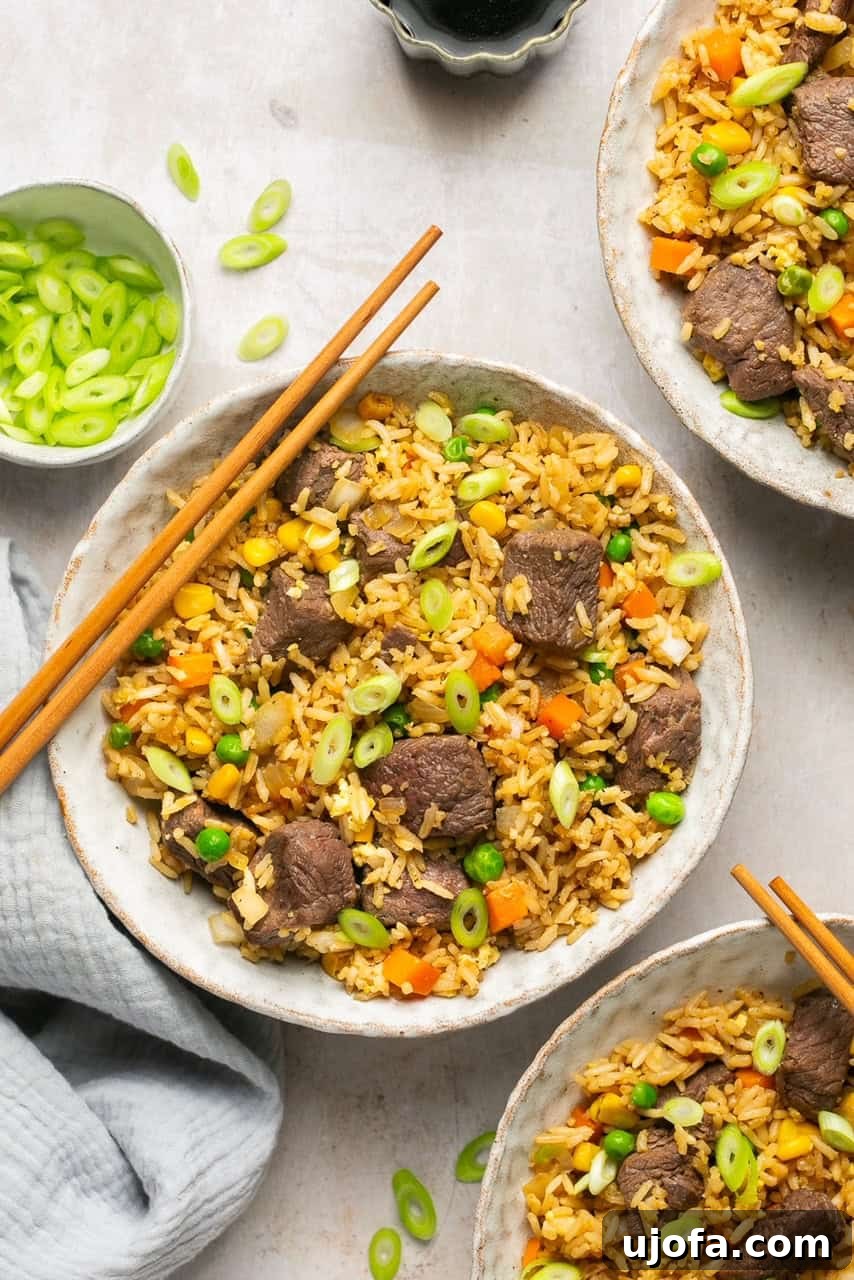
Why You’ll Love This Easy Steak Fried Rice Recipe
For too long, enjoying a simple fried rice dish at many local restaurants has been a challenge for me, primarily due to the common use of soy sauce, which often contains gluten. To satisfy my persistent craving for this beloved Asian staple, I embarked on a culinary quest to create a homemade Steak Fried Rice recipe that genuinely surpasses typical takeout versions. The result is nothing short of incredible – a dish that’s both deeply flavorful and entirely gluten-free, bringing the authentic taste of Hibachi right to your dinner table.
This recipe is a true weeknight wonder, requiring just 20 minutes from start to finish. Its amazing, authentic flavor profile makes it an instant family favorite, perfect for even the busiest evenings. If your weeknights are often a whirlwind of activities, this easy meal is designed with you in mind. It’s not only incredibly quick but also packed with lean protein from the steak and a generous helping of vibrant vegetables. Best of all, it achieves that classic savory taste using coconut aminos as a gluten-free alternative to traditional soy sauce, making it accessible to everyone.
Beyond its speed and deliciousness, this steak fried rice stands out for its incredible versatility and use of everyday ingredients. It’s one of those magical recipes you can whip up at a moment’s notice, making excellent use of leftover cooked steak (or chicken, if you prefer), any assortment of fresh or frozen veggies you have on hand, and, most importantly, day-old white rice. It’s a testament to simple cooking creating extraordinary results, providing a wholesome, satisfying, and utterly delicious meal without any fuss.
Gluten-Free Goodness: Enjoy Fried Rice Without Compromise
One of the primary reasons this recipe was developed was to offer a genuinely delicious gluten-free fried rice option. Traditional soy sauce, a cornerstone of many Asian dishes, often contains wheat. By using coconut aminos or gluten-free Tamari, we ensure that everyone can enjoy the rich, savory flavors of fried rice without any dietary concerns. Coconut aminos offer a slightly sweeter, milder umami punch, while Tamari provides a closer taste to traditional soy sauce, making both excellent choices for a compliant and flavorful dish.
Unbeatable Flavor and Authentic Taste
The secret to great fried rice lies in its balance of savory, sweet, and umami notes, combined with perfectly cooked ingredients. This recipe achieves a depth of flavor that rivals your favorite Japanese steakhouse or Hibachi grill. The marinade for the steak infuses it with ginger, sesame, and rich aminos, while the stir-frying process caramelizes the vegetables and rice, creating layers of irresistible taste. Each bite delivers a delightful blend of tender steak, crisp vegetables, and fluffy, flavorful rice.
A Quick and Convenient Weeknight Solution
In today’s fast-paced world, quick and easy meal solutions are invaluable. This steak fried rice recipe is designed for maximum efficiency, coming together in just 20 minutes. The quick cooking time makes it ideal for busy weeknights when you need a satisfying meal without spending hours in the kitchen. Having your ingredients prepped and ready (mise en place) is the key to executing this dish flawlessly and speedily, ensuring a hot, delicious meal is on the table in record time.
Packed with Protein and Nutritious Vegetables
Beyond its fantastic taste and ease, this recipe is a nutritional powerhouse. The sirloin steak and eggs provide a substantial amount of high-quality protein, essential for muscle repair and satiety. Complementing this are the mixed vegetables, offering a vibrant array of vitamins, minerals, and dietary fiber. This balance ensures that you’re not just enjoying a tasty meal but also fueling your body with wholesome ingredients.
Key Ingredients for the Perfect Steak Fried Rice
Crafting exceptional steak fried rice starts with selecting quality ingredients and understanding their role in the dish. Here’s a detailed look at what you’ll need to create this culinary masterpiece:
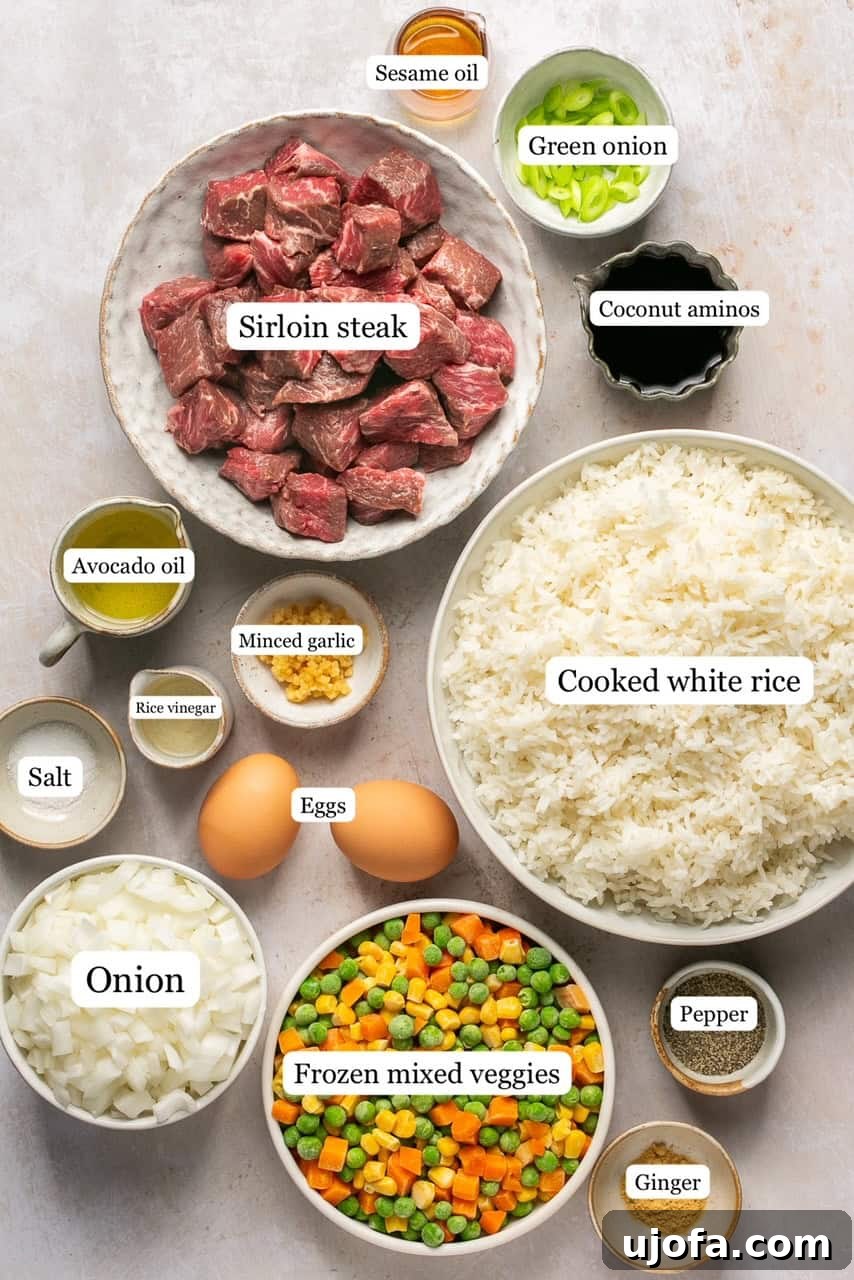
- Sirloin Steak: This cut is excellent for stir-frying as it’s flavorful and tender when cooked quickly at high heat. Ensure you cut the beef into uniform, bite-sized pieces or cubes to ensure even cooking and easy eating.
- Coconut Aminos: This is a fantastic gluten-free alternative to soy sauce, made from the sap of coconut blossoms. It has a slightly sweeter, milder, and less salty taste than soy sauce, making it a delicious and healthy choice. Gluten-free Tamari is another excellent option if you prefer a flavor closer to traditional soy sauce. If gluten is not a concern, feel free to use regular or low-sodium soy sauce.
- Sesame Oil: A drizzle of toasted sesame oil adds an unmistakable nutty, aromatic depth that is quintessential to Asian-inspired dishes. It’s typically added towards the end of cooking or in marinades to preserve its delicate flavor.
- Powdered Ginger: Provides a warm, zesty kick that brightens the overall flavor profile of the fried rice. Freshly grated ginger can also be used for an even more vibrant taste.
- Salt & Black Pepper: Essential seasonings that enhance and balance all the other flavors in the dish and for the steak marinade.
- Avocado Oil: With its high smoke point, avocado oil is perfect for stir-frying at high temperatures, preventing burning and ensuring a clean flavor. You can also use other high-heat oils like grapeseed or canola oil.
- Onion: Diced onion forms an aromatic base, adding a subtle sweetness and pungent flavor when sautéed.
- Minced Garlic: Fresh garlic is indispensable for its bold, savory aroma and taste, contributing significantly to the fried rice’s depth.
- Mixed Vegetables: A colorful medley of peas, carrots, corn, and green beans provides texture, nutrition, and visual appeal. Both fresh and frozen vegetables work wonderfully here, making it easy to adapt based on what you have available. Feel free to customize with other quick-cooking vegetables like broccoli florets, sliced bell peppers, or snow peas.
- White Rice (Cooked): The secret weapon for perfect fried rice! Preferably day-old cooked rice, chilled in the refrigerator. Cold, dry rice grains separate easily, preventing clumping and allowing them to crisp up beautifully in the wok. Long-grain varieties like jasmine or basmati rice are highly recommended for their texture.
- Large Eggs: Scrambled eggs are a classic addition, adding richness, protein, and a delightful texture to the fried rice.
- Green Onions: Sliced green onions are a must for garnish, adding a fresh, slightly pungent finish and a pop of vibrant green color.
- Additional Salt & Pepper: For seasoning the final dish to taste, ensuring perfect balance.
Mastering Steak Fried Rice: A Step-by-Step Guide
Creating delicious steak fried rice at home is simpler than you think, especially with these clear, easy-to-follow steps. Precision and high heat are your allies here for that authentic wok-fried flavor.
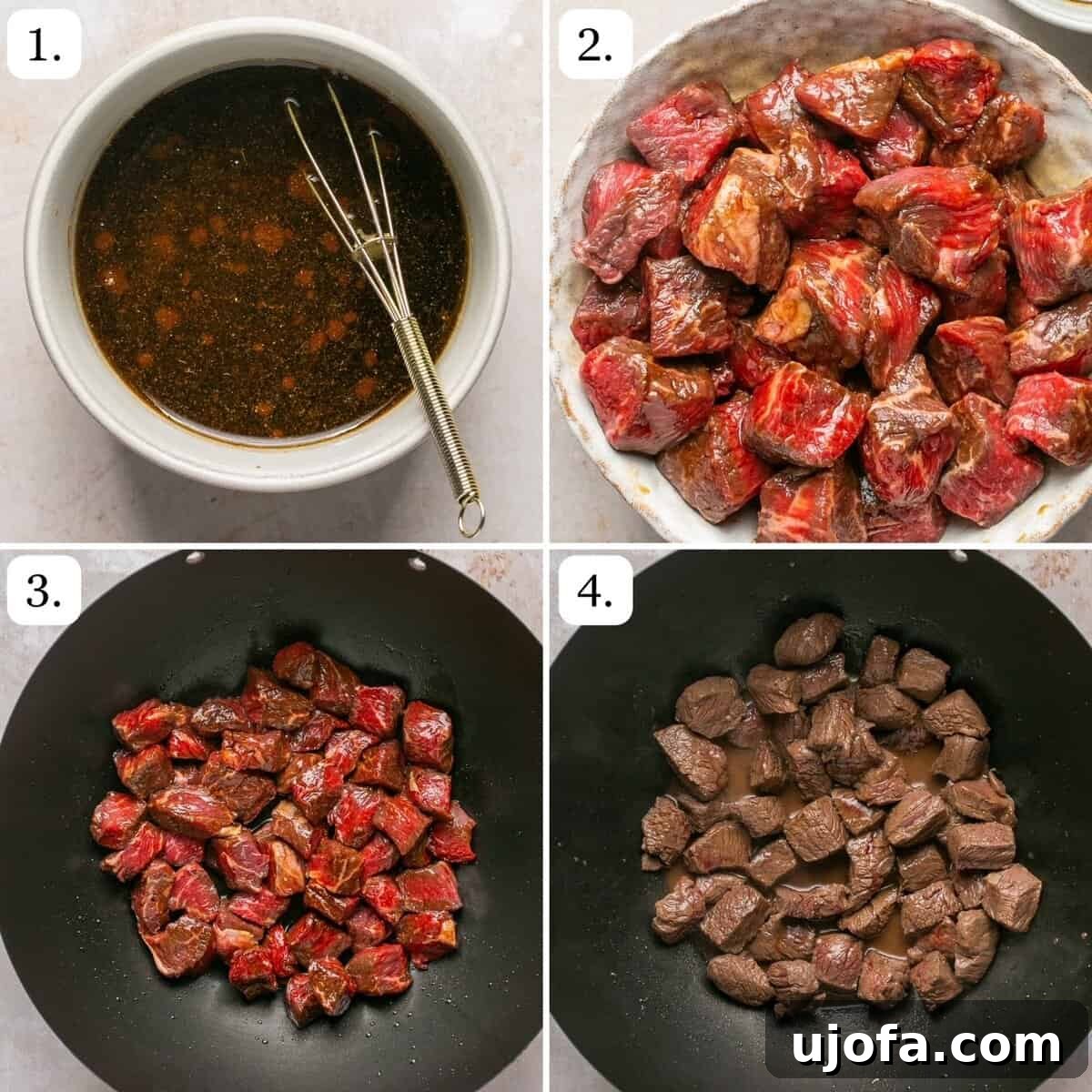
Step 1: Prepare the Flavorful Marinade and Sauce
In a medium-sized bowl, combine the gluten-free coconut aminos, aromatic sesame oil, a splash of rice vinegar for tang, fragrant powdered ginger, ½ teaspoon of salt, and ½ teaspoon of black pepper. Whisk all these ingredients together until thoroughly combined. This mixture will serve as both the marinade for your steak and the primary sauce for the fried rice, ensuring a cohesive flavor throughout the dish.
Step 2: Marinate the Steak for Maximum Flavor
Add your bite-sized cubed sirloin steak to a separate bowl. Pour exactly half of the prepared sauce over the steak pieces and toss gently to ensure every piece is coated. Set the remaining half of the sauce aside – this will be incorporated into the rice later. Allow the steak to marinate for at least 10 minutes to absorb the flavors; for an even deeper taste, you can marinate it in the refrigerator for up to overnight. This quick marinade tenderizes the meat and infuses it with delicious umami.
Step 3: Organize and Heat Your Wok
Before you begin cooking, practice good “mise en place” by setting all your remaining ingredients within easy reach next to your stove. This ensures a smooth and quick stir-frying process. Add 1 tablespoon of avocado oil to a large skillet or, ideally, a wok, and heat it over medium-high heat until it is smoking hot. A very hot pan is crucial for achieving that authentic fried rice char and preventing ingredients from steaming.
Step 4: Sear the Steak to Perfection
Carefully add the marinated steak cubes to the smoking hot pan, trying to leave any excess marinade behind in the bowl to avoid overcrowding the pan and lowering its temperature. Cook the steak for 2-4 minutes, turning occasionally, until it reaches your desired level of doneness. Remember, fried rice steak is typically cooked to a medium or medium-well. Once cooked, remove the steak from the pan and set it aside on a clean plate. It will be added back into the rice later.
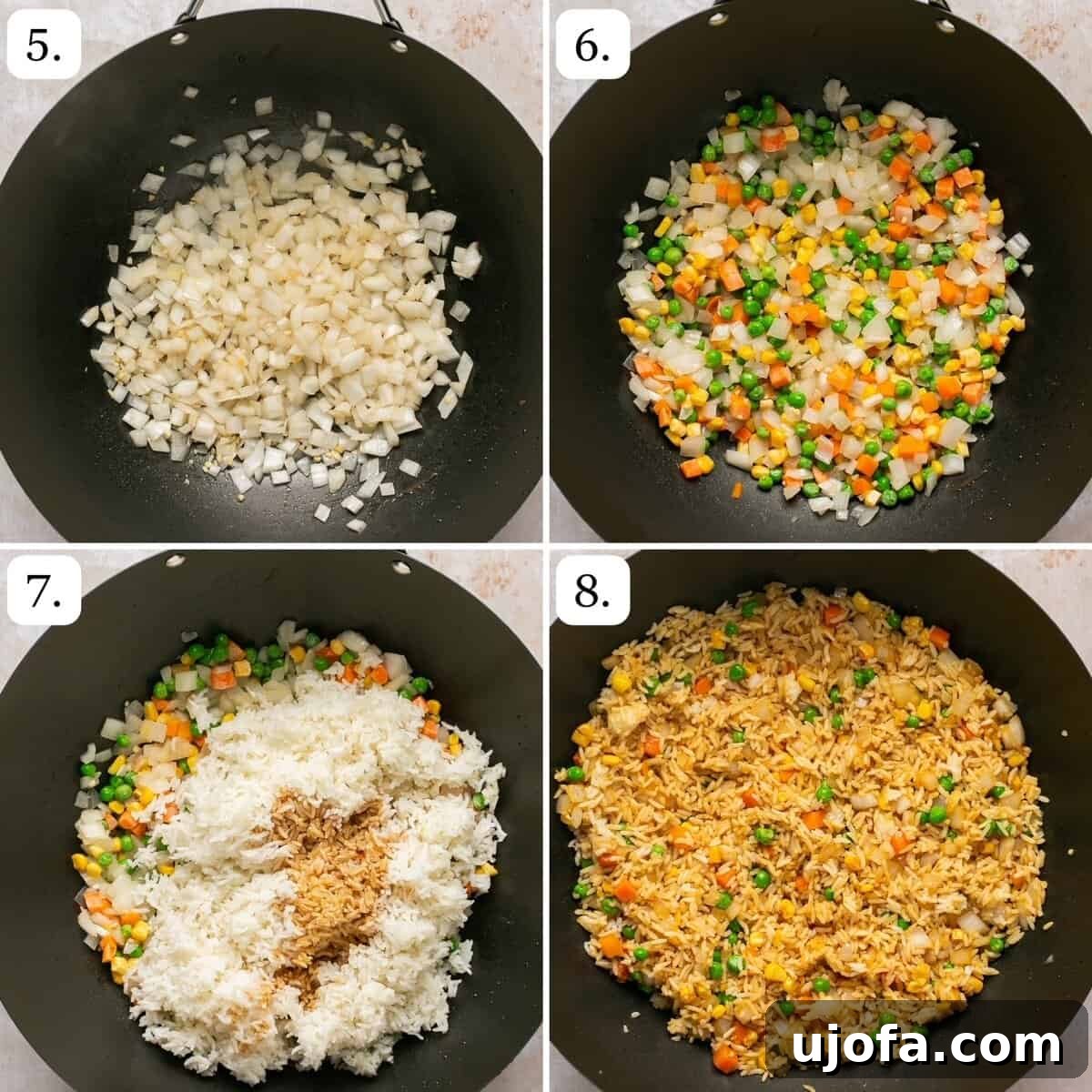
Step 5: Sauté the Aromatics
Add the remaining 1 tablespoon of avocado oil to the same wok. Once hot, add the diced onion and minced garlic. Sauté for 1-2 minutes, stirring constantly, until they become fragrant and slightly softened. Be careful not to burn the garlic, as this can impart a bitter taste.
Step 6: Incorporate the Mixed Vegetables
Next, add your mixed vegetables to the wok. If using frozen vegetables, there’s no need to thaw them beforehand. Sauté for another 1-2 minutes, stirring frequently, until the vegetables are tender-crisp. You want them cooked but still retaining a slight bite.
Step 7: Add the Rice and Remaining Sauce
Now it’s time for the star of the show: the rice! Add the cooked white rice to the wok, along with the reserved half of the sauce mixture from Step 1. Using day-old, cold rice is key here, as it prevents the rice from clumping and allows it to achieve that desirable fried texture.
Step 8: Stir and Combine Flavors
Stir the rice and vegetables continuously for 1-2 minutes, ensuring the sauce is evenly distributed and the rice grains are breaking apart and heating through. This stage is crucial for allowing the rice to absorb all the delicious flavors and start developing a slightly crispy exterior.
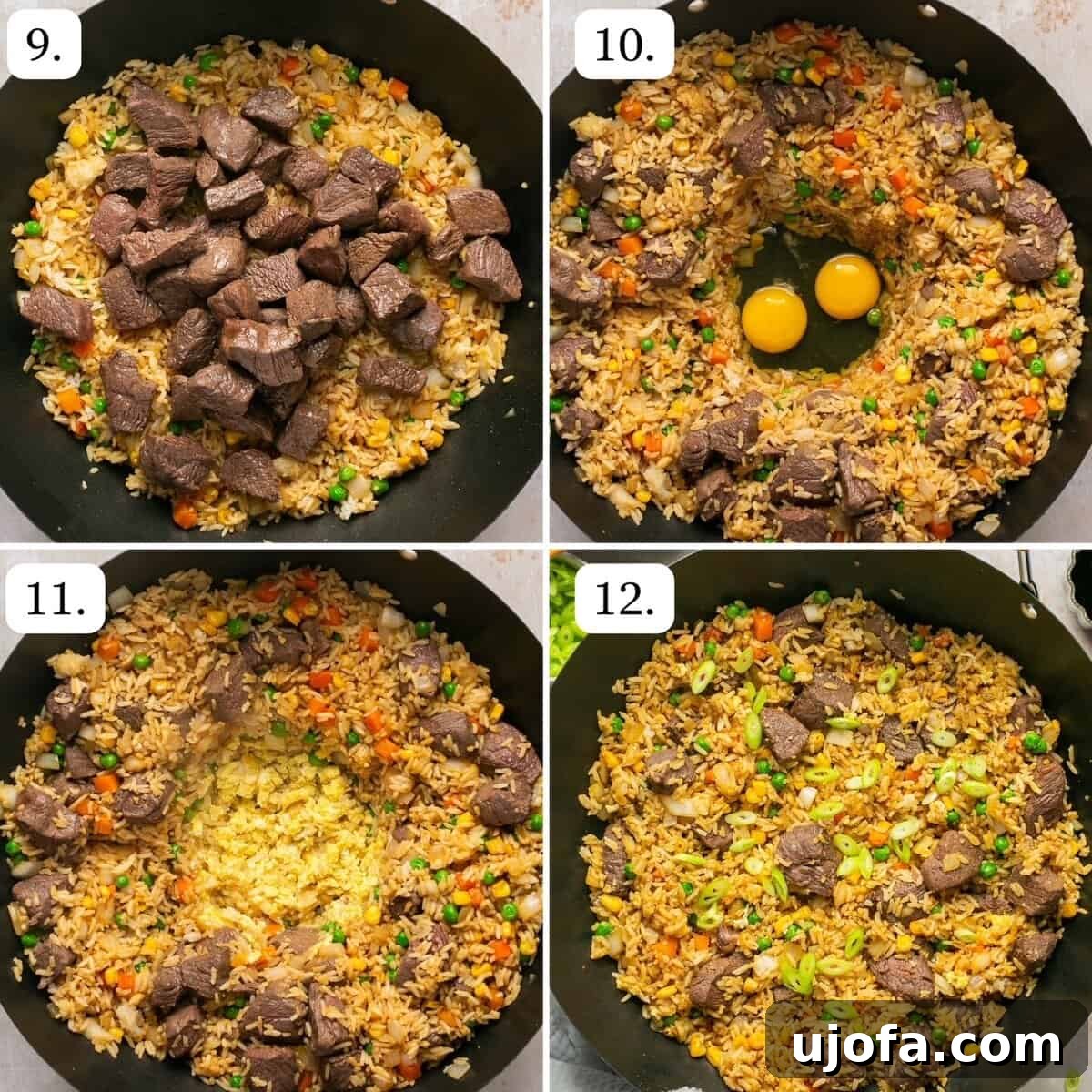
Step 9: Reintroduce the Cooked Steak
Once the rice is fragrant and lightly toasted, add the previously cooked steak back into the wok. Toss everything together to combine, ensuring the steak is evenly distributed throughout the fried rice. The steak will reheat gently as you mix.
Step 10: Make Space for the Eggs
Using your spatula, push the fried rice aside to create a clear space in the center of the wok. Crack the large eggs directly into this open space. This method allows the eggs to cook quickly without getting lost in the rice immediately.
Step 11: Scramble the Eggs Briefly
Quickly use your spatula to lightly scramble the eggs in the cleared space until they are just beginning to set but still slightly moist. This ensures they integrate well into the rice without becoming rubbery.
Step 12: Final Toss, Season, and Garnish
Once the eggs are partially scrambled, quickly toss them together with the rice mixture until they are fully cooked through and evenly incorporated. Taste the fried rice and add an additional ½ teaspoon of salt and pepper, or more to your preference, tossing everything again to distribute the seasonings. Remove the wok from the heat. Finally, garnish generously with sliced green onions for a fresh crunch and vibrant color. If desired, you can drizzle a little more coconut aminos on top for an extra layer of flavor. Serve immediately and enjoy your homemade Hibachi-style steak fried rice!
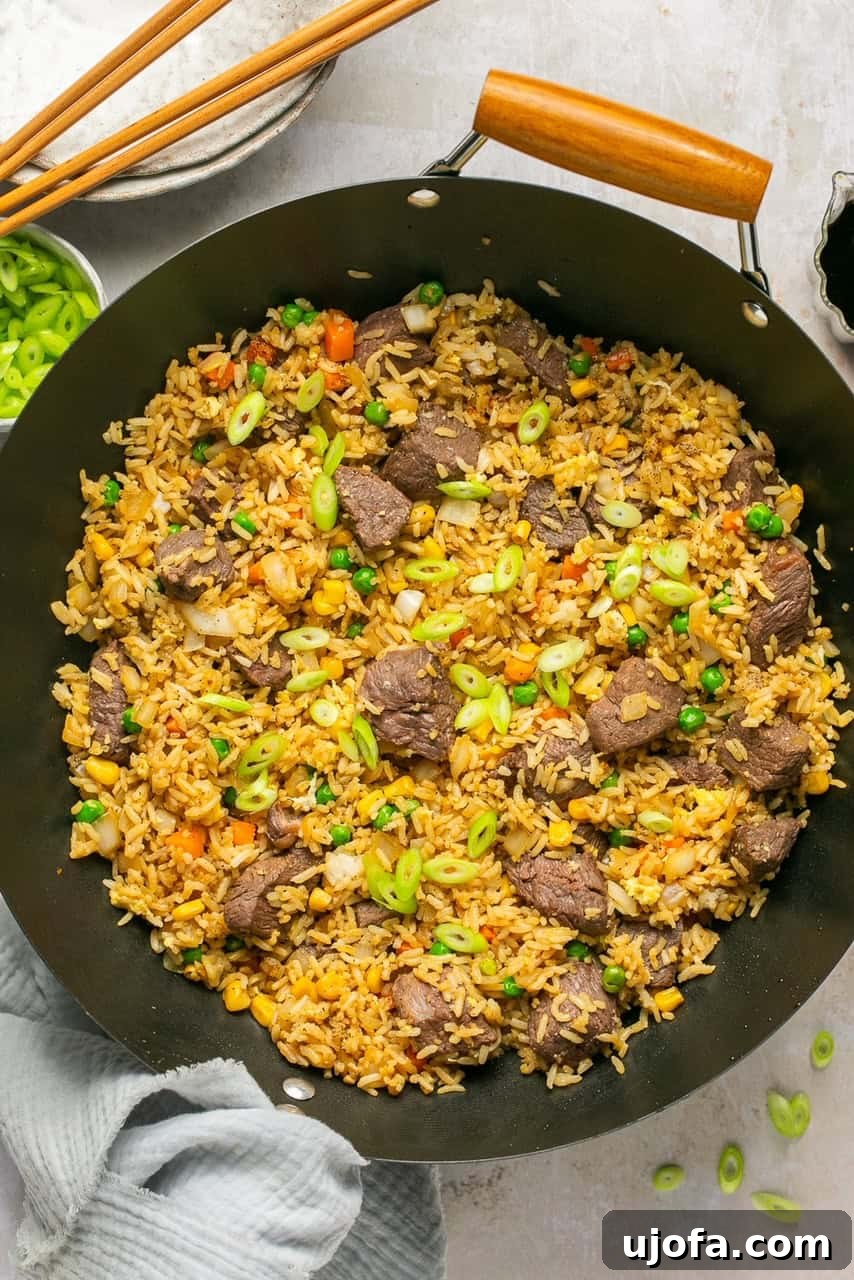
Expert Tips for the Best Homemade Fried Rice
Achieving restaurant-quality fried rice at home is entirely possible with a few key techniques and considerations. Here are some expert tips to elevate your homemade steak fried rice:
- The Secret is Day-Old Rice: This is arguably the most crucial tip for perfect fried rice. Cooked rice, especially long-grain varieties like jasmine or basmati, that has been chilled in the refrigerator overnight becomes drier and firmer. This prevents it from clumping and steaming in the wok, allowing the grains to separate beautifully and get that desired slightly crispy, wok-fried texture. If you must use freshly cooked rice, spread it out on a baking sheet and let it cool completely in the fridge for at least an hour (or even in the freezer for 15-20 minutes) before using.
- High Heat is Your Best Friend: Fried rice needs to be cooked quickly over high heat. This is what creates the “wok hei” – the smoky, complex flavor characteristic of properly stir-fried dishes. Ensure your wok or large skillet is smoking hot before adding any ingredients. Don’t be afraid of the heat!
- Don’t Overcrowd the Pan: Cooking in batches is essential if you don’t have a very large wok or skillet. Overcrowding cools down the pan, causing ingredients to steam instead of stir-fry, which results in soggy fried rice. Cook the steak in one batch, and if your wok isn’t huge, you might even consider cooking the rice and veggies in two batches if necessary.
- Mise en Place (Everything in its Place): Stir-frying is a rapid process. Have all your ingredients prepped, chopped, and measured, and placed near the stove before you start cooking. This way, you can add them to the hot pan in quick succession without delays, ensuring everything cooks evenly and efficiently.
- Protein Power-Ups & Variations: While this recipe focuses on steak, it’s incredibly versatile. Feel free to substitute the sirloin with other proteins. Bite-sized chicken breast or pork loin pieces are excellent choices. Shrimp cooks very quickly and adds a different flavor profile. For a plant-based version, consider pan-fried tofu or tempeh. Always ensure your chosen protein is cut into similar-sized pieces for even cooking.
- Veggie Variety is Key: The mixed vegetables (peas, carrots, corn, green beans) used here are a classic base. However, don’t hesitate to experiment with other vegetables. Broccoli florets, sliced bell peppers (red, yellow, orange), mushrooms, snow peas, water chestnuts, or even cauliflower florets would be delicious additions. Using leftover roasted vegetables is also a clever way to add flavor and reduce waste.
- Adjust the Sauce to Your Taste: The provided sauce recipe offers a balanced flavor. However, feel free to adjust it to your preference. For extra spice, add a dash of sriracha or chili garlic sauce to the marinade or while stir-frying. For more sweetness, a tiny bit of brown sugar or maple syrup can be added. Taste and adjust before adding to the main dish.
- Garnish for Freshness: Don’t skip the green onions and a final pinch of salt and pepper. These garnishes add a burst of fresh flavor and crucial textural contrast that completes the dish. A sprinkle of sesame seeds can also add a nice touch.
Storage and Reheating Tips
Leftover steak fried rice is a fantastic next-day meal. Here’s how to store and reheat it to maintain its deliciousness:
- Storage: Allow the fried rice to cool completely before transferring it to an airtight container. Store it in the refrigerator for up to 3-4 days. This ensures food safety and preserves flavor.
- Reheating on the Stovetop (Recommended): For the best results, reheat your fried rice in a skillet over medium-high heat. Add a tiny bit of butter or a neutral oil (like avocado oil) to the pan first. Break up any clumps of rice, spread it evenly, and cook for about 2-3 minutes, stirring occasionally, until it’s warmed through and slightly crispy again. This method helps maintain the texture and flavor.
- Reheating in the Microwave: While the stovetop method is preferred, you can also microwave leftovers. Place the fried rice in a microwave-safe dish, add a tablespoon of water, and cover loosely. Heat on high for 1-2 minutes, stirring halfway through, until heated through. Be aware that the texture might be softer than when reheated on the stove.
- Serving Leftovers: Before serving reheated fried rice, consider garnishing it with a fresh sprinkle of sliced green onions and a final dash of salt and pepper to revive its flavors and presentation.
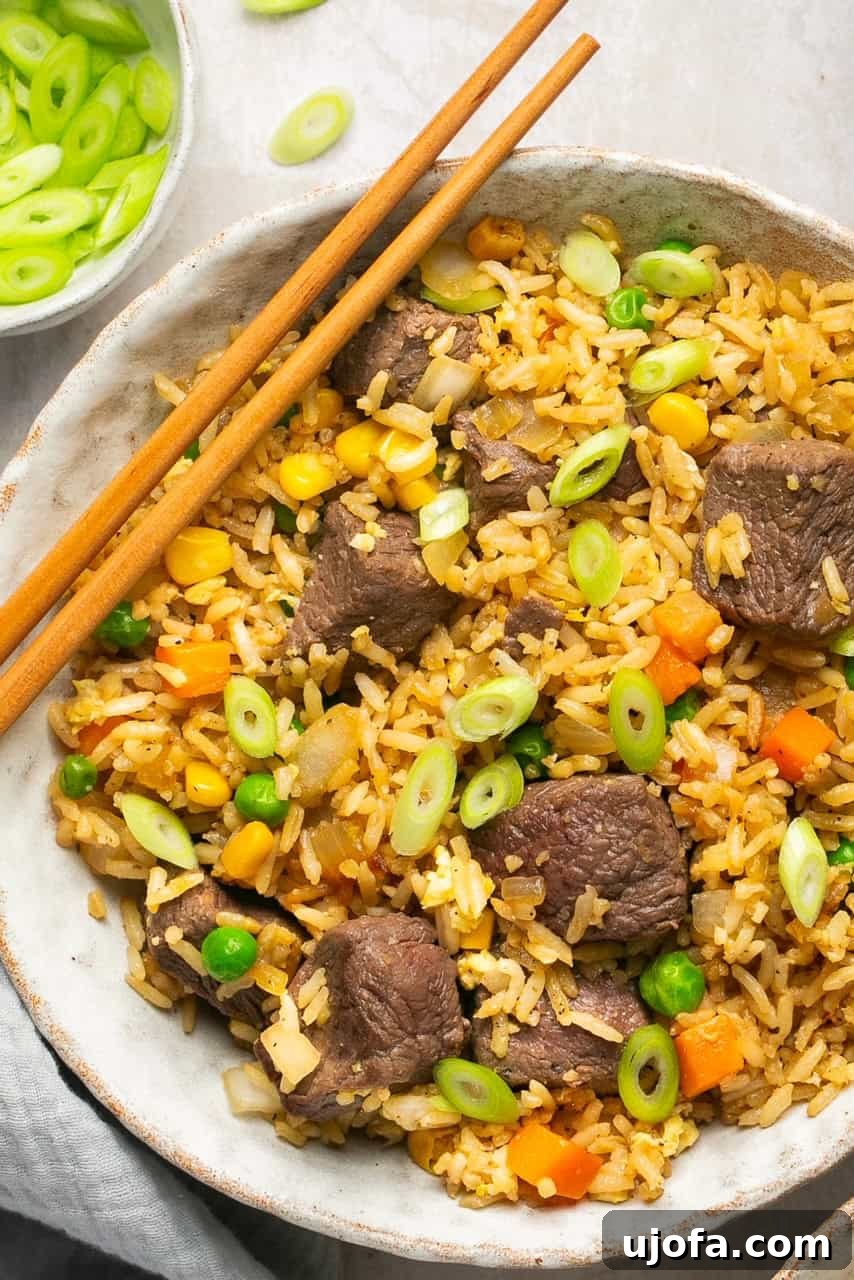
Common Questions About Steak Fried Rice (FAQs)
The absolute best way to make fried rice, achieving that perfect texture and avoiding sogginess, is to use day-old cooked rice that has been refrigerated. The cold, dry grains separate easily and get delightfully crispy when stir-fried over high heat. While fresh rice can work in a pinch, it tends to be moister and can lead to a slightly stickier or softer result. If using fresh rice, spread it thinly on a tray and chill it in the fridge for at least an hour before cooking.
For this recipe, I highly recommend using sirloin steak. It’s a great balance of tenderness and beefy flavor, and it cooks beautifully when cut into small cubes and seared quickly. Other excellent choices that would also be delicious include New York Strip or Filet Mignon. These cuts are tender enough to stand up to the high-heat cooking required for fried rice, ensuring every bite is a pleasure.
Absolutely! To make this recipe vegetarian, simply omit the steak and replace it with additional eggs or a plant-based protein like pan-fried tofu or tempeh cubes. For a fully vegan version, skip both the steak and eggs, using extra vegetables and a protein like seasoned tofu or tempeh. Ensure your coconut aminos (or Tamari) and other ingredients are vegan-friendly.
If you love a spicy kick, there are several ways to customize this recipe. You can add a teaspoon of sriracha or chili garlic sauce to the marinade mixture for the steak. Alternatively, you can stir in some red pepper flakes or a few drops of hot sesame oil directly into the wok with the vegetables, or drizzle some hot sauce over your individual serving.
Yes, you can certainly use brown rice for a more fiber-rich and wholesome alternative. Just like white rice, it’s best to use day-old, chilled brown rice for the optimal texture. Keep in mind that brown rice has a slightly chewier texture and a nuttier flavor, which will subtly change the overall taste of the fried rice, but it remains a delicious and healthier option.
More Gluten-Free Asian-Inspired Recipes You’ll Love
If you enjoyed this easy steak fried rice, be sure to explore more of our delicious and healthy Asian-inspired recipes:
Paleo Shrimp Fried Rice
Pork Fried Cauliflower Rice
Healthy Egg Roll in a Bowl
30-Minute Salmon Stir Fry
Beef & Broccoli Ramen Stir Fry
Love this recipe? Please leave a 5-star 🌟🌟🌟🌟🌟 rating in the recipe card below & a review in the comment section. Or, follow me on Facebook, Pinterest or Instagram today!
20-Minute Steak Fried Rice Recipe (Gluten-Free)
Equipment
-
Wok or large skillet
Ingredients
- 2 lbs sirloin steak, cut into cubes
- ½ cup coconut aminos
- 2 tsp sesame oil
- 1 tsp rice vinegar
- 1 tsp powdered ginger
- ½ tsp salt
- ½ tsp pepper
- 2 tbsp avocado oil, divided
- 1 onion, diced
- 2 cloves minced garlic
- 2 cups mixed vegetables, peas, carrots, corn and green beans
- 3 cups white rice, cooked. Preferably day-old.
- 2 eggs
- Green onions, sliced, for garnish
- salt & pepper, to taste for finished dish
Instructions
-
Combine the coconut aminos, sesame oil, rice vinegar, ginger, ½ tsp salt & ½ tsp pepper in a bowl and whisk to combine.
-
Add cubed steak to a bowl. Pour half the sauce over the steak and toss to combine. Set the remaining sauce aside. Let the steak marinate for 10 minutes (up to overnight).
-
Set all of your remaining ingredients next to the stove. Add 1 tbsp avocado oil to a large skillet or wok and heat over medium high heat until VERY hot.
-
Add the steak to the hot pan (trying to leave any marinade behind in the bowl) and cook for 2-4 minutes, or until steak is cooked to desired doneness. Remove and set aside.
-
Add remaining tbsp avocado oil to the wok. Add the onion and garlic and cook for 1-2 minutes. Add in the mixed veggies (from frozen) and saute for 1-2 more minutes.
-
Add in the rice plus the remaining sauce that you set aside earlier. Stir for 1-2 minutes, then add in the cooked steak and toss to combine.
-
Push the rice aside to make space in the middle of the wok and crack the eggs into it. Use your spatula to break up the eggs and slightly scramble them. Toss the eggs with the rice until the eggs are cooked through.
-
Add an additional ½ tsp salt + pepper to taste and toss everything together. Remove the rice from heat and add diced green onions to garnish. Add more coconut aminos on top, if desired. Enjoy!
Notes
Expert Tips & Variations
- Protein: This recipe is to make steak fried rice, but you can substitute bite-size chicken breast pieces or pork if desired. Shrimp would also be delicious.
- Veggies: For this recipe, I used a vegetable mixture of peas, carrots, corn, and green beans. Feel free to add any additional vegetable as desired, such as broccoli, snow peas, bell peppers, cauliflower, etc. You can also use leftover vegetables if that’s what you have on hand.
- Cooked Rice: I prefer to use day-old rice; however, you can also cook a fresh batch and use it in this recipe. I recommend long grain rice, like jasmine rice. Basmati rice will also work. I used white rice for this recipe, but for a more fiber-rich alternative, brown rice will also work.
Storage Tips
Leftovers can be stored in an airtight container in the fridge. Reheat in a skillet over the stovetop on medium-high heat with a little butter until warmed through, about 2-3 minutes. You can also microwave, but I recommend the stove top for best results. Serve with sliced green onions and salt and pepper.
Nutrition
All nutrition facts are an estimate and automatically calculated. While I fact check them using My Fitness Pal, please note that they may not always be 100% accurate and depend on ingredients used. Weigh your total and divide by the number of servings for the most accurate grams per serving size.