
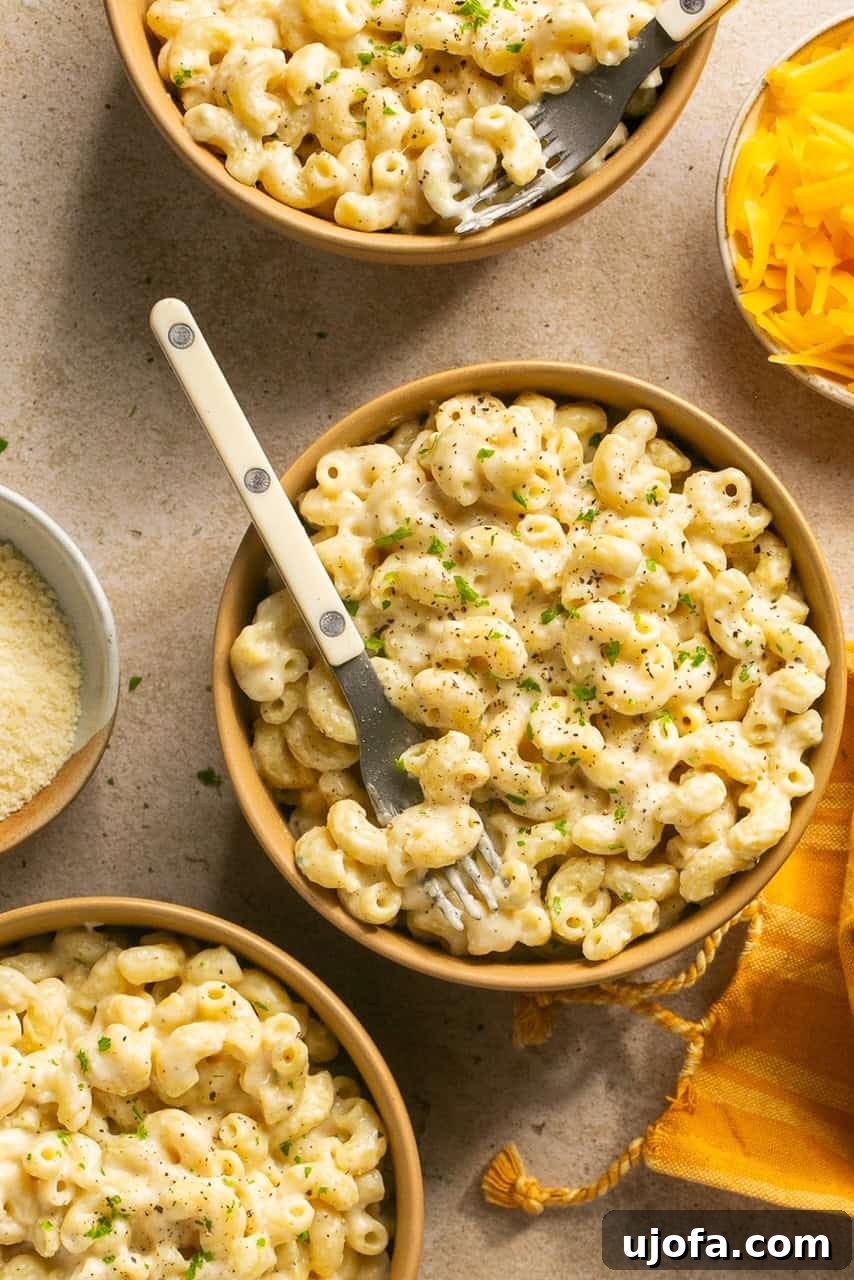
Craving the ultimate comfort food but looking for a healthier, protein-packed twist? Look no further! This **High-Protein Cottage Cheese Mac and Cheese** recipe transforms a classic favorite into a guilt-free, nutrient-dense meal that’s both incredibly creamy and satisfying. Say goodbye to boxed versions and hello to a homemade dish that’s ready in just 20 minutes, making it the perfect solution for busy weeknights and a delightful treat for the entire family.
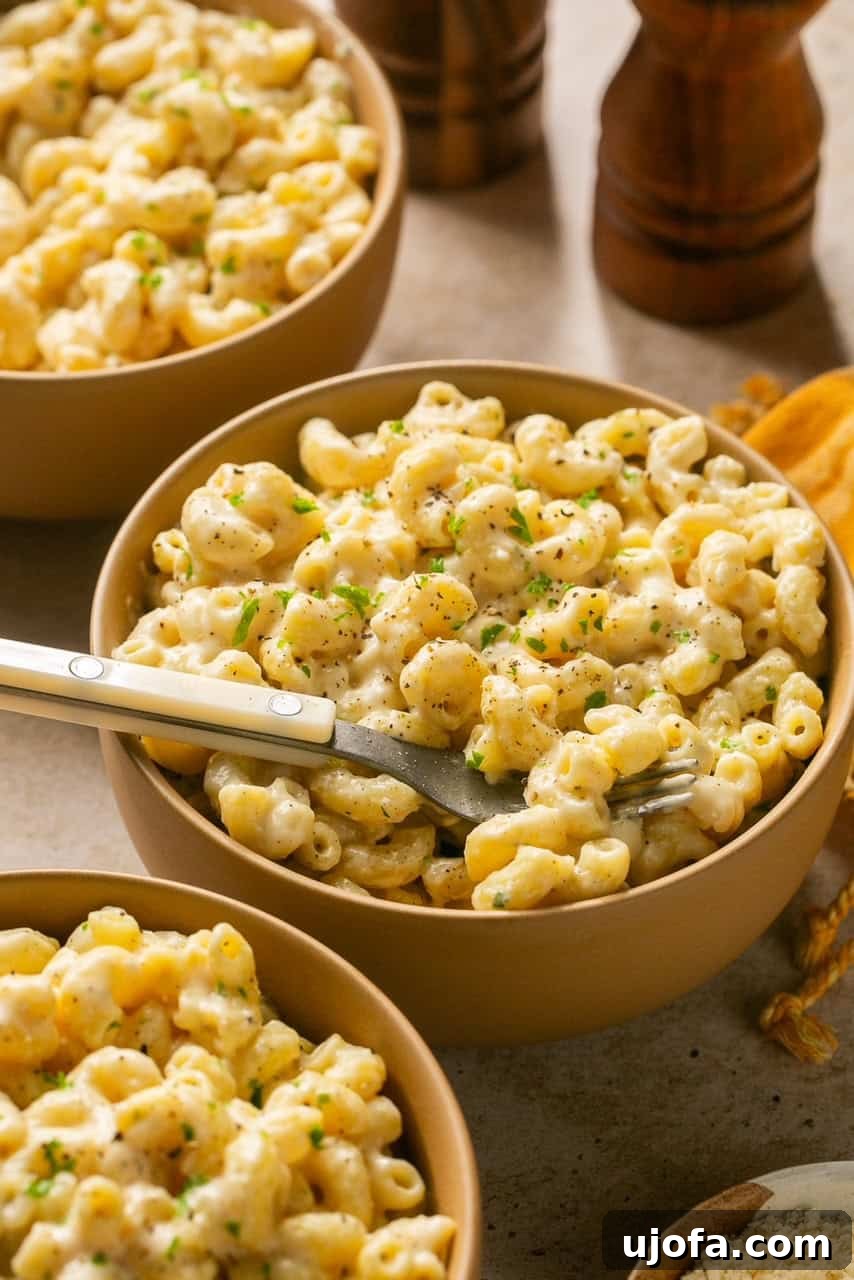
Why Our High-Protein Mac and Cheese is a Must-Try
Macaroni and cheese holds a special place in the hearts of many, a timeless comfort food that evokes warmth and nostalgia. However, traditional versions, especially the store-bought boxed varieties, often fall short on nutritional value, offering high calories, fat, and carbs with minimal protein. As someone constantly seeking easy ways to enhance our family’s protein intake, I’m thrilled to share this innovative approach to mac and cheese that truly stands out.
Our homemade version introduces a revolutionary ingredient: cottage cheese. Blended until silky smooth, it forms the base of an unbelievably creamy, rich cheese sauce. This isn’t just about adding protein; it’s about achieving an unparalleled texture and depth of flavor that rivals any classic mac and cheese. Combined with a luscious blend of sharp cheddar and savory Parmesan, plus a medley of carefully selected spices, this sauce coats every piece of elbow macaroni (gluten-free or regular) in pure cheesy goodness. The result is a dish that’s not only incredibly delicious but also boasts an impressive 17 grams of protein per serving! It’s an ideal way to sneak in extra nutrients for both adults and picky eaters, making healthy eating enjoyable and effortless.
The Unbeatable Benefits of Protein-Packed Comfort Food
Incorporating more protein into your diet is essential for numerous health reasons, from supporting muscle growth and repair to promoting satiety and stable energy levels throughout the day. This cottage cheese mac and cheese goes beyond simply tasting good; it’s designed to fuel your body effectively. With 17 grams of protein per serving, it transforms what is typically a side dish into a substantial main course. This makes it an excellent choice for active individuals, growing children, or anyone aiming to maintain a balanced diet without sacrificing the joy of comfort food. It’s truly a win-win, offering a satisfying meal that contributes positively to your nutritional goals.
Essential Ingredients for Your Creamy Mac
Crafting the perfect high-protein mac and cheese begins with selecting the right ingredients. Each component plays a vital role in achieving that desirable creamy texture and rich flavor. Here’s a detailed look at what you’ll need and why:
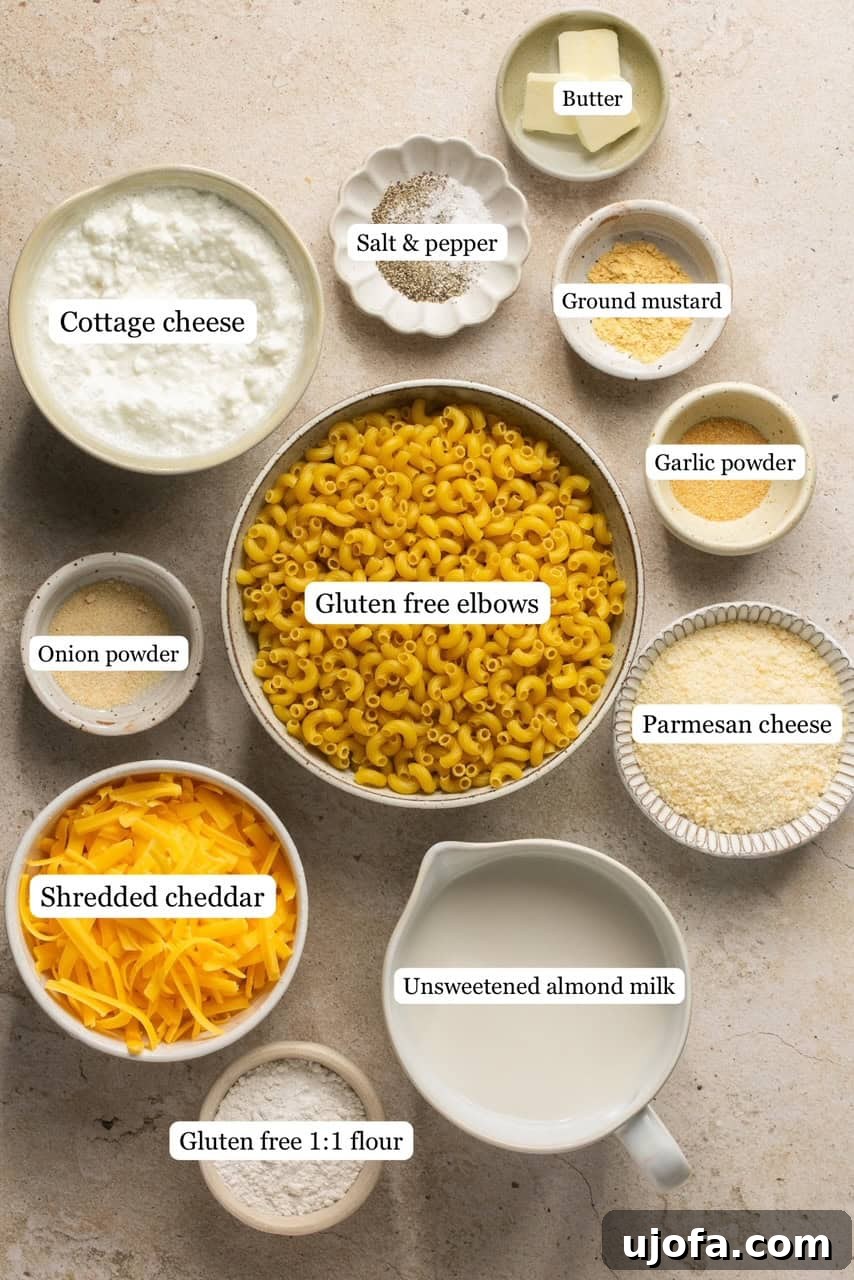
- Gluten-Free Elbow Pasta: While elbow macaroni is classic, feel free to use your favorite pasta shape. For an additional protein boost, consider chickpea pasta varieties. If you don’t require a gluten-free diet, regular pasta works perfectly.
- Unsalted Butter: The foundation of our roux, unsalted butter allows you to control the overall saltiness of the dish.
- Gluten-Free 1:1 Flour: Essential for thickening the sauce, this all-purpose gluten-free flour blend (such as King Arthur Baking brand) ensures a smooth and consistent consistency. Regular all-purpose flour can be used if you’re not gluten-intolerant.
- Unsweetened Almond Milk: Provides a light, creamy base without overpowering the cheese flavors. Whole milk or low-fat dairy milk can also be used, depending on your dietary preferences for a richer or lighter sauce.
- Salt and Black Pepper: Fundamental seasonings that enhance all other flavors in the sauce. Adjust to your personal taste.
- Garlic Powder and Onion Powder: These pantry staples add a savory depth and aromatic complexity to the cheese sauce without the need for sautéing fresh aromatics, saving you time.
- Ground Mustard: A secret ingredient often found in classic mac and cheese recipes. It doesn’t make the sauce taste like mustard but rather amplifies the savory, umami notes of the cheese, making it taste even cheesier.
- Cottage Cheese: The star of our high-protein show! You can use non-fat, low-fat, or full-fat cottage cheese. Blending it completely eliminates the curds, creating a smooth, velvety base for the sauce.
- Shredded Cheddar Cheese: Provides that quintessential mac and cheese flavor. Choose sharp cheddar for a more pronounced tang or mild for a subtler taste. Grating your own block of cheese offers superior melting and texture compared to pre-shredded, which often contains anti-caking agents, but pre-shredded works for convenience.
- Parmesan Cheese: Adds a salty, nutty, and complex flavor profile that complements the cheddar and deepens the overall cheese experience.
Step-by-Step Guide to Crafting the Ultimate High-Protein Mac and Cheese
Making this creamy, protein-packed mac and cheese is surprisingly simple and quick. Follow these easy steps to achieve a dish that will quickly become a family favorite.
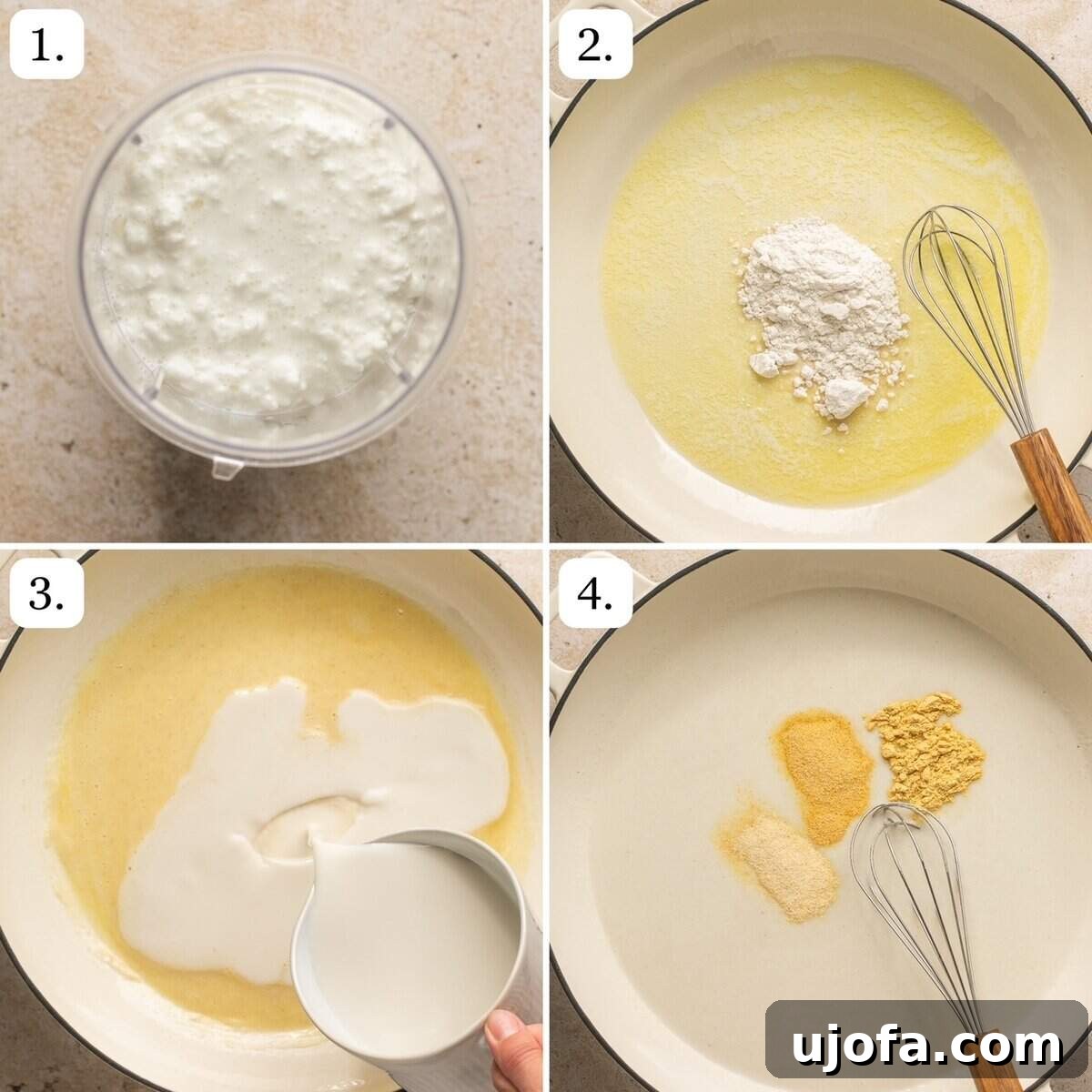
Step 1: Prepare Your Cottage Cheese Base
In a blender or food processor, add the cottage cheese. Blend until it reaches a completely smooth, creamy, and lump-free consistency. This is key to ensuring a velvety sauce. Once smooth, set it aside.
Step 2: Cook the Pasta and Start Your Roux
Bring a large pot of lightly salted water to a rolling boil over medium-high heat. Add your chosen pasta (elbow macaroni or another shape) and cook according to the package directions until al dente. For perfect pasta, I recommend cooking it for one minute less than suggested. Drain thoroughly once cooked.
While the pasta is cooking, melt the butter in a large, deep skillet over medium heat. Once the butter has melted and is bubbling gently, sprinkle in the gluten-free flour. Whisk continuously for about 1-2 minutes to form a smooth roux, cooking out the raw flour taste.
Step 3: Gradually Add Milk to Create a Velvety Base
Slowly pour the almond milk (or your milk of choice) into the roux, whisking constantly to prevent lumps. Continue whisking as the mixture heats up over medium heat, ensuring it becomes smooth and homogenous.
Step 4: Season and Thicken the Sauce
Once the milk and roux mixture is smooth, add the salt, black pepper, garlic powder, onion powder, and ground mustard. Continue whisking consistently. The sauce will begin to bubble and thicken over about 5 minutes. Keep whisking until it reaches your desired creamy consistency, thick enough to coat the back of a spoon.
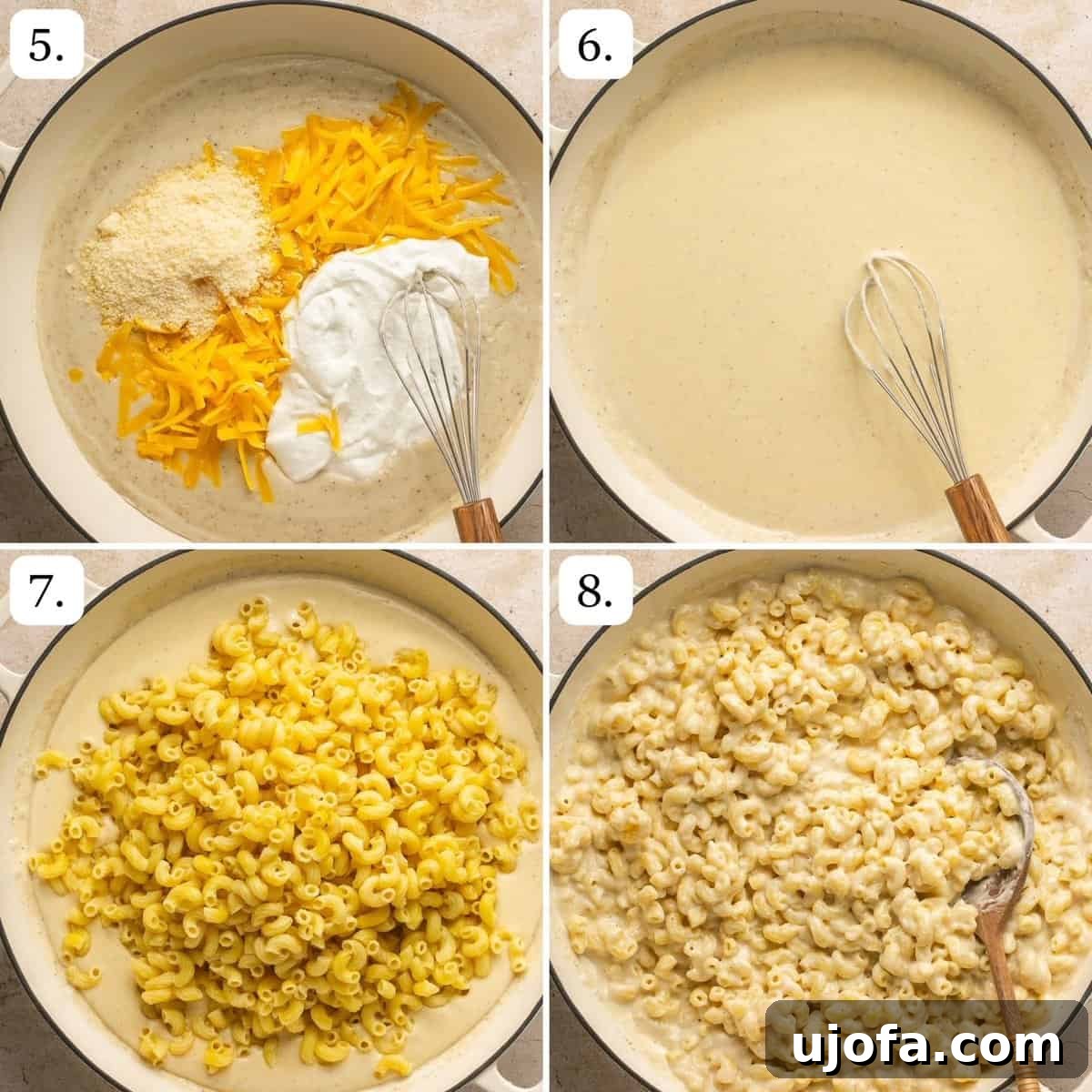
Step 5: Incorporate the Cheeses
Remove the skillet from the heat. This is crucial to prevent the cheese from becoming oily or grainy. Stir in the shredded cheddar cheese, the previously blended smooth cottage cheese mixture, and the Parmesan cheese. Whisk vigorously until all the cheeses are fully melted and the sauce is completely smooth and creamy.
Step 6: Combine with Pasta and Serve
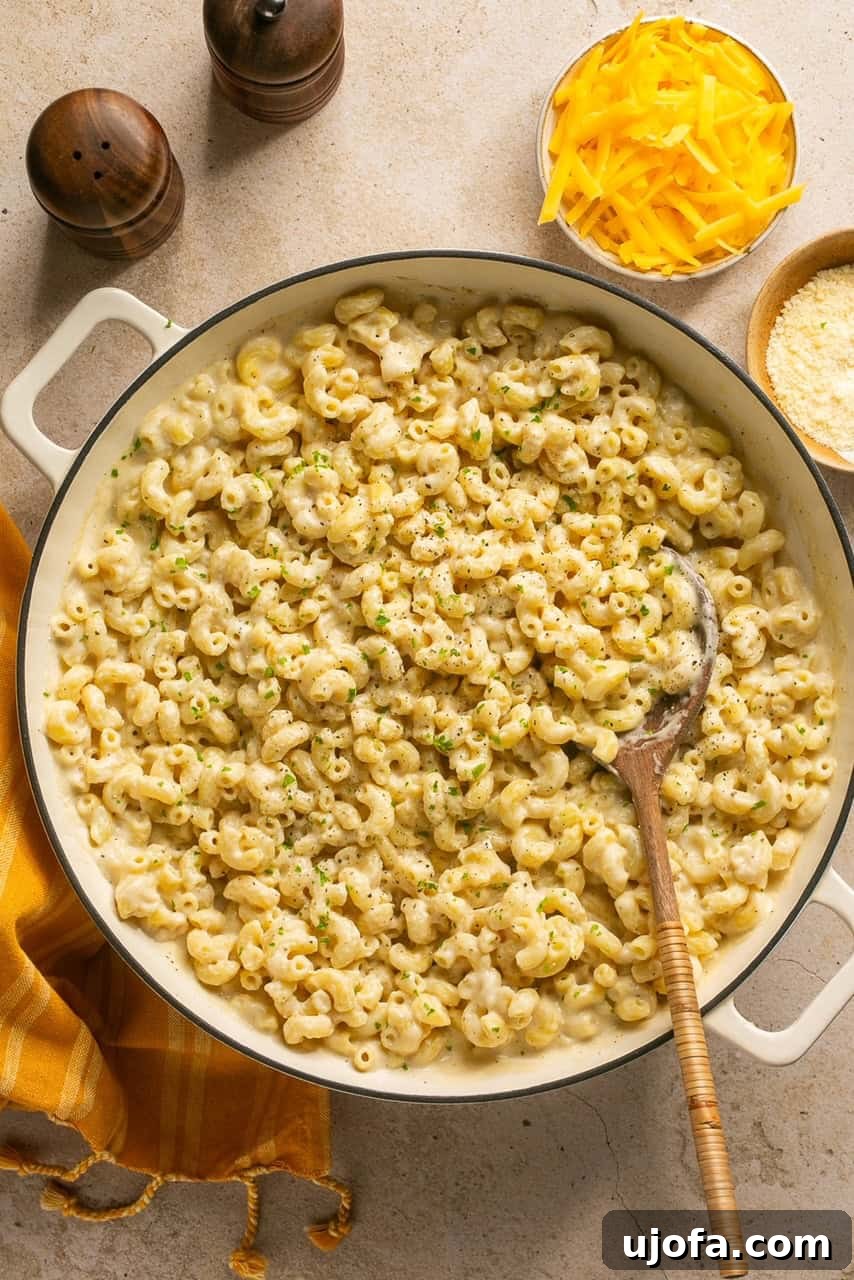
Add the cooked and drained pasta directly into the skillet with the creamy cheese sauce. Stir gently but thoroughly, ensuring every piece of macaroni is lovingly coated in the rich, cheesy goodness. Serve immediately, topped with a sprinkle of additional shredded cheddar cheese and a dash of freshly ground black pepper for an extra layer of flavor and presentation.
Expert Tips for Perfecting Your High-Protein Mac and Cheese
Achieving mac and cheese perfection is easy with a few simple tricks. These expert tips will help you customize your dish, prevent common issues, and make it truly your own.
- Pasta Perfection: Don’t limit yourself to elbow pasta! Campanelle, cavatappi, or even penne can hold the creamy sauce beautifully. For an even bigger protein punch, especially if you’re not gluten-free, consider using chickpea pasta or lentil pasta. Always cook your pasta al dente, as it will continue to cook slightly when combined with the hot sauce.
- Cheese Combinations: While cheddar and Parmesan are a classic pairing, feel free to experiment! Monterey Jack, Colby, Gruyère, or even a touch of smoked gouda can add wonderful complexity and flavor to your cheese sauce. Freshly grated cheese melts more smoothly than pre-shredded varieties, which often contain anti-caking agents that can sometimes affect the sauce’s texture.
- Preventing a Grainy Sauce: The key to a smooth cottage cheese sauce is thorough blending. Ensure your cottage cheese is completely smooth before adding it to the roux. Also, always remove the sauce from the heat before stirring in the cheeses to prevent them from seizing or becoming oily. If your sauce appears too thick, a splash of warm milk can help thin it to your desired consistency.
- Make it Dairy-Free (and Vegan!): While cottage cheese is the star, a delicious dairy-free version is possible. Substitute vegan butter for regular butter, use dairy-free cheese shreds, and opt for a plant-based milk (like unsweetened almond or cashew milk). For the cottage cheese alternative, I recommend using a tub of Kite Hill cream cheese, which offers a similar tangy, creamy base when blended.
- Boost the Flavor: For an extra kick, add a pinch of cayenne pepper or a dash of hot sauce to the sauce. Smoked paprika can also add a delightful smoky depth.
- Add-Ins for Variety: This mac and cheese is incredibly versatile. Stir in steamed broccoli florets, peas, or sautéed spinach for added vegetables. Cooked chicken, ham, or crispy bacon bits can transform it into an even heartier meal.
Storage and Reheating Tips
This high-protein mac and cheese is so good, you might not have leftovers! But if you do, here’s how to store and reheat it to maintain its deliciousness.
Store any leftover mac and cheese in an airtight container in the refrigerator for up to 3-4 days. To reheat, you can use the microwave in short bursts, stirring occasionally, or gently warm it on the stovetop over low heat. If the sauce seems too thick or dry after chilling, add a splash of milk or a small knob of butter during reheating to restore its creamy texture.
Frequently Asked Questions About Cottage Cheese Mac and Cheese
Here are answers to some common questions you might have about making this delicious and healthy mac and cheese:
- Can I use low-fat or non-fat cottage cheese?
Absolutely! You can use non-fat, low-fat, or full-fat cottage cheese. The main difference will be in the fat content and a slight variation in richness, but the blending process will still yield a wonderfully smooth sauce.
- Do I have to blend the cottage cheese?
Yes, blending the cottage cheese is crucial for achieving that signature creamy, smooth sauce without any curdy texture. It’s what makes this recipe unique and delicious, indistinguishable from traditional creamy mac and cheese sauces.
- Can I freeze this mac and cheese?
While you can freeze mac and cheese, the texture of the sauce can sometimes change after thawing and reheating, potentially becoming a bit grainy. For best results, I recommend enjoying it fresh or refrigerating leftovers for up to 3-4 days.
- What can I serve with high-protein mac and cheese?
This dish is hearty enough on its own, but it pairs wonderfully with a fresh green salad, steamed vegetables like asparagus or green beans, or even a side of roasted chicken or grilled fish if you’re looking for an extra protein boost. The slight tang from the cottage cheese also complements brighter, acidic sides.
- How can I make this spicier?
To add a kick, consider incorporating a pinch of cayenne pepper or red pepper flakes into your cheese sauce. A dash of your favorite hot sauce stirred in at the end can also provide a pleasant heat.
Explore More High-Protein Cottage Cheese Recipes
If you love the versatility and nutritional benefits of cottage cheese, you’ll be thrilled to discover more delicious ways to incorporate it into your meals. Here are some other fantastic recipes featuring this versatile ingredient:
- Viral Cottage Cheese Queso Dip
- High Protein Cottage Cheese Alfredo Sauce
- Easy Chocolate Protein Cheesecakes
- Cheesy Buffalo Chicken Pasta
- Cottage Cheese Ranch Dip
Easy High Protein Cottage Cheese Mac and Cheese
By: Mary Smith
Prep Time: 5 mins
Cook Time: 15 mins
Total Time: 20 mins
Yield: 6 servings
This cottage cheese mac and cheese is a high protein pasta recipe made with a delicious creamy cheese sauce and elbow macaroni pasta. All you need is a few simple ingredients, and 20 minutes, making busy weeknights a breeze!
Equipment
- Whisk
- Blender
Ingredients
- 12 oz gluten-free elbow pasta
- 3 tbsp butter
- 3 tbsp gluten-free 1:1 flour (e.g., King Arthur Baking brand)
- 2 cups unsweetened almond milk (or regular low-fat milk)
- ½ tsp salt
- ½ tsp pepper
- 1 tsp garlic powder
- 1 tsp onion powder
- 1 tsp ground mustard
- 1 cup cottage cheese
- 1 cup shredded cheddar cheese
- ¼ cup Parmesan cheese
Instructions
- Blend the cottage cheese in a blender until smooth. Set aside.
- Cook pasta according to package directions and drain.
- Melt the butter in a large deep skillet over medium heat. Add the gluten-free flour and whisk to form a roux.
- Slowly pour in the milk and continue whisking over medium heat.
- Add in the salt, pepper, garlic powder, onion powder, and mustard powder. Continue whisking until it bubbles and thickens, about 5 mins.
- Turn off the heat. Stir in the shredded cheddar, blended cottage cheese, and Parmesan. Whisk until smooth.
- Add in the cooked pasta. Serve topped with a little more shredded cheddar and black pepper.
Notes
Expert Tips
- Pasta: Feel free to use your favorite gluten-free pasta—chickpea pasta will add even more protein if you’re looking for an extra boost. If you’re not gluten-free, use your favorite regular pasta of choice.
- Dairy-Free: For a dairy-free version, use vegan butter, dairy-free cheese shreds, 1 tub Kite Hill cream cheese (as a cottage cheese alternative), and plant-based milk.
- Nutrition facts are for ⅙ of the total recipe.
Storage Tips
Store leftovers in an airtight container in the refrigerator for up to 3-4 days. Reheat in the microwave or over the stovetop with some butter or milk.
Nutrition
Calories: 394kcal | Carbohydrates: 47g | Protein: 17g | Fat: 16g | Saturated Fat: 9g | Polyunsaturated Fat: 1g | Monounsaturated Fat: 4g | Trans Fat: 0.2g | Cholesterol: 38mg | Sodium: 722mg | Potassium: 66mg | Fiber: 2g | Sugar: 1g | Vitamin A: 413IU | Vitamin C: 0.1mg | Calcium: 313mg | Iron: 1mg
All nutrition facts are an estimate and automatically calculated. While I fact check them using My Fitness Pal, please note that they may not always be 100% accurate and depend on ingredients used. Weigh your total and divide by the number of servings for the most accurate grams per serving size.
Did you make this recipe? We’d love to hear from you! Rate & comment below, and don’t forget to tag us on Instagram @maryswholelife or follow us on Facebook and Pinterest!
This recipe may contain affiliate links.