
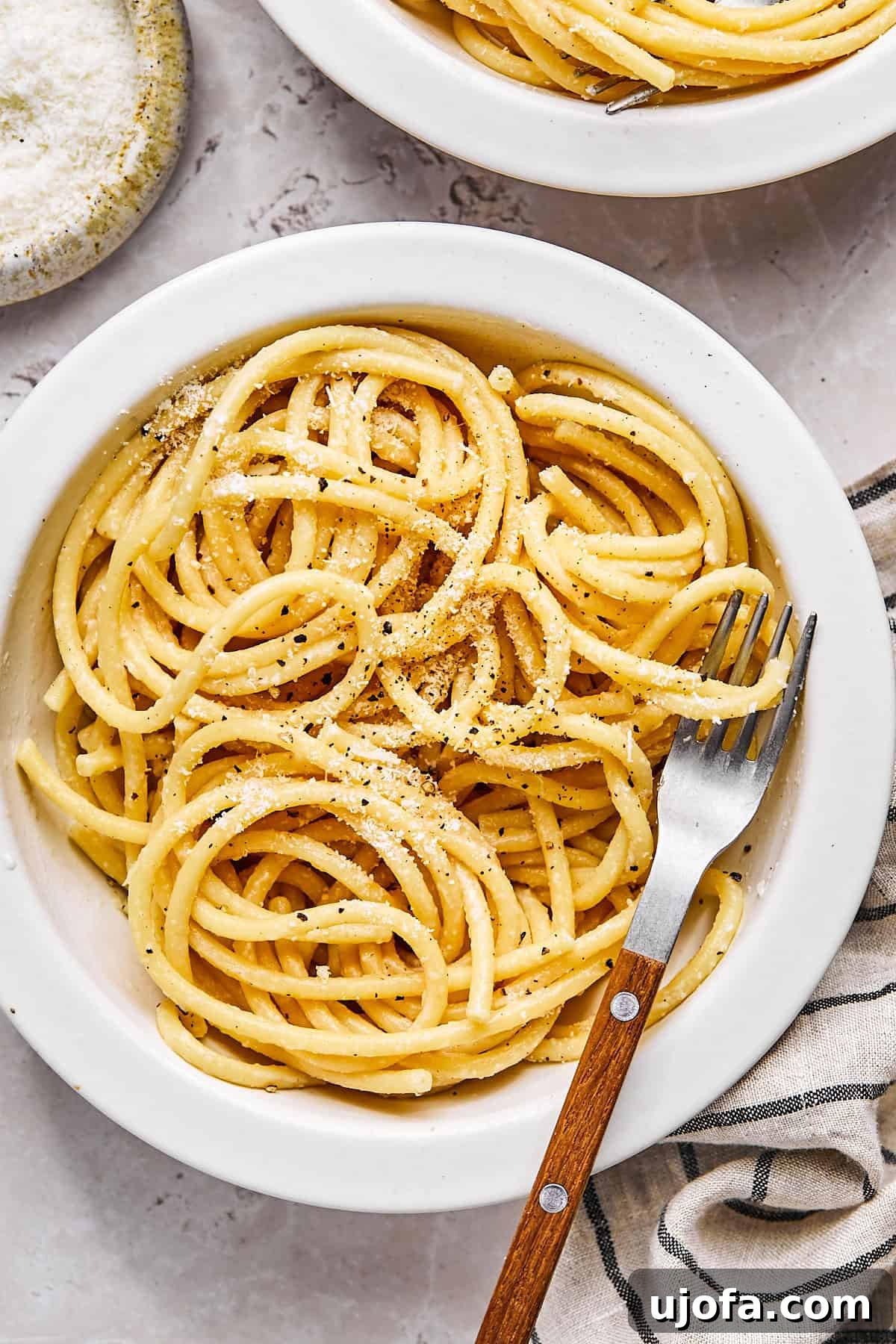
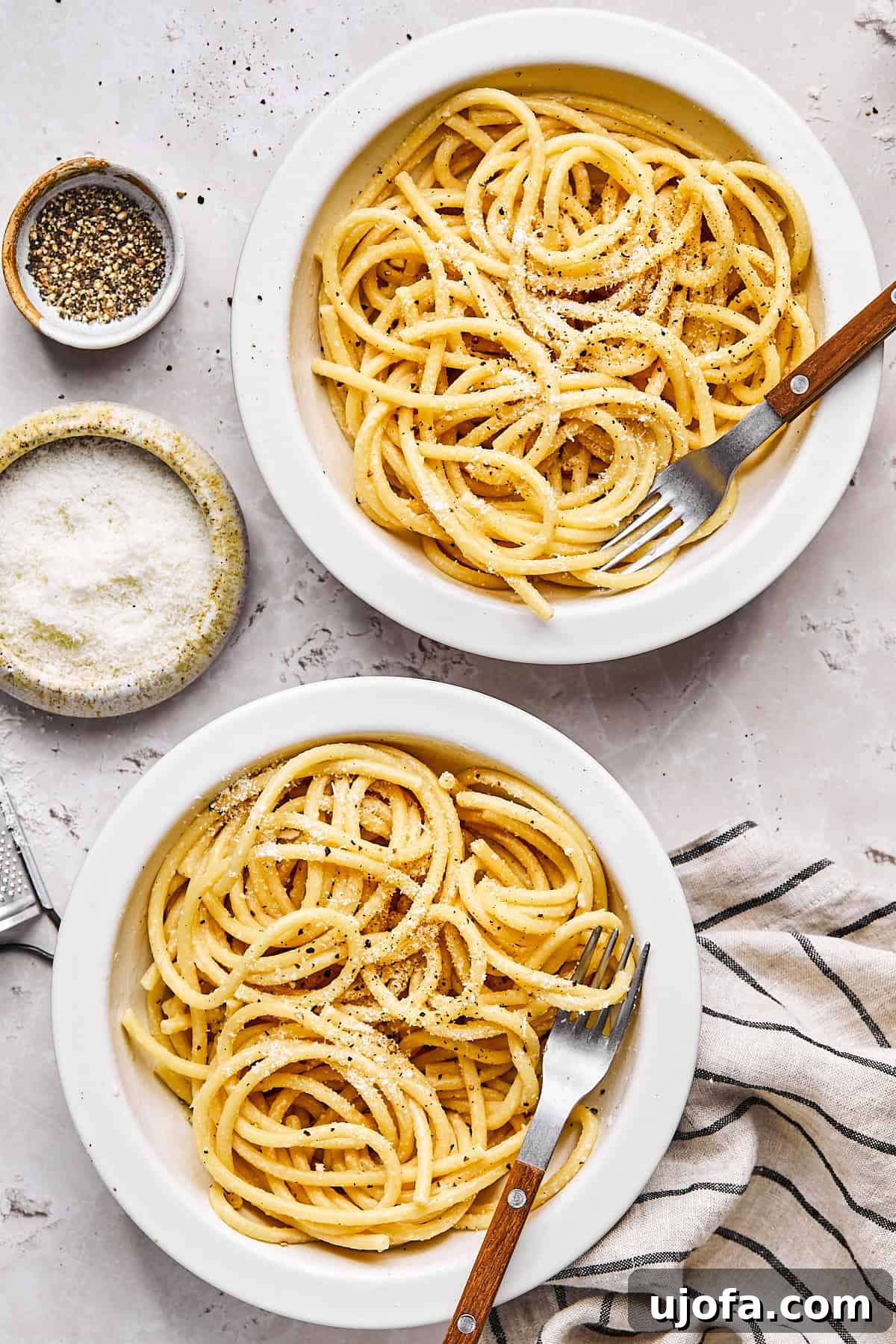
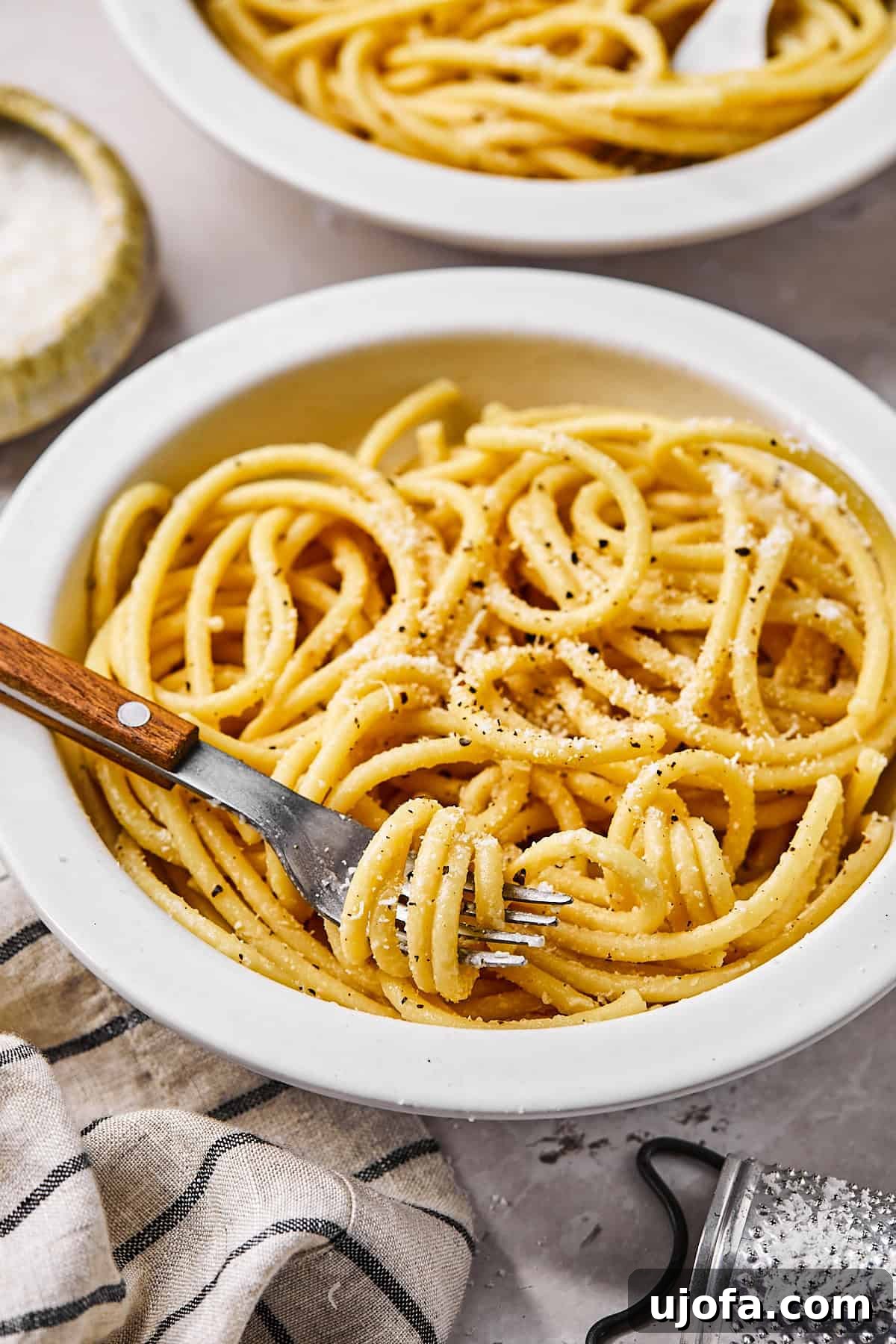
Bucatini Cacio e Pepe is a celebrated Roman pasta dish, revered for its elegant simplicity and incredibly rich, creamy texture. This classic Italian masterpiece is traditionally crafted with just a few core ingredients: bucatini noodles, finely grated Pecorino Romano cheese, a generous amount of freshly cracked black pepper, and the essential starchy pasta water, often enhanced with a touch of butter. Our version, however, offers a delightful and equally satisfying gluten-free twist, utilizing high-quality Jovial bucatini to ensure everyone can indulge in this comforting, deeply flavorful experience.
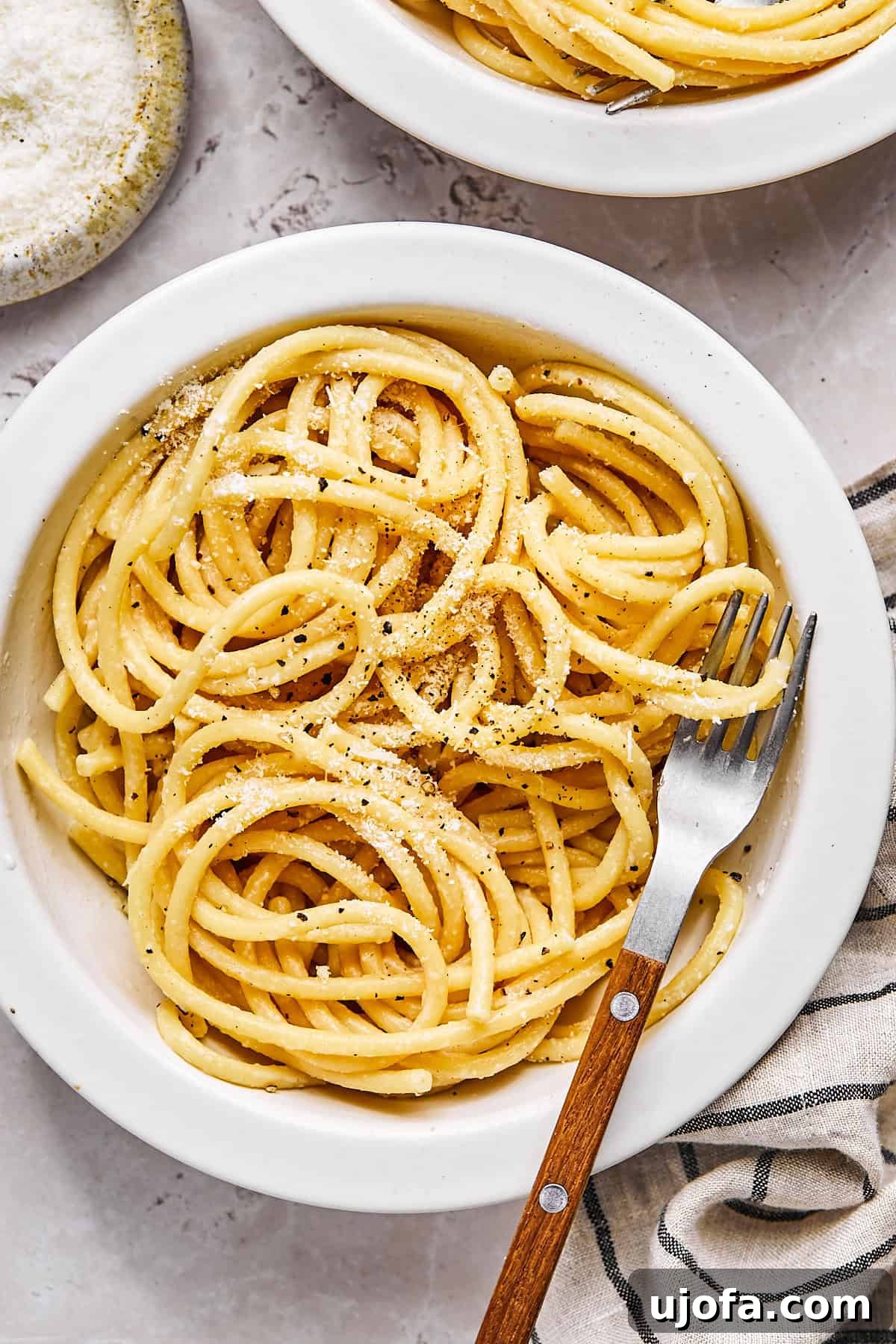
Chef’s Insights: If you’re encountering Bucatini Cacio e Pepe for the very first time, prepare yourself for a truly extraordinary culinary journey. This iconic dish proves that gourmet flavors don’t require an extensive ingredient list. With just a handful of humble components—when treated with care and proper technique—they magically transform into the most luxurious, intensely cheesy, and beautifully peppery pasta you’ll ever have the pleasure of twirling onto your fork. It’s a testament to Italian cooking philosophy: quality ingredients, masterfully prepared.
Why You’ll Fall in Love with This Gluten-Free Cacio e Pepe Recipe
This particular recipe for Bucatini Cacio e Pepe isn’t just a meal; it’s an invitation to a warm, comforting embrace. It’s rich in flavor, incredibly satisfying, and remarkably approachable, even if you’re a complete novice in the kitchen or trying Cacio e Pepe for the first time. The magic lies in the harmonious interplay of Pecorino Romano cheese, assertive black peppercorns, and the natural emulsion created by starchy pasta water. The result is a velvety, glossy, restaurant-quality sauce that requires absolutely no heavy cream, relying instead on pure technique and the inherent creaminess of the ingredients.
For this gluten-free adaptation, we specifically opted for Jovial gluten-free bucatini. We’ve found that these robust, thick noodles stand up beautifully to the tossing and coating process, ensuring the sauce clings perfectly to every strand, just like traditional wheat pasta. This means you won’t sacrifice texture or satisfaction. The hollow center of bucatini is particularly adept at capturing every drop of the exquisite sauce, making each bite an explosion of flavor. To achieve the absolute best results, a critical step is to always grate your Pecorino Romano cheese fresh. Pre-grated cheeses often contain anti-caking agents that can hinder smooth melting, leading to a clumpy or uneven sauce that lacks that signature Roman silkiness.
If you’ve enjoyed the delightful comfort of our Easy Marry Me Chicken Pasta or the savory notes of our Sausage Broccolini Pasta, this Bucatini Cacio e Pepe delivers a similar carb-loving coziness. However, it distinguishes itself with an even simpler ingredient list and a distinctively sharper, saltier, and more intensely peppery bite that truly awakens the palate. It’s a testament to the power of a few high-quality components coming together in perfect harmony, proving that extraordinary meals don’t need to be complicated.
Essential Ingredients for Authentic Cacio e Pepe
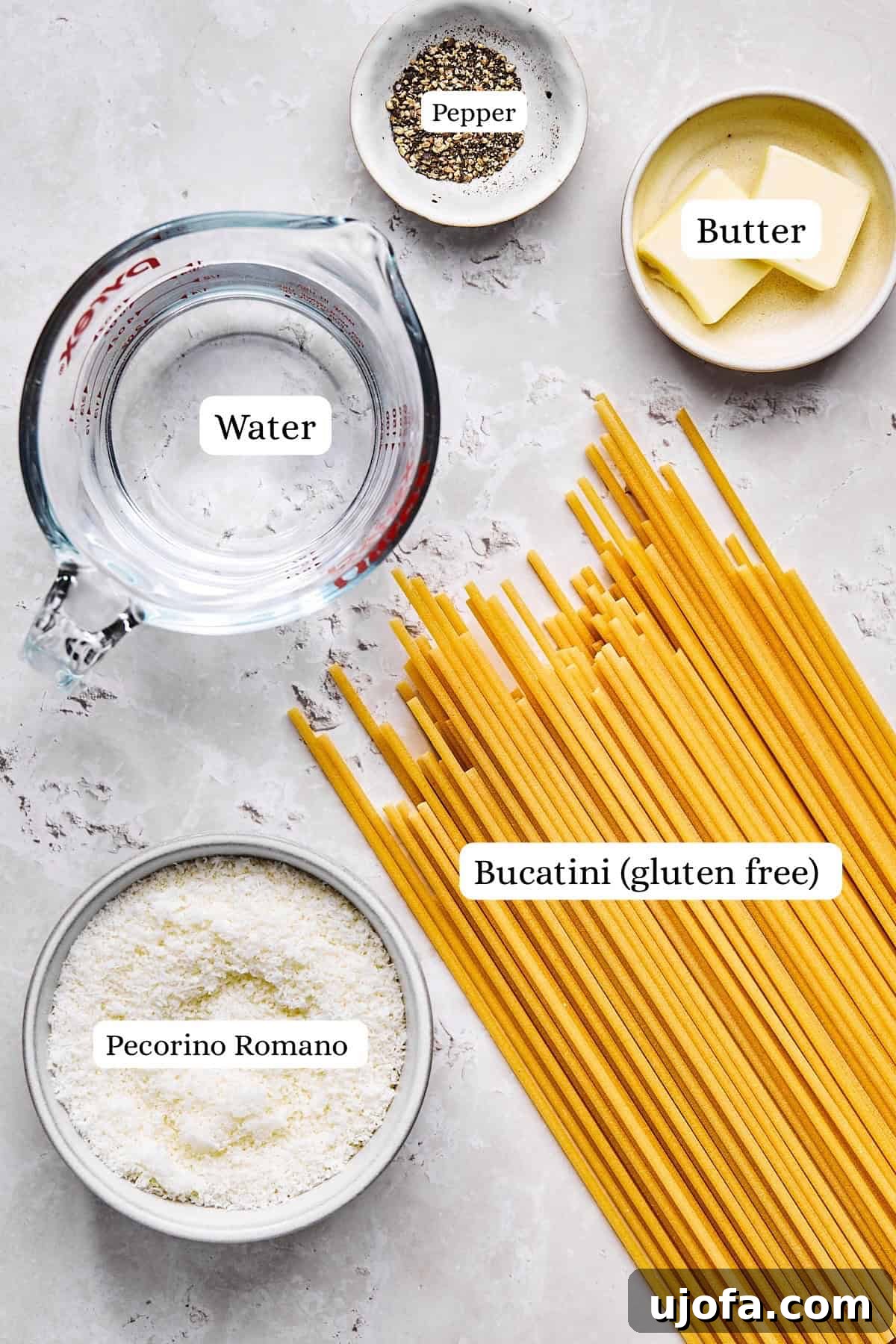
At its heart, this deceptively simple Roman dish relies on the quality and careful handling of just a few stellar ingredients. Each plays a vital role in creating that iconic, luxurious sauce:
- Bucatini Pasta: This thick, hollow pasta noodle, resembling a hollow spaghetti, is the traditional choice for Cacio e Pepe. Its unique shape is specifically designed to capture and hold onto the rich, creamy sauce, ensuring every mouthful is perfectly coated. For this gluten-free recipe, we highly recommend Jovial Foods bucatini for its excellent texture and cooking performance. To achieve maximum starch concentration, which is crucial for the sauce, we cook the pasta in slightly less water than usual. This concentrated starch is what gives the sauce its signature velvety “hug.”
- Pecorino Romano Cheese: This ingredient is non-negotiable for an authentic Cacio e Pepe. Pecorino Romano is a hard, salty sheep’s milk cheese with a sharper, tangier flavor profile than Parmesan. It is absolutely essential to use freshly grated cheese; pre-grated varieties often contain cellulose or other anti-caking agents that prevent it from melting smoothly, leading to a grainy or clumpy sauce. Use a Microplane grater to transform the cheese into light, fluffy snow. Before adding it to the pan, whisk this finely grated cheese with a splash of hot (but not boiling) pasta water. The slightly cooler water helps to prevent the cheese from clumping and kickstarts the emulsification process, ensuring a glossy, cohesive sauce.
- Unsalted Butter: While some traditional Roman recipes might omit butter, a tablespoon or two stirred in with the pepper significantly enhances the dish. It helps to temper the heat of the pan, preventing the cheese from seizing, and adds a subtle, silky richness and depth of flavor. Butter is the little secret that helps keep your sauce beautifully shiny and emulsified all the way to the very last forkful, contributing to that irresistible mouthfeel.
- Freshly Cracked Black Pepper: True to its name (“cacio” means cheese, “pepe” means pepper), black pepper is a co-star in this dish. Its pungent, aromatic notes are crucial. For the most intense flavor, use whole black peppercorns and crack them fresh, either in a mortar and pestle or a pepper mill. For an elevated experience, toast the freshly cracked peppercorns in your dry skillet over medium heat for about 30 seconds before adding them. They will become incredibly fragrant, starting to pop and release a distinct citrusy aroma, intensifying the “pepe” aspect of the dish.
- Reserved Starchy Pasta Water: This is arguably the most vital ingredient and the absolute secret to achieving that coveted glossy, cheesy, emulsified sauce without relying on any cream. As pasta cooks, it releases starch into the boiling water. This starchy water acts as a natural emulsifier, binding the cheese, butter, and pepper into a cohesive, luscious sauce. Make sure to scoop out at least a mugful of this precious liquid right before you drain the pasta – this is when the water is at its peak starchiness. Let it cool off the rolling boil for just a few seconds before incorporating it. This prevents the cheese from cooking too quickly or seizing, allowing it to gracefully marry with the pasta and create that perfect, velvety texture.
Crafting Your Gluten-Free Bucatini Cacio e Pepe: A Step-by-Step Guide
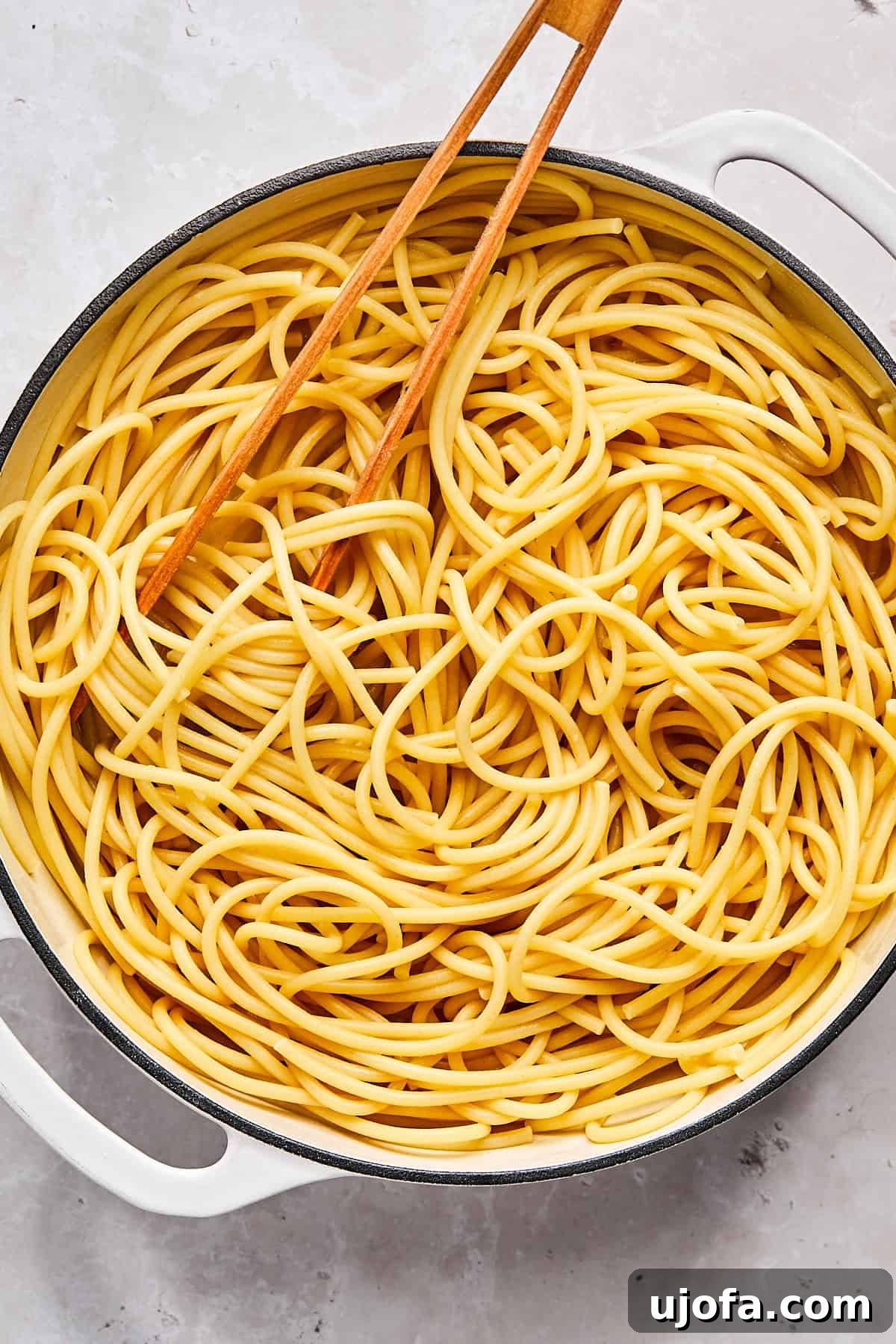
Step 1: Cook the Bucatini to Perfection
Begin by bringing a large pot of generously salted water to a rolling boil. Add your bucatini pasta. For gluten-free varieties like Jovial, cook the pasta slightly al dente, which means it should still have a firm bite. For Jovial bucatini, this typically takes about 5 minutes, but always refer to your package instructions as cooking times can vary significantly between brands. Just before draining, ensure you reserve at least 1 cup of the starchy pasta water. This liquid gold is essential for creating the sauce.
Step 2: Prepare the Base for the Sauce
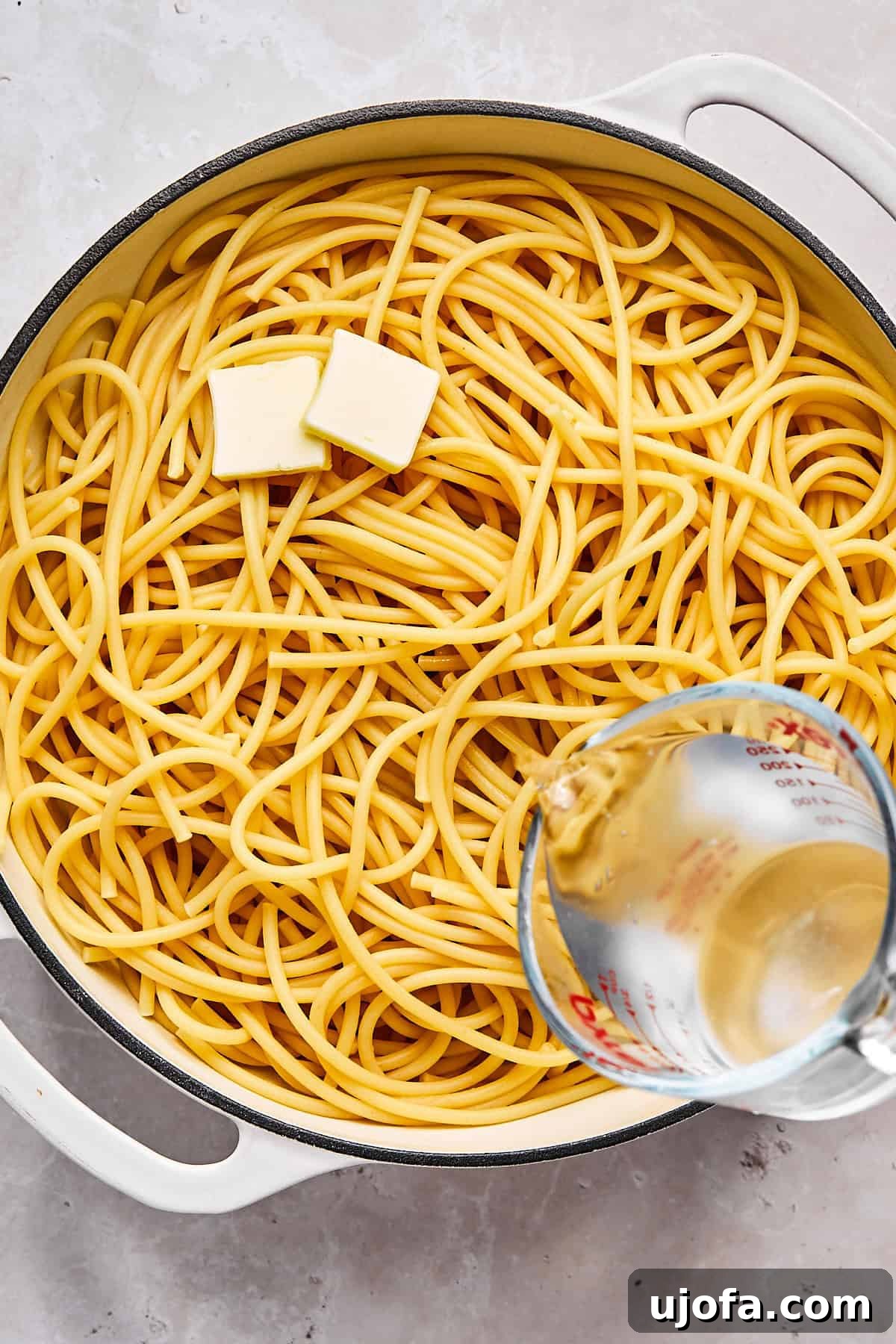
In a large skillet (or the same pot you used for pasta, if it’s wide enough), combine the drained, cooked bucatini with the butter and about half of your reserved starchy pasta water (start with less, you can always add more). Place the skillet over medium-low heat. Gently toss the pasta, allowing the butter to melt completely and coat the noodles. This step helps to introduce moisture and fat, preparing the pasta to perfectly absorb the cheese sauce.
Step 3: Emulsify the Cheese and Pepper
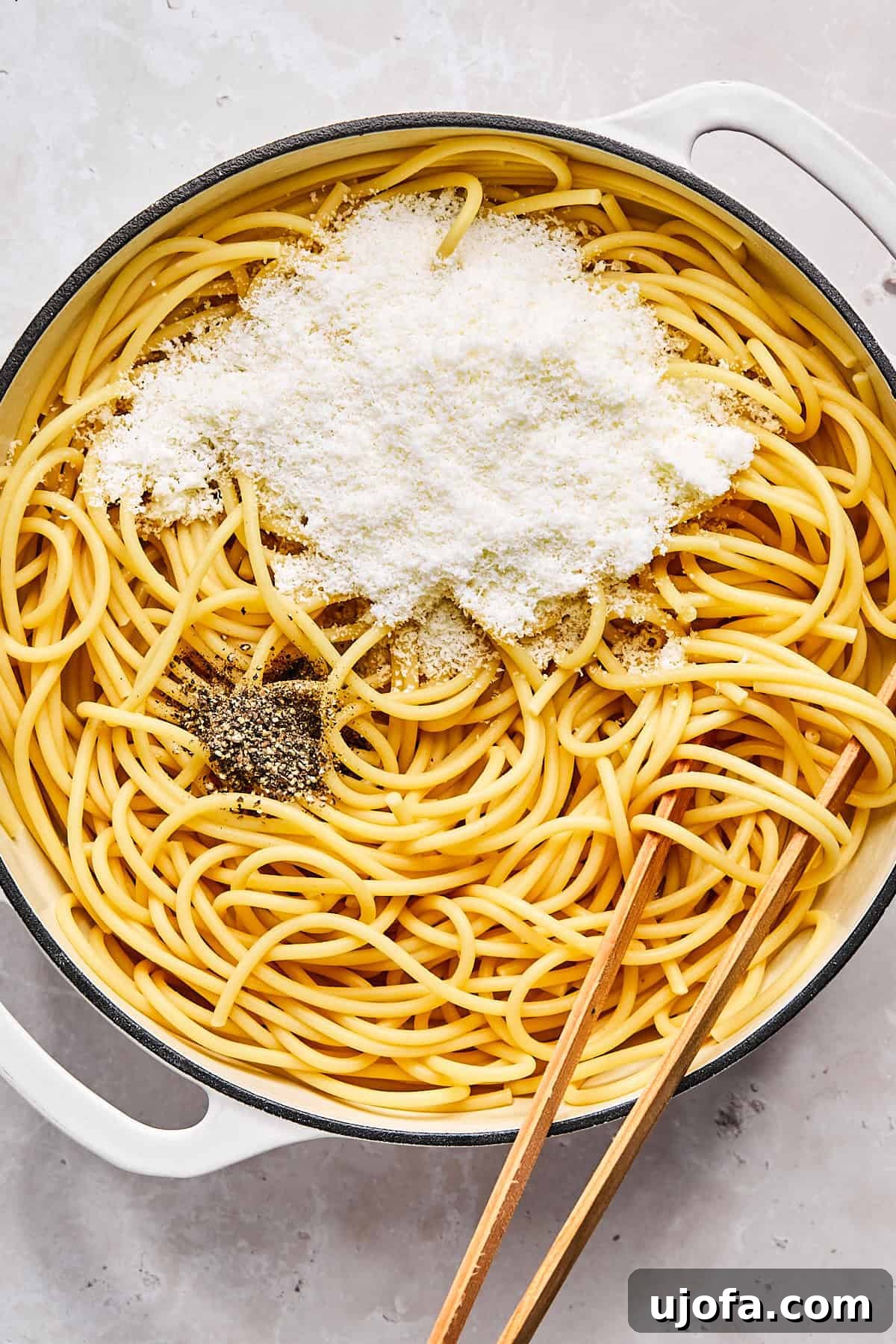
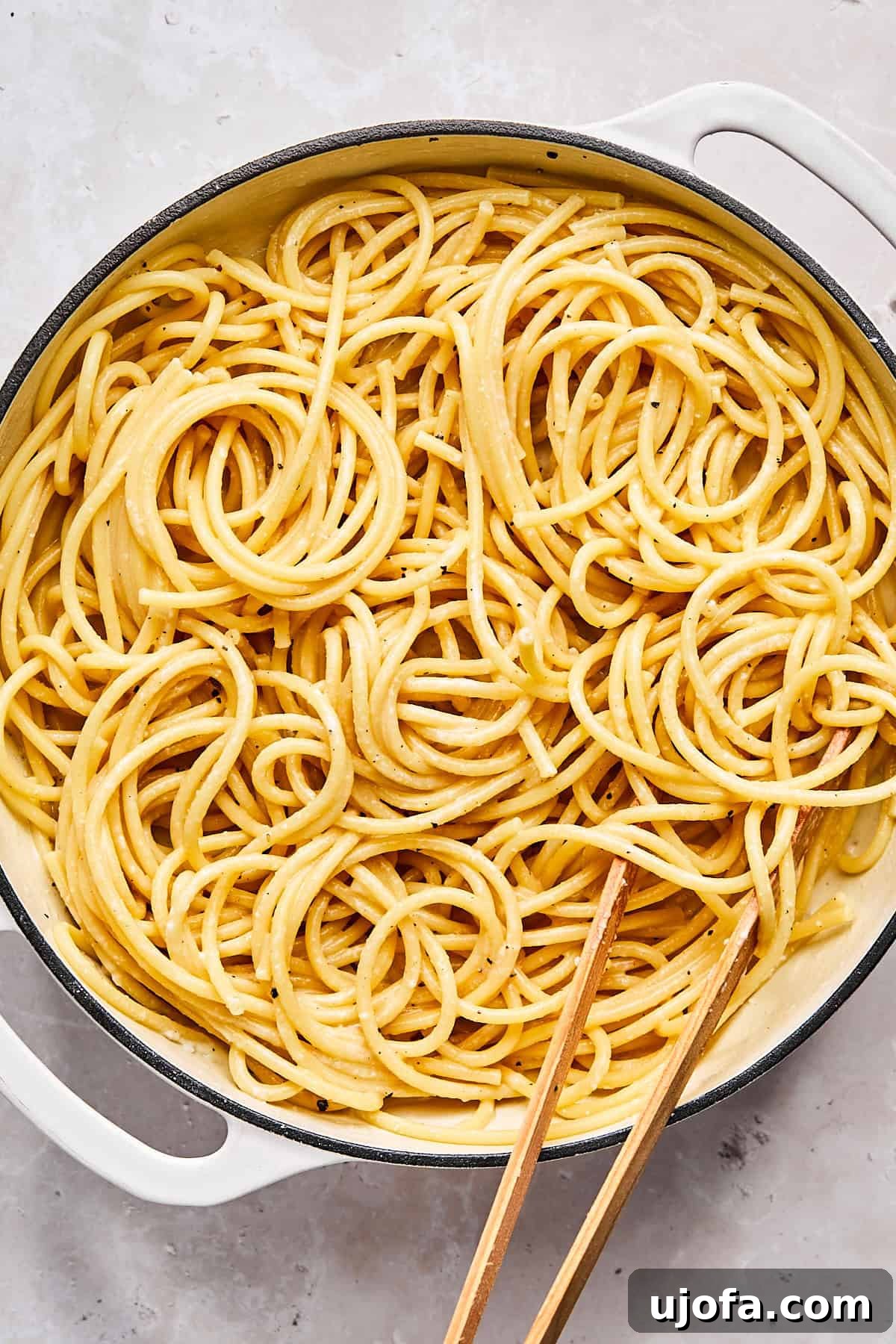
Crucially, turn off the heat under the skillet. This prevents the cheese from seizing. Immediately add the freshly cracked black pepper and the finely grated Pecorino Romano cheese to the pasta. Begin tossing vigorously and continuously with tongs. The residual heat from the pasta and the skillet, combined with the starchy water, will encourage the cheese to melt and emulsify into a smooth, creamy sauce. Work quickly and consistently until the cheese is fully integrated and a luxurious, cohesive sauce has formed, clinging beautifully to every strand of bucatini.
Step 4: Adjust and Serve Immediately
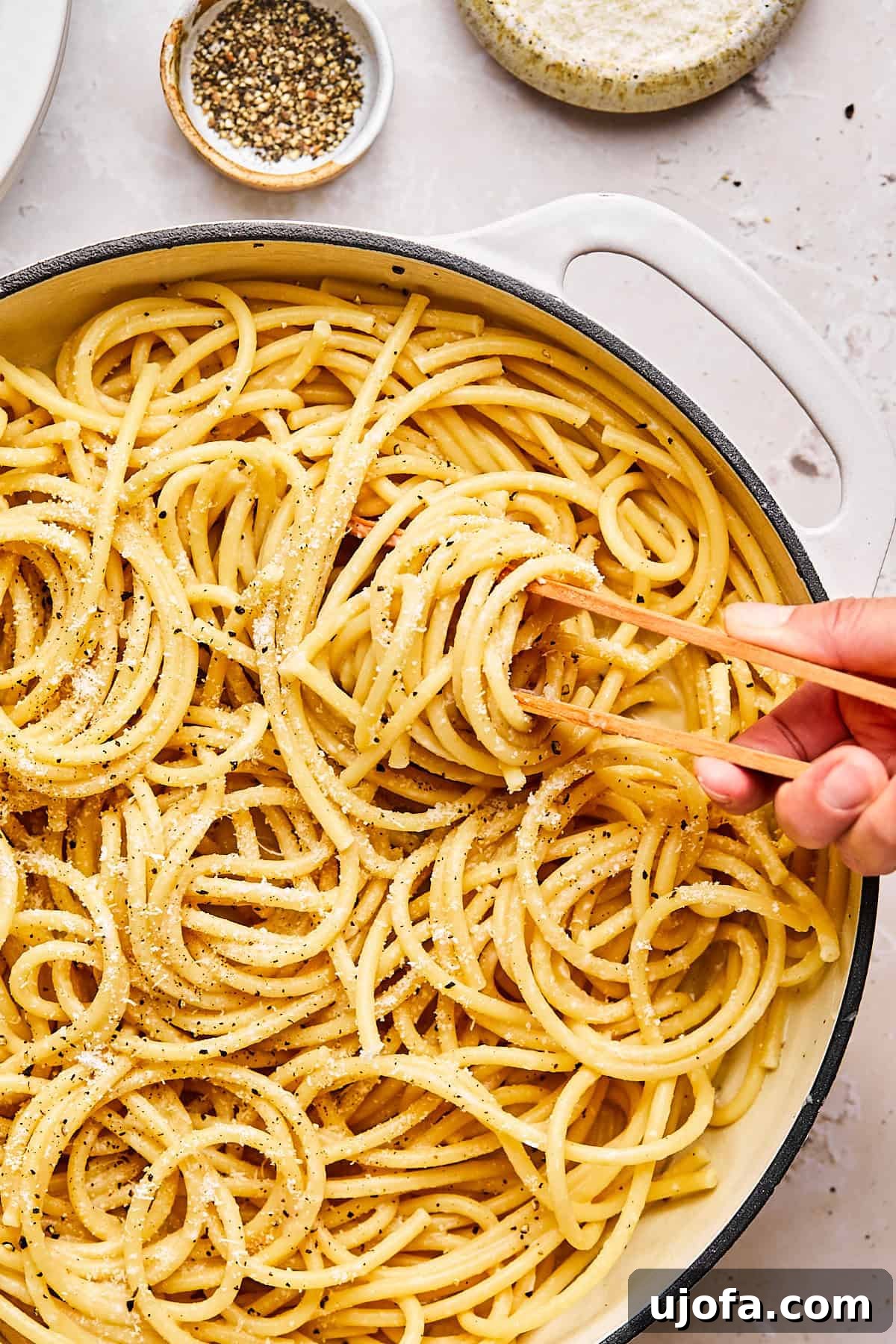
If, after tossing, your sauce appears too thick or not as creamy as desired, turn the heat back on to a very low setting. Add a small splash of the remaining reserved pasta water, one tablespoon at a time, continuing to toss until the sauce reaches your preferred consistency. Remember, it’s easier to add more liquid than to fix a too-thin sauce. Serve your Bucatini Cacio e Pepe immediately. Garnish generously with an extra sprinkle of freshly cracked black pepper and additional finely grated Pecorino Romano cheese for an authentic finish. Enjoy this Roman classic straight from the pan!
For those who love ultra-creamy pasta options, be sure to also explore our Gluten-Free TikTok Spaghetti Alfredo or our ingenious Chicken and Broccoli Alfredo (No Cream) for dinner ideas that promise to delight the entire family with their rich textures and incredible flavors.
Pro Tips for Achieving the Creamiest Cacio e Pepe Sauce
- Always Use Freshly Grated Cheese: This cannot be stressed enough. Pre-grated cheeses are often coated with anti-caking agents like cellulose, which prevent them from melting smoothly and can result in a grainy or clumpy sauce. Invest in a block of Pecorino Romano and grate it finely with a Microplane just before use for the best, silkiest emulsion.
- Control the Cheese Temperature: Adding cheese to pasta that is too hot will cause it to seize and clump instantly. This is why we instruct you to turn off the heat before adding the cheese. The residual heat from the pasta and skillet is sufficient to melt the cheese gradually and beautifully into a sauce, preventing it from overcooking or separating.
- Start with Less Pasta Water: When building the sauce, it’s always best to start with less reserved pasta water than you think you might need. You can easily add more in small splashes if your sauce is too thick. Removing excess liquid, however, is much more challenging. The goal is a rich, clinging sauce, not a watery one.
- Handle Gluten-Free Pasta with Care: Gluten-free pasta, particularly bucatini, can be more delicate than its wheat counterpart. To maintain its integrity and prevent it from breaking down, toss gently but continuously, especially when using Jovial bucatini. Avoid overcooking the pasta in the first place, as mushy pasta will not hold the sauce well.
- Don’t Rinse Your Pasta: Unlike some pasta dishes, never rinse your Cacio e Pepe pasta after draining. The starch on the surface of the noodles is crucial for creating the emulsified sauce. Rinsing removes this valuable starch.
Make This Cacio e Pepe Your Own: Delicious Variations
One of the most appealing aspects of this seemingly simple Cacio e Pepe is its inherent adaptability. While it shines in its classic form, it also provides an excellent canvas for customization, allowing you to tailor it to your dietary preferences or simply to add a little extra flair. Whether you’re aiming to boost the protein content, experiment with different cheeses, or introduce additional textures and flavors, here are some easy and delicious ideas to make this dish uniquely yours:
- Enhance with Veggies: Introduce more depth, nutrition, and color by tossing in some sautéed vegetables. Think earthy sautéed mushrooms, which soak up the sauce beautifully, delicate roasted garlic cloves for a mellow sweetness, or vibrant green peas for a touch of freshness and sweetness. Roasted asparagus tips or blanched broccolini florets also make excellent additions.
- Boost the Protein: To transform this into a heartier, more complete meal, consider adding a protein source. Sliced grilled chicken breast or succulent sautéed shrimp are fantastic choices that complement the rich, peppery sauce without overpowering it. Crispy pancetta or guanciale, rendered until golden, would also add a traditional Roman touch and incredible savory depth.
- Dairy-Free Adaptation: For those following a dairy-free lifestyle, this dish can absolutely be adapted. Substitute traditional butter with a high-quality plant-based butter alternative and use your favorite dairy-free Parmesan-style cheese. It’s important to be mindful that some dairy-free cheeses melt differently than their dairy counterparts. To ensure a smooth sauce, add the dairy-free cheese slowly and maintain a very low heat, tossing continuously until fully melted and integrated.
- Add a Citrus Brightness: A squeeze of fresh lemon juice at the very end can add a bright, acidic counterpoint to the richness of the cheese and pepper, lifting the flavors.
- Herbaceous Twist: While not traditional, a sprinkle of fresh parsley or chives before serving can add a fresh, aromatic note.
While this recipe truly excels when kept to its authentic, minimal ingredient list, don’t hesitate to experiment and make it your own based on your personal preferences and what you have on hand.
Perfect Serving Suggestions for Your Roman Feast
Bucatini Cacio e Pepe, with its rich and satisfying profile, can easily stand alone as a magnificent meal. However, it also pairs beautifully with a variety of side dishes to create a more complete and well-rounded Italian-inspired dining experience. Consider serving it alongside a crisp, vibrant green side salad dressed with a light vinaigrette to cut through the richness of the pasta. A basket of warm, crusty gluten-free bread is also ideal for soaking up every last drop of that delectable sauce. For those looking to add more substance or protein, roasted vegetables such as broccoli, zucchini, or bell peppers, or simply grilled chicken or fish, would complement the pasta exquisitely.
Storing and Reheating Gluten-Free Cacio e Pepe
This pasta dish, like many fresh pasta preparations, is undoubtedly at its peak when served immediately. The sauce is perfectly emulsified and the pasta texture is ideal. However, if you find yourself with delightful leftovers, here’s how to properly store and reheat them to maintain as much of their original charm as possible:
- Storage: Allow the pasta to cool down completely to room temperature before transferring it to an airtight container. Refrigerate promptly, and it will keep well for up to 3 days. Proper cooling and sealing prevent bacterial growth and maintain freshness.
- Reheating: The key to reheating Cacio e Pepe is gentle, slow heat and added moisture to re-emulsify the sauce. Add a splash of water (or a small knob of butter for extra richness) to a large skillet. Warm the pasta gently over medium-low heat, tossing constantly with tongs. The goal is to bring the sauce back to life and coat the noodles without overcooking them or breaking the emulsion. This continuous tossing helps distribute heat evenly and reconstitute the sauce’s creaminess.
- Avoid the Microwave: While convenient, microwaving Cacio e Pepe is generally not recommended. The rapid, uneven heating can cause the cheese in the sauce to separate and become oily, and the pasta noodles can quickly dry out or become rubbery. Stick to stovetop reheating for the best results.
Pro Tip: If, during reheating or even initial preparation, your Cacio e Pepe sauce appears to have “broken” (looking oily or separated), don’t despair! Often, a little extra reserved starchy pasta water and vigorous, gentle stirring over very low heat can bring the sauce back together into its creamy, emulsified state. Patience and a light hand are your best friends here.
Frequently Asked Questions About Cacio e Pepe
While you technically can, using Parmesan (Parmigiano-Reggiano) will significantly alter the authentic flavor profile of Cacio e Pepe. Pecorino Romano, made from sheep’s milk, offers a much sharper, saltier, and tangier flavor that is characteristic of this Roman dish. Parmesan, made from cow’s milk, is sweeter and nuttier. If you do opt for Parmesan, you might find the dish less bold and could consider adding a little extra salt and a more generous amount of black pepper to compensate for the difference in pungency.
A clumpy or grainy sauce is a common issue and almost always stems from two primary factors: the cheese being added to pasta or a pan that is too hot, or using pre-grated cheese. When cheese is exposed to excessive heat, its proteins can seize and clump rather than melt smoothly. To avoid this, always turn off the heat before adding the cheese and toss vigorously. Additionally, pre-grated cheeses often contain anti-caking agents that hinder proper melting. Always use freshly grated, high-quality Pecorino Romano for the best results.
Traditionally, no, Cacio e Pepe is not gluten-free as it is made with wheat-based pasta. However, this specific recipe is entirely gluten-free friendly because it utilizes certified gluten-free bucatini pasta, such as the excellent option from Jovial Foods. This substitution allows individuals with gluten sensitivities or celiac disease to enjoy this classic Roman dish without compromise.
It reheats reasonably well, though the texture may not be quite as perfectly silky as when it’s freshly made. To achieve the best reheating results, store leftovers in an airtight container in the refrigerator. When reheating, avoid the microwave and instead warm gently in a skillet over low heat with a splash of water or a small knob of butter, continuously tossing to help re-emulsify the sauce. The flavor remains fantastic, even if the texture is slightly altered.
This Bucatini Cacio e Pepe recipe is a wonderful demonstration that you absolutely do not need an array of exotic ingredients or overly complicated culinary techniques to create something profoundly delicious and truly crave-worthy. Whether you’re preparing a quick and satisfying meal for your family, treating yourself to a delightful dinner, or planning a cozy Italian-themed night at home, this simple yet elegant dish consistently delivers bold, authentic Roman flavor with minimal effort and maximum satisfaction.
Craving more comforting gluten-free pasta dishes? Be sure to try our Easy Marry Me Chicken Pasta next for another crowd-pleaser!
Explore More Irresistible Gluten-Free Pasta Recipes
- Easy Marry Me Chicken Pasta
- Boursin Chicken Pasta
- Sausage Broccolini Pasta
- TikTok Viral French Onion Pasta (Gluten-Free)
Love this recipe? Please leave a 5-star 🌟🌟🌟🌟🌟 rating in the recipe card below & a review in the comment section. Or, follow me on Facebook, Pinterest or Instagram today!
Pin
Bucatini Cacio e Pepe (5 Ingredients & Gluten Free)
Equipment
-
large skillet
-
cheese grater
Ingredients
- 12 oz gluten free bucatini, I like Jovial Foods brand
- 1 cup freshly grated pecorino romano
- 1 cup reserved pasta water
- 2 tbsp butter
- 1 tsp freshly cracked black pepper
Instructions
-
Cook pasta slightly al dente (I did 5 minutes for the Jovial pasta but this will vary for other brands) and reserve 1 cup of pasta water before draining.
-
To the same pan or a new skillet, add the cooked pasta along with the butter and reserved water over low heat. Toss until the butter is just melted. Turn off the heat and stir in the cracked black pepper and grated cheese.
-
Toss until a creamy sauce forms. Turn the heat back on low if needed. Serve with more pepper and freshly grated cheese on top and enjoy!
Notes
- Use freshly grated cheese-avoid pre-grated versions, which often contain anti-caking agents that prevent smooth melting.
- Don’t overheat the cheese. Add it off heat to prevent clumping.
- Start with less water. You can always add more if your sauce feels too thick.
- Gluten-free pasta tip: Toss gently and avoid overcooking, especially if using Jovial bucatini.
Nutrition
All nutrition facts are an estimate and automatically calculated. While I fact check them using My Fitness Pal, please note that they may not always be 100% accurate and depend on ingredients used. Weigh your total and divide by the number of servings for the most accurate grams per serving size.