
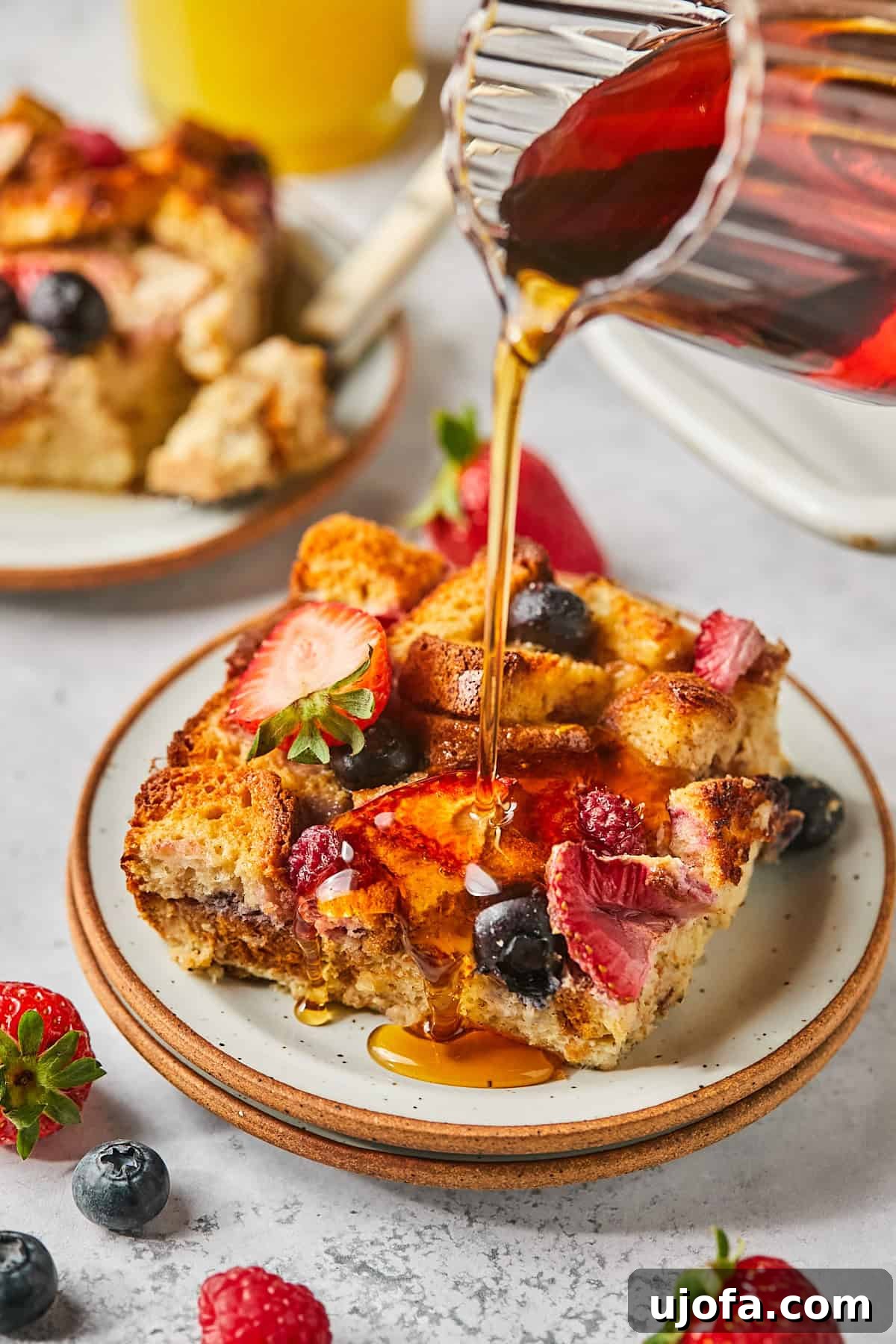
Transform your breakfast routine with this incredible Gluten-Free Protein French Toast Casserole – a true game-changer for busy mornings, festive holidays, and special brunches. Imagine waking up to the delightful aroma of freshly baked French toast, without any last-minute fuss. This make-ahead marvel is designed to simplify your life while delivering a delicious, high-protein meal that your entire family will adore. Perfect for occasions like Christmas morning, Mother’s Day, or any leisurely weekend, this casserole offers the ultimate combination of indulgence and convenience. Each generous slice boasts an impressive 19 grams of protein, ensuring you start your day feeling energized and satisfied. Say goodbye to stress and hello to a wholesome, flavorful breakfast that’s ready when you are.
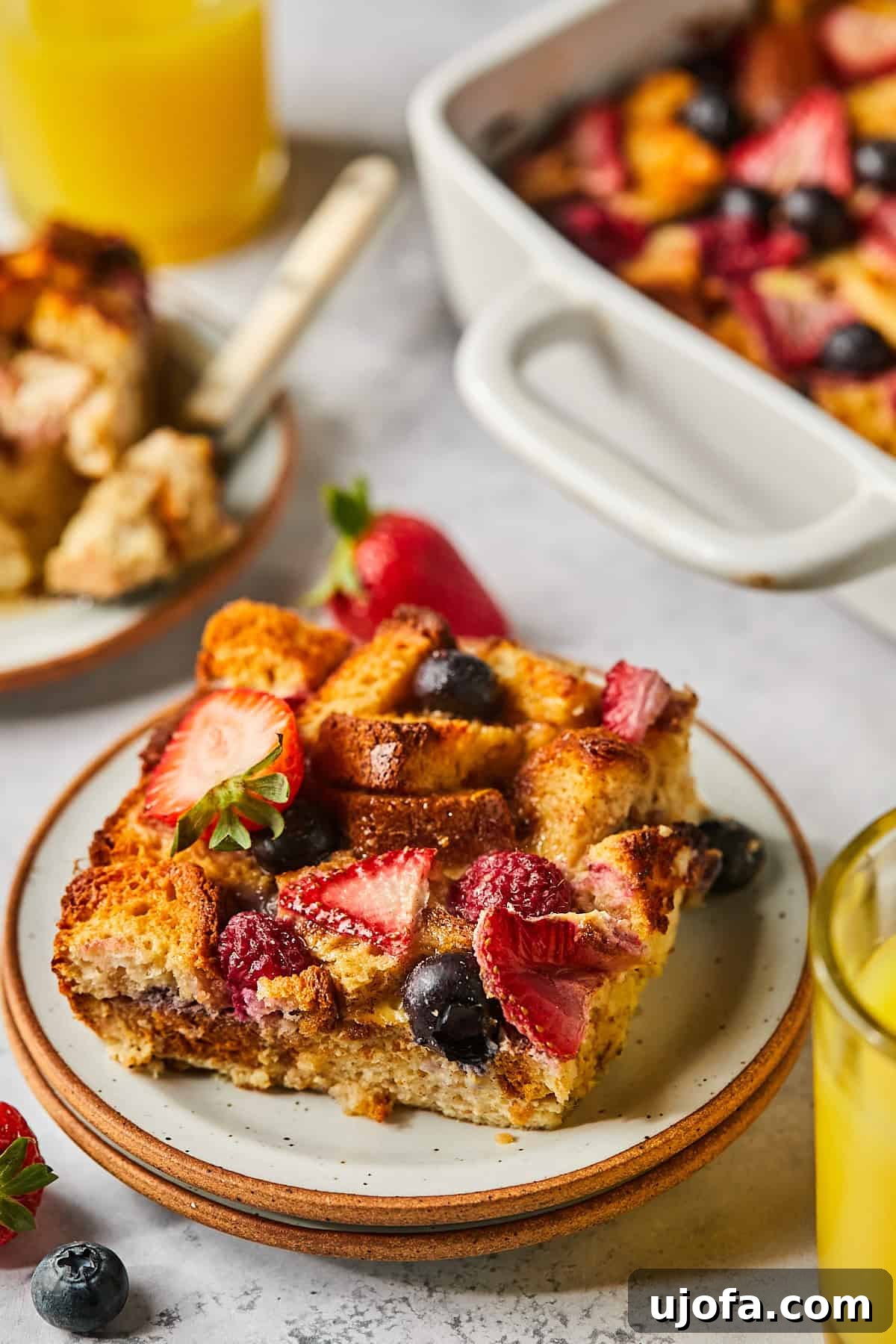
Why This Gluten-Free Protein French Toast Bake Will Be Your New Favorite
Breakfast casseroles have become my secret weapon for managing the hustle and bustle of holiday mornings and weekend gatherings. They epitomize effortless elegance, combining simple ingredients with minimal prep time for a truly stress-free experience. This particular high-protein French toast recipe stands out as the ultimate holiday brunch creation, crafted specifically for those mornings when you crave something incredibly indulgent yet surprisingly energizing. It’s more than just a meal; it’s a culinary hug that warms the soul and fuels the body.
What sets this overnight French toast casserole apart is its thoughtful composition. Prepared with high-quality gluten-free bread, it’s a safe and scrumptious option for anyone with gluten sensitivities or Celiac disease, ensuring no one misses out on the festive feast. But the real star is its robust protein content, skillfully integrated through nutrient-rich eggs, creamy cottage cheese, and a scoop of your favorite vanilla protein powder. This powerful combination not only delivers sustained energy but also keeps you feeling fuller for longer. It pairs exquisitely with a warm mug of dairy-free hot chocolate or a refreshing homemade iced coffee, elevating your brunch experience to new heights.
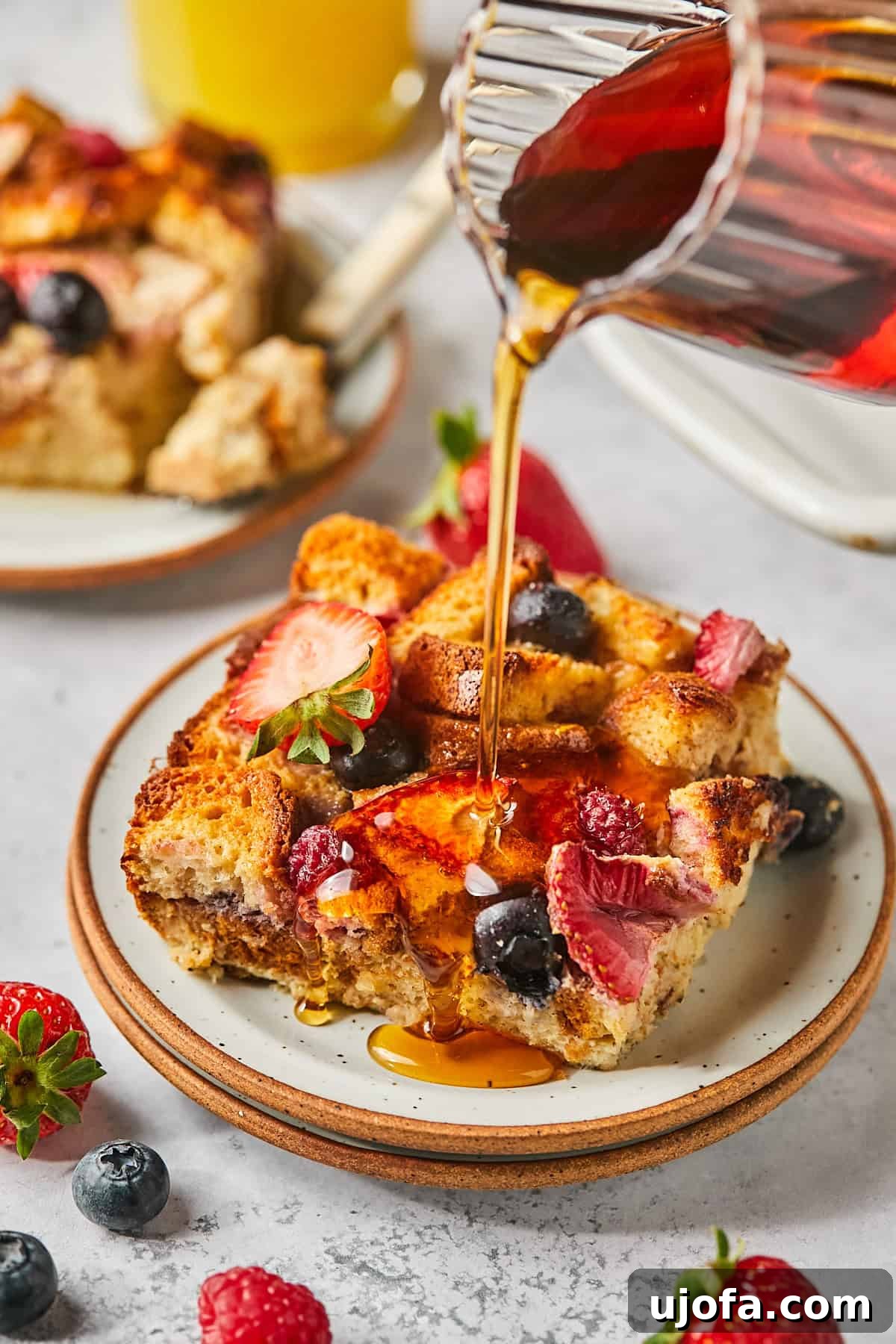
Unlike traditional French toast recipes that often rely on excessive amounts of sugar, this casserole adopts a more balanced approach. It utilizes just a touch of pure maple syrup and harnesses the natural sweetness of vibrant mixed berries, keeping the sugar content considerably lower without sacrificing flavor. The medley of ripe raspberries, plump blueberries, and succulent strawberries not only infuses the dish with a burst of vivid color but also introduces a fresh, slightly tangy dimension. This fruity counterpoint perfectly balances the rich, custardy bread, creating a harmonious flavor profile that’s both comforting and bright. This protein-packed breakfast bake is ideal for a cozy, relaxed weekend or as a cherished holiday morning tradition. Serve it dusted with a delicate sprinkle of powdered sugar, adorned with fresh mint leaves for a pop of color, and with an extra pour of maple syrup on the side. The result is a truly beautiful and impressive dish that’s guaranteed to enchant your guests and become a staple in your recipe collection.
For those perpetually busy mornings when time is of the essence, consider exploring more of my make-ahead options. My protein-packed overnight oats recipe offers another incredibly easy and nutritious choice, ensuring you always have a wholesome breakfast ready to grab and go.
Essential Ingredient Notes for Your Perfect French Toast Casserole
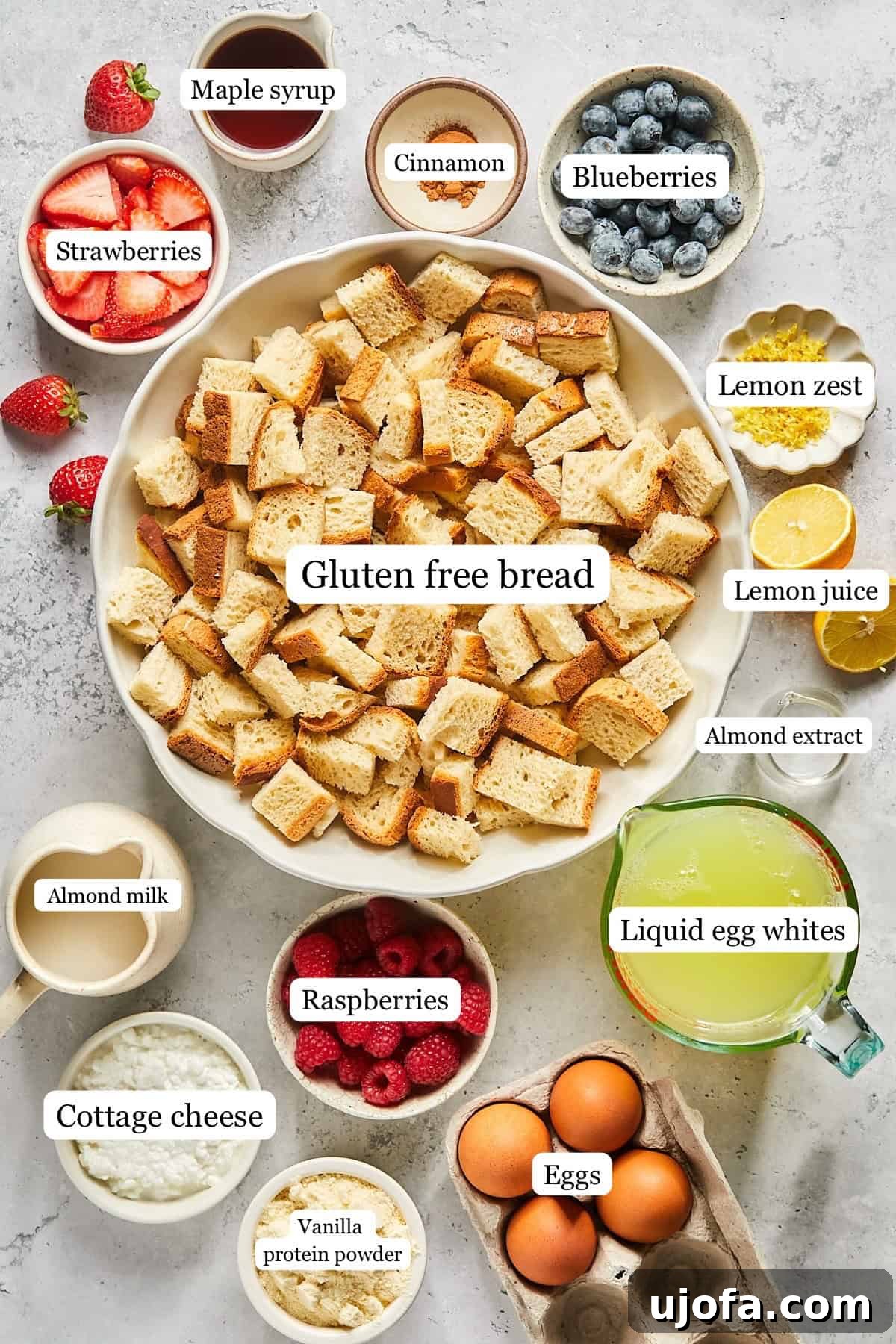
- Gluten-free white bread: This forms the crucial foundation of our casserole, acting like a sponge to soak up every drop of the delectable custard mixture. The quality of your bread significantly impacts the final texture. For optimal results, a sturdy gluten-free bread like Canyon Bakehouse Gluten-Free Country White is an excellent choice, but feel free to use any robust gluten-free bread you love. Using slightly stale bread can actually enhance its ability to absorb the custard without becoming mushy.
- Raspberries: These delightful fresh berries introduce a juicy, slightly tart burst of flavor that beautifully contrasts the sweetness of the casserole. Their vibrant red hue also adds a stunning visual appeal. If raspberries aren’t available or if you prefer, fresh or frozen blackberries make an equally delicious substitute.
- Blueberries: A quintessential breakfast fruit, blueberries contribute a wonderful natural sweetness and marry perfectly with the other berries, creating a harmonious and well-rounded fruit layer. Both fresh and frozen blueberries work wonderfully, offering flexibility and convenience depending on what you have on hand.
- Strawberries: Sliced thin, strawberries add a delicate sweetness and a lovely textual variety, enhancing the overall brightness of the dish. Their refreshing flavor complements the custard and other berries. Don’t hesitate to experiment with other berries or even thinly sliced apples or peaches if you’re looking for a different seasonal twist.
- Eggs: Large eggs are absolutely essential for crafting the rich, custardy base of this French toast casserole. They act as the primary binding agent, holding all the components together while imparting a luxurious, creamy texture that defines classic French toast.
- Liquid egg whites: Incorporating liquid egg whites helps to lighten the dish slightly, contributing to its structure without adding excessive richness. This offers a great way to boost protein while maintaining a balanced profile. If you prefer a richer casserole, you can easily substitute with more whole eggs.
- Cottage cheese: Often an unexpected ingredient in French toast, cottage cheese is a fantastic secret weapon for adding a delightful creaminess and a significant protein boost to the custard. When blended, its curds disappear, leaving behind a smooth texture without any overpowering flavors. For a dairy-free alternative, Greek yogurt or even ricotta cheese can be used.
- Almond milk: This serves as the liquid component of our custard mixture, providing a smooth and creamy consistency without dairy. Unsweetened almond milk is ideal for controlling sweetness, but feel free to use any whole milk or your preferred non-dairy milk such as oat milk, soy milk, or even coconut milk for a different flavor profile.
- Maple syrup: The classic sweetener for French toast, pure maple syrup imparts a deep, caramelized flavor that’s simply irresistible. For dietary variations, honey or agave nectar can be used as equally delicious alternatives, allowing you to adjust the sweetness to your liking.
- Lemon zest: A small amount of lemon zest goes a long way in bringing a bright, zesty aroma that cuts through the richness of the custard. It adds a fresh, uplifting note and prevents the dish from tasting overly sweet, creating a perfect flavor balance.
- Lemon juice: Just a splash of fresh lemon juice enhances the natural flavors of the berries, adding a subtle tang that complements their sweetness. It brightens the entire casserole. If you prefer a less tangy profile, you can reduce the amount or omit it entirely.
- Almond extract: This extract infuses the casserole with a hint of nutty, sweet aroma that beautifully complements the mixed berries. It adds a sophisticated layer of flavor. If almond extract isn’t available, pure vanilla extract is an excellent and widely loved substitute.
- Ground cinnamon: A warming spice, ground cinnamon brings a cozy, inviting hint of spice that is synonymous with comforting breakfast dishes. It rounds out the flavors and makes the casserole feel truly special and festive.
- Vanilla protein powder: This is the hero ingredient for our “protein” French toast casserole. It significantly boosts the protein content, making the dish more satisfying and nutritious, while also imparting a subtle vanilla flavor to the custard. Use any brand of your favorite vanilla protein powder. If you prefer to skip protein powder, collagen powder is a great alternative for a protein boost, or you can simply omit it if desired.
A complete list of ingredients with precise measurements can be found in the detailed recipe section below.
How to Prepare This High-Protein French Toast Casserole
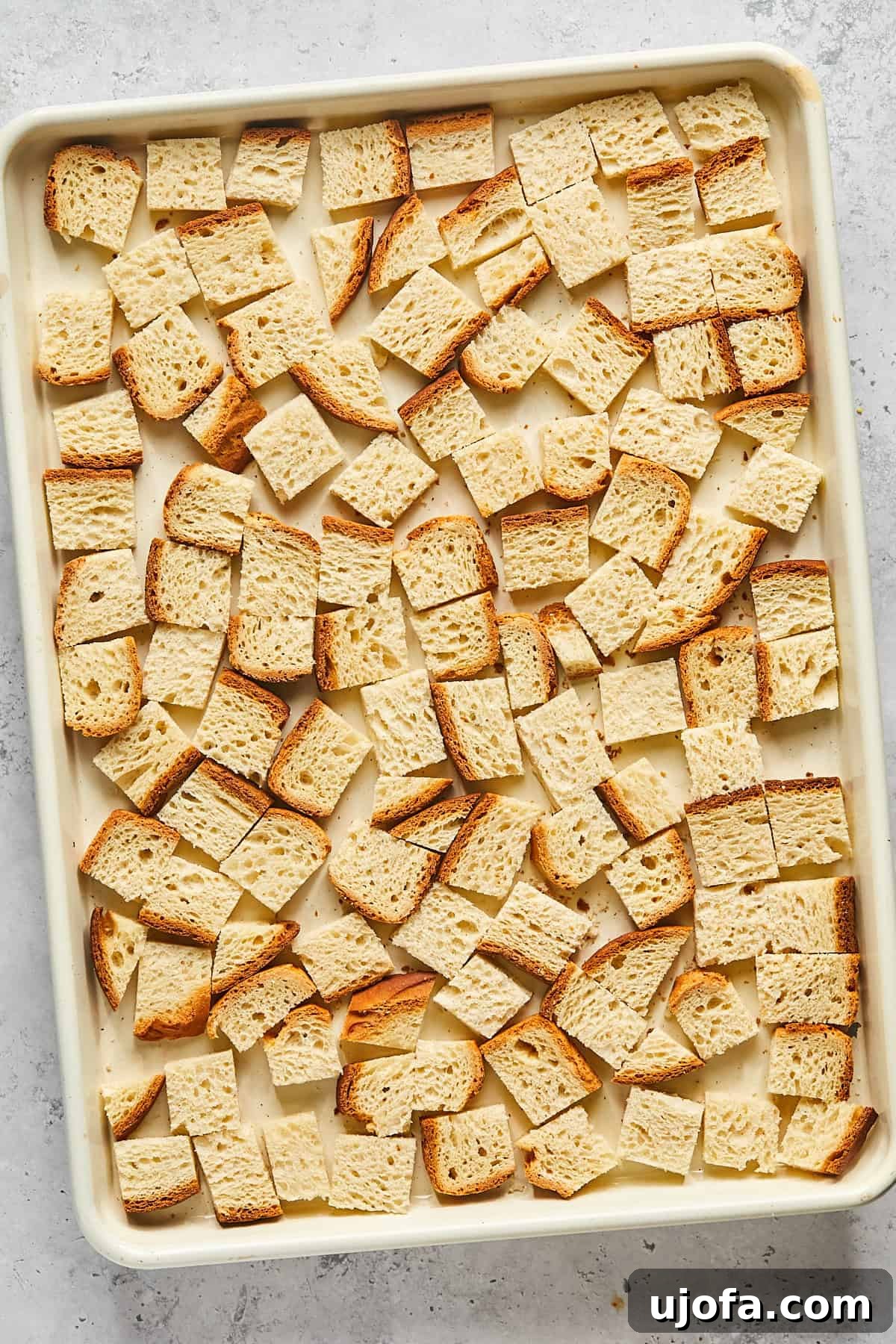
Step 1: Begin by preheating your oven to 350°F (175°C). Cut your gluten-free bread into uniform cubes and spread them out evenly in a single layer on a large sheet pan. This ensures even toasting and maximum surface area for soaking.
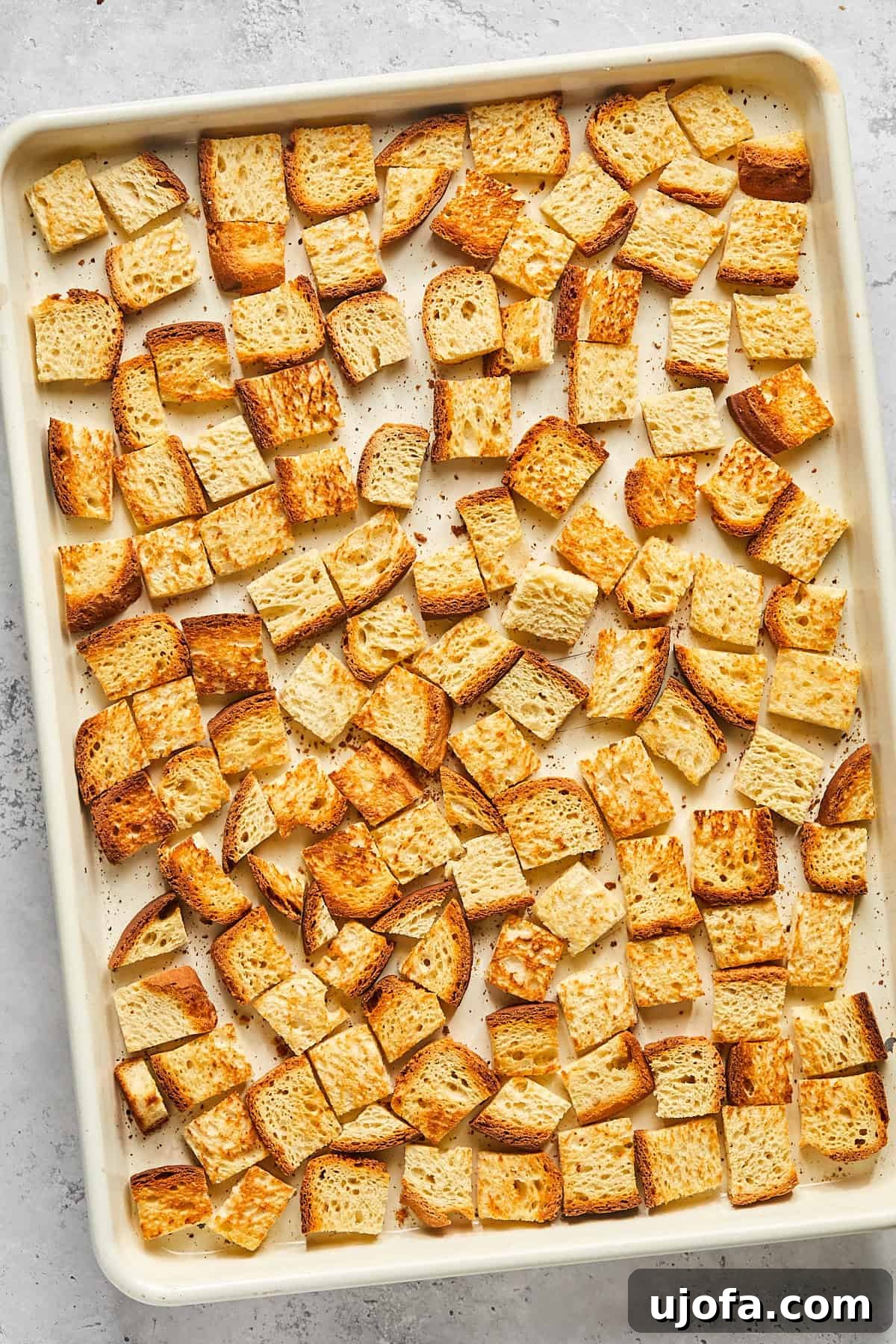
Step 2: Bake the bread cubes for approximately 10 minutes, making sure to stir them halfway through the baking time. This toasting process is crucial as it helps to dry out the bread, allowing it to better absorb the custard without becoming soggy, yielding a perfectly textured casserole.
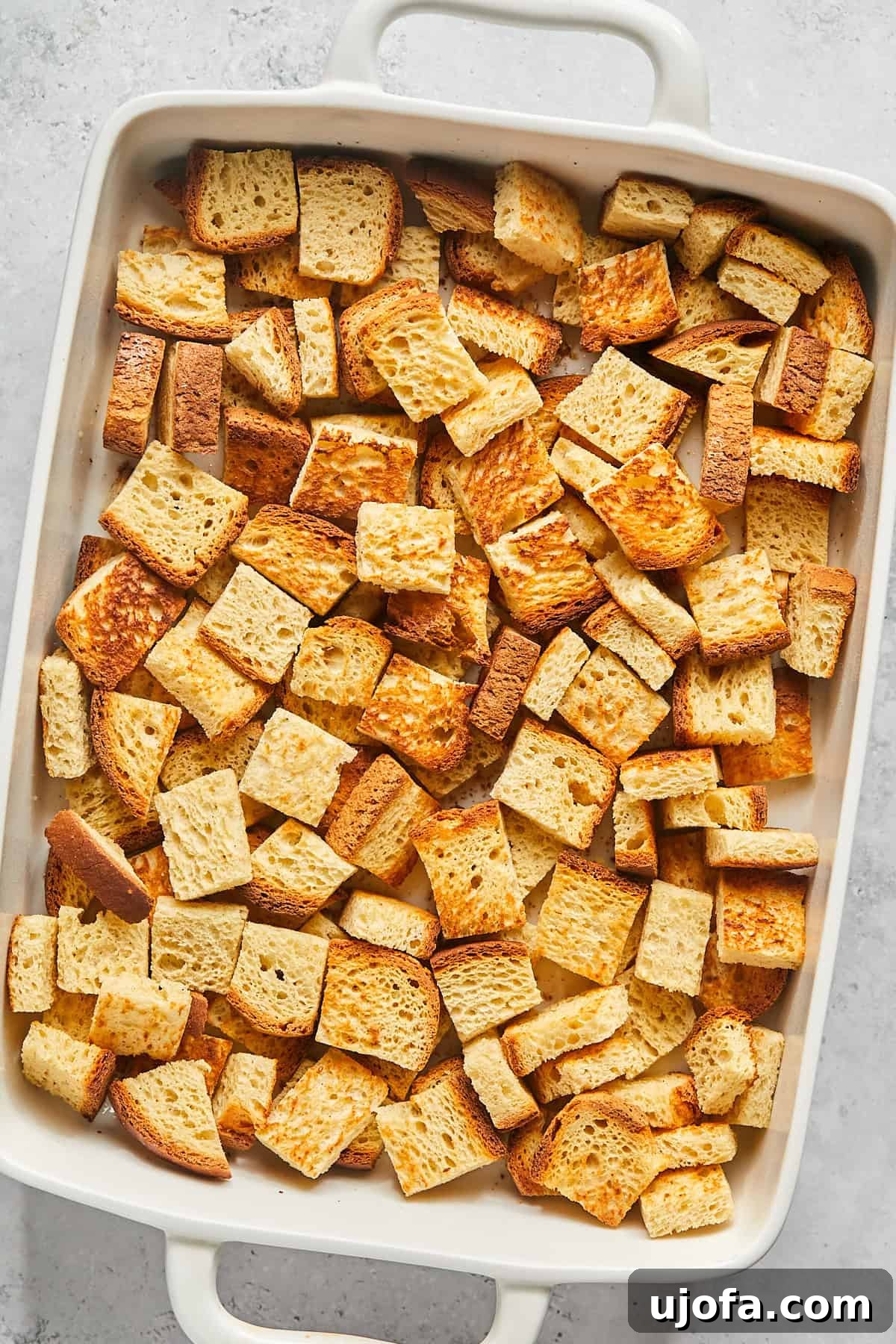
Step 3: Lightly spray a 9×13-inch casserole dish with your preferred cooking spray. Transfer the toasted bread cubes into the prepared dish, spreading them out evenly across the bottom. This base layer is now ready to receive its fruity and custardy companions.
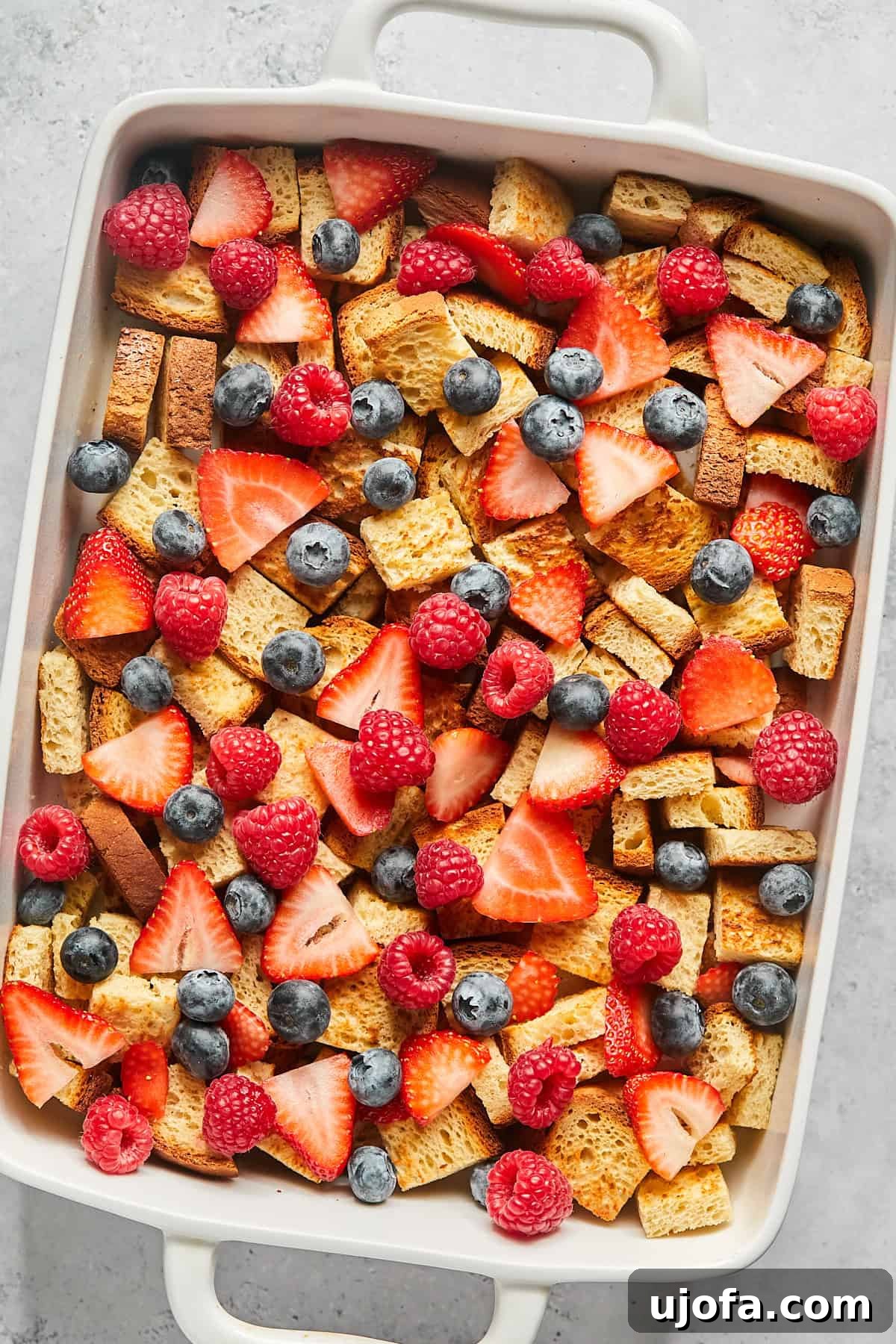
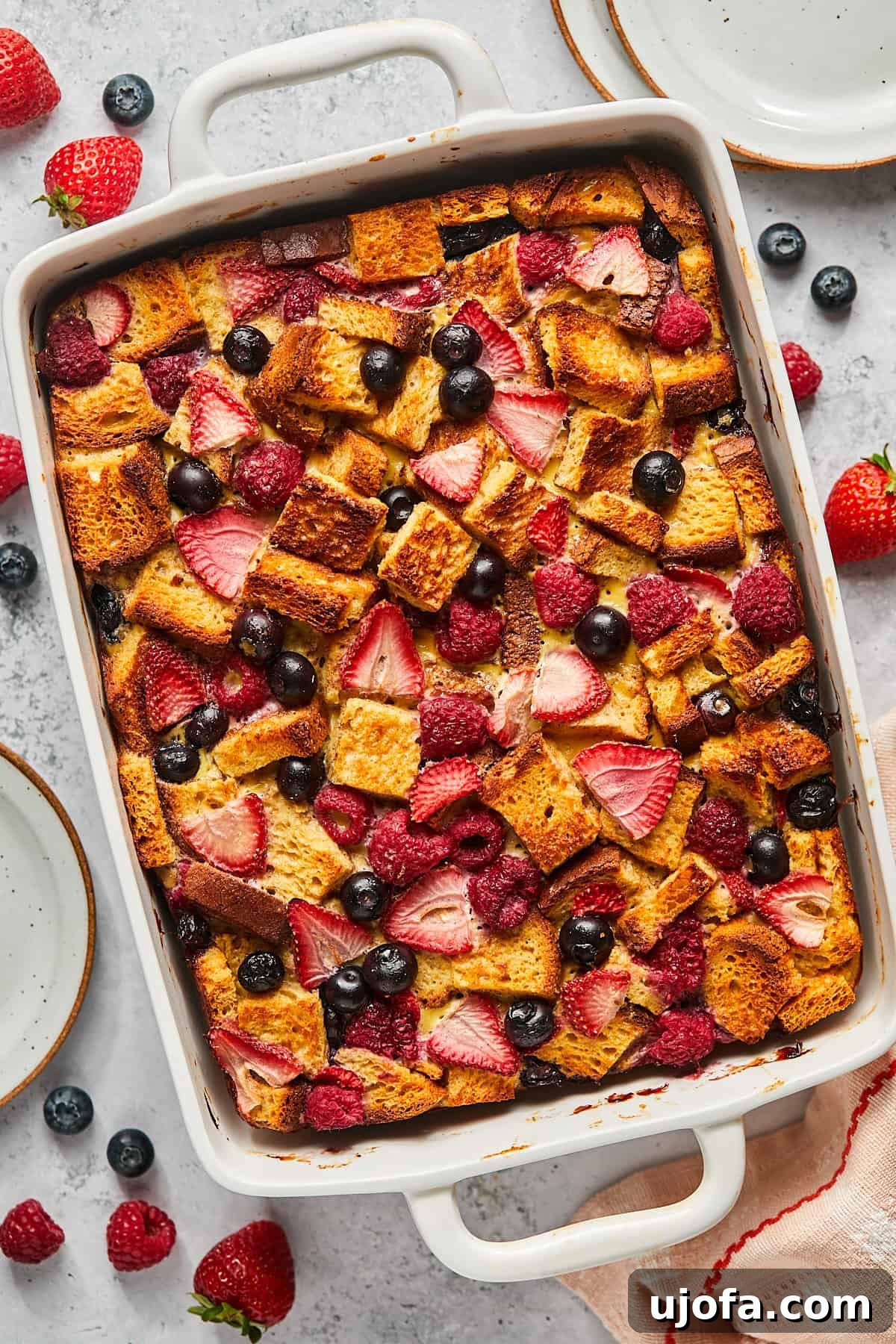
Step 4: Generously sprinkle the mixed berries – raspberries, blueberries, and sliced strawberries – over the toasted bread cubes. Distribute them evenly to ensure every bite of the casserole is bursting with fruity goodness.
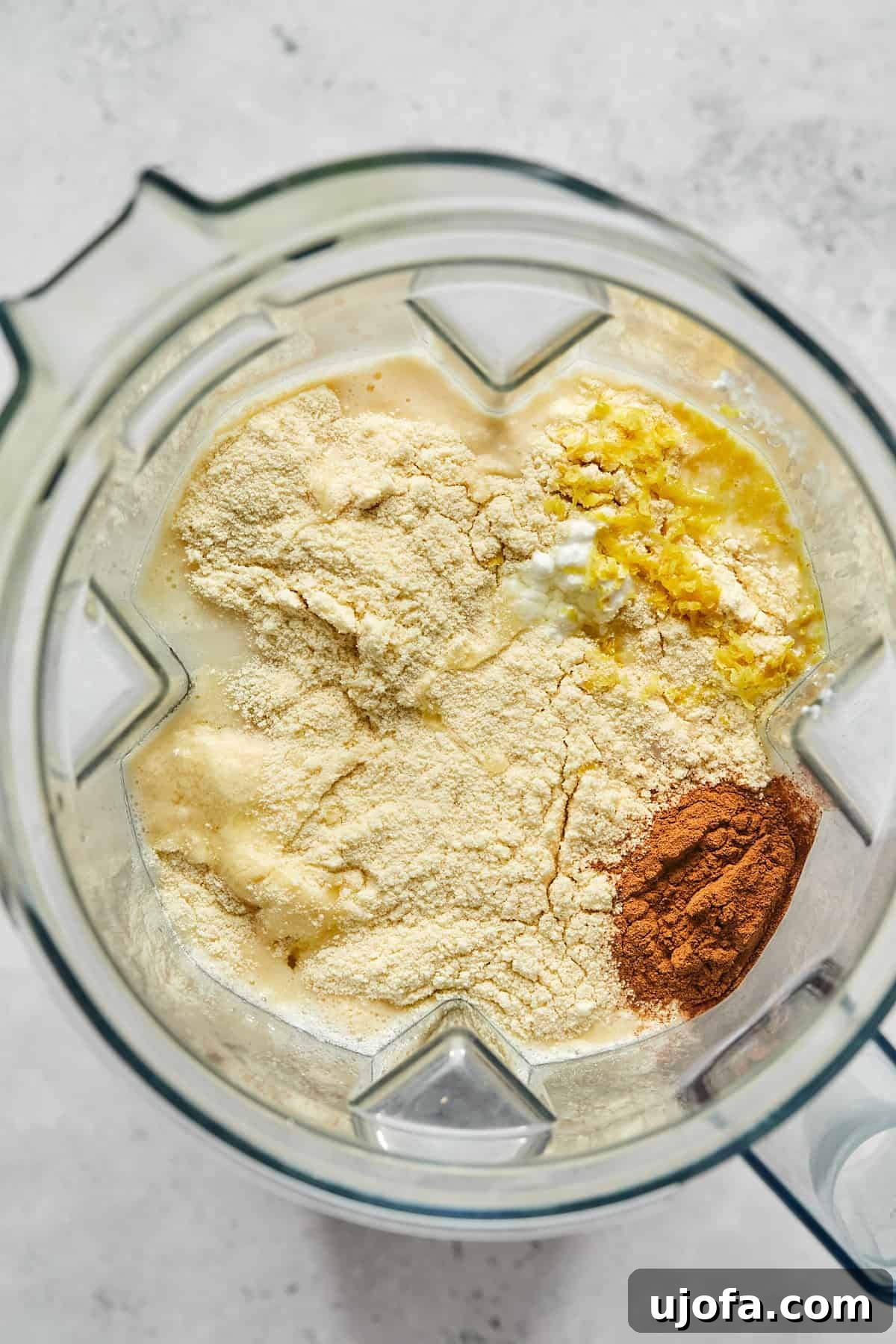
Step 5: In a blender, combine the remaining ingredients for the custard: whole eggs, liquid egg whites, cottage cheese, almond milk, maple syrup, lemon zest, lemon juice, almond extract, ground cinnamon, and vanilla protein powder. This powerful blend is what creates the rich, flavorful custard.
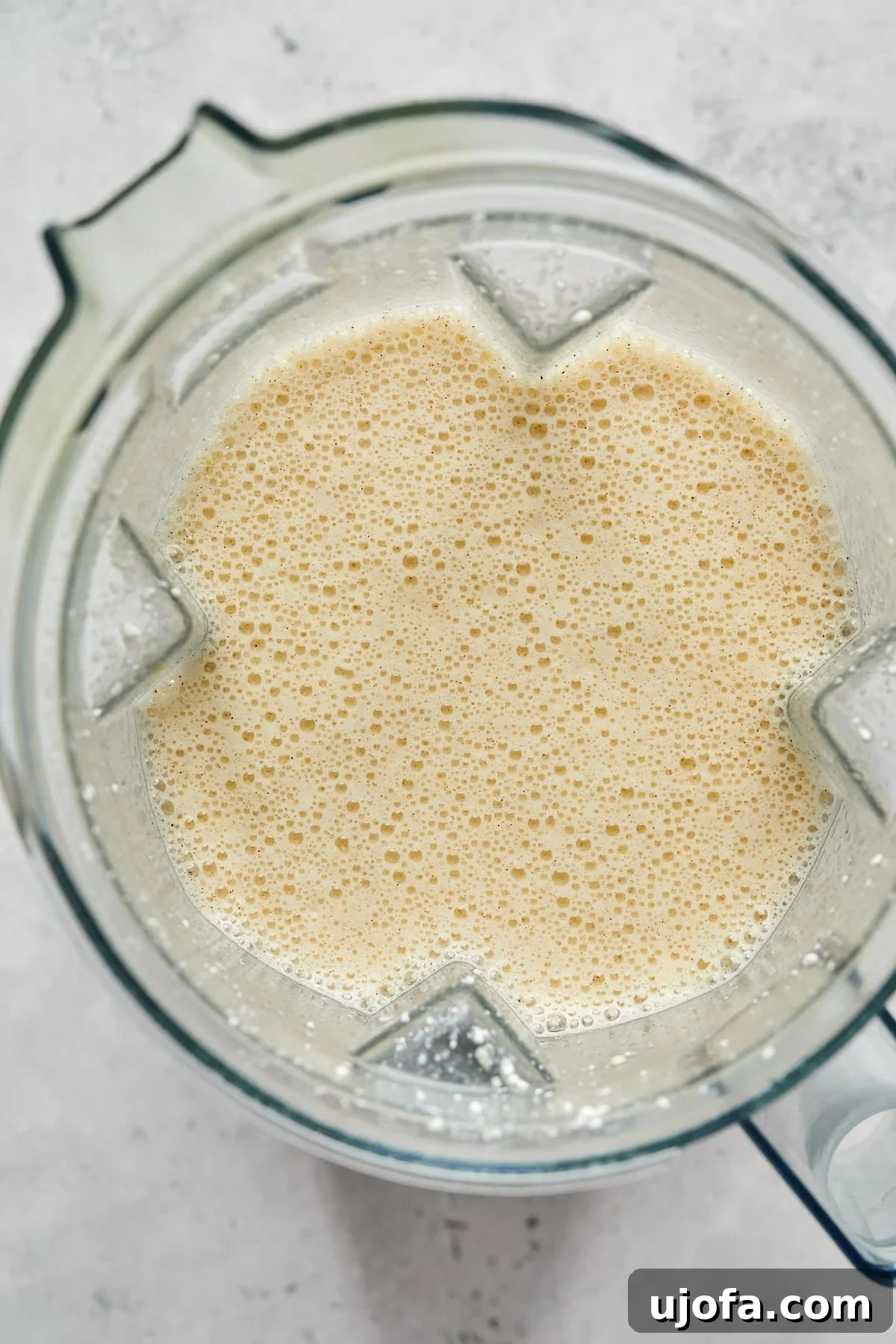
Step 6: Blend the custard mixture on medium speed for about 10 seconds. The goal is to achieve a smooth, well-combined consistency where you can no longer see the cottage cheese curds. Be careful not to over-mix, as this can make the batter too frothy, which might affect the final texture of the casserole.
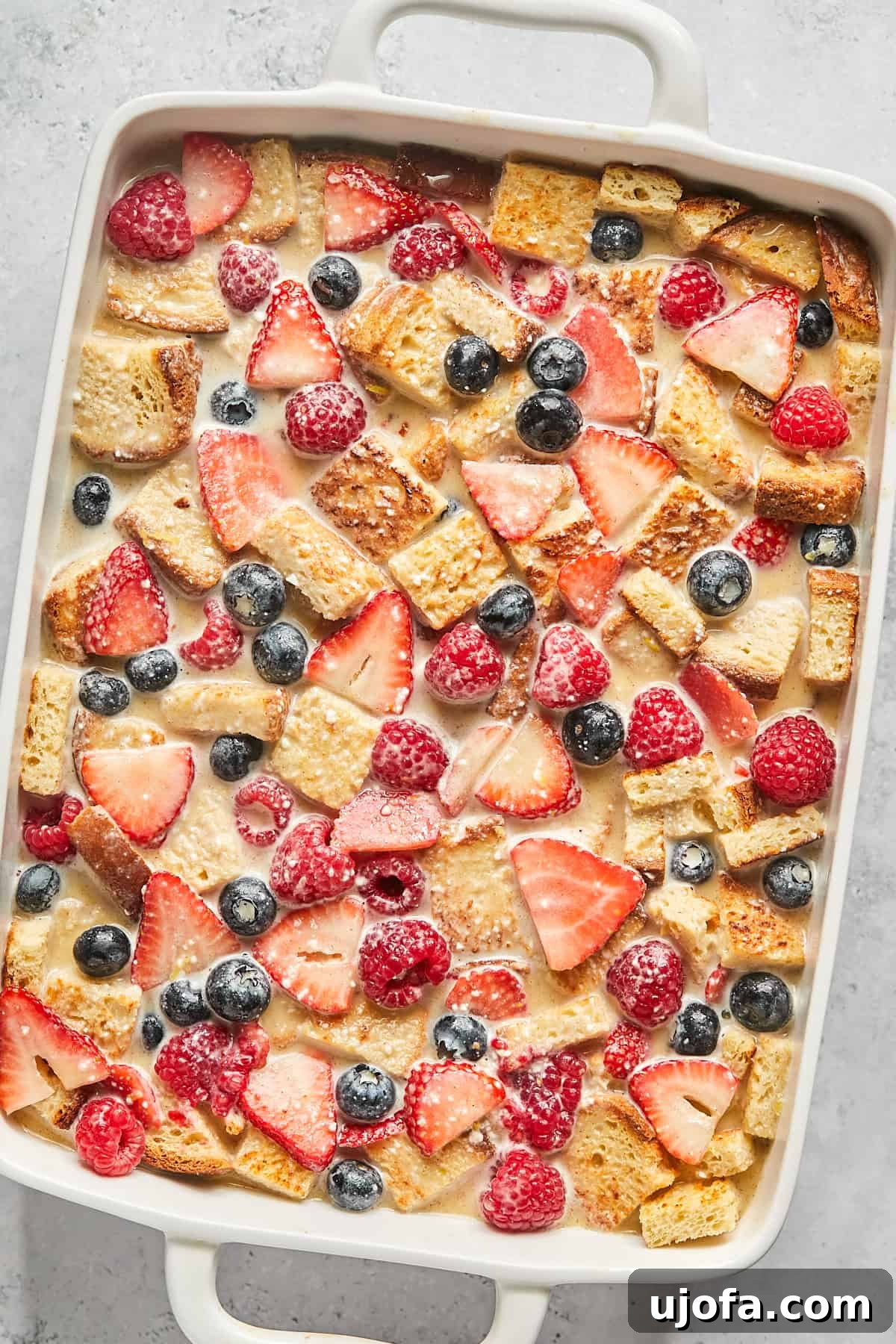
Step 7: Carefully pour the blended French toast batter evenly over the bread and berries in the casserole dish. Use a spatula or the back of a spoon to gently press down on the bread, ensuring that all the cubes are thoroughly coated and submerged in the custard. This step is key for a consistently moist and flavorful casserole.
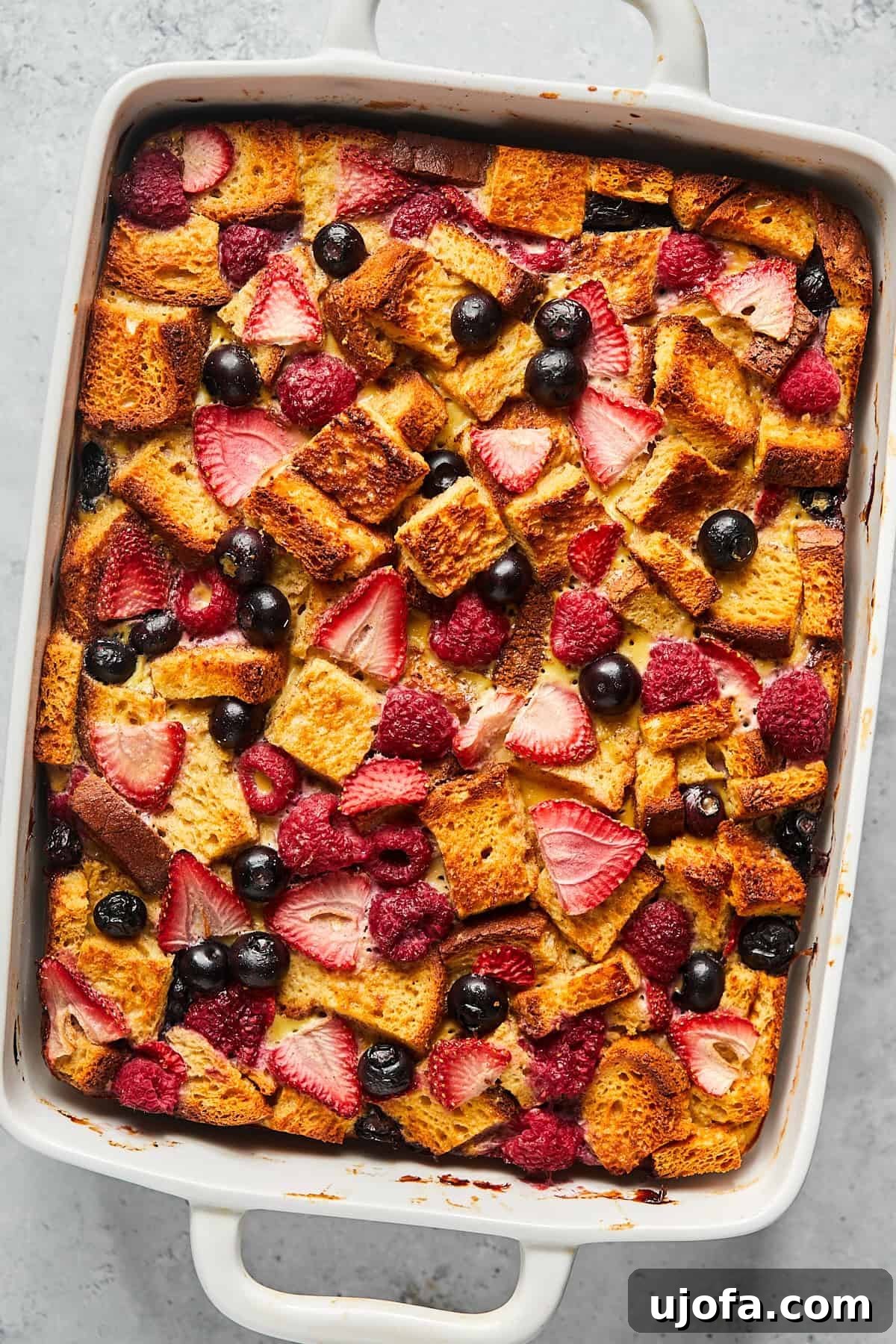
Step 8: At this point, you have two options: either bake the casserole immediately, or cover it tightly with plastic wrap or foil and refrigerate it overnight. This overnight soak allows the bread to fully absorb the flavors, making it an ideal make-ahead breakfast. When you’re ready to bake, preheat your oven to 350°F (175°C) and bake for 45-50 minutes, or until the egg mixture is completely set and the top is beautifully golden brown. The casserole may puff up gloriously in the oven, but don’t worry – it will gently settle as it cools, revealing a perfectly set and delicious outcome. Serve warm and enjoy your high-protein, gluten-free French toast casserole!
Pro Recipe Tips for Your Best French Toast Casserole
To ensure your protein French toast casserole turns out absolutely perfect every time, consider these helpful tips and tricks:
- **Bread Selection is Key:** The type and freshness of your bread significantly impact the casserole’s texture. Stale or day-old gluten-free bread is actually ideal for soaking up the custard mixture without becoming mushy. If you’re using fresh bread, a simple trick is to dry it out slightly by toasting the cubes in the oven for an extra 10-15 minutes (beyond the initial step). This pre-toasting creates a perfect canvas for absorbing all the rich custard, preventing any dreaded sogginess and ensuring every bite has a delightful texture.
- **Dairy-Free Adaptation:** Making this casserole dairy-free is wonderfully simple. Just swap the cottage cheese for an equal amount of your favorite dairy-free yogurt (unsweetened plain coconut or almond yogurt works best). Ensure your chosen protein powder is also dairy-free if that’s a dietary requirement. For an added touch of richness, you can spread a thin layer of dairy-free butter on top of the casserole before baking.
- **Adjusting Sweetness:** This recipe offers flexibility in sweetness. If you prefer a less sweet breakfast, simply reduce the amount of maple syrup called for in the recipe, or substitute it with a sugar-free syrup alternative. You can also rely more heavily on the natural sweetness of the berries.
- **Milk Options:** While almond milk is recommended for its creamy texture and dairy-free nature, the recipe is quite forgiving. Feel free to use unsweetened almond milk for better sweetness control, vanilla almond milk for an extra flavor dimension, oat milk for a thicker, richer custard, or even traditional heavy cream if dairy is not an issue and you desire a truly decadent casserole.
- **Preventing a Soggy Casserole:** A common concern with French toast bakes is sogginess. The key to avoiding this is properly drying out your bread (as mentioned above) and not over-saturating it. If you find your casserole consistently turns out too moist, try reducing the amount of milk in the custard mixture by a quarter cup next time. Also, ensure your bread is adequately toasted and has a chance to cool before adding the liquid.
Elevate Your Meal: Serving Tips & Optional Add-ins for French Toast Casserole
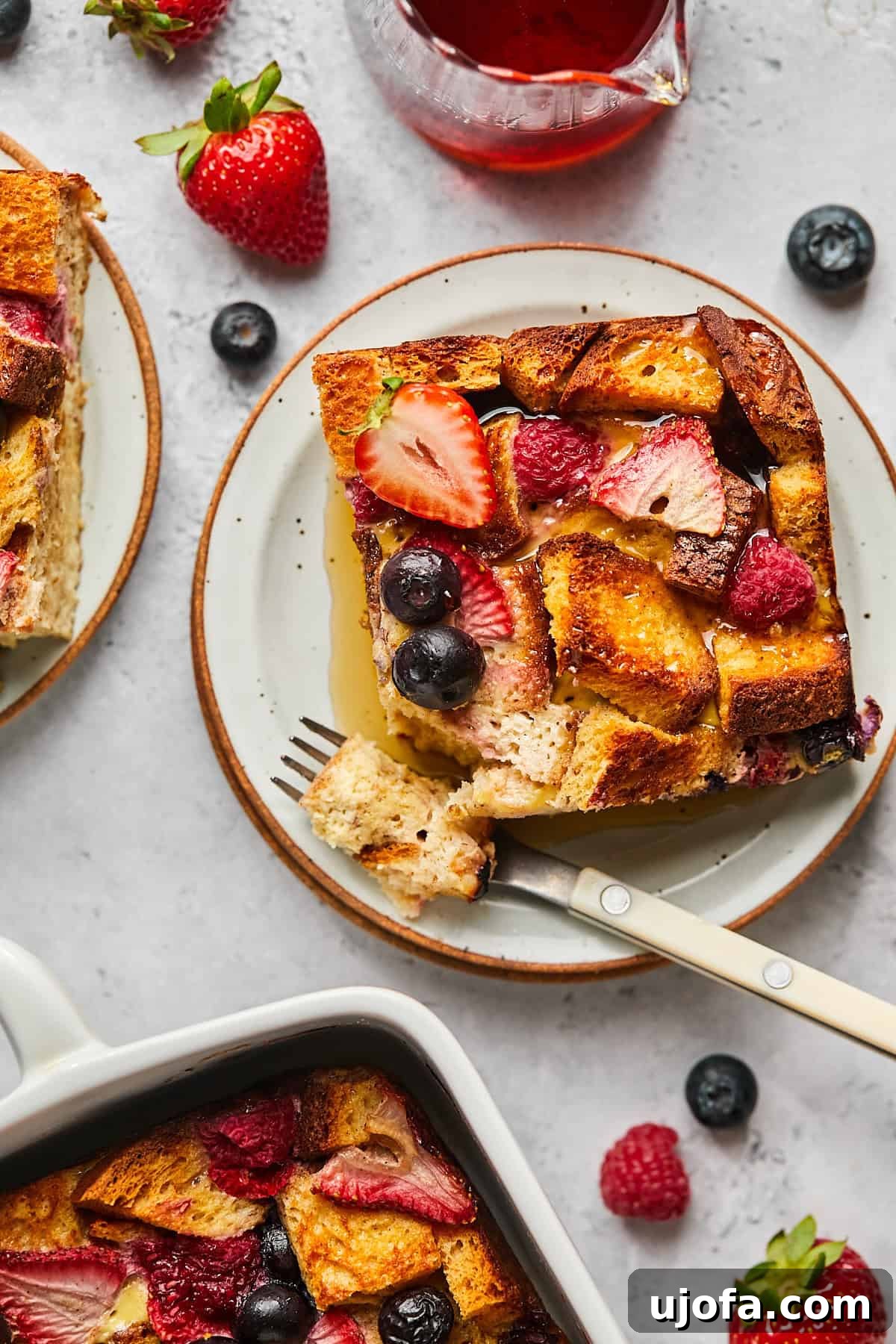
Once your irresistible Protein French Toast Casserole emerges from the oven, golden and fragrant, the real fun begins with customizing each serving. Here are some fantastic ideas to make your brunch truly unforgettable:
- **Classic Toppings:** A generous pour of pure maple syrup is non-negotiable for traditional French toast lovers. For an extra touch of decadence, add a dollop of fluffy whipped cream, a spoonful of rich peanut butter, or a sprinkle of melty chocolate chips.
- **Sweet Finishes:** Enhance the visual appeal and add a delicate sweetness with a light dusting of powdered sugar. Alternatively, for a deeper caramel note, a sprinkle of brown sugar or coconut sugar before serving works beautifully.
- **Tropical Flair:** Introduce an exotic twist by sprinkling a little shredded coconut on top. Its unique texture and sweet, tropical flavor pair exceptionally well with the mixed berries, transporting your taste buds to a sunnier destination.
- **Freshness Factor:** Garnish with fresh mint leaves for a vibrant pop of color and a refreshing aromatic contrast. This simple addition gives the casserole a sophisticated and festive touch, perfect for holiday gatherings.
- **Creamy Boost:** For an additional layer of creaminess and an extra protein punch, add a dollop of Greek yogurt. Its tangy notes will beautifully complement the sweetness of the berries and syrup.
- **Crunchy Texture:** If you love a textural contrast, sprinkle a handful of chopped nuts like pecans or walnuts over the casserole before baking. They’ll toast in the oven, adding a delightful crunch and nutty flavor.
- **Fruit Experimentation:** Don’t limit yourself to just berries! This casserole is incredibly versatile. Thinly sliced apples (tossed with a little cinnamon) or ripe peaches work wonderfully and can be swapped in based on seasonal availability or personal preference.
- **Complete Brunch Spreads:** For a truly grand holiday brunch or special gathering, serve this delightful French toast casserole alongside other complementary dishes. Consider a refreshing honey-lime poppyseed fruit salad, a comforting bone broth hot cocoa, or elegant yogurt parfaits for a diverse and delicious spread that caters to all tastes.
Smart Storage & Reheating Tips for Your Protein French Toast Casserole
One of the many benefits of this French Toast Casserole is its excellent make-ahead and storage capabilities, allowing you to enjoy its deliciousness over several days. Here’s how to properly store and reheat your leftovers:
- Storing Leftovers: Once the casserole has completely cooled to room temperature, ensuring no condensation forms, cover it tightly with aluminum foil or transfer individual slices or the entire remainder to an airtight container. Stored properly, it will maintain its freshness and delicious flavor in the refrigerator for up to 3 days.
- Effortless Reheating: To reheat the entire casserole, cover it with foil to prevent drying out and warm it in a preheated 350°F (175°C) oven for approximately 10-15 minutes, or until it’s heated through to your desired warmth. For individual servings, the microwave is your best friend: simply warm for 1-2 minutes, checking for desired temperature.
- Freezing for Future Feasts: This casserole freezes beautifully, making it perfect for meal prepping. Once cooled completely, wrap the casserole tightly in several layers of plastic wrap, then place it in a freezer-safe bag or an airtight container. It can be stored in the freezer for up to 2 months, ready for a quick and easy breakfast anytime.
- Reheating from Frozen: For the best results when reheating from frozen, it’s recommended to thaw the casserole overnight in the refrigerator. Once thawed, you can reheat it using the oven method described above. This ensures the best texture and flavor, providing a delightful breakfast solution whenever you need it.
Frequently Asked Questions About This Recipe
Can I make this gluten-free French toast casserole the night before?
Absolutely! This casserole is designed to be the perfect make-ahead dish. Simply assemble it according to the instructions, cover it tightly, and refrigerate it overnight. In the morning, you can just pop it into the oven and bake as directed, saving you valuable time during busy hours.
Can I make this casserole without eggs?
To create an egg-free version, you can substitute the eggs with a flaxseed egg or chia egg mixture. Keep in mind that while these alternatives will help bind the casserole, they may result in a slightly different texture compared to using traditional eggs. Experimentation may be required to achieve your desired consistency.
Can I use flavored protein powder in this recipe?
Yes, definitely! Using a flavored protein powder can add an exciting twist to your casserole. A cinnamon-flavored protein powder, for instance, would be incredibly delicious and complementary to the existing spices. Just be mindful that some flavored powders can be sweeter than unflavored or vanilla versions, so you might want to adjust the amount of maple syrup accordingly to maintain your preferred sweetness level.
What can I do if my casserole is too soggy?
If your French toast casserole turns out a bit too soggy, it’s likely due to either too much liquid in the custard or the bread being too fresh and not adequately dried out. For your next attempt, try slightly reducing the amount of milk in the custard mixture. Additionally, ensure your bread cubes are thoroughly toasted in the oven (or use stale bread) before soaking them in the custard. Properly dried bread will absorb the liquid better without becoming mushy.
What kind of gluten-free bread works best?
A sturdy, dense gluten-free white bread works best as it holds its shape and absorbs the custard well without falling apart. Brands like Canyon Bakehouse Country White are excellent. Avoid very soft or crumbly gluten-free breads.
Can I add other spices to the custard?
Certainly! While cinnamon is a classic, you can enhance the spice profile with a pinch of nutmeg, a dash of cardamom, or a touch of pumpkin pie spice for a seasonal twist. These additions will lend a unique warmth and depth to your French toast casserole.
More Delicious Brunch Recipes You’ll Love
Butternut Squash Noodle Frittata
Spinach Bacon and Mushroom Crustless Quiche {Whole30}
Homemade Gluten Free Waffles (Dairy Free!)
Broccoli Cheddar Keto Egg Bites
Love this recipe? Please leave a 5-star 🌟🌟🌟🌟🌟 rating in the recipe card below & a review in the comment section. Or, follow me on Facebook, Pinterest or Instagram today!

The BEST Gluten-Free Protein French Toast Casserole Recipe
Mary Smith
10 mins
45 mins
55 mins
8 slices
This Gluten-Free Protein French Toast Casserole is the perfect make-ahead breakfast for any special occasion. Prep it the night before for a stress-free morning, serving a delicious, high-protein meal that everyone will love, boasting 19 grams of protein per slice!
Equipment
-
9 x 13 casserole dish
Ingredients
- 15 oz gluten-free white bread (such as Canyon Gluten-Free Country White Bread), cubed
- ½ cup raspberries, fresh or frozen
- ½ cup blueberries, fresh or frozen
- ½ cup strawberries, sliced thin, fresh or frozen
- 4 large eggs
- 2 cups liquid egg whites
- ½ cup cottage cheese
- 1 ¼ cups almond milk (or milk of choice)
- ⅓ cup maple syrup (or honey/agave)
- Zest from one lemon
- 2 tbsp lemon juice
- 2 tsp almond extract (or vanilla extract)
- 1 tsp ground cinnamon
- 1 scoop vanilla protein powder (optional, can substitute collagen powder)
Instructions
- Preheat your oven to 350°F (175°C). Spread the cubed gluten-free bread evenly on a sheet pan. Bake for 10 minutes, stirring the bread cubes halfway through to ensure even toasting.
- Lightly spray a 9×13-inch casserole dish with cooking spray. Transfer the toasted bread cubes into the dish. Sprinkle the mixed berries generously on top of the bread.
- In a blender, combine the whole eggs, liquid egg whites, cottage cheese, almond milk, maple syrup, lemon zest, lemon juice, almond extract, ground cinnamon, and vanilla protein powder. Blend on medium speed for about 10 seconds, or until the mixture is smooth and the cottage cheese curds are no longer visible. Avoid over-mixing to prevent excessive frothing.
- Pour the smooth custard mixture evenly over the bread and berries in the casserole dish. Use a spatula to gently press down on the bread cubes, ensuring that all pieces are fully coated and submerged in the delicious custard.
- You can either bake the casserole immediately, or cover it tightly and store it in the refrigerator overnight. This allows the bread to soak up all the flavors beautifully. When ready to bake, cook at 350°F (175°C) for 45-50 minutes, or until the egg mixture is completely set and the top is golden brown. The casserole will puff up in the oven but will settle as it cools.
- Serve your warm Protein French Toast Casserole with extra maple syrup and a dollop of whipped cream, if desired, and savor every delightful bite!
Notes
- If you have stale bread, that’s actually perfect for soaking up the custard! But if it’s fresh, try drying it out by toasting it for a little longer in the oven (about 10-15 minutes). This way, the bread absorbs the custard without getting mushy.
- To make a dairy-free casserole, swap cottage cheese for dairy-free yogurt, and choose a dairy-free protein powder if needed. You can also spread dairy-free butter on top before baking for extra richness.
- For a less sweet casserole, use less maple syrup or substitute with a sugar-free syrup.
- I use almond milk in this recipe – you can use unsweetened almond milk, vanilla almond milk, oat milk, or even heavy cream for a richer version. The choice is yours!
- Once the casserole has cooled to room temperature, cover it tightly with foil or transfer it to an airtight container. It will stay fresh in the fridge for up to 3 days.
- To reheat, cover the casserole with foil and warm it in a 350°F (175°C) oven for about 10-15 minutes, or until heated through. Individual servings can be reheated in the microwave for 1-2 minutes.
- For freezing, once cooled, wrap the casserole tightly in plastic wrap, then place in a freezer-safe bag or container for up to 2 months. Thaw overnight in the fridge before reheating.
Nutrition Facts (Estimated)
Serving Size: 1 slice |
Calories: 288kcal |
Carbohydrates: 41g |
Protein: 19g |
Fat: 5g |
Saturated Fat: 1g |
Polyunsaturated Fat: 2g |
Monounsaturated Fat: 1g |
Trans Fat: 0.02g |
Cholesterol: 90mg |
Sodium: 515mg |
Potassium: 189mg |
Fiber: 2g |
Sugar: 13g |
Vitamin A: 626IU |
Vitamin C: 10mg |
Calcium: 221mg |
Iron: 3mg
All nutrition facts are an estimate and automatically calculated. While I fact-check them using My Fitness Pal, please note that they may not always be 100% accurate and depend on ingredients used. For the most accurate grams per serving size, weigh your total and divide by the number of servings.
Did you make this?
Rate & comment below, and tag me on Instagram @maryswholelife