
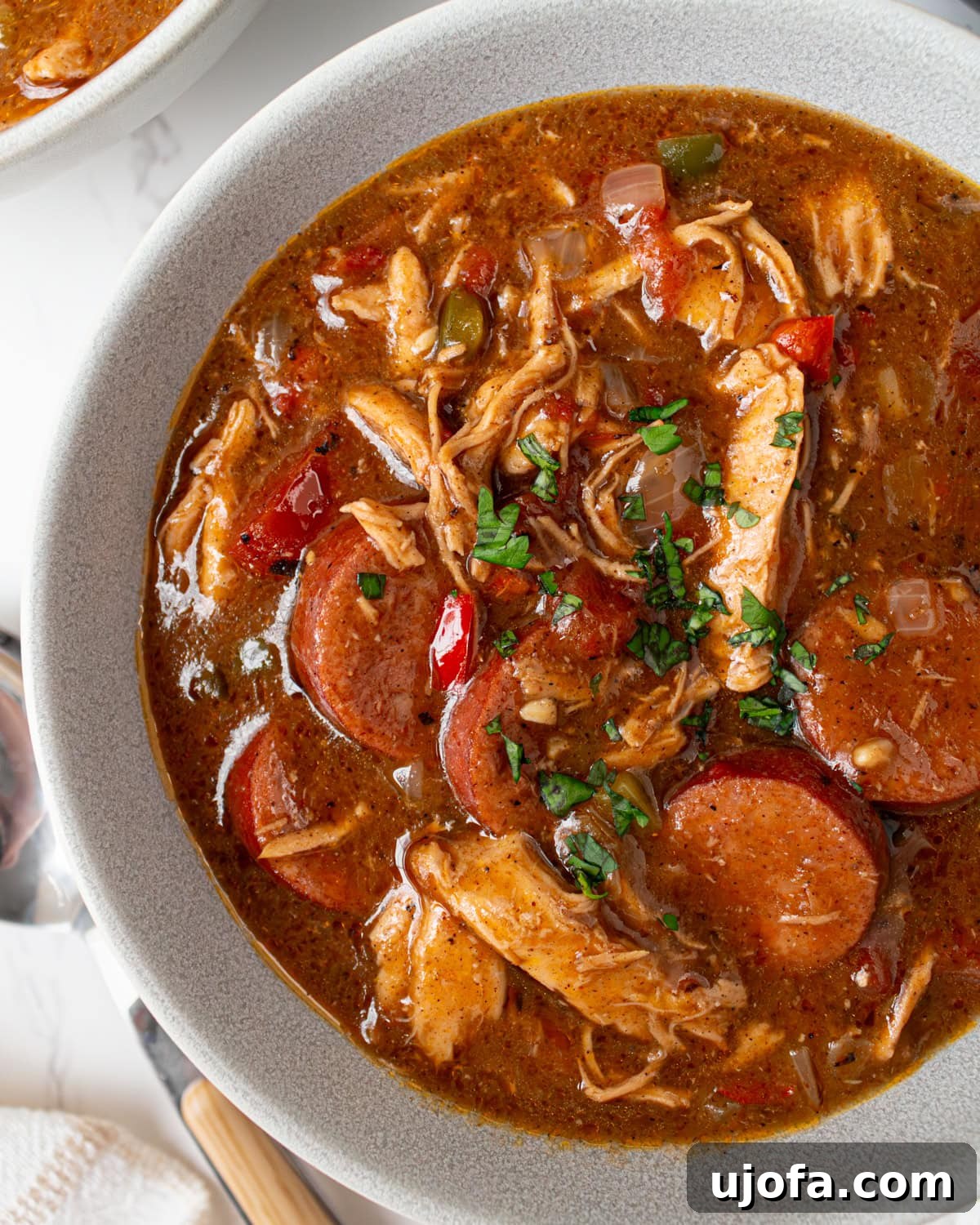
Delve into the comforting embrace of a classic Cajun dish, reimagined for modern dietary needs. This **Gluten-Free Chicken and Sausage Gumbo** is a rich, robust, and incredibly satisfying one-pot meal that promises deep flavor without any gluten. It masterfully combines tender shredded chicken, smoky andouille sausage, and a symphony of bold Cajun spices, all harmonized by a perfectly crafted gluten-free roux. Infused with the classic “holy trinity” of onion, bell pepper, and celery, along with the vibrant tang of fire-roasted tomatoes, this gumbo offers an authentic taste experience that feels both traditional and approachable. With just 15 minutes of initial prep, you can embark on a culinary journey to the heart of Louisiana, right in your own kitchen. Prepare for a cozy, comforting, and utterly delicious gluten-free dinner that will leave you wanting more.
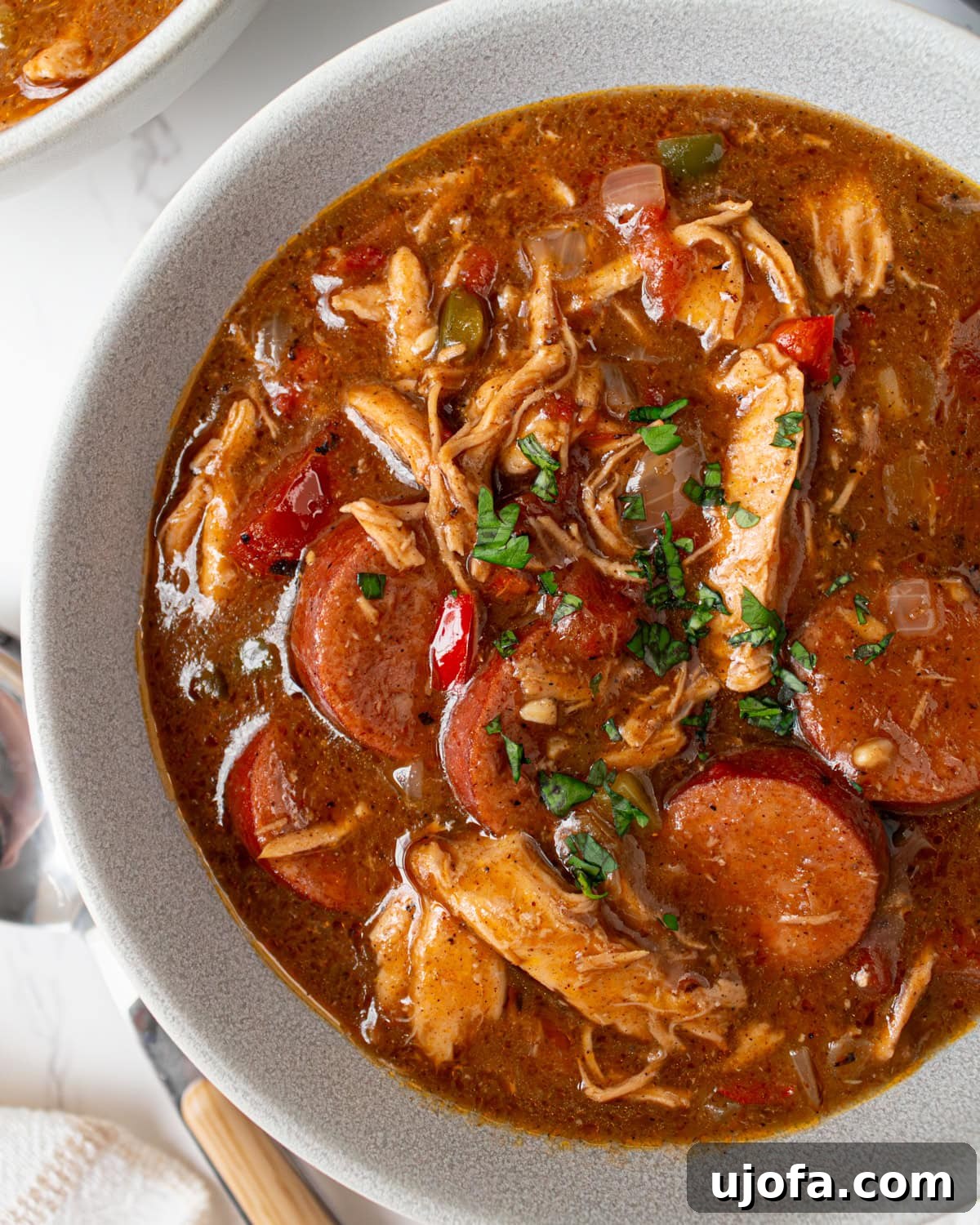
For many, the thought of making gumbo at home conjures images of complex techniques and hours spent stirring. However, this gluten-free rendition demystifies the process, proving that this iconic Cajun comfort food is, at its heart, a simple art of layering flavors and techniques within a single pot. The secret to an authentic gumbo lies in its roux – and for those avoiding gluten, mastering a **gluten-free roux** is a game-changer. My personal journey revealed that patiently browning the gluten-free flour and fat mixture to a rich, dark hue is non-negotiable. This meticulous approach ensures a smooth, nutty base that underpins the entire dish, preventing a scorched taste or separated texture. Once the roux is perfected, the remaining steps are all about building upon this foundation with savory layers of smoky andouille, succulent shredded chicken, the aromatic trinity of vegetables, and a generous kick of bold Cajun seasoning. This step-by-step method transforms what seems like an intimidating recipe into an entirely achievable culinary triumph, rewarding your efforts with a deeply flavored, soul-warming gumbo that tastes as if it simmered all day long.
Unveiling the Secrets to a Flawless Gluten-Free Gumbo
Through extensive testing and a passion for perfecting this gluten-free recipe, I’ve uncovered several key insights that will elevate your gumbo from good to extraordinary. These aren’t just tips; they’re fundamental principles for achieving a truly authentic and delicious result.
- The Nuance of Gluten-Free Flours in Roux: It’s important to recognize that not all gluten-free 1:1 flour blends behave identically when creating a roux. My experiments showed significant differences: some blends browned beautifully to the desired color, developing a rich, nutty aroma, while others quickly developed a burnt flavor long before reaching the ideal dark shade. Based on my experience, aiming for a deep peanut butter color is the safest and most effective sweet spot for a **gluten-free roux**. This ensures maximum flavor development without the risk of scorching.
- The Golden Rule of Roux: Patience is Paramount: This cannot be overstated. Rushing the roux is the most common pitfall. Every attempt to speed up the browning process by increasing the heat resulted in a separated, oily roux or a distinct scorched odor, compromising the entire foundation of the gumbo. The secret lies in maintaining a consistent medium-low heat and whisking continuously. This gentle, unwavering attention yields a smooth, rich, and perfectly browned base that is essential for a truly authentic gumbo flavor.
- The Transformative Power of Simmer Time: While a 15-minute simmer might make your gumbo “taste good,” it takes significantly longer for the flavors to truly meld and deepen into the complex, rich profile that defines a real gumbo. I found that allowing the gumbo to gently bubble for at least 45 minutes, or even longer, is where the magic truly happens. This extended simmer allows the smoky notes from the sausage, the savory essence of the chicken, the aromatic vegetables, and the bold Cajun seasoning to fully integrate and intensify, creating a harmonious and deeply satisfying broth.
- Achieving Richness, Not Greasiness: A good gumbo should be rich and velvety, not overly oily. It’s normal for a small amount of oil to rise to the surface due to the roux and the fat rendered from the sausage. However, if you notice distinct puddles of oil forming, it’s beneficial to gently skim them off while the gumbo simmers. This simple step maintains a luxurious, silky texture in your gumbo, ensuring it remains a comforting and inviting dish rather than a heavy or greasy one.
- The Unbeatable Flavor of Leftovers: Like many hearty stews, gumbo improves with time. After a night in the refrigerator, the flavors settle, deepen, and become even more pronounced. I often find myself preferring the leftovers the next day, making this recipe an excellent candidate for meal prep or for preparing in advance of a gathering. The waiting is truly rewarded with an intensified culinary experience.
Gluten-Free Gumbo: A Cajun Classic Reimagined
Ashley Barbey
8 servings
15 mins
1 hr 30 mins
1 hr 45 mins
Email Recipe
Print Recipe

This gluten-free gumbo is a hearty, one-pot Cajun comfort food loaded with tender chicken, smoky andouille sausage, and bold spices. Made with a rich gluten-free roux, fire-roasted tomatoes, and the classic base of onion, bell pepper, and celery.
Equipment
-
1 Dutch Oven or large saucepan
Ingredients
- 2 lbs. chicken breasts, boneless and skinless
- 1 large carrot, cut into large pieces
- 1 yellow onion, quartered
- 1 bay leaf*
- 1 tbsp black peppercorns
- 2 quarts water
- 12 oz. package of andouille sausage**, sliced into ½” pieces
- 1¼ cup yellow onion, diced
- 1¼ cup bell pepper, red and green, diced
- ½ cup celery, diced
- 3 tbsp garlic, minced
- 1 cup avocado oil
- 1 cup 1:1 GF flour
- 14.5 oz. fire roasted tomatoes***, 1 can
- 3 tbsp Cajun seasoning, I used McCormick GF Cajun Seasoning
- salt and pepper, to taste
- 1 tsp file powder
- hot rice for serving, optional
Instructions
-
In a large pot or Dutch oven, combine the chicken breasts, carrot pieces, quartered onion, bay leaf, black peppercorns, and 2 quarts of water. Bring the mixture to a boil, then reduce the heat to a gentle simmer. Allow it to cook for 25-30 minutes, or until the chicken is thoroughly cooked through (reaching an internal temperature of 160°F / 71°C) and very tender.
-
Carefully remove the cooked chicken from the broth. Strain the remaining liquid, reserving precisely 5½ cups of the flavorful chicken broth. Discard the spent vegetables, bay leaf, and peppercorns. Alternatively, for added texture and flavor, you can finely dice the softened carrots and onions and reintroduce them into the gumbo later.
-
While the chicken is still warm, use two forks to shred it into bite-sized pieces. Transfer the shredded chicken to a large plate and set aside.
-
Using the same pot, place it over medium heat and add the sliced andouille sausage. Cook until the sausage is beautifully golden brown and slightly crispy at the edges, which should take approximately 5-7 minutes. Remove the browned sausage from the pan and add it to the plate with the shredded chicken, ensuring all the rich fat drippings remain in the pot.
-
To the savory sausage drippings still in the pot, add the diced yellow onion, red and green bell peppers, celery, and minced garlic. Sauté these aromatics for 8-10 minutes, stirring occasionally, until they become tender, glossy, and just begin to take on a golden hue at the edges. Once cooked, transfer these vegetables to the plate containing the chicken and sausage.
-
Reduce the heat to medium-low. Add the avocado oil and the gluten-free 1:1 flour to the pot. Whisk continuously and patiently for 30-45 minutes. The mixture will gradually transform into a smooth, thick consistency, resembling warm pudding, and darken to the color of dark peanut butter. This step is critical and should not be rushed; slow, constant whisking prevents burning and separation, forming the essential foundation of your gumbo’s flavor and thickness.
-
Once your roux reaches the perfect color, whisk in the Cajun seasoning, followed by salt and pepper to taste. At this point, the roux will be very thick and aromatic.
-
Return the shredded chicken, browned sausage, and sautéed vegetables to the pot. Add the can of fire-roasted tomatoes and the reserved 5½ cups of chicken broth. Stir all the ingredients thoroughly until they are well combined and the mixture begins to loosen into a hearty stew-like consistency.
-
Bring the gumbo to a gentle simmer. Cook uncovered for an additional 30-45 minutes, stirring occasionally. This simmering period is crucial for the flavors to deepen and meld, and for the gumbo to thicken further. If you observe small pools of oil rising to the surface, gently skim them off to maintain a rich, not greasy, texture.
-
Remove the pot from the heat. Stir in 1 teaspoon of filé powder. Taste the gumbo and adjust the seasoning with additional salt and pepper if desired. Serve this flavorful gumbo on its own for a hearty meal, or spoon it generously over hot, long-grain white rice.
Notes for Perfecting Your Gumbo
*Bay leaves are **optional** but **beautifully traditional**. Adding an extra bay leaf while the gumbo simmers can impart a **deeper, more classic Cajun flavor**. While not strictly required, it introduces a subtle earthy note that enhances the authenticity of the broth.
**If you find the spice level of traditional andouille sausage too intense, you can easily **swap it for a milder chicken sausage**. This allows you to control the heat while still enjoying a delicious, protein-packed gumbo.
***For an enhanced depth of flavor and a touch of smoky complexity, always opt for **fire-roasted tomatoes**. Their inherent char adds another layer of deliciousness to the gumbo’s rich broth.
****The amount of **Cajun seasoning can be adjusted to your personal taste**. Start with the recommended amount and add more as needed to achieve your desired level of spice and flavor.
Nutrition
Calories: 612kcal
Carbohydrates: 23g
Protein: 35g
Fat: 43g
Saturated Fat: 8g
Polyunsaturated Fat: 7g
Monounsaturated Fat: 25g
Trans Fat: 0.1g
Cholesterol: 109mg
Sodium: 580mg
Potassium: 800mg
Fiber: 5g
Sugar: 6g
Vitamin A: 3611IU
Vitamin C: 37mg
Calcium: 69mg
Iron: 3mg
Nutrition information is automatically calculated, so should only be used as an approximation.
Additional Information
Dinner
American
Tried this recipe?
Mention @mamaknowsglutenfree or tag #mamaknowsglutenfree!
How to Make Gluten-Free Gumbo: A Detailed Step-by-Step Guide
Creating a truly authentic and delicious gluten-free gumbo is an enjoyable process when you follow these clear, detailed steps. Each stage is designed to build layers of flavor, ensuring a rich and satisfying final dish.
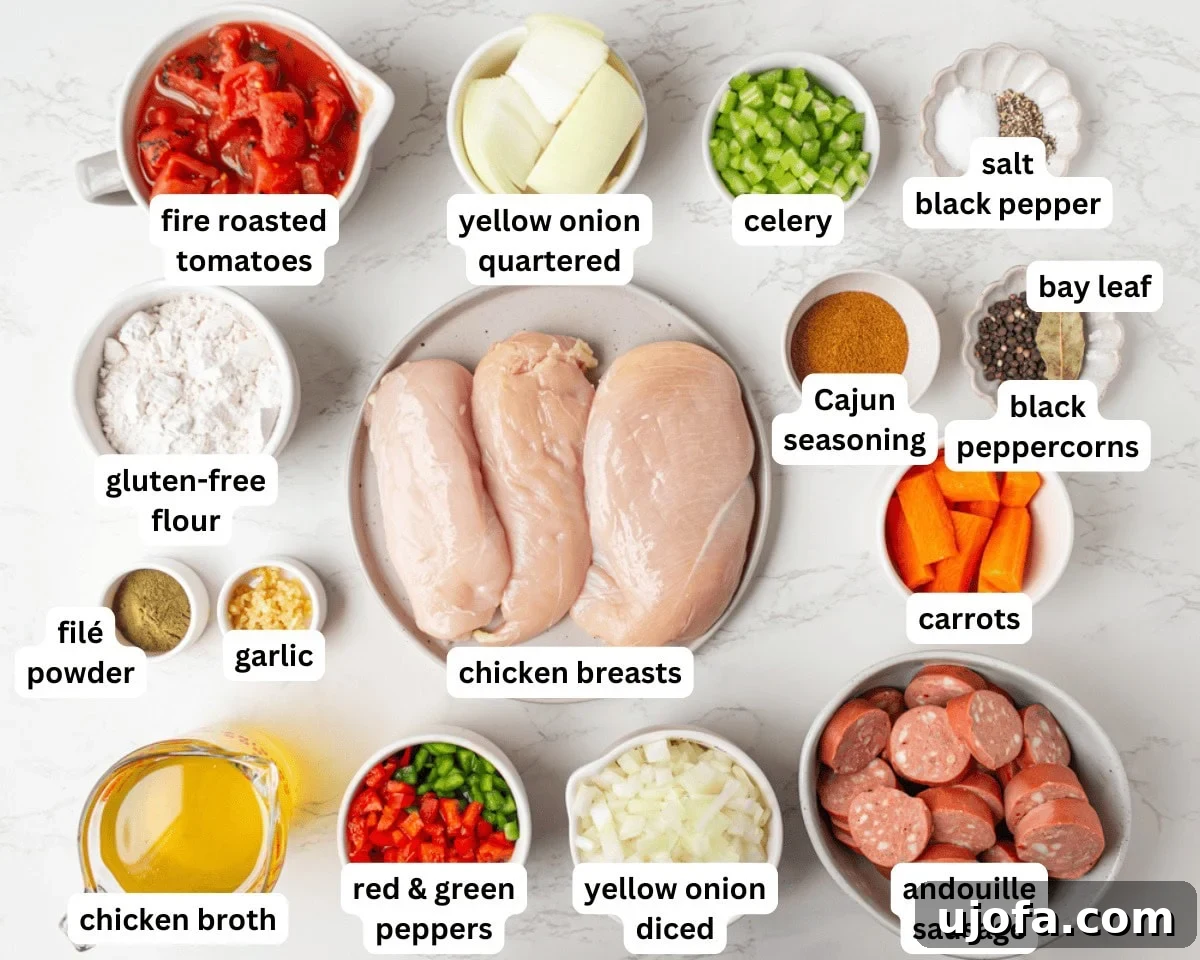
Before you begin, ensure all your ingredients are prepped and ready to go. This mise en place will streamline your cooking experience.
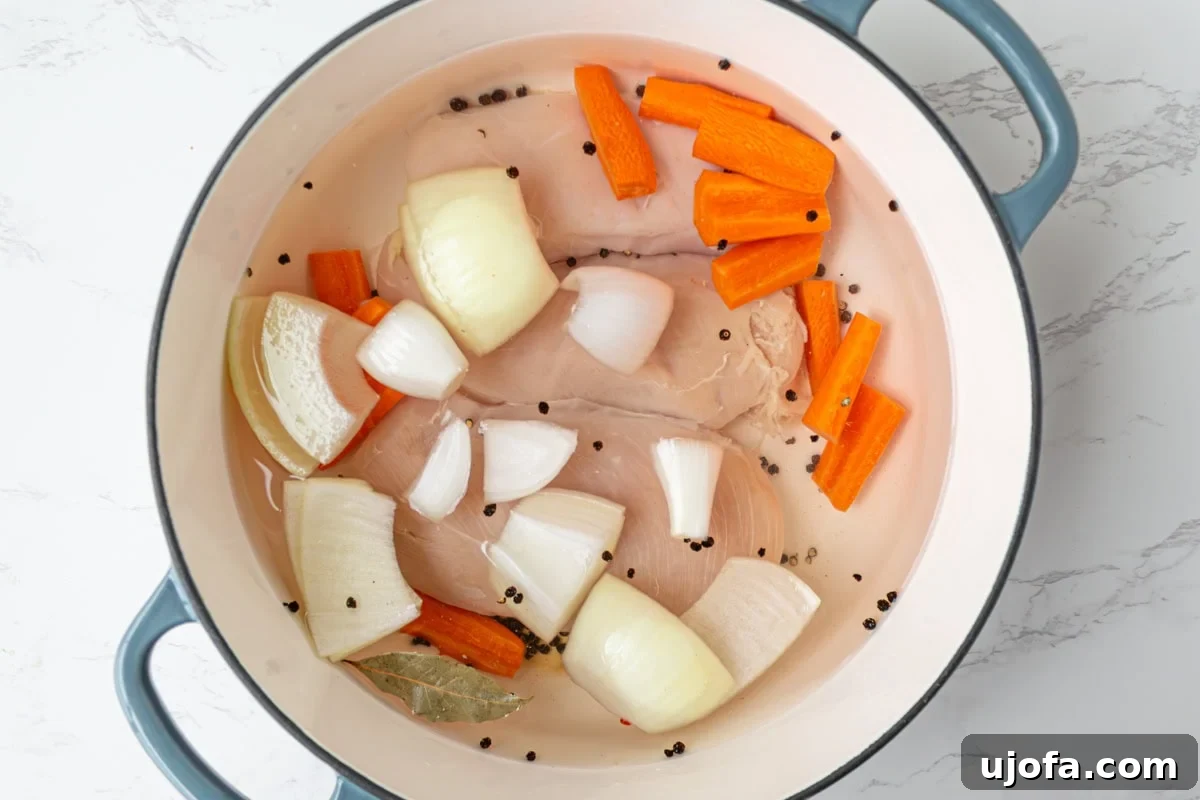
Step 1: Build the Broth. In a substantial Dutch oven or large pot, combine 2 lbs. (700g) of boneless, skinless chicken breasts with 1 large carrot (approximately 61g), cut into large, rough pieces. Add 1 yellow onion (about 177g), quartered, along with 1 bay leaf and 1 tbsp (10g) of black peppercorns. Pour in 2 quarts (1.9 liters) of water. Bring the mixture to a rolling boil, then immediately reduce the heat to a steady simmer. Let it cook for 25–30 minutes, or until the chicken reaches an internal temperature of 160°F (71°C) and is fork-tender. This initial step is crucial for developing a rich, flavorful broth that will be the backbone of your gumbo.
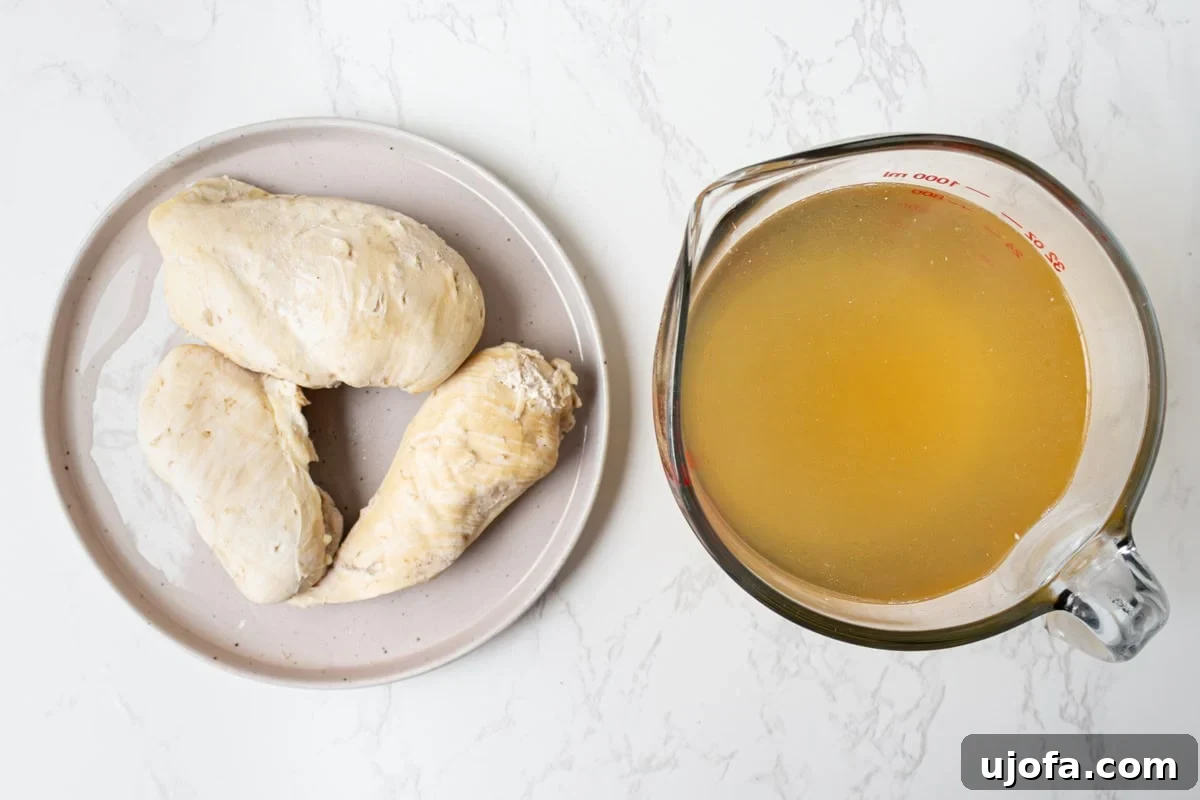
Step 2: Strain and Reserve the Broth. Carefully remove the cooked chicken from the pot and set it aside. Using a fine-mesh sieve, strain the broth into a separate heatproof bowl or container. Measure and reserve precisely 5½ cups (1.3 liters) of this homemade chicken broth. Discard the cooked carrot, onion, bay leaf, and peppercorns. If you prefer, and to minimize waste, you can finely dice the softened carrots and onions from the broth and incorporate them back into the gumbo later with the other sautéed vegetables.
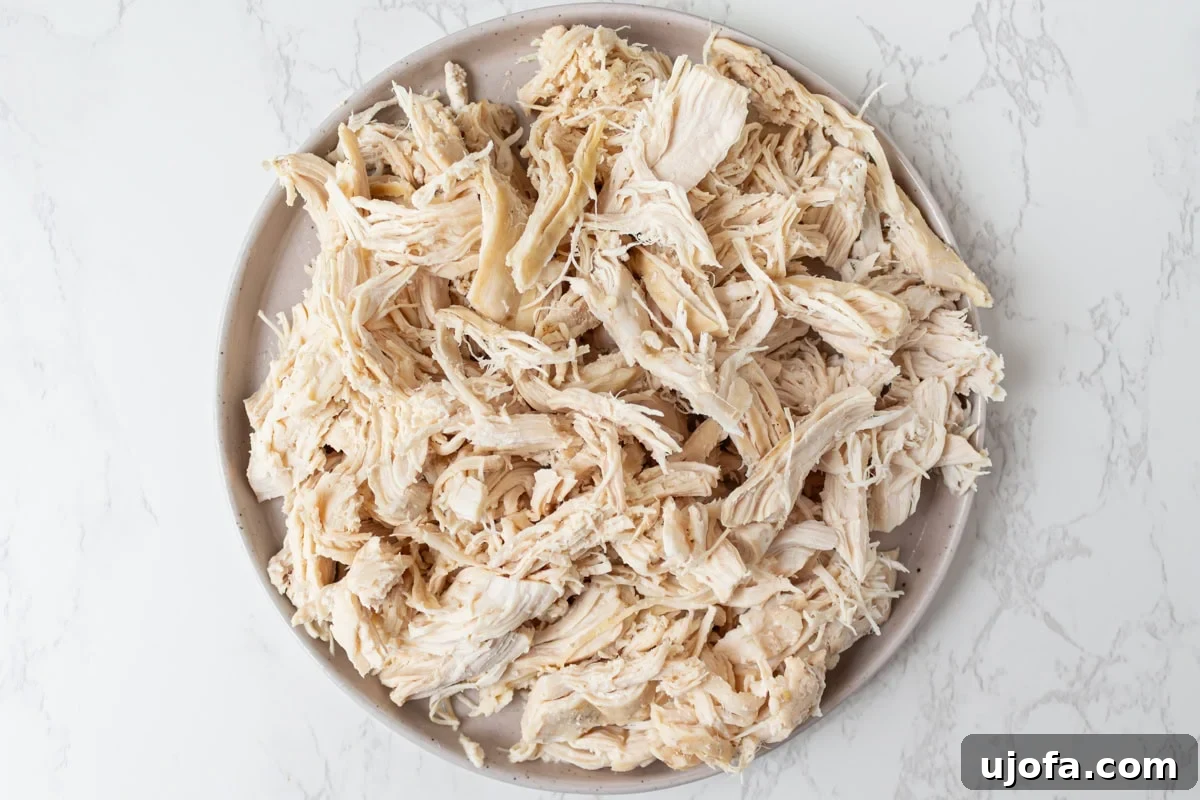
Step 3: Shred the Chicken. Once the chicken has cooled slightly but is still warm enough to handle comfortably, use two forks to easily shred it into bite-sized pieces. Place the shredded chicken on a large plate alongside the other reserved ingredients.

Step 4: Brown the Andouille Sausage. Return the same Dutch oven to medium heat. Add 12 oz. (340g) of andouille sausage, sliced into ½-inch thick pieces. Cook the sausage, stirring occasionally, until the edges are nicely browned and slightly crisp, which typically takes about 5–7 minutes. Using a slotted spoon, transfer the browned sausage to the plate with the shredded chicken, making sure to leave all the flavorful rendered fat and drippings in the pot. These drippings are essential for the next step.
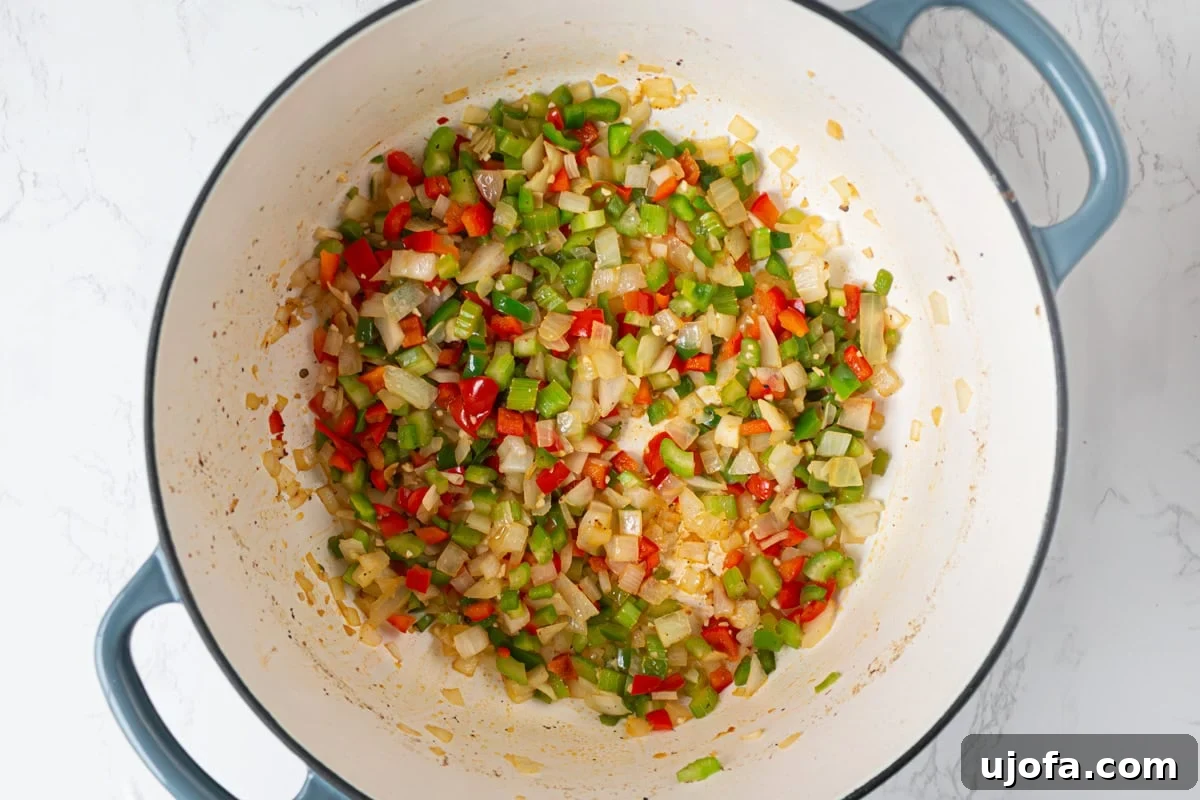
Step 5: Sauté the Vegetables (The Holy Trinity). To the aromatic sausage drippings remaining in the pot, add 1¼ cups (125g) of diced yellow onion, 1¼ cups (177g) of diced red and green bell peppers, ½ cup (71g) of diced celery, and 3 tbsp (24g) of minced garlic. Cook these vegetables for 8–10 minutes, stirring frequently, until they become tender, glossy, and just begin to caramelize at the edges. This combination, often called the “holy trinity” in Cajun cooking, is vital for the gumbo’s authentic taste. Once cooked, transfer these sautéed vegetables to the plate with the chicken and sausage.
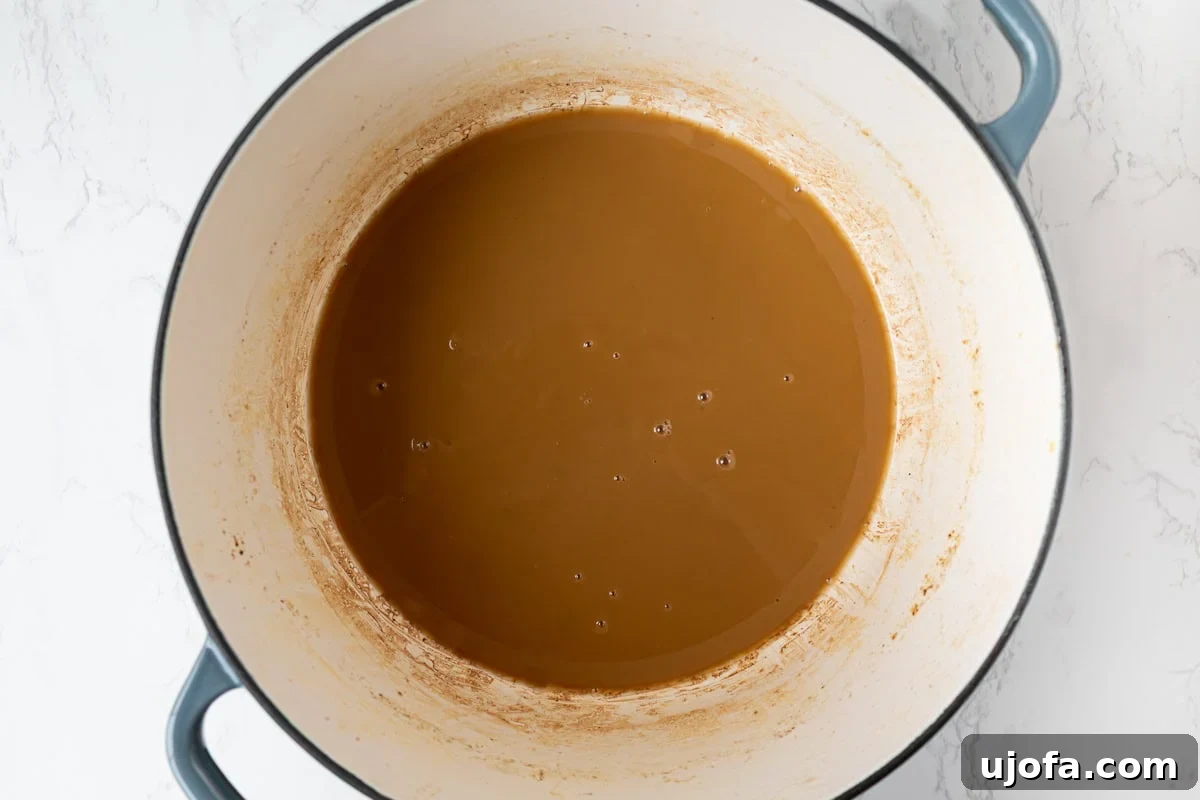
Step 6: Make the Gluten-Free Roux. Reduce the heat to medium-low. Add 1 cup (240ml) of avocado oil and 1 cup (120g) of your preferred gluten-free 1:1 flour blend to the pot. Begin whisking constantly and without interruption. This is the most crucial and time-consuming step, requiring patience. Continue whisking for a full 30–45 minutes, or until the roux achieves a deep, dark peanut butter color and has a smooth, thick consistency, much like warm pudding. It is imperative not to rush this process by increasing the heat, as this will cause the roux to burn or separate, ruining the base of your gumbo. The slow, gradual darkening is what develops its signature nutty flavor.
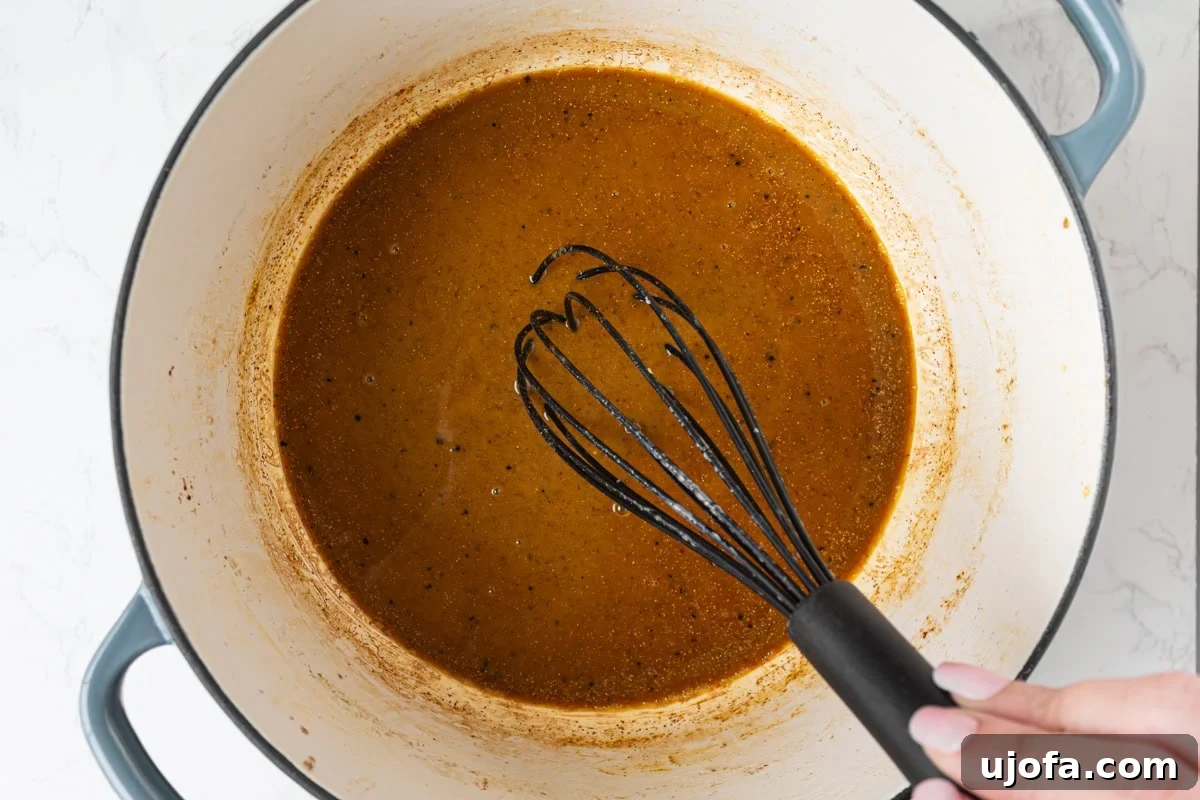
Step 7: Season the Roux. Once your roux has reached the perfect dark peanut butter color, whisk in 3 tbsp (27g) of Cajun seasoning, along with salt and freshly ground black pepper to taste. The roux will now be incredibly thick and aromatic, ready to welcome the other ingredients.
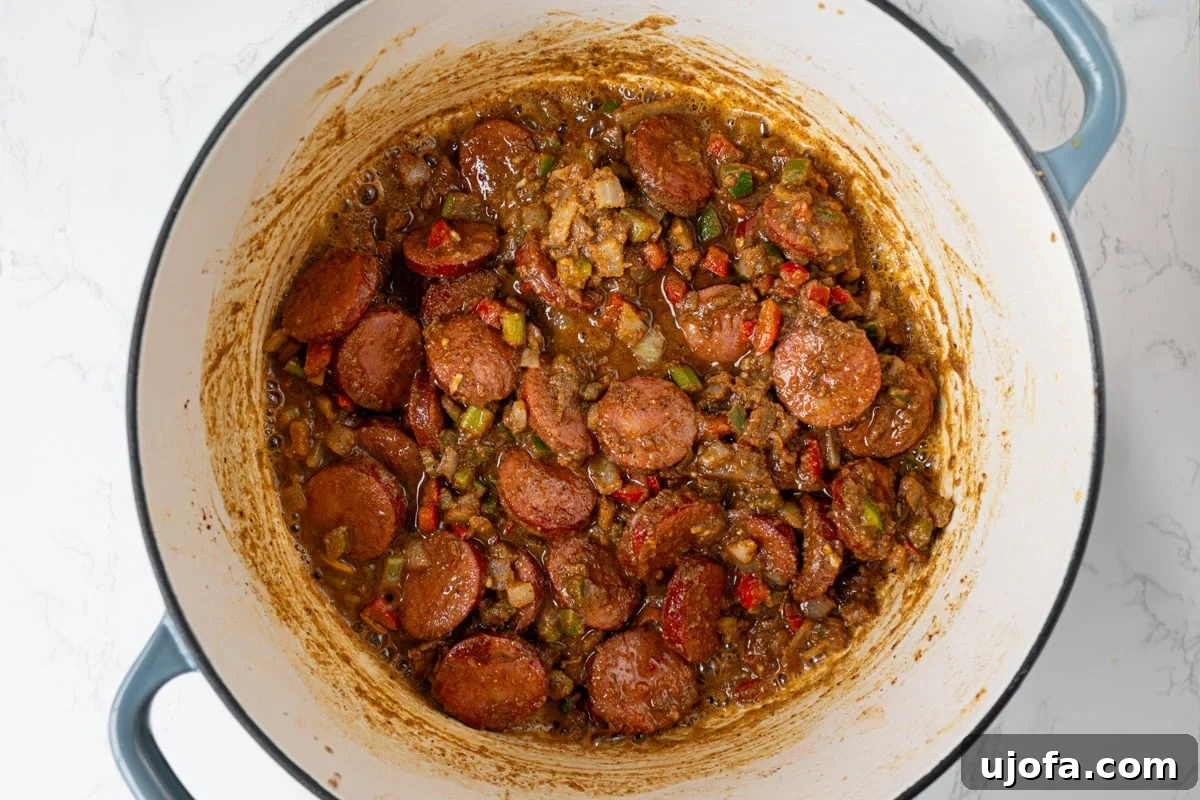
Step 8: Combine the Gumbo Ingredients. Return the shredded chicken, browned sausage, and sautéed vegetables to the pot with the seasoned roux. Add one 14.5-oz can of fire-roasted tomatoes (undrained, to maximize flavor) and the 5½ cups (1.3 liters) of reserved chicken broth. Stir all the ingredients thoroughly until everything is fully combined. The gumbo will begin to transform into a thick, rustic stew-like consistency.

Step 9: Simmer to Develop Flavor. Bring the gumbo to a gentle, consistent simmer. Cook uncovered for another 30–45 minutes, stirring occasionally to prevent sticking and ensure even cooking. During this extended simmer, the flavors will deepen and meld beautifully, and the gumbo will thicken further to its characteristic consistency. Keep an eye out for any small pools of oil that may rise to the surface; gently skim these off with a spoon to ensure a rich, velvety texture without excessive greasiness.
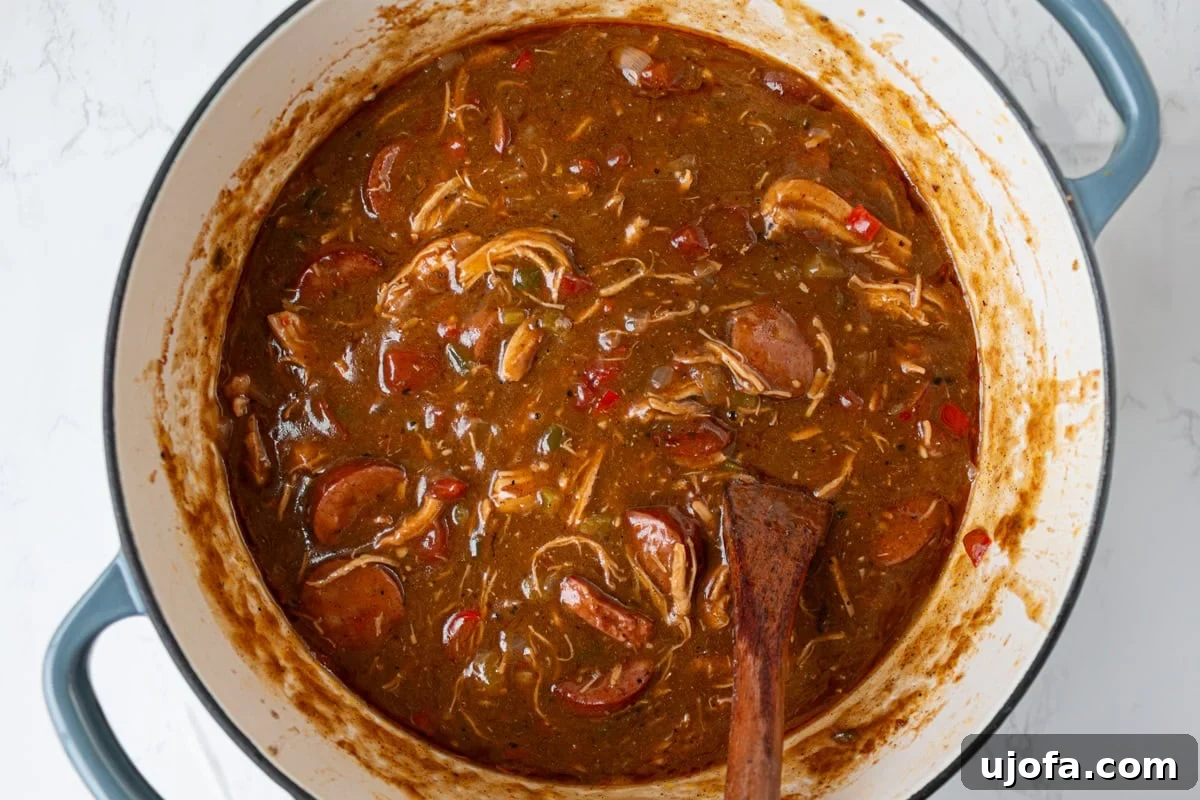
Step 10: Finish and Adjust Seasoning. Remove the pot from the heat. Stir in 1 teaspoon of filé powder. Filé powder, made from ground sassafras leaves, is a traditional gumbo thickener and imparts a distinctive earthy, slightly citrusy flavor. Taste the gumbo and adjust the seasoning as needed, adding more salt and pepper to suit your preference. The flavors should be balanced and bold.
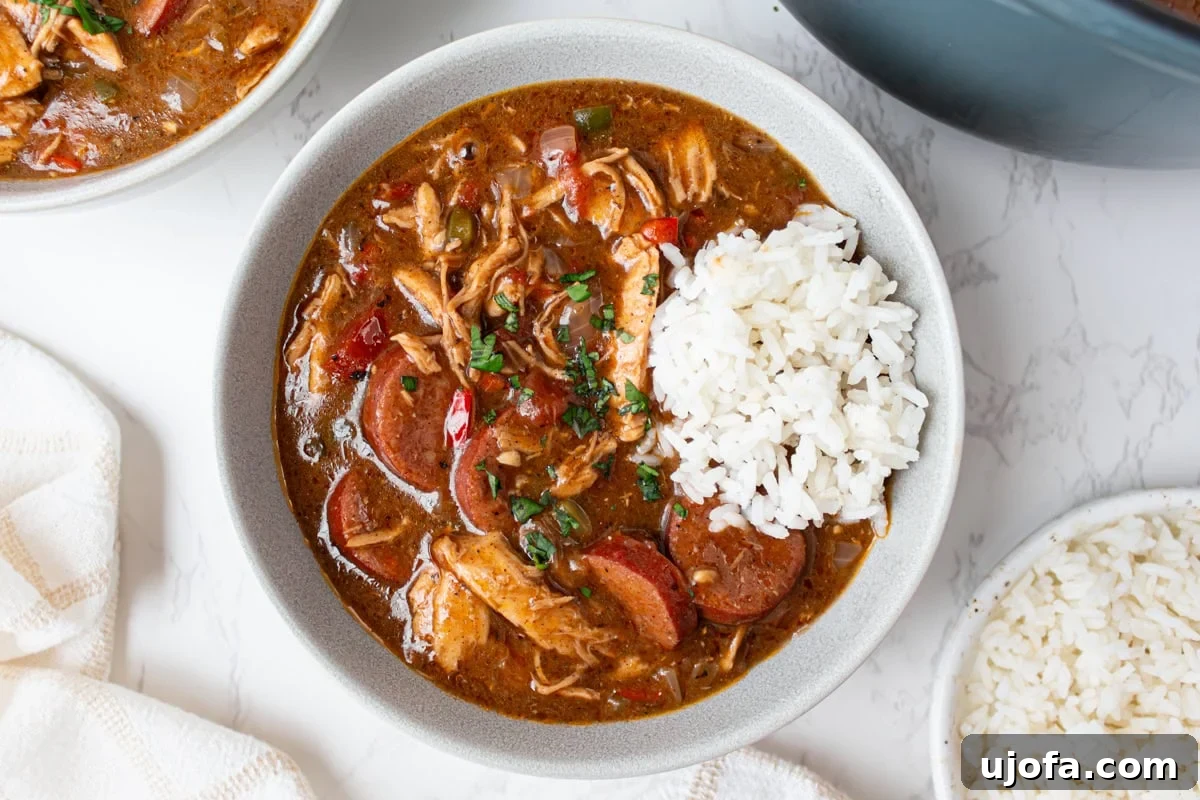
Step 11: Serve and Enjoy. Ladle the hot gumbo into bowls. It is wonderfully satisfying on its own, but traditionally, it’s served spooned generously over a bed of steamed long-grain white rice. Garnish with a sprinkle of fresh parsley or green onions for a touch of freshness and color. Gather your loved ones and savor this homemade taste of Cajun country.

Serving Suggestions for Your Gluten-Free Gumbo
This gluten-free gumbo is a complete meal in itself, but there are many ways to enhance and complement its rich flavors, turning it into an even more memorable dining experience.
- Classic Rice Pairing: The most traditional way to enjoy gumbo is ladled over fluffy long-grain white rice. The rice absorbs the flavorful broth beautifully, providing a wonderful textural contrast. For a lighter, vegetable-packed option, try serving it over cauliflower rice.
- Bread for Sopping: A key part of enjoying any hearty stew is having something to soak up every last drop of the delicious broth. Warm gluten-free buttermilk biscuits are an absolute dream alongside this gumbo, offering a tender, flaky counterpoint. Alternatively, a slice of savory gluten-free cornbread or simple gluten-free crackers also make excellent accompaniments.
- Fresh Garnish: A sprinkle of fresh chopped parsley or sliced green onions not only adds a pop of color but also a fresh, herbaceous note that brightens the rich gumbo.
- Perfect for Gatherings: Gumbo is a fantastic dish for entertaining. Its one-pot nature makes cleanup easy, and it’s a crowd-pleaser. Serve it with a simple green salad to round out the meal.
- Weeknight Hero and Meal Prep Star: Beyond special occasions, this gumbo is ideal for busy weeknights. It reheats incredibly well, making it a perfect candidate for meal prepping. Its flavors actually deepen and improve overnight, meaning leftovers are often even more delicious than the fresh batch.
Storage and Make-Ahead Instructions
This gluten-free gumbo is a fantastic make-ahead meal, as its flavors intensify and develop even further after a day or two. Here’s how to best store and reheat your delicious creation:
- Refrigeration: Allow the gumbo to cool completely to room temperature before storing. Transfer it to an airtight container and refrigerate for up to 4-5 days. The longer it sits, the more the flavors will marry and deepen, making your leftovers incredibly delicious.
- Freezing: Gumbo freezes beautifully! For best results, freeze the gumbo without any rice. Portion it out into freezer-safe containers or heavy-duty zip-top freezer bags. This makes it convenient to thaw only the amount you need. It will keep well in the freezer for up to 3 months.
- Thawing and Reheating: To thaw, simply transfer the frozen gumbo to the refrigerator overnight. Once thawed, reheat gently on the stovetop over medium-low heat, stirring occasionally, until it is heated through. If the gumbo has thickened too much during storage, you can add a small splash of chicken broth or water to bring it back to your desired consistency. Always serve reheated gumbo over freshly cooked rice for the best experience.
- Make-Ahead Benefits: Preparing this gumbo a day in advance is highly recommended. This allows all the spices and ingredients to meld together, creating a much more complex and satisfying flavor profile. In my opinion, it tastes even better on the second day, making it a stress-free option for entertaining or for enjoying a quick, flavorful meal during the week.
Frequently Asked Questions About Gluten-Free Gumbo
Here are some common questions about making gluten-free gumbo:
-
What is the best gluten-free flour for a roux?
A good quality 1:1 gluten-free all-purpose flour blend is ideal. Look for blends that specifically state “cup-for-cup” or “baking blend,” as these are designed to mimic wheat flour in most recipes. Avoid blends that are primarily nut flours or those with a very strong flavor profile, as they can alter the taste of your gumbo. My testing showed that some blends brown better than others, so pay close attention during the roux-making process.
-
Can I make this gumbo vegetarian or vegan?
While this recipe focuses on chicken and sausage, you can adapt it. For a vegetarian version, omit the meats and use vegetable broth. You can add more vegetables like okra, mushrooms, or sweet potatoes. For vegan, ensure your gluten-free flour is suitable and use a plant-based oil for the roux, along with vegetable broth and plant-based sausage alternatives.
-
Is gumbo supposed to be spicy?
Gumbo typically has a kick, especially with traditional andouille sausage and Cajun seasoning. However, you can control the spice level. Use a milder sausage (like chicken sausage) if you prefer less heat, and adjust the amount of Cajun seasoning to your taste. For an extra kick, a dash of hot sauce can be added at the table.
-
My roux separated or looks greasy, what went wrong?
A separated or greasy roux often means it was cooked too quickly or at too high a heat. The key to a successful roux is patience and constant whisking over medium-low heat. If it separates, it may be too late to fully salvage, but you can try to continue whisking vigorously on low heat to recombine. If it’s burnt, you’ll need to start over, as the burnt flavor will permeate the entire gumbo.
-
What is filé powder and is it necessary?
Filé powder is a traditional seasoning and thickener for gumbo, made from dried and ground sassafras leaves. It adds a unique earthy, slightly citrusy flavor and contributes to the gumbo’s texture. While not strictly “necessary” if you have a well-made roux, it adds an authentic touch. It is usually added off the heat at the end, as boiling it can make the gumbo stringy.
More Gluten-Free Comfort Dinner Recipes You’ll Love
If you enjoyed this hearty gumbo, be sure to explore more of our favorite gluten-free comfort food recipes:
- Gluten-Free Biscuits and Gravy: Indulge in flaky, tender gluten-free biscuits smothered in a rich, peppery sausage gravy – a quintessential comfort breakfast or brunch, made entirely gluten-free.
- Gluten-Free Baked Ziti: Enjoy perfectly tender gluten-free pasta baked to perfection in a vibrant tomato sauce, layered with gooey, melty cheese and aromatic savory herbs. This easy Italian-style dinner delivers ultimate comfort without the gluten.
- Gluten-Free Beef Stroganoff: Savor tender strips of beef and earthy mushrooms swimming in a luxurious, creamy, and deeply savory sauce, traditionally served over gluten-free pasta. It’s a cozy, comforting dinner classic that’s perfect for any occasion.