
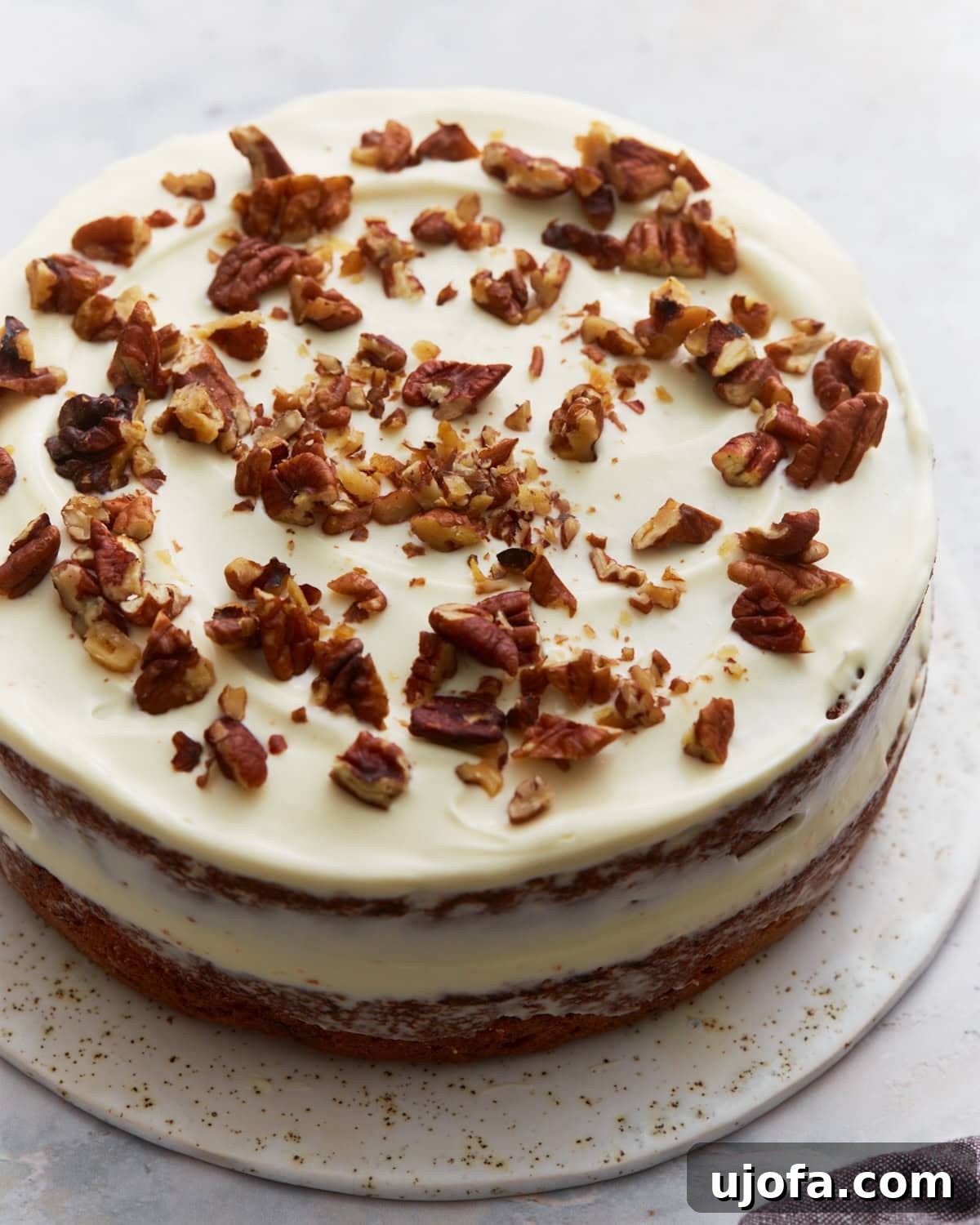
Indulge in the ultimate gluten-free treat with this incredibly moist and tender almond flour carrot cake. Crafted with finely ground almond flour, a generous helping of freshly shredded carrots, and a symphony of warm, inviting spices, this cake is crowned with a rich, velvety cream cheese frosting that melts in your mouth. Experience the classic, comforting flavors of cinnamon, nutmeg, and ginger in every single bite, offering a grain-free dessert that sacrifices nothing in taste or texture. Perfect for special occasions like Easter brunch, charming spring gatherings, or simply when you crave a delicious homemade cake without traditional wheat flour, this recipe simplifies baking. With straightforward pantry ingredients and only about 20 minutes of active prep time, you can quickly bring this beautifully soft, layered cake to life, ready to impress family and friends.
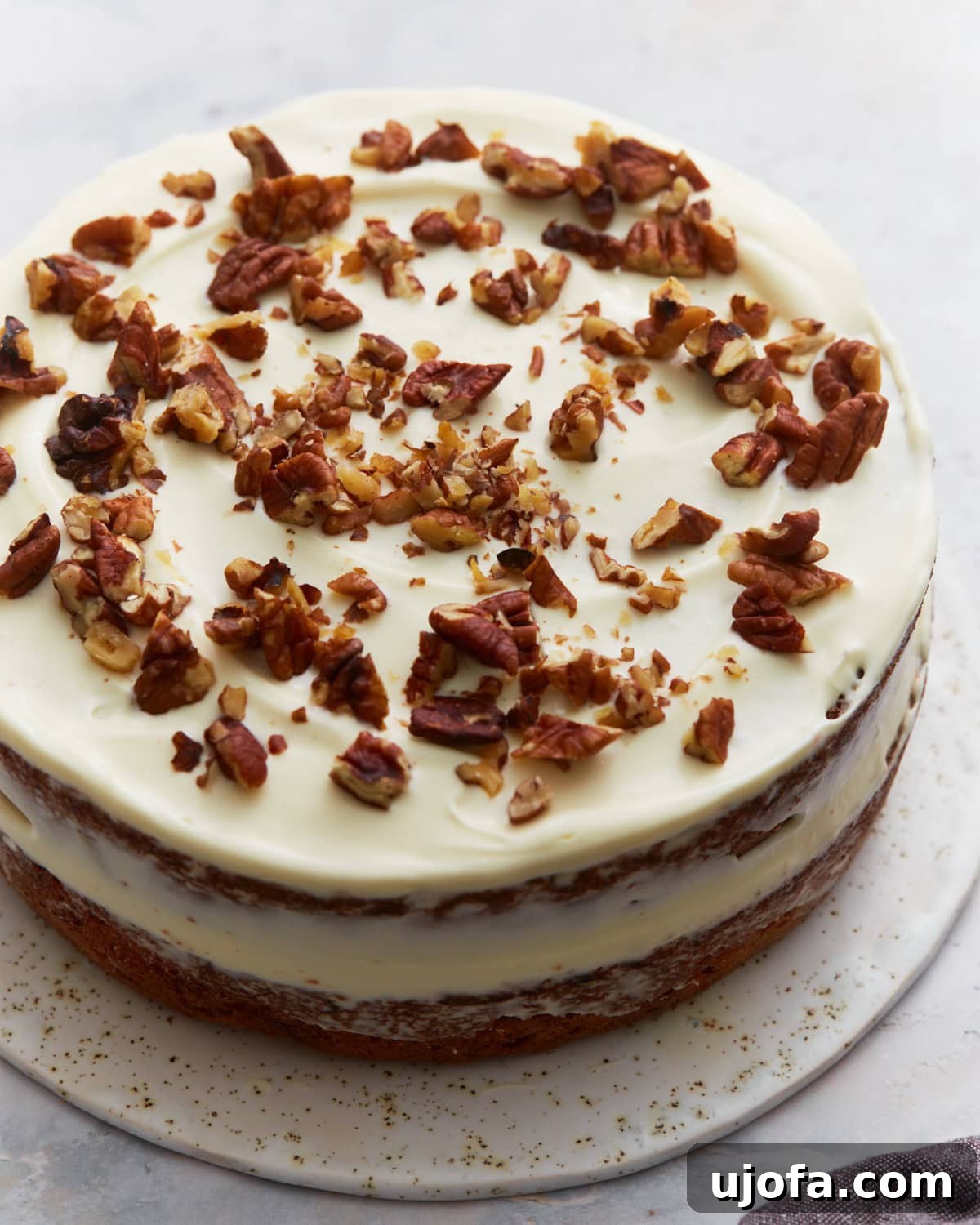
Having perfected a classic gluten-free carrot cake over countless iterations, my journey naturally led me to explore the unique properties of almond flour. The challenge with almond flour lies in its distinct liquid absorption compared to wheat flour. An imbalance can quickly lead to a dense crumb or an unpleasantly gummy center. Through extensive experimentation, I discovered several crucial techniques that make all the difference: gently squeezing excess moisture from shredded carrots, opting for finely ground almond flour (never almond meal), and mixing the batter just until combined. This careful approach ensures a light and airy texture. The thoughtful combination of granulated and brown sugar not only adds depth of flavor but also contributes to the cake’s structural integrity, while a touch of oil keeps the crumb wonderfully soft for days. This perfected version finally achieved the quintessential carrot cake texture I’ve always aimed for—tender, richly spiced, and robust enough to support a lavish layer of cream cheese frosting. I am confident you will love it, and I’d be delighted to hear about your baking experience.
Why Bake with Almond Flour?
Almond flour is a fantastic alternative for gluten-free baking, offering numerous benefits beyond simply being grain-free. It imparts a delicate, nutty flavor that complements the warm spices of carrot cake beautifully. Rich in protein and healthy fats, it can make desserts more satisfying and often has a lower glycemic index than traditional wheat flours. For those following specific dietary restrictions, such as keto or paleo, almond flour is an invaluable ingredient. However, its unique properties require a slightly different approach to achieve optimal results, as it behaves differently in terms of moisture and structure. This recipe is specifically designed to harness the best qualities of almond flour, ensuring a moist, tender cake every time.
Key Techniques for Almond Flour Carrot Cake Success
Achieving the perfect almond flour carrot cake requires attention to a few critical details. These insights, gathered from rigorous testing, will help you avoid common pitfalls and ensure your cake is nothing short of spectacular:
- Choose Finely Ground Almond Flour: This is paramount. When I experimented with almond meal, the resulting cake had a noticeably heavier and slightly gritty texture. Finely ground almond flour, often labeled “blanched almond flour,” creates a significantly softer and more tender crumb, closely mimicking the delicate texture of traditional wheat-based carrot cake. The finer grind means better absorption and a smoother mouthfeel.
- Gently Squeeze Shredded Carrots: Carrots contain a surprising amount of water. If added to the batter without proper preparation, this excess moisture can lead to a cake that is too dense or even slightly gummy in the center. After shredding, gently press the carrots between paper towels or a clean kitchen towel to remove some of this liquid. The goal is to make them moist, not dry, ensuring they contribute flavor without compromising the cake’s delicate structure.
- Avoid Overmixing the Batter: Almond flour cakes are particularly sensitive to overmixing. Unlike wheat flour, which develops gluten when mixed, almond flour doesn’t. Overworking the batter can lead to a tough, dense, or heavy cake. Once the dry ingredients are added, stir only until everything is just combined and no streaks of dry flour remain. A light touch here preserves the tender crumb.
- Ensure Baking Powder is Fresh and Active: Since almond flour lacks gluten, it relies heavily on leavening agents like baking powder and baking soda for its rise and light texture. If your baking powder is old or inactive, your cake may turn out flat, heavy, or fail to rise properly. Always check the expiration date and, if in doubt, test its freshness by adding a teaspoon to a small bowl of hot water—it should bubble vigorously.
- Cool the Cake Completely Before Frosting: This step cannot be rushed. Even slightly warm cake layers will cause your beautiful cream cheese frosting to melt, slide, and create a messy presentation. Allow the cakes to cool fully on a wire rack until they reach room temperature. This ensures the frosting maintains its thick, fluffy consistency and adheres perfectly, creating a professional and delicious finish.
Almond Flour Carrot Cake
By: Sabine Venier
Servings: 12 slices
Prep Time: 20 mins
Cook Time: 40 mins
Total Time: 1 hr
Moist and tender, this almond flour carrot cake is a gluten-free, grain-free dessert made with freshly shredded carrots, warm spices, and rich cream cheese frosting. It has the classic carrot cake flavor you love and comes together in just 20 minutes using simple pantry ingredients.
Ingredients
For the Cake
- 4 large eggs
- ½ cup vegetable oil
- ¾ cup granulated sugar
- ½ cup packed light brown sugar
- 2 tsp pure vanilla extract
- 3½ cups almond flour, finely ground
- 2¼ tsp baking powder
- ¼ tsp baking soda
- 2 tsp ground cinnamon
- ½ tsp ground nutmeg
- ½ tsp ground ginger
- ¼ tsp ground cloves
- ½ tsp salt
- 2 cups shredded carrots, about 3 medium carrots – squeeze gently
- 1 cup chopped walnuts or pecans
- ½ cup raisins
For the Frosting
- 8 oz. cream cheese, at room temperature
- 2 cups powdered sugar, sifted
- ⅓ cup heavy cream
- ½ cup chopped walnuts or pecans (for topping)
Instructions
- Preheat oven to 350°F (180°C). Grease two 8×8-inch baking pans thoroughly and line the bottoms with parchment paper for easy removal.
- In a large mixing bowl, combine the eggs, vegetable oil, granulated sugar, light brown sugar, and pure vanilla extract. Beat the mixture until it is smooth, well-combined, and appears slightly lighter in color and thickened.
- To the wet ingredients, add the finely ground almond flour, baking powder, baking soda, ground cinnamon, ground nutmeg, ground ginger, ground cloves, and salt. Mix gently using a spatula or spoon until the dry ingredients are just incorporated and no flour streaks remain. Be careful not to overmix, as this can result in a dense cake.
- Gently fold in the prepared shredded carrots (ensure excess moisture has been squeezed out), chopped walnuts or pecans, and raisins until they are evenly distributed throughout the batter.
- Divide the batter equally between the two prepared baking pans. Use a spatula to gently spread the batter into an even layer in each pan, ensuring smooth tops for even baking.
- Bake for 35-40 minutes, or until the cake tops are golden brown, the edges pull slightly away from the sides of the pan, and a toothpick inserted into the center comes out clean or with a few moist crumbs. The center of the cake should also spring back lightly when touched.
- Allow the cakes to cool in their pans on a wire rack for about 15 minutes. This helps them firm up before handling. After 15 minutes, carefully invert the cakes onto the wire rack to cool completely. Ensure they are entirely cool before proceeding to the frosting stage; warm cakes will melt the frosting.
- While the cakes are cooling, prepare the cream cheese frosting. In a large bowl, beat the room-temperature cream cheese on medium speed until it is light, fluffy, and perfectly smooth, with no lumps remaining.
- Gradually add the sifted powdered sugar to the cream cheese, mixing on low speed until fully combined and thick. Slowly pour in the heavy cream and continue to beat on medium speed for 2-3 minutes until the frosting becomes wonderfully creamy, airy, and easily spreadable.
- To assemble, place one cooled cake layer on your chosen serving plate. Spread a generous and even layer of the cream cheese frosting over the top. Carefully place the second cooled cake layer directly on top of the frosted first layer.
- Apply the remaining frosting to the top of the second cake layer. You can spread it evenly for a classic look or get creative with swirls. If desired, frost the sides of the cake as well. For a beautiful finish and added texture, sprinkle the ½ cup of chopped walnuts or pecans over the top of the frosted cake.
Notes
- Customizing Mix-ins: Feel free to omit the raisins if they are not to your taste. You can also easily swap walnuts for pecans, or use a combination of both, depending on your preference.
- Cupcake Conversion: To transform this recipe into delicious cupcakes, simply adjust the baking time to approximately 20-25 minutes. Fill cupcake liners about two-thirds full.
- Dairy-Free Option: For a dairy-free frosting, substitute the cream cheese with a high-quality dairy-free cream cheese alternative and use full-fat coconut cream (chilled, only the solid part) in place of heavy cream.
- For the best presentation, consider chilling the cake briefly before slicing. This helps the frosting set and allows for cleaner cuts.
Nutrition
Serving: 1 slice
Calories: 660 kcal
Carbohydrates: 59 g
Protein: 13 g
Fat: 45 g
Saturated Fat: 9 g
Polyunsaturated Fat: 13 g
Monounsaturated Fat: 6 g
Trans Fat: 0.1 g
Cholesterol: 81 mg
Sodium: 303 mg
Potassium: 234 mg
Fiber: 6 g
Sugar: 45 g
Vitamin A: 3376 IU
Vitamin C: 1 mg
Calcium: 178 mg
Iron: 3 mg
Nutrition information is automatically calculated and should be used as an approximation.
Additional Info
Course: Baking, Dessert
Cuisine: American
If you’ve enjoyed making this recipe, we’d love to see your creations! Share your photos on Instagram and tag us @mamaknowsglutenfree or use the hashtag #mamaknowsglutenfree!
How to Make Almond Flour Carrot Cake Step by Step: A Visual Guide
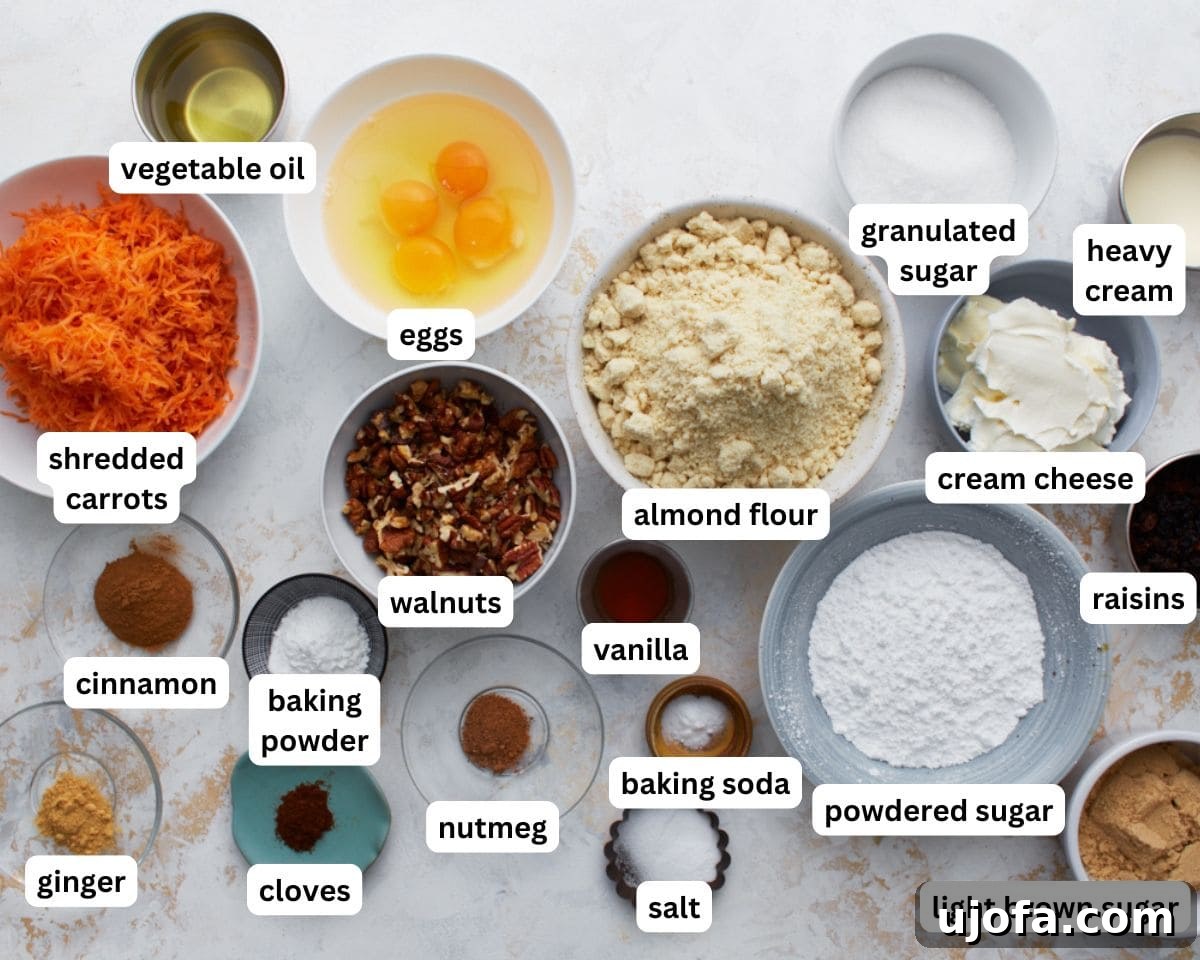
Step 1: Prepare Your Workspace and Ingredients. Begin by gathering all the necessary ingredients, ensuring everything is measured and ready for assembly. Preheat your oven to 350°F (180°C). Prepare two 8×8-inch baking pans by greasing them thoroughly and lining the bottoms with parchment paper. This crucial step prevents sticking and ensures your delicate almond flour cake layers release cleanly and easily after baking.
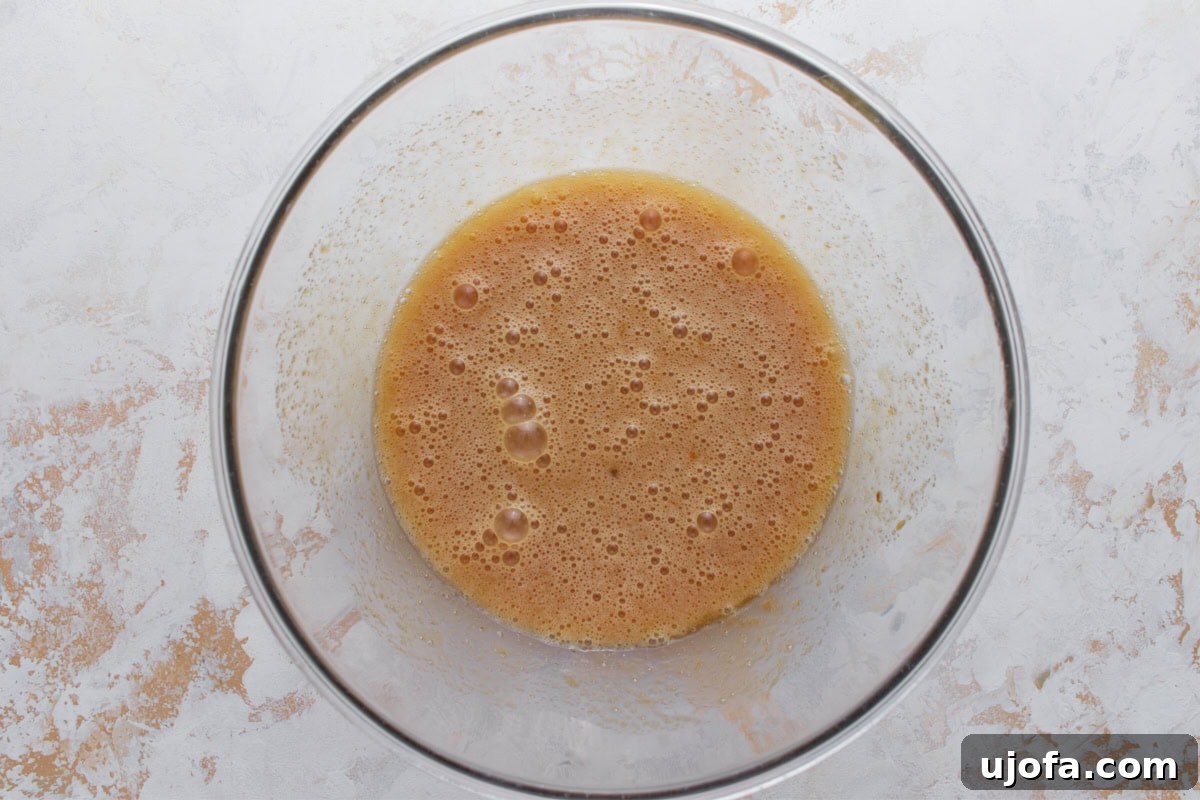
Step 2: Combine the Wet Ingredients. In a large mixing bowl, crack the 4 large eggs. Add the ½ cup (120ml) vegetable oil, ¾ cup (150g) granulated sugar, ½ cup (100g) packed light brown sugar, and 2 tsp (10ml) pure vanilla extract. Using an electric mixer or a whisk, beat these ingredients together until the mixture is smooth, glossy, and beautifully combined. It should develop a slightly thickened consistency and a paler color, indicating that the sugars have dissolved and the ingredients are well emulsified.
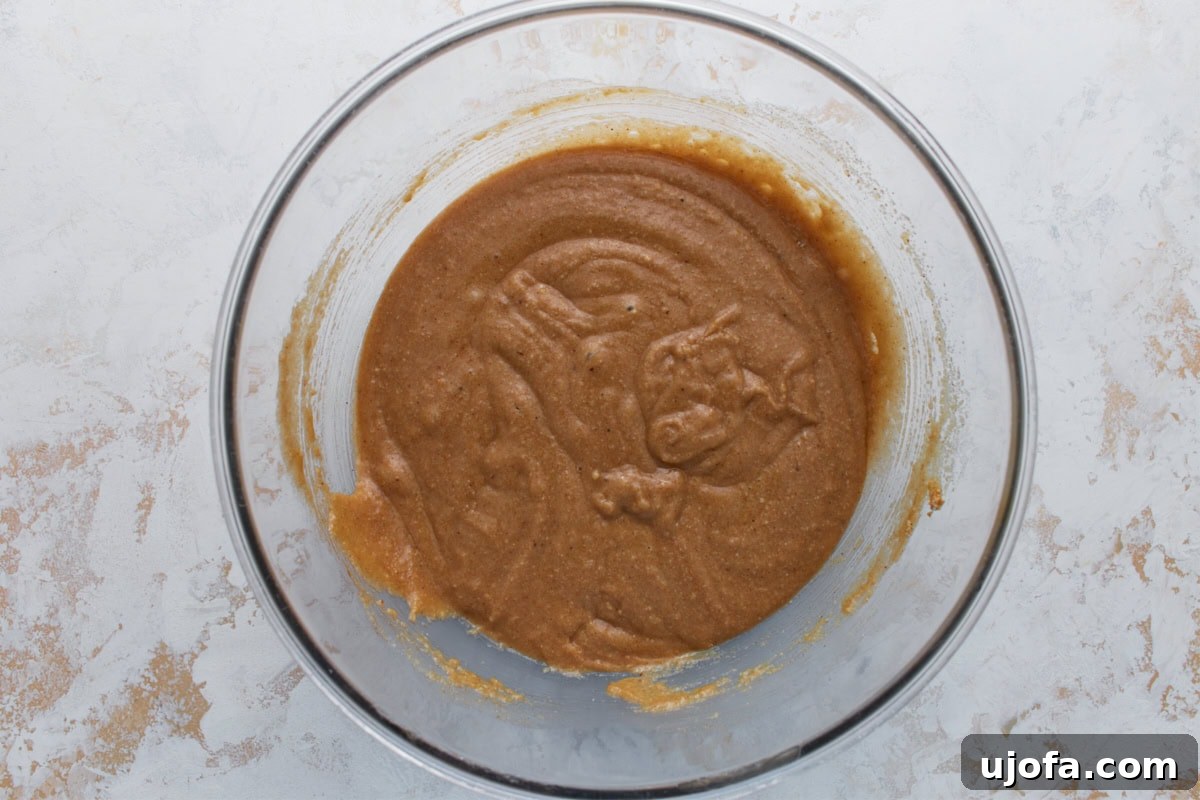
Step 3: Incorporate the Dry Ingredients. Carefully add the 3½ cups (350g) of finely ground almond flour to the wet mixture, along with 2¼ tsp (9g) baking powder, ¼ tsp baking soda, 2 tsp (5g) ground cinnamon, ½ tsp ground nutmeg, ½ tsp ground ginger, ¼ tsp ground cloves, and ½ tsp salt. With a gentle hand, stir these dry ingredients into the wet mixture using a spatula or spoon. Mix just until everything is combined and no dry streaks of flour are visible. It’s important not to overmix, as this can lead to a denser cake. The batter will be thicker than what you might expect from a traditional wheat flour cake, appearing moist but not runny.
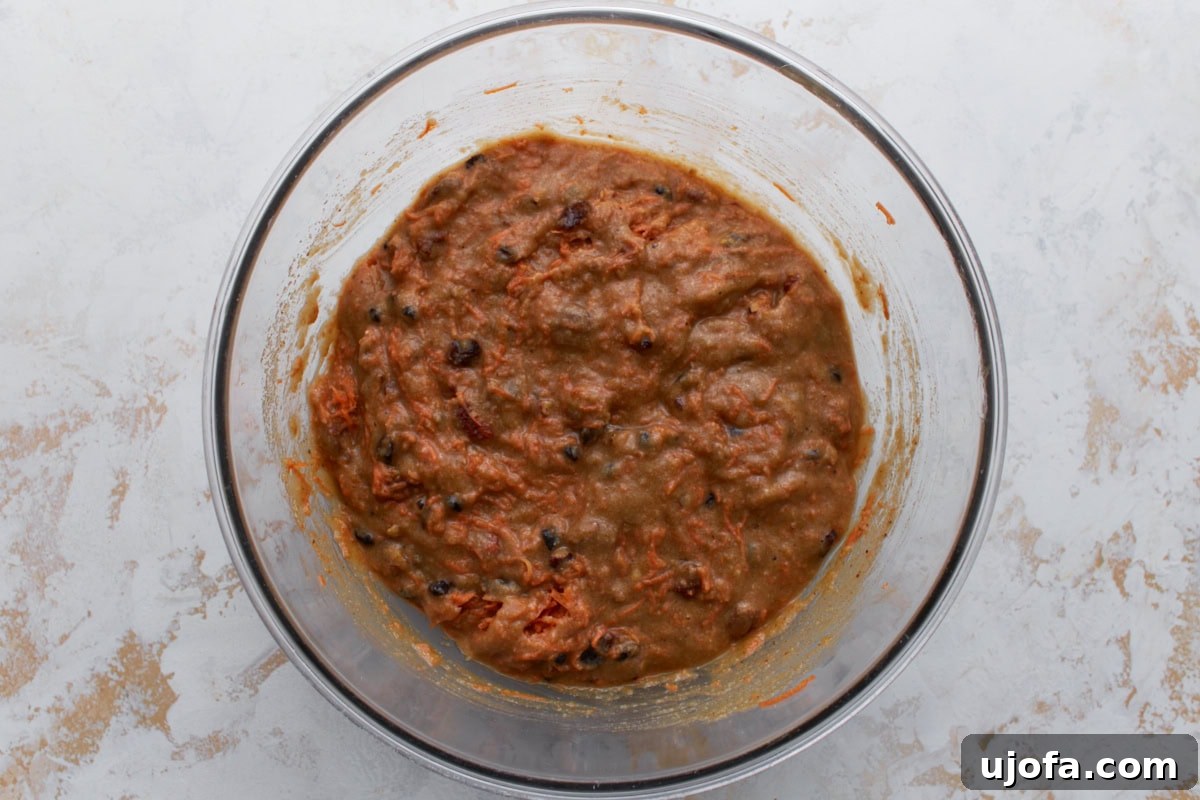
Step 4: Fold in the Carrots and Mix-ins. Take the 2 cups (220g) of shredded carrots and lightly squeeze them with a paper towel or clean kitchen towel to remove any excess moisture. This step is key to preventing a gummy cake. Then, gently fold these prepared carrots into the batter. Along with the carrots, add 1 cup (120g) of chopped walnuts or pecans and ½ cup (75g) of raisins. Continue to fold carefully until all the mix-ins are evenly distributed throughout the thick batter. Again, avoid overmixing to maintain the cake’s tender texture.
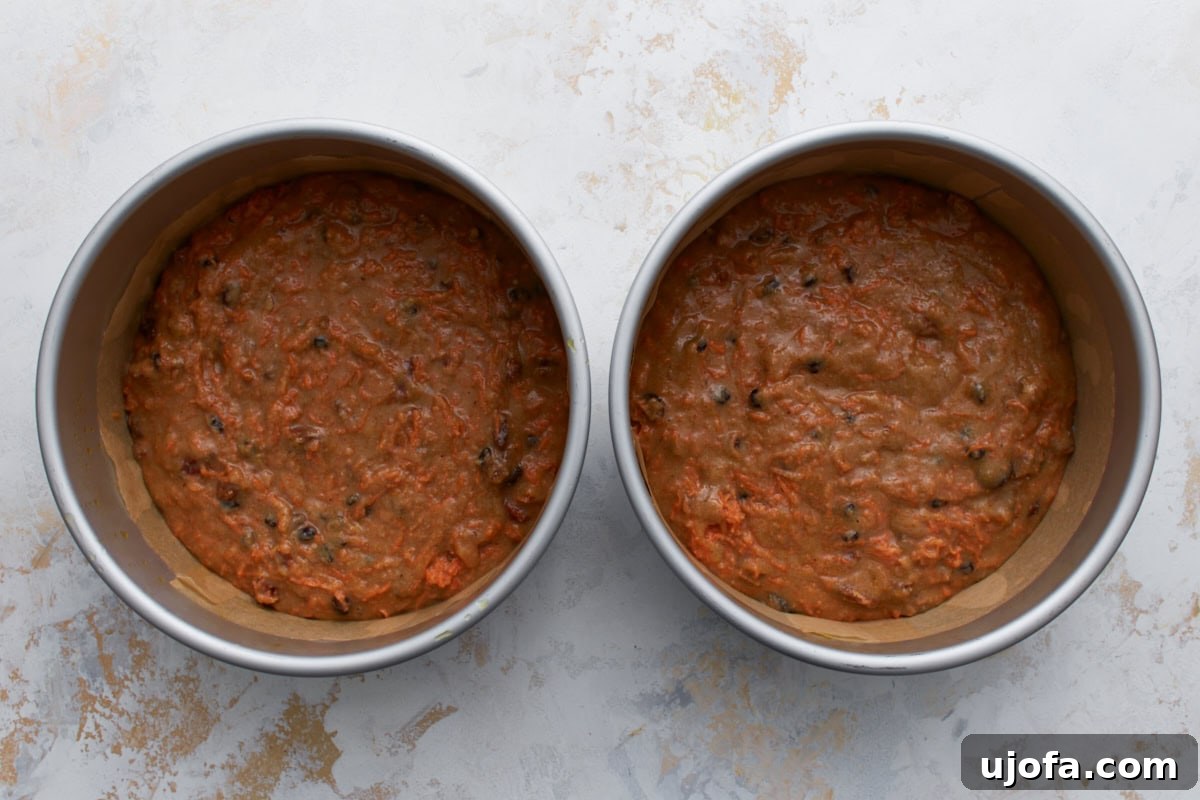
Step 5: Divide and Smooth the Batter. Evenly divide the prepared carrot cake batter between your two greased and parchment-lined baking pans. Use a spatula to gently spread the batter into an even layer in each pan. Ensure the tops are smooth and level, which will help the cakes bake uniformly and create beautiful, flat layers perfect for stacking.
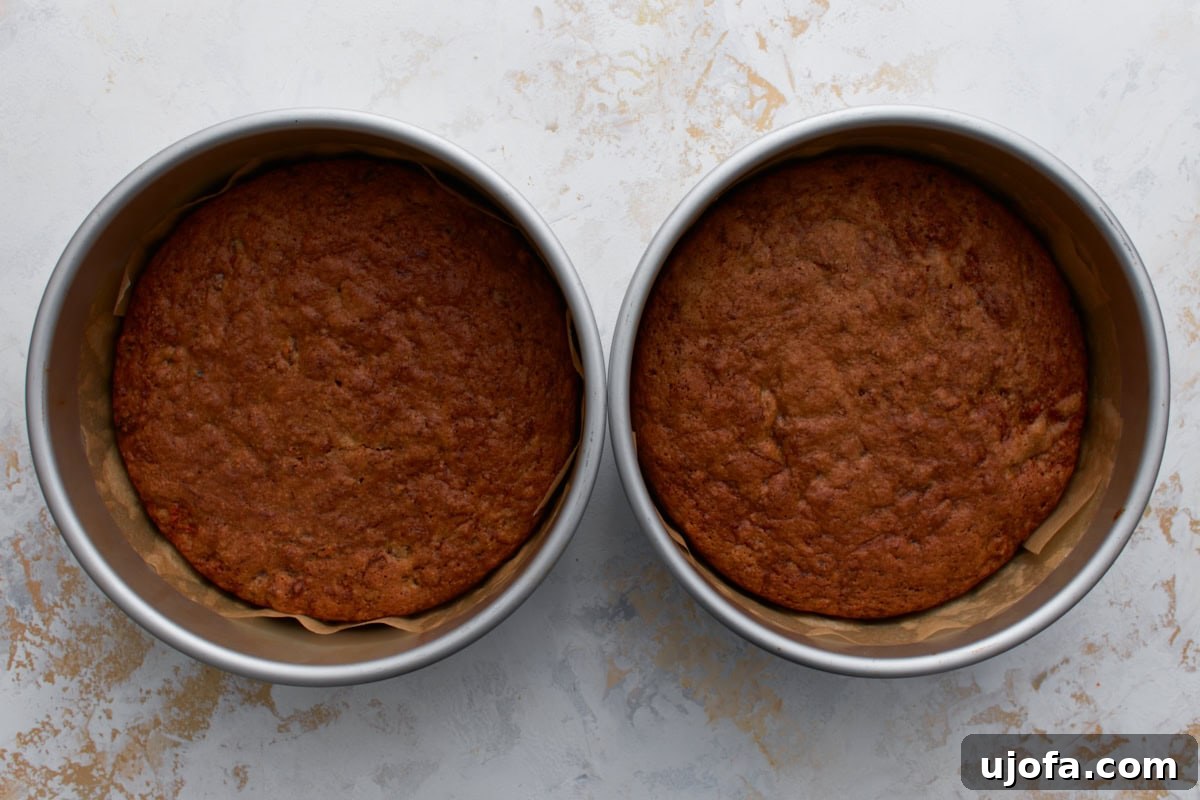
Step 6: Bake the Cakes to Perfection. Place the pans in the preheated oven and bake for approximately 35-40 minutes. You’ll know the cakes are done when their tops are golden and set, the edges have slightly pulled away from the pan, and a toothpick inserted into the center comes out clean or with only a few moist crumbs attached. The center of the cake should also lightly spring back when gently pressed. Once baked, remove the cakes from the oven and let them cool in their pans on a wire rack for about 15 minutes. This cooling period in the pan helps them firm up before you handle them. After 15 minutes, carefully transfer the cake layers directly to the wire rack to cool completely. Patience here is key—ensure they are entirely at room temperature before moving on to the frosting.
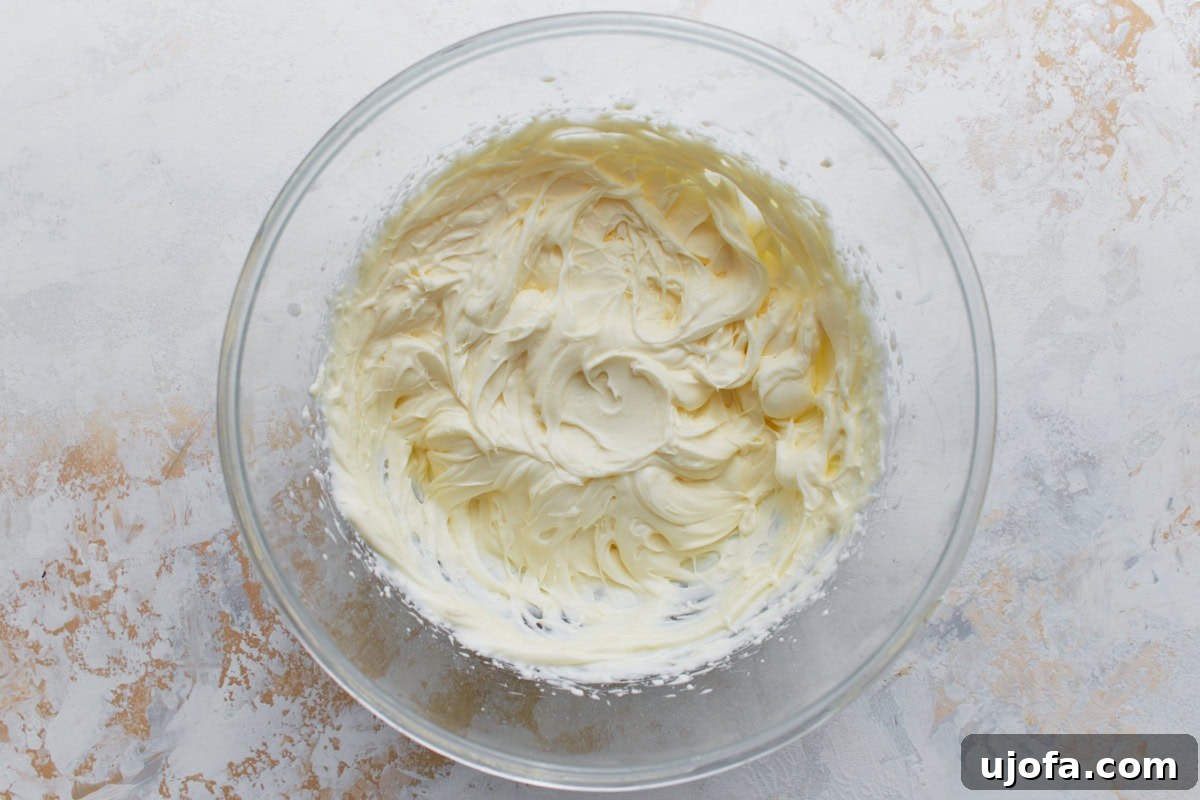
Step 7: Prepare the Rich Cream Cheese Frosting. While your cake layers are cooling, it’s time to prepare the star of the show: the cream cheese frosting. In a large mixing bowl, place the 8 oz. (225g) of room-temperature cream cheese. Using an electric mixer, beat the cream cheese on medium speed until it is utterly smooth, creamy, and completely free of any lumps. This step is essential for a velvety frosting texture. Gradually add the 2 cups (240g) of sifted powdered sugar, mixing on low speed until it is fully incorporated and the frosting becomes thick. Then, slowly pour in the ⅓ cup (80ml) of heavy cream. Increase the speed to medium-high and beat for 2-3 minutes until the frosting is wonderfully light, fluffy, and perfectly spreadable. Scrape down the sides of the bowl as needed to ensure everything is evenly mixed.
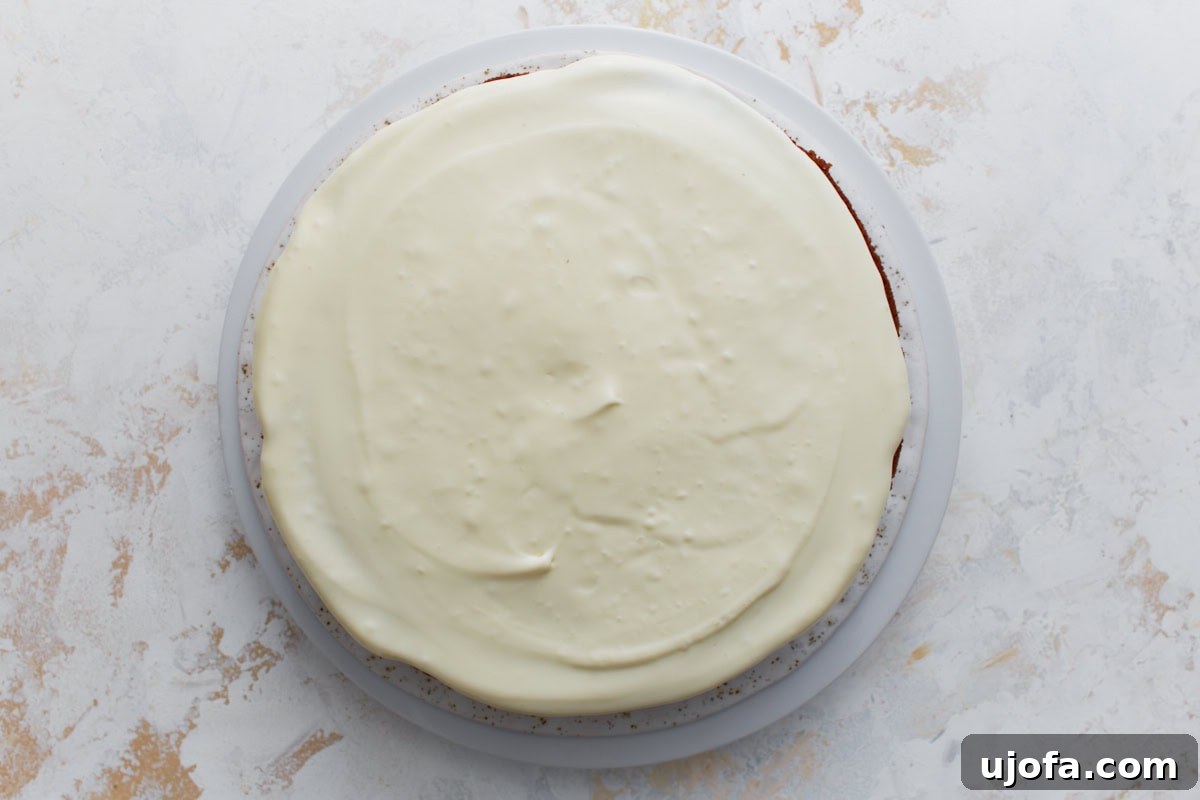
Step 8: Assemble the First Layer. Once both cake layers are completely cool, place one layer onto your chosen serving plate or cake stand. Using an offset spatula or knife, spread a generous and even layer of your prepared cream cheese frosting across the entire top surface of the cake. Aim for a consistent thickness to ensure a balanced flavor in every slice.
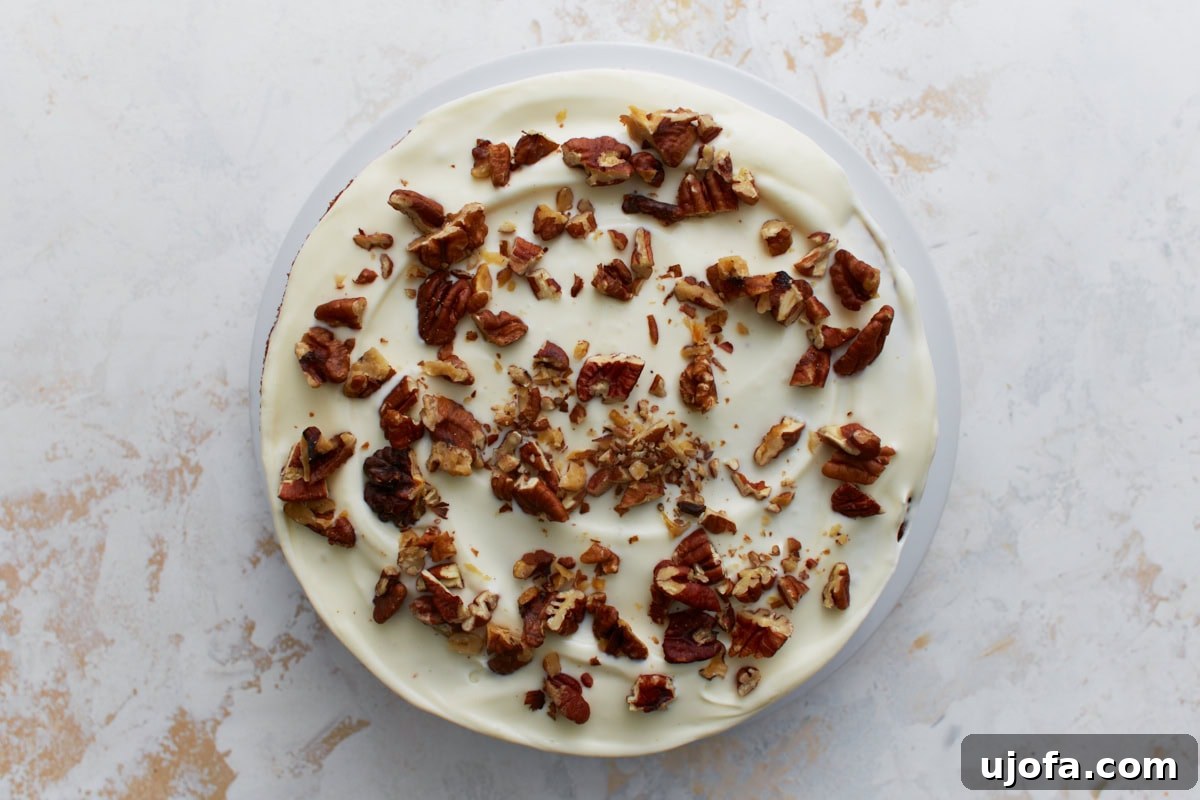
Step 9: Add the Second Layer and Finish with Frosting. Carefully place the second cooled cake layer directly on top of the frosted first layer. Now, use the remaining cream cheese frosting to cover the top of the cake, spreading it smoothly and evenly. If you desire a fully frosted cake, also apply frosting to the sides, using your spatula to create smooth or textured finishes. For a classic touch and delightful crunch, generously sprinkle the remaining ½ cup (60g) of chopped walnuts or pecans over the top of the cake. This not only adds visual appeal but also a wonderful textural contrast.
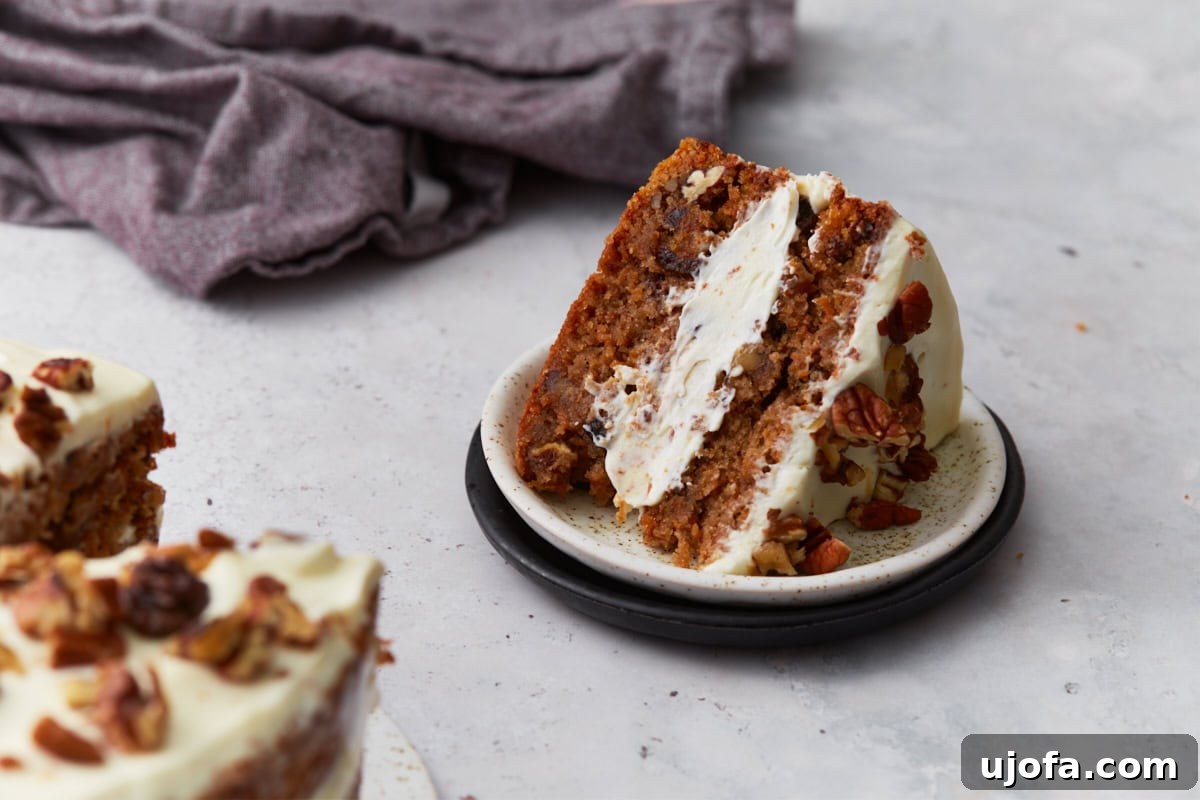
Step 10: Slice, Serve, and Savor. To ensure clean and elegant cuts when serving, it’s helpful to wipe your knife with a warm, damp towel between each slice. This keeps the frosting from dragging and makes for perfect portions. You can serve this delightful almond flour carrot cake chilled for a firmer frosting, or allow it to sit at room temperature for about 15 minutes before serving to let the frosting soften slightly and the flavors meld beautifully. Pair it with a steaming cup of coffee, a refreshing glass of milk, or a simple garnish of fresh berries. Enjoy every tender, warmly spiced bite!
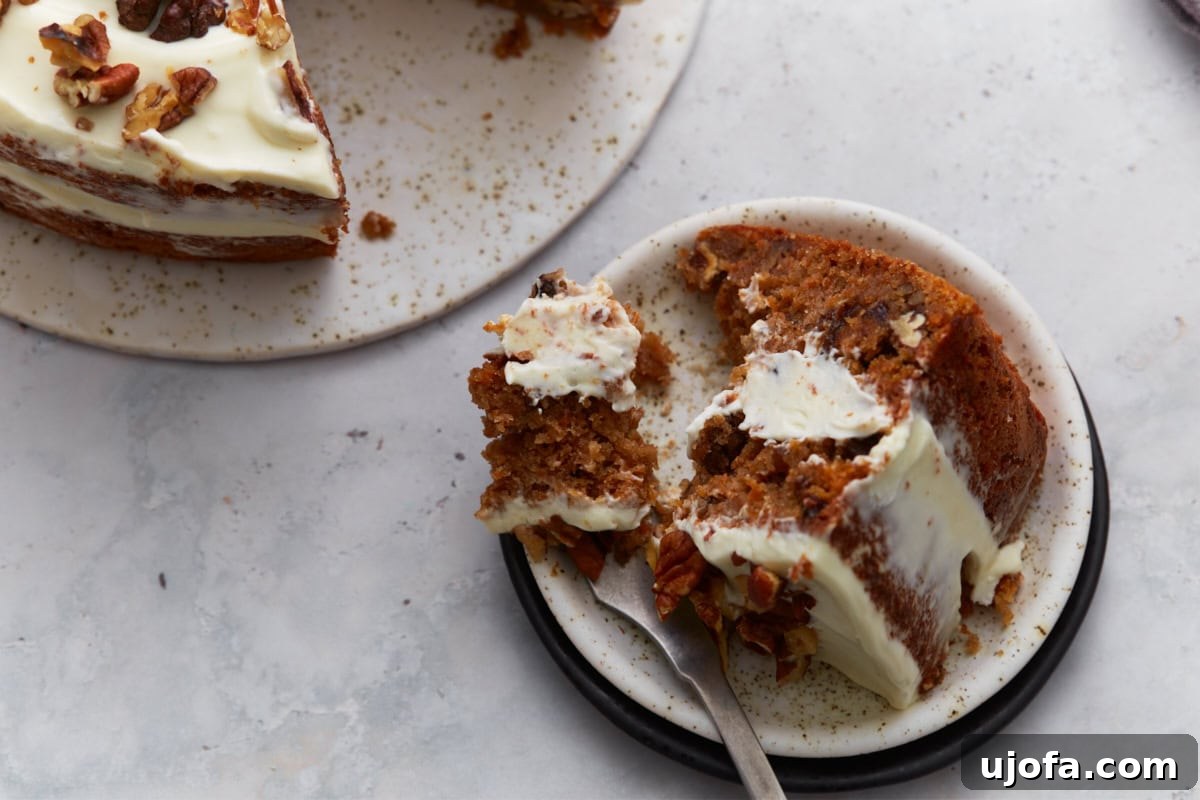
Delightful Serving Suggestions for Your Almond Flour Carrot Cake
This almond flour carrot cake is incredibly versatile and makes a stunning centerpiece for various occasions. I particularly adore serving it for Easter brunch, where its vibrant flavors pair wonderfully with other seasonal treats like light and fluffy almond flour scones. It also complements a sophisticated Mother’s Day spread beautifully, offering a sweet counterpoint to savory dishes such as a cheesy gluten-free quiche. For a truly elegant spring dessert table, consider placing it alongside delicate gluten-free macarons, creating an array of textures and flavors. Beyond grand celebrations, this cake feels equally special with a simple afternoon coffee or tea, turning an ordinary moment into a delightful indulgence. For the ultimate enjoyment, I usually serve it either chilled, directly from the refrigerator, or allow it to sit at room temperature for about 15 minutes. This brief pause allows the rich cream cheese frosting to soften slightly, enhancing its creamy texture. My personal favorite pairing? A handful of fresh, seasonal berries to add a touch of tartness and a hot, aromatic cup of coffee to balance the cake’s sweetness.
Storage and Freezing Instructions for Maximum Freshness
Proper storage is essential to keep your almond flour carrot cake tasting fresh and delicious for as long as possible. Here are some tips to ensure its longevity:
Advance Preparation:
You can prepare the cake layers up to 1 day in advance of assembly. Once they are completely cool, wrap each layer tightly in plastic wrap to prevent them from drying out, then store them in the refrigerator. The frosting can also be made a day ahead. Store it in an airtight container in the fridge. Before using, let it soften slightly at room temperature, then give it a good stir to restore its smooth, creamy consistency.
Refrigeration:
Once fully frosted, this almond flour carrot cake must be stored in the refrigerator. Cover it tightly with a cake dome, plastic wrap, or aluminum foil to protect it from odors and prevent it from drying out. Stored correctly, it will remain fresh and delicious for up to 5 days. Due to the inherent moisture from the almond flour and the delicate nature of cream cheese frosting, this cake should not be left at room temperature for extended periods.
Freezing Instructions:
This cake is excellent for freezing, allowing you to enjoy a slice whenever a craving strikes!
- Unfrosted Layers: If you plan to freeze the cake for a longer duration, it’s best to freeze the unfrosted layers. Once the baked cake layers are completely cool, wrap each one tightly in several layers of plastic wrap, followed by a layer of aluminum foil. This double wrapping prevents freezer burn and protects the cake’s flavor and texture. Frozen unfrosted layers can be stored for up to 3 months. To thaw, transfer the wrapped layers to the refrigerator overnight. Once thawed, you can frost and serve as usual.
- Frosted Slices: You can also freeze individual frosted slices. For best results, place individual slices on a baking sheet and freeze until the frosting is firm (this prevents smudging). Once firm, wrap each slice individually in plastic wrap, then in foil. Store in an airtight freezer-safe container. Thaw individual slices in the refrigerator for a few hours or at room temperature for about 30-60 minutes before enjoying.
More Gluten-Free Dessert Recipes for Any Occasion
If you loved this almond flour carrot cake, you’ll be thrilled to discover more delightful gluten-free treats perfect for brunches, holidays, or any sweet craving. Expand your repertoire with these delicious recipes:
- Gluten-Free Banana Bread: A wonderfully moist and flavorful quick bread, often made with almond flour or a similar gluten-free blend, ideal for breakfast, brunch, or a simple snack with coffee.
- Gluten-Free Cinnamon Rolls: If the warm spices in carrot cake are your favorite, these soft, gooey cinnamon rolls offer that same comforting flavor profile, making them a perfect weekend indulgence.
- Gluten-Free Blueberry Muffins: A lighter, everyday baked option that’s quick to prepare and uses a versatile gluten-free flour blend, bursting with juicy blueberries.
- Gluten-Free Red Velvet Cupcakes: These festive cupcakes, also topped with a luxurious cream cheese frosting, are perfect for celebrations and share the delightful richness found in our carrot cake.
- Gluten-Free Chocolate Cake: For the ultimate chocolate lover, a rich, decadent gluten-free chocolate cake provides a different but equally satisfying dessert experience. Its deep flavor and moist texture make it a crowd-pleaser.
- Gluten-Free Lemon Loaf: A bright and zesty alternative, a lemon loaf made with gluten-free flour is perfect for spring or summer, offering a refreshing citrus flavor with a delicate crumb.
Each of these recipes brings its own unique charm to your table, proving that gluten-free baking can be just as delicious, if not more so, than traditional alternatives. Enjoy exploring these wonderful options!