
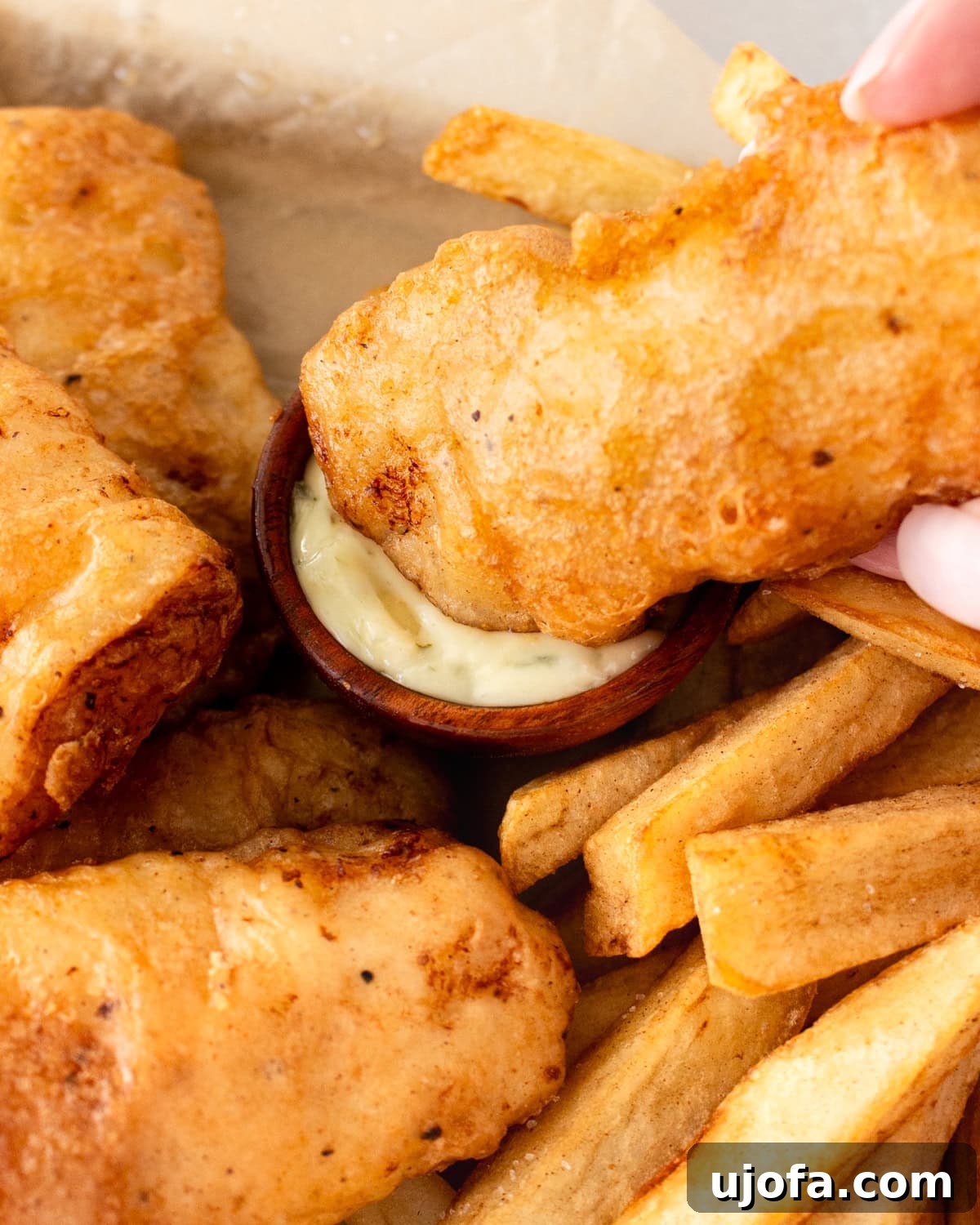
The Ultimate Guide to Crispy Gluten-Free Fish and Chips: A Homemade Delight
Craving the classic taste of a golden, crispy fish fry paired with perfectly cooked chips, but need it to be gluten-free? Look no further! This comprehensive recipe delivers an incredibly satisfying and genuinely authentic gluten-free fish and chips experience right in your own kitchen. It’s a dish my family absolutely adores, making the development of a foolproof gluten-free batter a top priority. Whether you strictly adhere to a gluten-free diet or are simply exploring lighter, equally delicious alternatives, this recipe is designed for ease of preparation and bursting with flavor. Forget bland substitutes; prepare for a culinary revelation that will become a staple in your home.
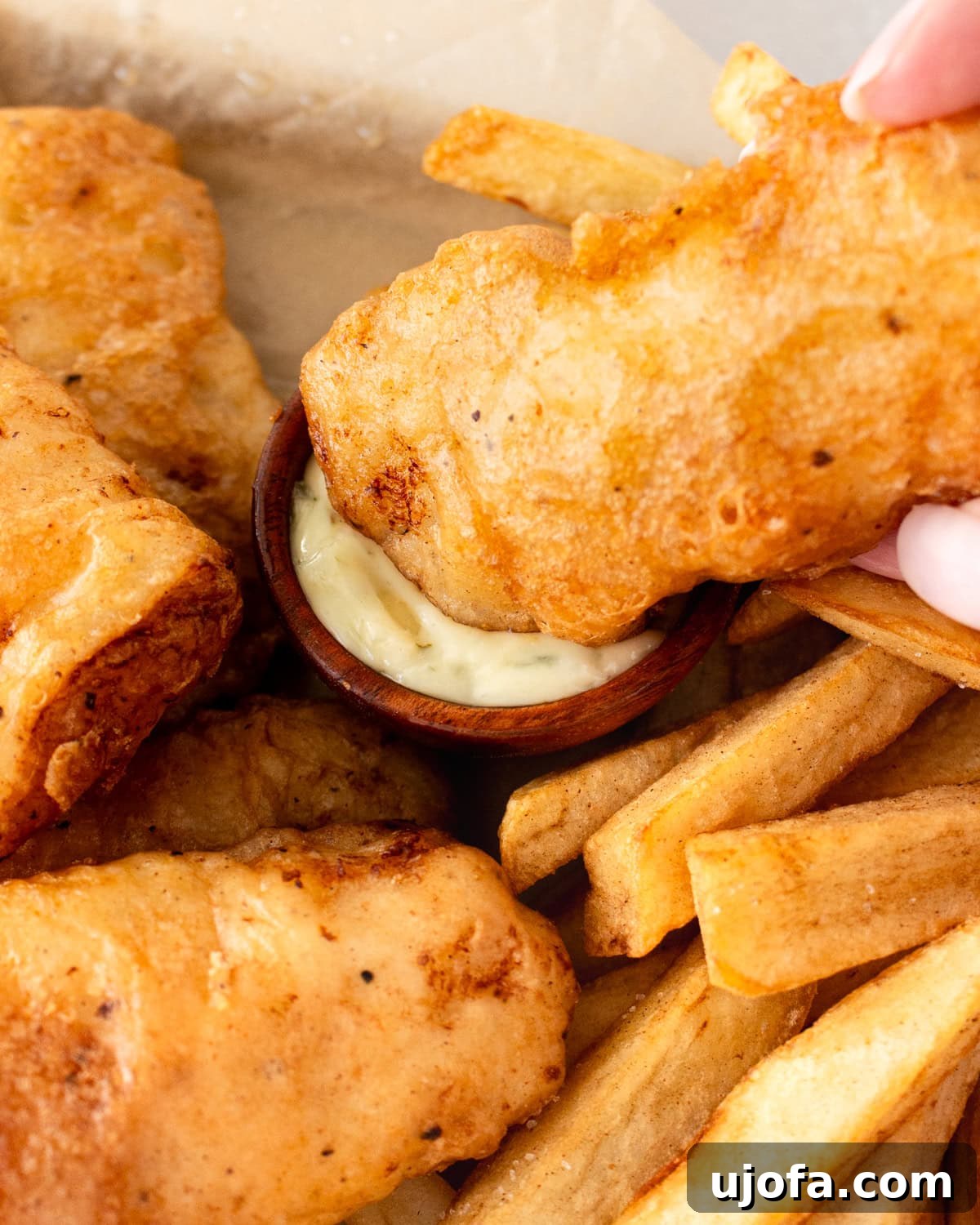
Mastering the Perfect Crispy Gluten-Free Fish Batter at Home
For many years, the simple pleasure of walking into a chippy and ordering a classic fish and chips dinner was a distant memory. The thought of finding a truly authentic and safe gluten-free option felt almost impossible. Fortunately, after extensive testing, I’ve discovered the ideal combination of ingredients to create this homemade gluten-free beer-battered fish and chips that truly rivals any traditional version.
The secret to achieving the lightest, bubbliest, and crispiest fish batter lies in a thoughtful blend of gluten-free beer and a high-quality gluten-free all-purpose flour mix. The carbonation from the beer, combined with the leavening agents present in a good GF flour blend, works synergistically to create that irresistible airy texture. If gluten-free beer is not readily available or you prefer an alcohol-free option, fret not! Club soda is an excellent substitute, providing similar carbonation benefits, much like how I utilized it in my popular gluten-free tempura batter. This isn’t just another recipe; it’s a culinary treasure you’ll want to keep in your repertoire for countless family dinners and special occasions.
Gluten-Free Fish & Chips
Ashley Barbey
4 servings
45 mins
30 mins
1 hr 15 mins
Create an authentic fish fry experience at home with this exceptional gluten-free fish and chips recipe. Loved by families, this easy-to-make dish features a perfectly crispy gluten-free batter and flavorful fish, offering a lighter yet equally satisfying alternative to traditional fish and chips.
Ingredients
For the Fish Dredge:
- ¼ cup rice flour
- ½ tsp salt
- ¼ tsp black pepper
For the Fish Batter:
- 1 ½ – 2 lbs white fish, Haddock or Cod is highly recommended, cut into 2-3” strips
- 1 cup gluten-free all-purpose flour mix
- ¼ cup white rice flour
- 1 tsp baking powder
- 1 tsp salt
- ½ tsp onion powder
- ½ tsp garlic powder
- ½ tsp Old Bay seasoning
- ½ tsp paprika
- ½ tsp black pepper
- 1 large egg
- 12 oz of gluten-free beer or club soda (chilled is best)
For the Chips (Fries):
- 3 lbs Russet potatoes, washed, peeled, and carefully cut into ½”- ¾” thick sticks
- Cooking oil for deep frying (vegetable, canola, or peanut oil are suitable)
- Salt, for seasoning
Instructions
- Prepare the Oil for Frying: In a deep, heavy-bottomed pot or Dutch oven, pour about 3 inches of your chosen cooking oil. Heat the oil to 375°F (190°C). It is crucial to use a reliable cooking thermometer to accurately monitor and maintain this temperature throughout the frying process. Note that the temperature will naturally dip to approximately 350°F (175°C) once the fish is added.
- Prepare the Potatoes for Parboiling: While the oil heats, place your washed, peeled, and cut Russet potatoes into a large pot. Add enough cold water to fully submerge the potato sticks. Place the pot over medium heat and bring the water to a rolling boil. Once boiling, immediately turn off the heat and allow the potatoes to steep in the hot water for 30 minutes. This parboiling step is essential for creating fluffy interiors.
- Make the Fish Dredge: On a wide-rimmed plate or in a shallow bowl, whisk together the ¼ cup rice flour, ½ tsp salt, and ¼ tsp black pepper until well combined. This dredge provides a light coating that helps the batter adhere to the fish.
- Prepare the Gluten-Free Batter: In a separate mixing bowl, combine the 1 cup gluten-free all-purpose flour blend, ¼ cup white rice flour, 1 tsp baking powder, 1 tsp salt, ½ tsp onion powder, ½ tsp garlic powder, ½ tsp Old Bay seasoning, ½ tsp paprika, and ½ tsp black pepper. Whisk these dry ingredients thoroughly. Then, whisk in the 1 large egg and 12 oz of chilled gluten-free beer or club soda until just combined. Be careful not to overmix; a few lumps are fine. Let the batter rest for 5 minutes. This allows the flours to hydrate and the leavening agents to activate, contributing to a lighter batter.
- Prepare the Fish: While the batter rests, thoroughly pat the 1 ½-2 lbs of white fish strips dry with paper towels. Removing excess moisture is key to achieving a crispy batter. Lightly coat each fish fillet with the dredge mixture, ensuring all sides have a thin, even layer of flour.
- First Fry the Fish: Line two baking sheets with several layers of paper towels. Once the oil has reached 375°F (190°C) and the batter has rested, dip each dredged fish fillet completely into the prepared batter. Carefully lower a few battered fillets at a time into the hot oil. A spider skimmer or long tongs work best for this. It is crucial to work in small batches to avoid overcrowding the pot. Overcrowding will cause the oil temperature to drop significantly, leading to soggy, greasy fish instead of perfectly crisp ones.
- Cook the Fish to Golden Perfection: Fry the fish for approximately 5-7 minutes, turning occasionally to ensure even cooking and browning. The batter should become beautifully crispy and golden. The internal temperature of the fish should register between 130°F-135°F (54°C-57°C) when tested with an instant-read thermometer. Transfer the fried fish to the paper towel-lined baking sheets to absorb any excess oil, then move them to a wire rack for continued crispiness. Sprinkle lightly with salt immediately after frying. Allow the oil temperature to return to 375°F (190°C) before frying the next batch.
- Prepare Potatoes for Frying: Carefully remove the parboiled potatoes from the warm water and pat them thoroughly dry with paper towels. Any residual moisture can cause oil to splatter. Reduce the oil temperature in your pot to 300°F (150°C).
- First Fry the Chips (Par-Frying): In batches, carefully add the dried potato sticks to the oil heated to 300°F (150°C). Par-fry them for about 3-5 minutes. The objective here is to cook the interior of the chips, making them tender and fluffy, without browning the exterior. They should appear slightly softened but not crispy. Remove the par-fried chips from the oil and place them on fresh paper towels to drain any excess oil.
- Second Fry for Ultimate Crispiness: Increase the oil temperature again to 375°F (190°C). Fry the chips a second time, still in batches to prevent overcrowding, for 1-3 minutes. This final fry will turn them a beautiful golden brown and make them wonderfully crispy. Transfer the finished chips to paper towels to drain and sprinkle with salt immediately. Serve these glorious homemade gluten-free fish and chips hot, accompanied by tartar sauce and fresh lemon wedges. Enjoy your gourmet pub experience at home!
Expert Tips for the Best Gluten-Free Fish and Chips
- Consistency in Cutting: My foremost tip for successful deep-frying is consistency. Ensure you cut both the fish and potatoes into even sizes. This guarantees they cook uniformly and reach perfect doneness at the same time.
- Fish Preparation is Key: Always remove any skin from your fish fillets, as it can act as an insulator and prevent even cooking. More importantly, pat the fish thoroughly dry with paper towels before applying the dredge. This essential step helps the batter adhere properly and promotes a crispier coating.
- Choosing Your Fish: While haddock and cod are traditional choices for their flaky texture and mild flavor, feel free to experiment with other firm white fish varieties such as pollock, halibut, or seabass.
- The Power of Carbonation: The effervescence from either gluten-free beer or club soda is crucial for keeping the batter light, airy, and wonderfully crispy. I personally favor gluten-free beer for the added depth of flavor it imparts to the batter, but club soda is a perfectly viable and delicious alternative if beer isn’t an option.
- Maintain Warmth: To keep earlier batches of fish warm and crisp while you finish frying the rest, utilize your oven. Set it to a low temperature, around 200°F (95°C), and place the fried fish on a wire rack over a baking sheet inside.
- Don’t Skip the Two-Stage Fry for Chips: The parboiling and subsequent two-stage frying process for the potatoes might seem like extra steps, but they are non-negotiable for authentic, perfectly crisp-on-the-outside and fluffy-on-the-inside chips. Parboiling softens the interior, while the initial par-fry cooks it further, setting the stage for the final crisping.
- Oil Temperature Test: Before adding your precious fish or chips, always test the oil temperature. Drop a small piece of fish or a tiny bit of batter into the pot. If the oil vigorously bubbles around it and the piece floats to the surface within a few seconds, your oil is ready for frying.
- Invest in a Thermometer: Maintaining the correct oil temperature is paramount. Temperature fluctuations are the enemy of crispy food, often leading to greasy, heavy results. A good cooking thermometer is your best friend here.
Nutrition Information (Approximate per serving)
Calories: 663 kcal
Carbohydrates: 104 g
Protein: 48 g
Fat: 6 g
Saturated Fat: 2 g
Polyunsaturated Fat: 1 g
Monounsaturated Fat: 2 g
Trans Fat: 0.01 g
Cholesterol: 126 mg
Sodium: 1103 mg
Potassium: 2005 mg
Fiber: 8 g
Sugar: 3 g
Vitamin A: 195 IU
Vitamin C: 19 mg
Calcium: 158 mg
Iron: 6 mg
Nutrition information provided is an automatic calculation and should be used as an approximation only.
Additional Info
Dinner, Main Course
American, British, Seafood
How to Make Gluten-Free Fish & Chips: A Visual Guide
To help you perfect every step, here’s a detailed breakdown of the cooking process, complete with illustrative images to ensure your homemade gluten-free fish and chips turn out flawlessly.
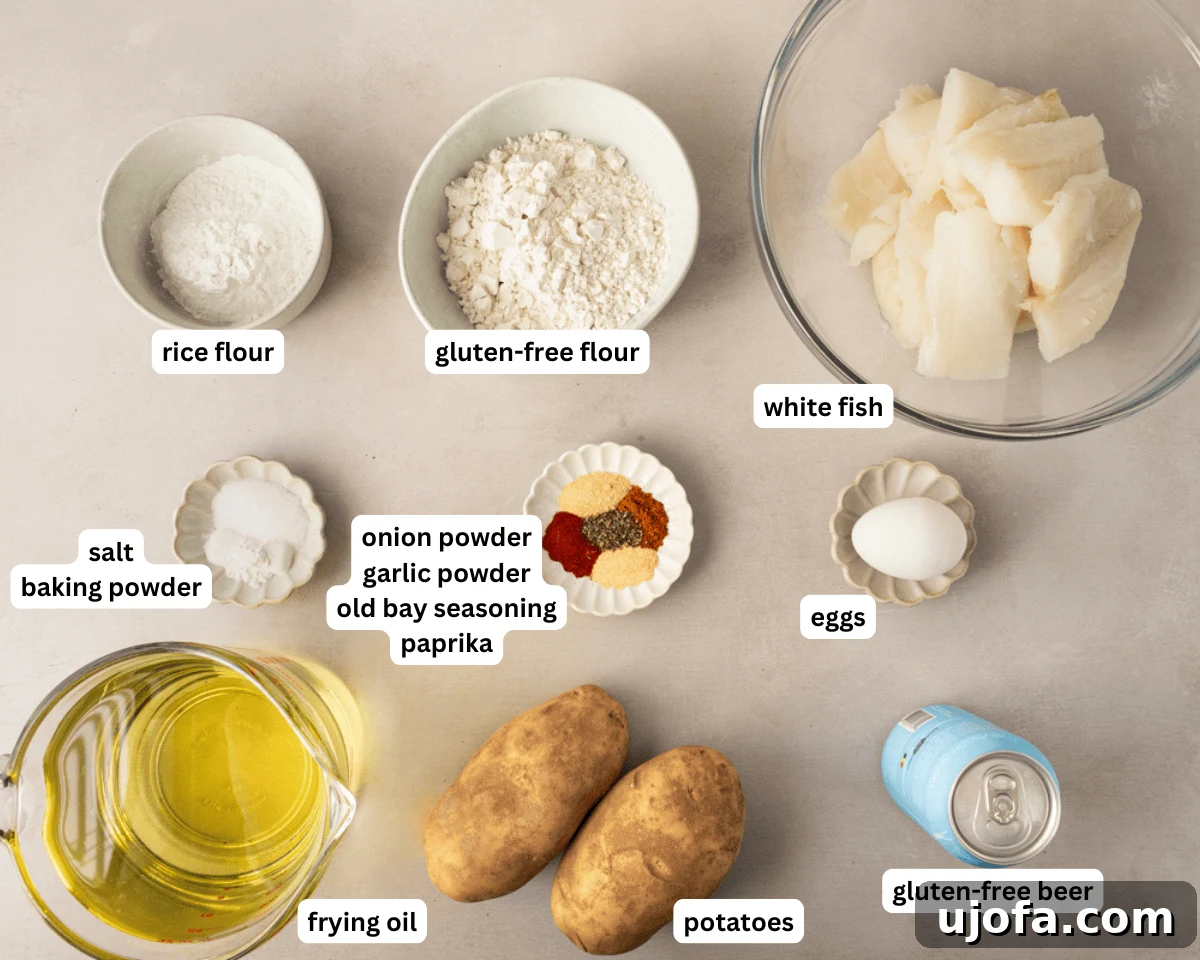
Preparation is the cornerstone of any great meal. Lay out all your measured ingredients, from your chosen white fish to your gluten-free flours and seasonings. This ‘mise en place’ approach ensures a smooth and stress-free cooking experience, allowing you to focus on technique.
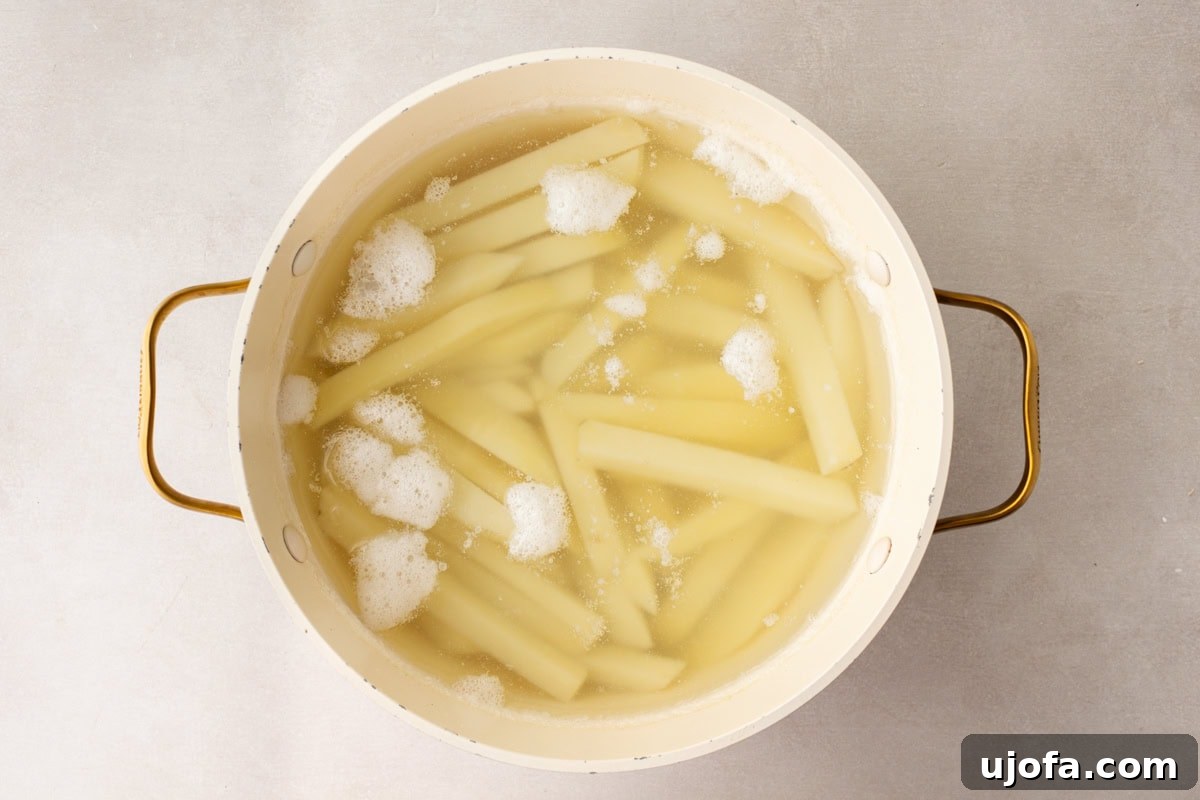
Start by preparing your deep-frying setup. Select a robust, deep pot and fill it with approximately 3 inches of cooking oil. Heat the oil steadily to 375°F (190°C), using a thermometer to precisely gauge and maintain the temperature. Remember that the oil temperature will naturally decrease when you introduce ingredients. Simultaneously, prepare your chips: wash, peel, and cut 3 lbs of Russet potatoes into uniform ½” – ¾” sticks. Place them in a separate pot, cover with water, bring to a boil, then turn off the heat and let them sit for 30 minutes. This critical parboiling step ensures the potatoes become tender on the inside, ready for their crispy transformation.
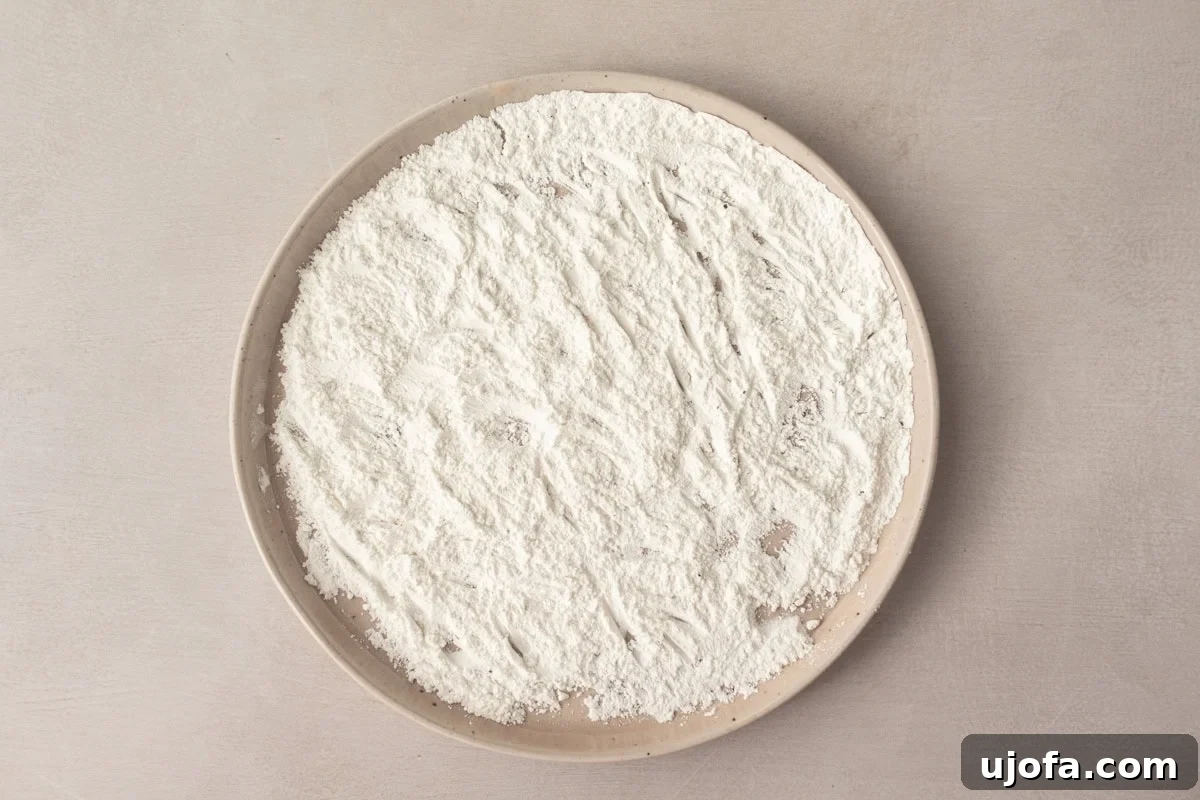
For the fish dredge, combine ¼ cup rice flour, ½ tsp salt, and ¼ tsp black pepper on a wide-rimmed plate or shallow bowl. Whisk these ingredients until thoroughly mixed. This seasoned flour will create a thin, protective layer on the fish, helping the batter adhere and enhancing its final crispness.
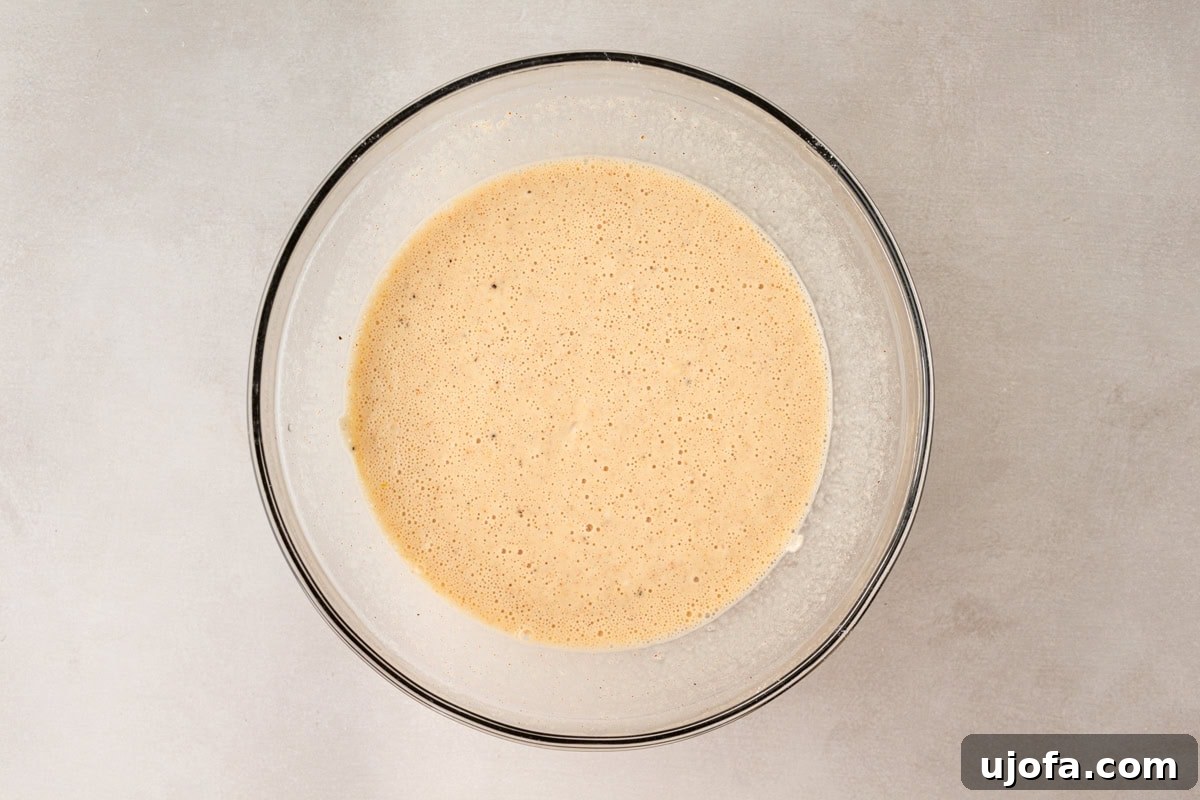
Now, prepare the star of the show: the gluten-free batter. In a separate bowl, whisk together 1 cup gluten-free all-purpose flour, ¼ cup white rice flour, 1 tsp baking powder, 1 tsp salt, ½ tsp onion powder, ½ tsp garlic powder, ½ tsp Old Bay seasoning, ½ tsp paprika, and ½ tsp black pepper. Once dry ingredients are mixed, add 1 large egg and 12 oz of chilled gluten-free beer or club soda. Whisk gently until just combined; a few small lumps are perfectly acceptable and even desirable for texture. Let this magical batter rest for 5 minutes. This resting period allows the gluten-free flours to properly hydrate and the leavening agents to activate, contributing significantly to a light, puffy, and crispy crust.
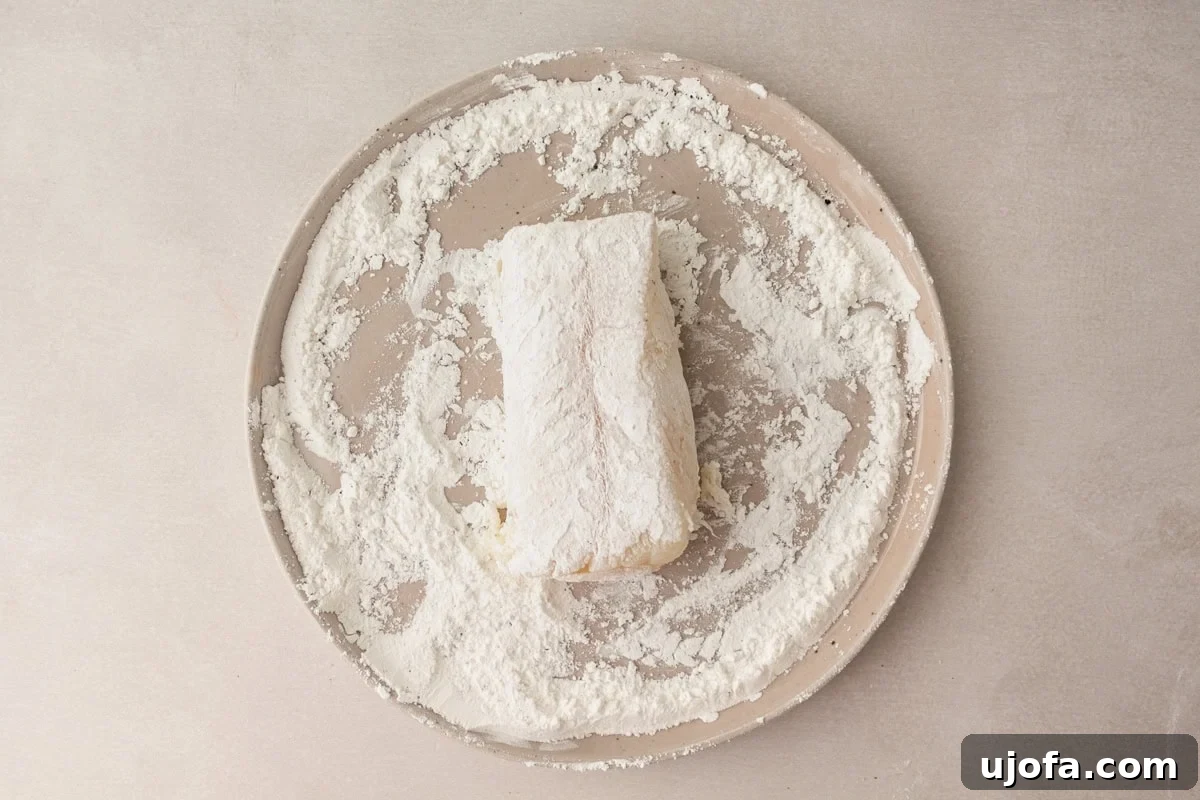
Take your 1 ½-2 lbs of white fish (haddock or cod are superb choices) and pat them meticulously dry with paper towels. Cut them into 2-3” strips, ideal for frying. Then, gently press each fillet into the dredge mixture, ensuring all sides are thoroughly coated with a thin, even layer of seasoned flour. This initial coating is crucial for the batter to adhere perfectly to the fish.
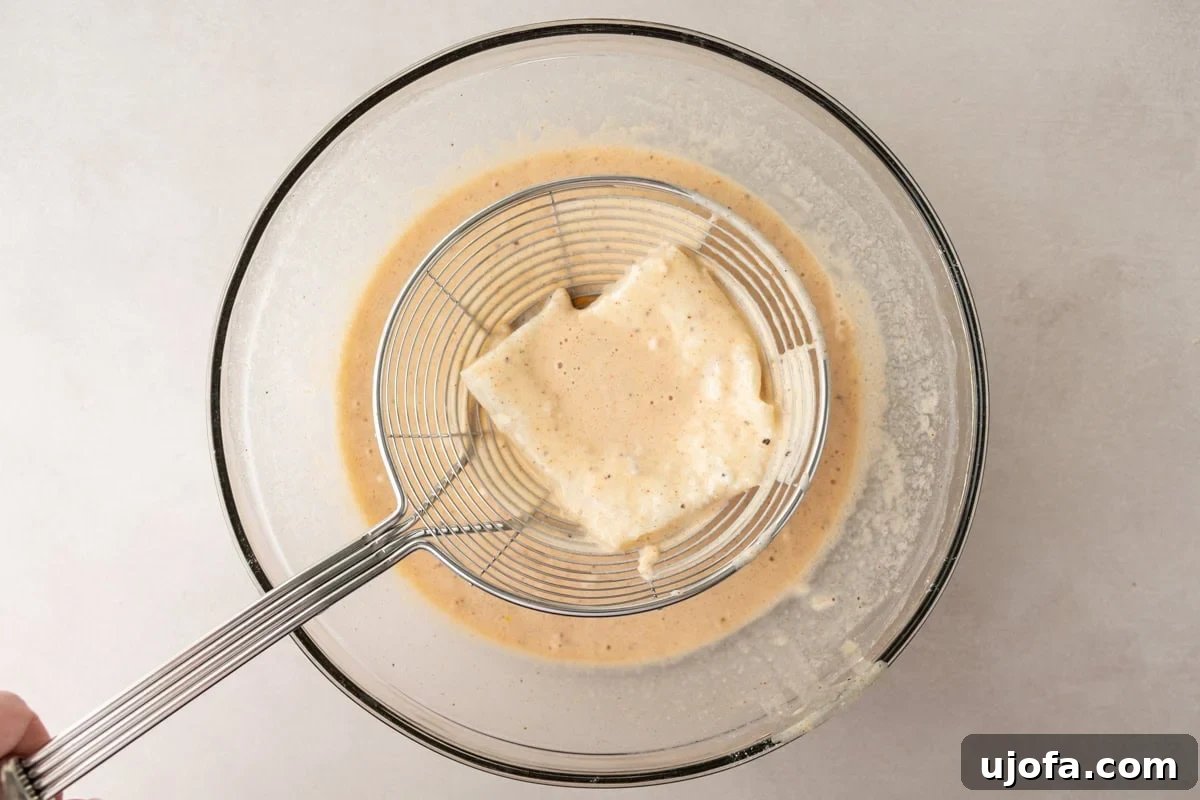
Prepare your landing zone for the fried fish: line two baking sheets with fresh paper towels. Once your oil is at the precise temperature (375°F/190°C), it’s time to batter and fry. Dip each dredged fish strip completely into the fluffy gluten-free batter. Using a spider skimmer or sturdy tongs, carefully lower only a few battered fish strips at a time into the hot oil. Avoid overcrowding the pot at all costs, as this will drastically lower the oil temperature and result in fish that is greasy, dense, and far from crispy.
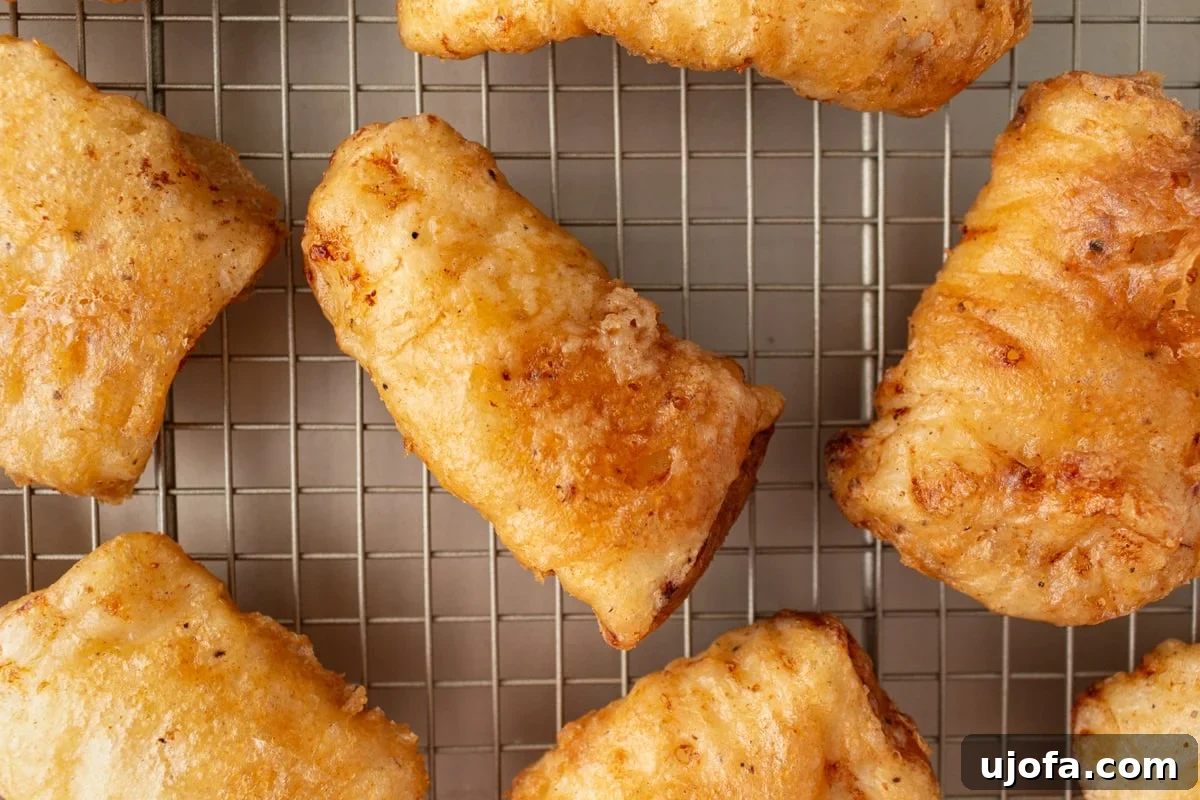
Fry the fish for 5-7 minutes, turning occasionally to achieve an even golden-brown color and ultimate crispiness. The internal temperature of the fish should reach a safe 130°F-135°F (54°C-57°C). Once cooked, transfer the fried fish to the paper towel-lined baking sheets to absorb any residual oil, then move them to a wire rack. Immediately sprinkle them with a touch of salt. Crucially, allow the oil temperature to return to the target 375°F (190°C) before proceeding with the next batch to ensure consistent results.
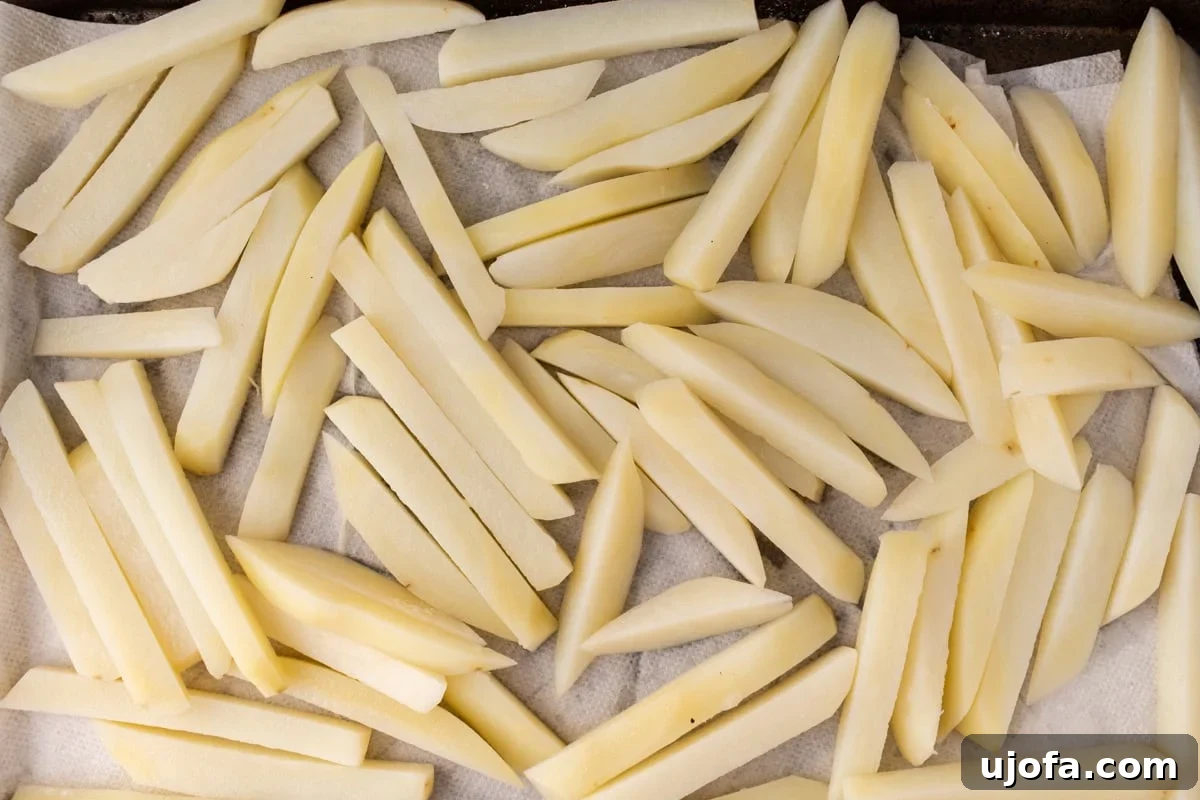
Once all your fish is fried, it’s time to tackle the chips. Remove the parboiled potatoes from the warm water and pat them completely dry with paper towels. Excess moisture is the enemy of crispiness! Now, reduce the oil temperature in your pot to 300°F (150°C) for the first stage of frying the chips.
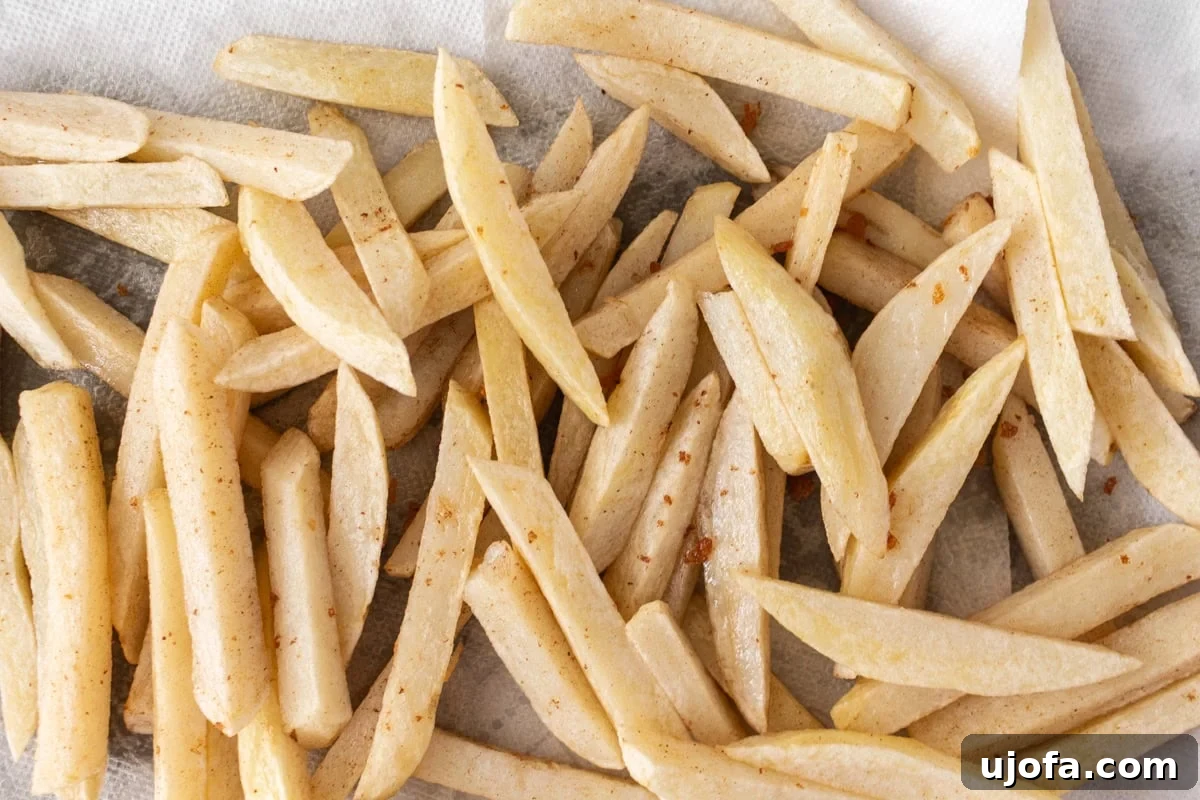
Carefully add the dried potato sticks to the 300°F (150°C) oil in batches. Par-fry them for approximately 3-5 minutes. During this stage, the goal is to fully cook the interior of the potatoes, rendering them soft and fluffy, without allowing the exterior to brown. They will appear slightly pale but cooked through. Remove the par-fried chips from the oil and spread them on a clean paper towel-lined baking sheet to drain and cool slightly. This brief cooling period helps solidify the cooked interior.
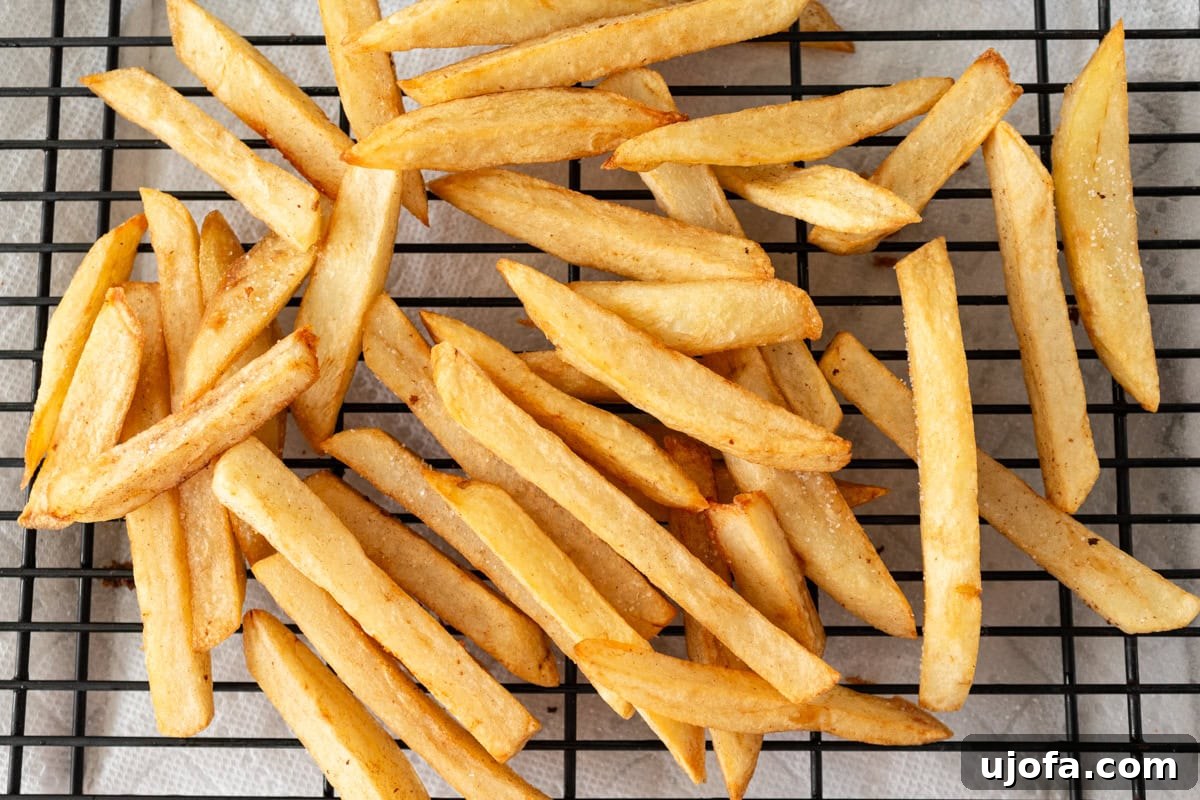
Finally, increase the oil temperature back to a scorching 375°F (190°C). Return the par-fried chips to the hot oil, again working in batches to maintain temperature. Fry them for a shorter duration of 1-3 minutes, watching closely until they achieve a beautiful deep golden brown color and become irresistibly crispy. Transfer the perfectly fried chips back to fresh paper towels to drain any excess oil, and immediately sprinkle them generously with salt. This two-stage frying method is the secret to achieving truly restaurant-quality, crisp-on-the-outside, fluffy-on-the-inside chips.
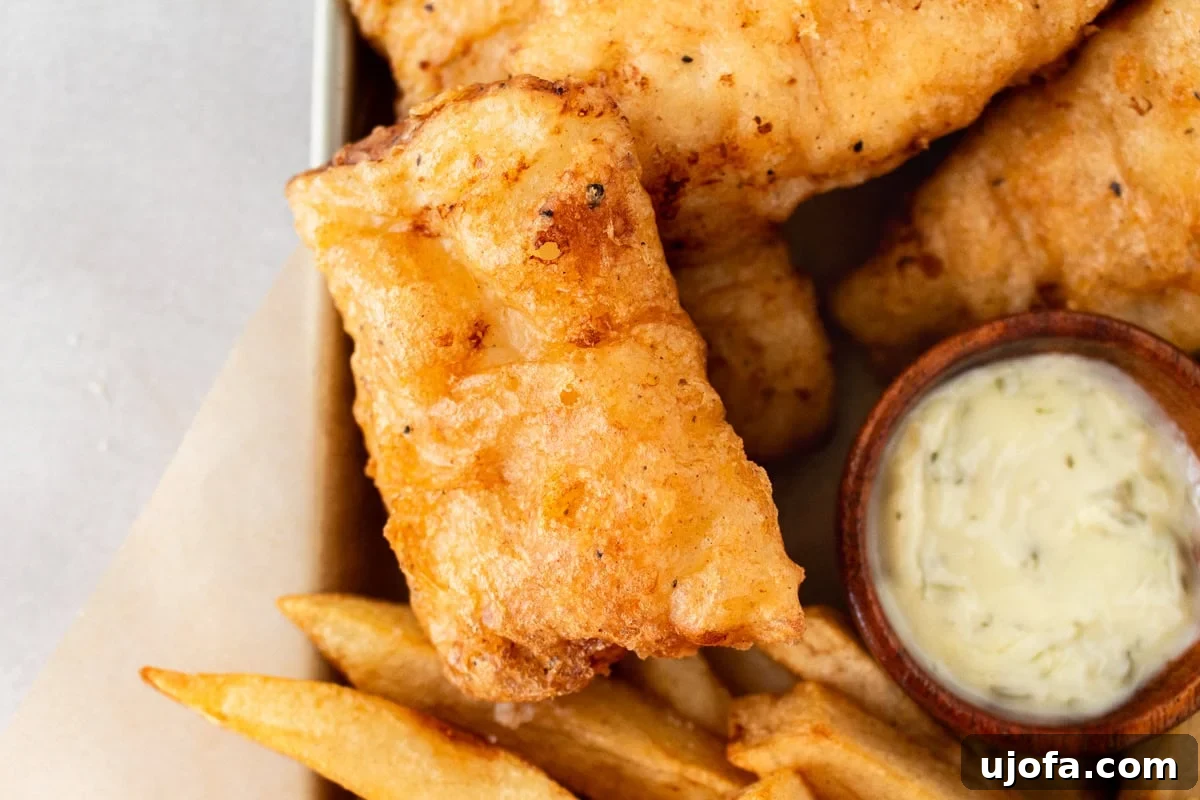
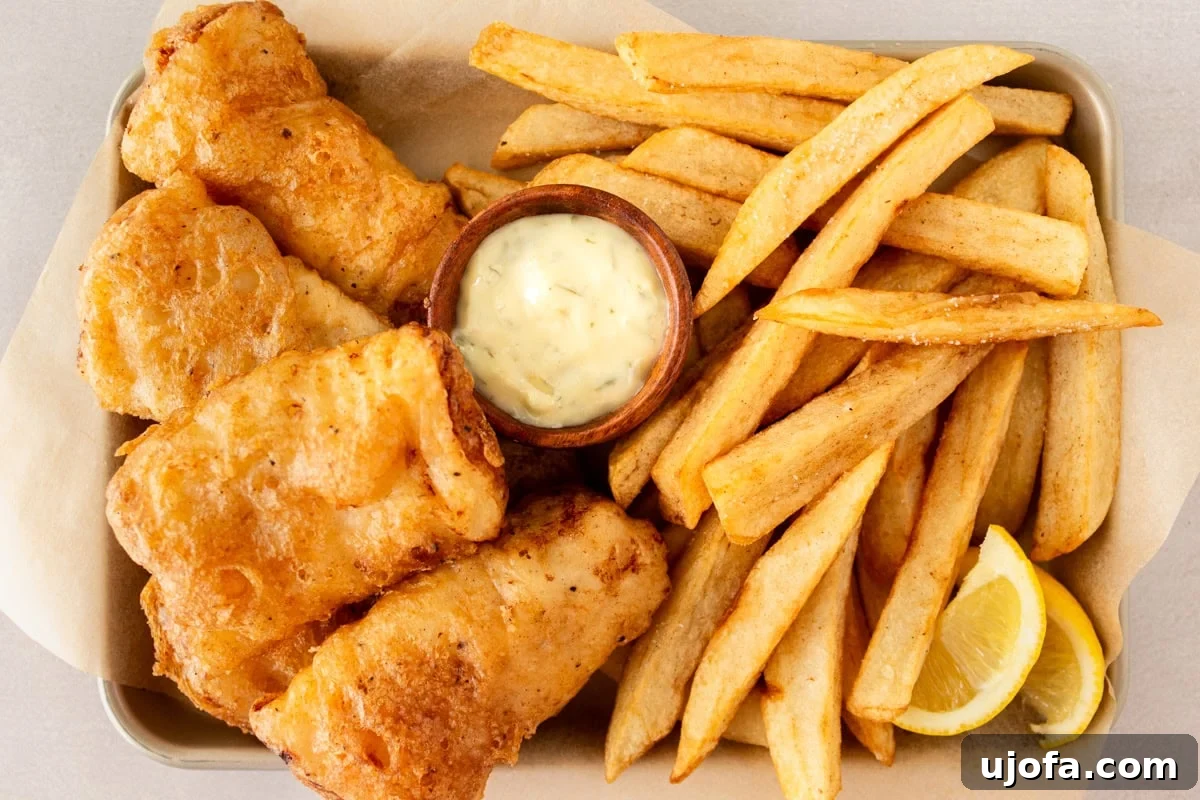
Present your magnificent gluten-free fried fish and chips alongside a generous dollop of classic tartar sauce and bright, zesty lemon slices. This truly authentic and delicious meal is now yours to enjoy!
How to Make Gluten-Free Fish & Chips in the Air Fryer: A Healthier Twist
For those seeking a lighter alternative to deep-frying, or simply prefer the convenience, your air fryer can produce surprisingly delicious gluten-free fish and chips. While the texture won’t be identical to deep-fried, it offers a fantastic, less oily option without sacrificing too much crispness or flavor.
Air Frying the Gluten-Free Fish:
Begin by preheating your air fryer to 400°F (200°C). After you’ve dredged the fish fillets and coated them in the gluten-free batter (as per the main recipe instructions), carefully arrange them in a single layer within your air fryer basket. For best results and easier cleanup, you can line the basket with parchment paper specifically designed for air fryers, or lightly grease the basket with cooking oil spray. To promote maximum crispiness, lightly spray the tops of the battered fish fillets with cooking oil. Air fry for 8–12 minutes, making sure to flip the fish halfway through the cooking time. Continue cooking until the batter is beautifully golden brown and crispy, and the fish reaches an internal temperature of 130°F–135°F (54°C-57°C).
Air Frying the Perfect Chips:
Once your potatoes are parboiled and thoroughly patted dry (as instructed in the deep-fry method), toss them with a small amount of neutral cooking oil, just enough to lightly coat. Preheat your air fryer to 375°F (190°C). Place the potato sticks in the air fryer basket in a single layer, working in batches if necessary to avoid overcrowding. Air fry for 15–20 minutes, ensuring you shake the basket vigorously every 5 minutes to promote even cooking and browning. Continue until the chips are golden and wonderfully crispy. Serve both the air-fried fish and chips immediately for the best texture and flavor.
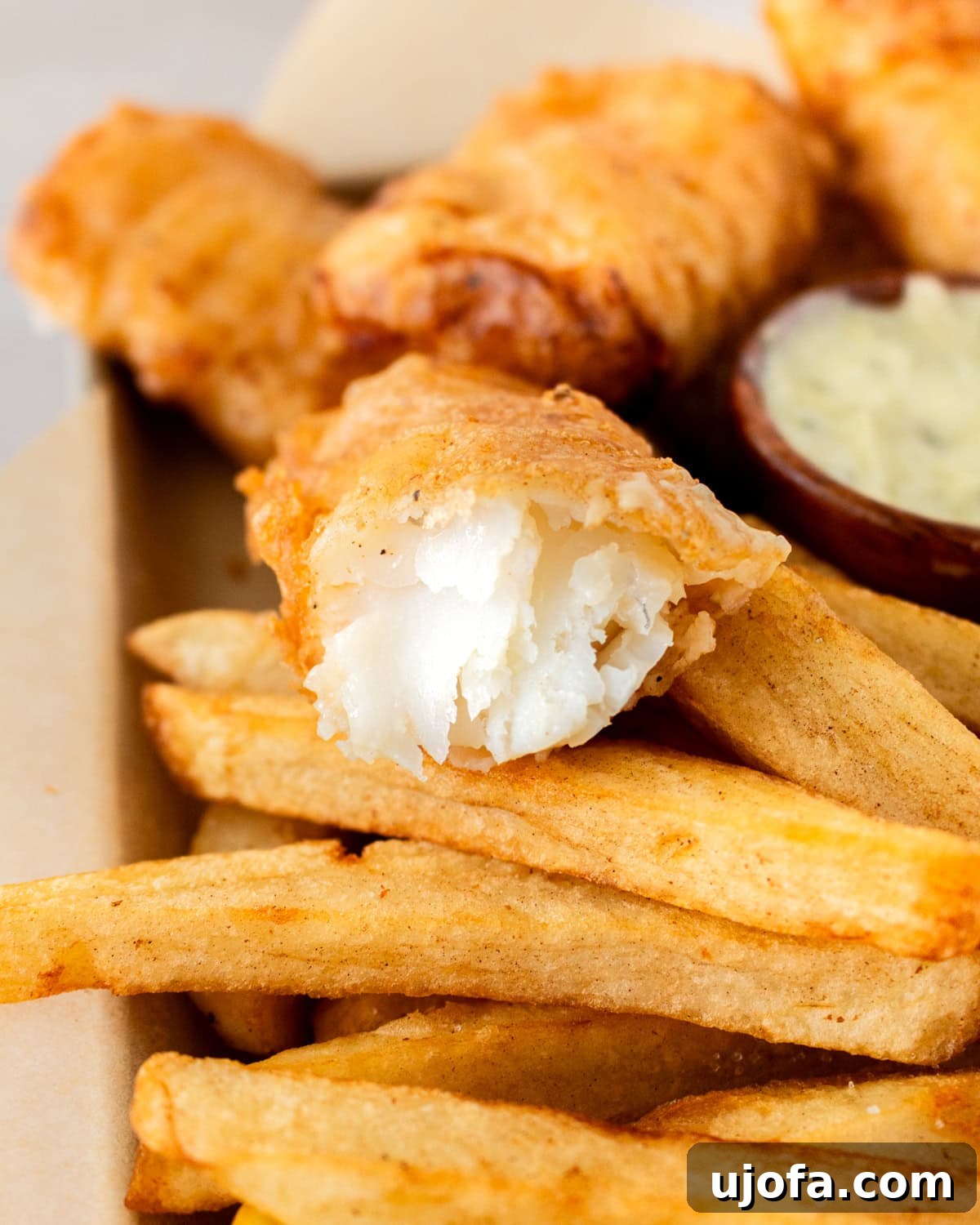
Serving Suggestions for Your Gluten-Free Fish and Chips
While classic tartar sauce and a squeeze of fresh lemon are essential companions to fish and chips, don’t hesitate to elevate your meal with a variety of delightful sides. Here are some suggestions to complete your gluten-free feast:
- Traditional Tartar Sauce & Lemon: A creamy, tangy homemade tartar sauce (or a good quality store-bought one) is non-negotiable. The acidity of fresh lemon wedges cuts through the richness of the fried fish beautifully.
- Dairy-Free Coleslaw: A crisp, refreshing coleslaw provides a wonderful textural contrast and a hint of freshness. My dairy-free coleslaw recipe is a perfect match.
- Mushy Peas: For an authentic British experience, serve with a side of vibrant, comforting mushy peas.
- Malt Vinegar: A drizzle of malt vinegar over your chips is a traditional favorite that adds a distinctive tang. Ensure your chosen brand is gluten-free if strict adherence is necessary.
- Fresh Green Salad: A simple side salad with a light vinaigrette can add a refreshing balance to the rich fried elements.
- Remoulade Sauce: For a slightly different flavor profile, a zesty remoulade sauce can also pair wonderfully with the fried fish.
Storage and Reheating Instructions
For the absolute best taste and texture, I highly recommend enjoying your gluten-free fish and chips immediately after frying. The crispness is at its peak when fresh. However, if you happen to have leftovers, they can be stored efficiently to preserve quality for a short period.
- Storage: Store the leftover fried fish and chips separately in airtight containers in the refrigerator for up to 2 days. Keeping them separate helps prevent the chips from becoming overly soft.
- Reheating Fish: To reheat the fish and restore some of its crispiness, preheat your oven to 375°F (190°C) or your air fryer to 350°F (175°C). Place the fish on a wire rack set over a baking sheet (for oven) or directly in the air fryer basket. Heat for 10-15 minutes in the oven, or 5-8 minutes in the air fryer, until thoroughly warmed through and crispy.
- Reheating Chips: For crispy chips, reheat them in a preheated oven at 400°F (200°C) or an air fryer at 375°F (190°C) for about 5-10 minutes, shaking halfway through, until hot and crisp. Avoid microwaving, as this will make them soggy.
Frequently Asked Questions (FAQs)
What type of oil is best for deep frying fish and chips?
For deep frying, neutral oils with a high smoke point are ideal. Good options include vegetable oil, canola oil, peanut oil, or sunflower oil. These oils impart minimal flavor and can withstand the high temperatures required for crispy results.
Can I use frozen fish for this recipe?
While fresh fish is always recommended for the best flavor and texture, you can use frozen fish. Ensure it is completely thawed and thoroughly patted dry before dredging and battering. Excess moisture from frozen fish can lead to a soggy batter and cause oil to splatter.
Is gluten-free beer essential, or can I use regular beer if I’m not strictly gluten-free?
If you are not strictly gluten-free and can consume gluten, regular beer (like a lager or ale) can be used for the batter. The carbonation and flavor notes will still contribute to a delicious outcome. However, for a true gluten-free experience, stick to gluten-free beer or club soda.
How can I make sure my chips are extra crispy?
The key to extra crispy chips is the two-stage frying process (parboiling and then two distinct frying stages) and ensuring your potatoes are completely dry before frying. Also, never overcrowd the pot or air fryer basket, and always monitor and maintain the correct oil temperature.
Can I bake the fish and chips instead of frying?
While baking will not yield the same classic crispiness as deep-frying or air frying, you can try baking the fish after battering. Place battered fish on a greased wire rack over a baking sheet and bake at 400°F (200°C) for 15-20 minutes, flipping halfway, until golden. For chips, toss with oil and bake at 425°F (220°C) for 25-35 minutes, flipping occasionally. Expect a softer, less uniformly crispy result.
Explore More Delicious Gluten-Free Fried Recipes
If you loved this gluten-free fish and chips recipe, you’re in for a treat! Discover more fantastic fried dishes that cater to a gluten-free lifestyle without compromising on flavor or texture:
- Gluten-Free Fried Onions
- Gluten-Free Fried Chicken
- Gluten-Free Onion Rings
- Gluten-Free Mozzarella Sticks
- Gluten-Free Chicken Tenders