
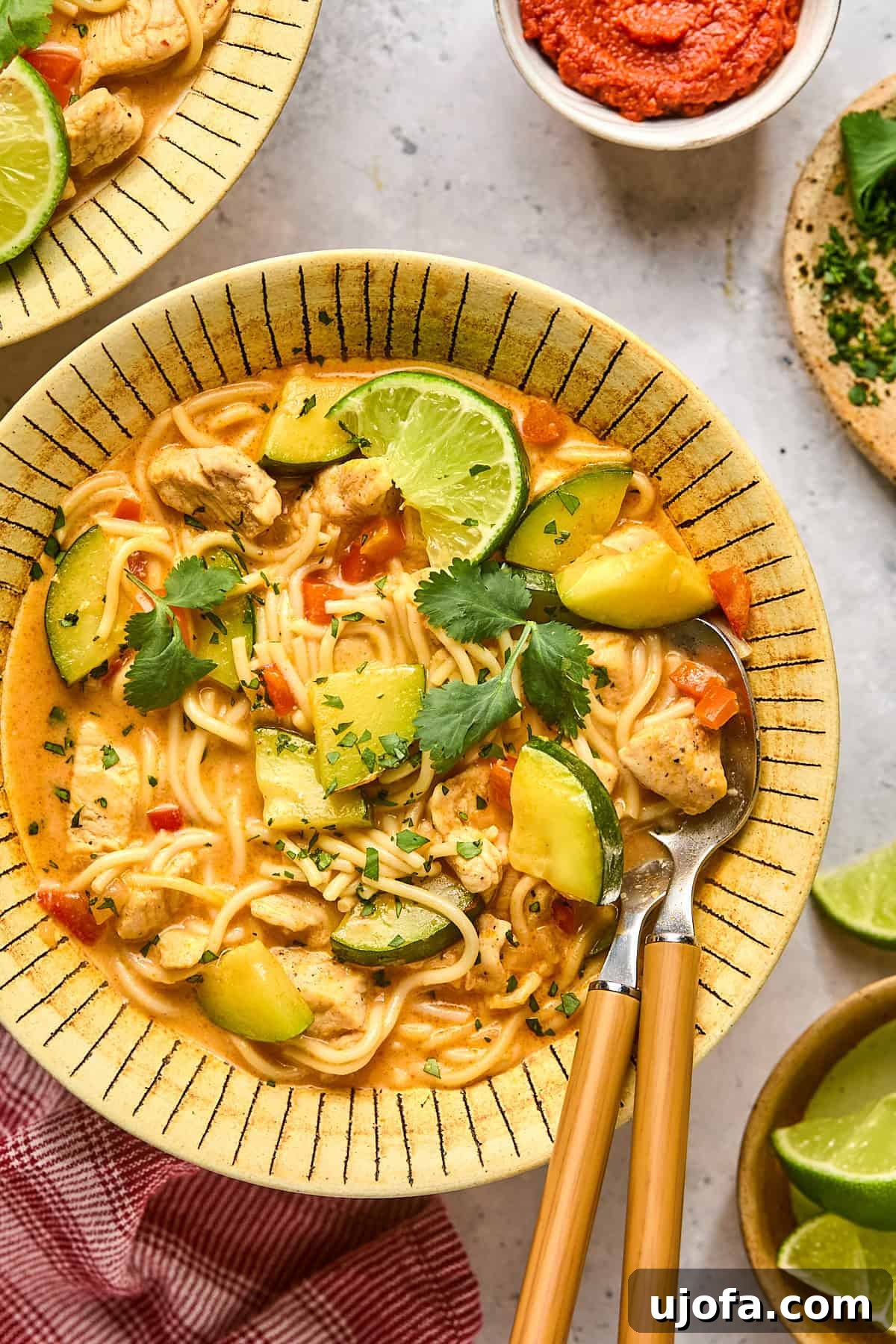
Welcome to your new favorite weeknight meal! This vibrant and incredibly flavorful Thai Red Curry Noodle Soup recipe is designed to bring the exotic tastes of Thailand straight to your kitchen, without the need for takeout. Forget complicated cooking – this recipe is a true one-pot wonder, delivering a rich, creamy, and deeply satisfying soup that’s surprisingly easy to make. Packed with tender chicken, an array of fresh vegetables, aromatic spices, and slurpable noodles, it’s a bowl full of comfort and bold, authentic flavors. Get ready to impress your taste buds and fill your home with an irresistible aroma!
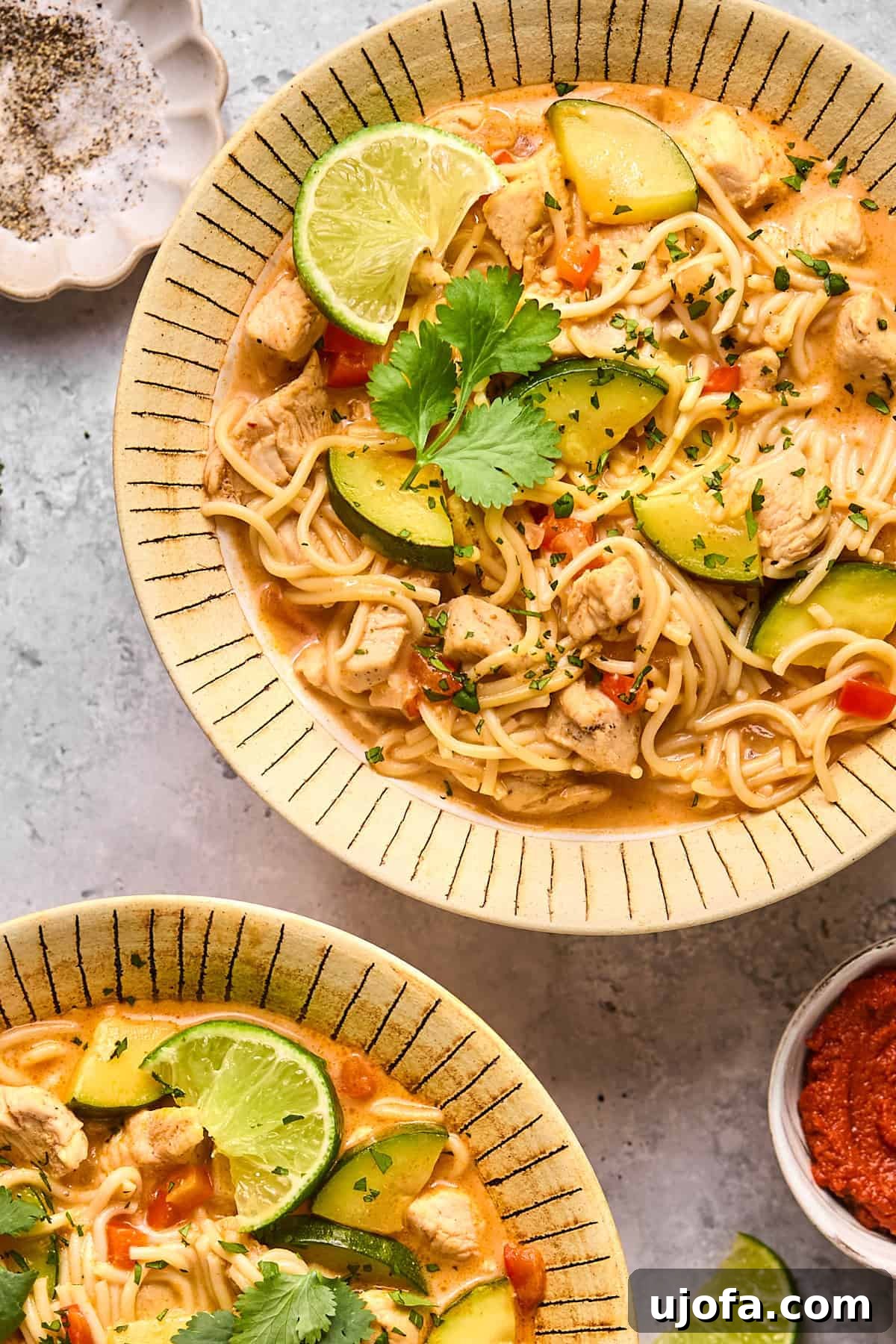
Why You’ll Adore This Homemade Thai Red Curry Noodle Soup
There are countless reasons why this Thai Red Curry Noodle Soup will quickly become a staple in your meal rotation. First and foremost, crafting this restaurant-quality dish at home is a complete game-changer, giving you full control over the quality and freshness of every ingredient. This recipe is a celebration of wholesome goodness, featuring a vibrant assortment of fresh, colorful vegetables like crisp bell peppers and tender zucchini, providing essential nutrients and delightful textures.
For a robust protein boost, we incorporate succulent chicken breasts, though this recipe is incredibly versatile and allows for easy protein swaps. The rich, velvety texture comes from full-fat coconut milk, which not only adds a luxurious creaminess but also imbues the soup with a subtly sweet and authentic Thai essence. We’ve chosen rice ramen noodles for a perfect gluten-free alternative that maintains the classic, comforting noodle experience without compromising on flavor or authenticity.
But the true magic lies in the symphony of aromatic ingredients: fresh garlic and ginger lay the foundational notes, while fragrant onion adds depth. The star, Thai red curry paste, delivers that quintessential spicy and savory kick. Harmonizing these flavors are robust chicken broth, a touch of umami from coconut aminos, and a bright finish from fresh lime juice and a generous sprinkle of cilantro. The result? A profoundly flavorful and wonderfully balanced bowl of soup that will tantalize your senses.
Beyond its incredible taste, this soup offers remarkable flexibility. Craving more heat? Adjust the amount of curry paste or add a pinch of red pepper flakes. Prefer different vegetables? Feel free to experiment with mushrooms, spinach, or snap peas. This recipe truly invites personalization, ensuring every bowl is tailored to your exact preferences. And the best part? It’s a true one-pot wonder, minimizing cleanup, and comes together in just about 30 minutes. This makes it an ideal solution for those hectic weeknights when you need a comforting, healthy, and unbelievably delicious meal without spending hours in the kitchen.
For more Thai-inspired culinary adventures, be sure to explore my Thai-Inspired Gluten Free Turkey Meatballs, indulge in the savory goodness of Thai Curry Salmon Gluten Free Ramen, or cozy up with this Easy Thai Pumpkin Chicken Curry for a heartwarming and delicious fall dish that everyone will adore!
Essential Ingredient Notes for Your Red Curry Soup
Crafting the perfect Thai Red Curry Noodle Soup starts with understanding each ingredient and its role. Here’s a breakdown of what you’ll need and some helpful tips for substitutions:
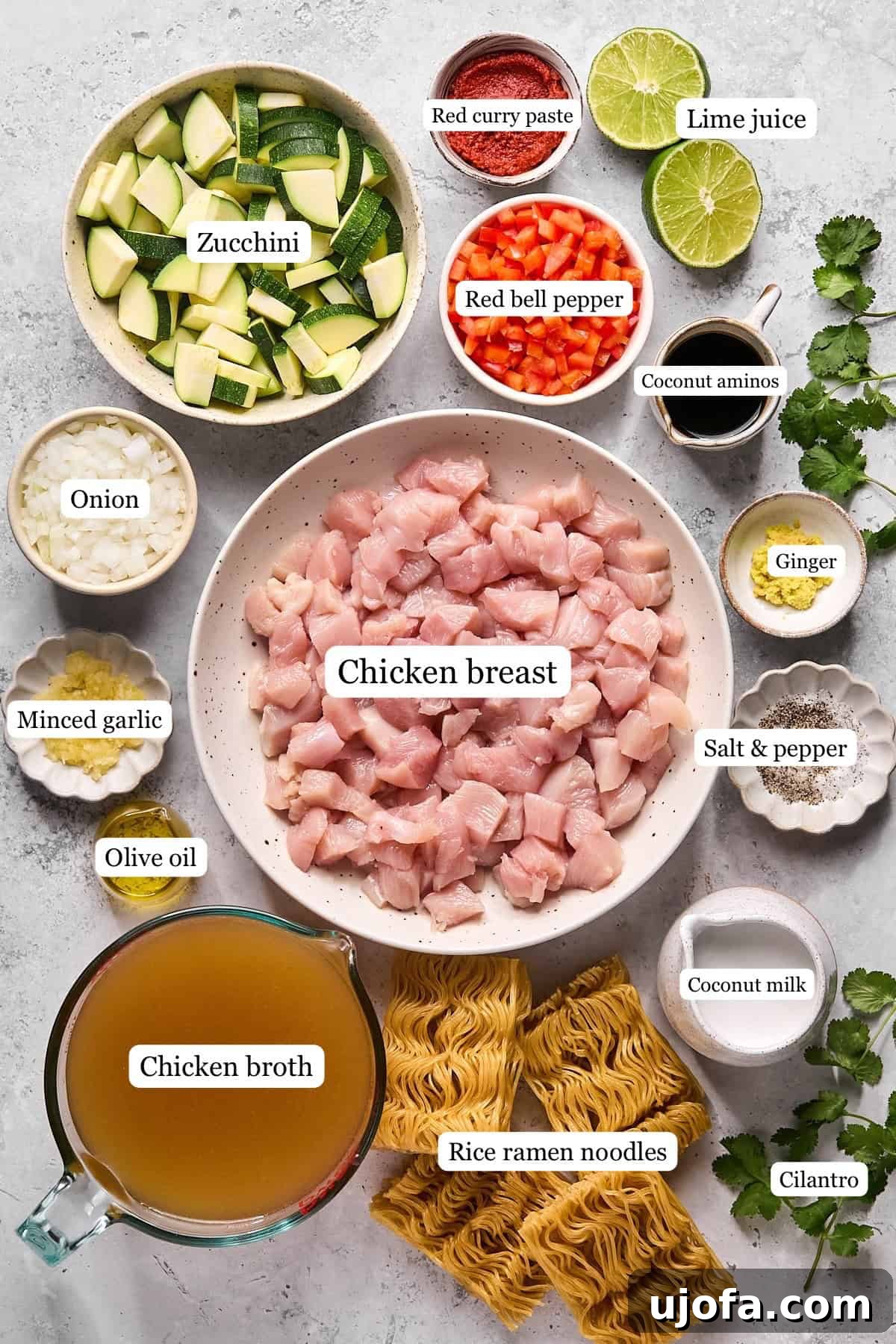
- Olive Oil: Used for sautéing your chicken and vegetables, providing a neutral base. You can also use coconut oil for a more pronounced Thai flavor, or any other neutral cooking oil like avocado oil.
- Chicken Breasts: Lean and tender, chicken breasts are cut into 1-inch cubes for quick cooking and even distribution throughout the soup. For an even quicker meal, pre-cooked rotisserie chicken can be shredded and added at the end.
- Minced Garlic Cloves: Freshly minced garlic is crucial for depth of flavor. Don’t skimp here; it’s a cornerstone of Thai cuisine.
- Onion: Diced onion adds a savory sweetness and aromatic foundation to the soup. Yellow or white onions work best.
- Red Bell Pepper: This adds a beautiful pop of color and a mild, sweet crunch. While red bell pepper is preferred for its sweetness, any color bell pepper will work if that’s what you have on hand.
- Zucchini: Sliced zucchini incorporates a tender texture and a fresh, subtle flavor. Cut them into quarter-inch thick quarter-moon slices for optimal cooking.
- Thai Red Curry Paste: This is the heart of your soup’s flavor. I highly recommend the Thai Kitchen brand for its authentic taste and clean ingredients. It’s widely available in most grocery stores and provides the perfect balance of spice and aromatic complexity.
- Fresh Ginger: Grated fresh ginger adds a warm, spicy, and incredibly fragrant note that brightens the entire dish. Always opt for fresh ginger over powdered for the best results.
- Chicken Broth: Forms the liquid base of your soup, carrying all the delicious flavors. For a vegetarian or vegan version, easily substitute with vegetable broth.
- Rice Ramen Noodles: These gluten-free noodles are a fantastic choice, offering a satisfying chewiness similar to traditional ramen. My favorite brand for these is Lotus Foods, known for its quality and texture.
- Full-Fat Coconut Milk: Essential for achieving that rich, creamy texture and authentic Thai flavor. Be sure to use canned full-fat coconut milk, not the refrigerated beverage, as the latter is too thin.
- Coconut Aminos: A gluten-free and soy-free alternative to soy sauce, providing a wonderful umami depth. If gluten is not a concern, Tamari (gluten-free soy sauce) or regular soy sauce can be used instead.
- Fresh Lime Juice: A squeeze of fresh lime juice at the end brightens all the flavors, adding a necessary acidic balance to the richness of the curry.
- Fresh Cilantro: Used as a garnish, fresh cilantro adds a burst of herbaceous freshness and vibrant color to each serving.
Refer to the full recipe card below for precise ingredient amounts.
Crafting Your Delicious One-Pot Thai Red Curry Soup
Follow these simple steps to create a deeply flavorful and satisfying Thai Red Curry Noodle Soup in just one pot:
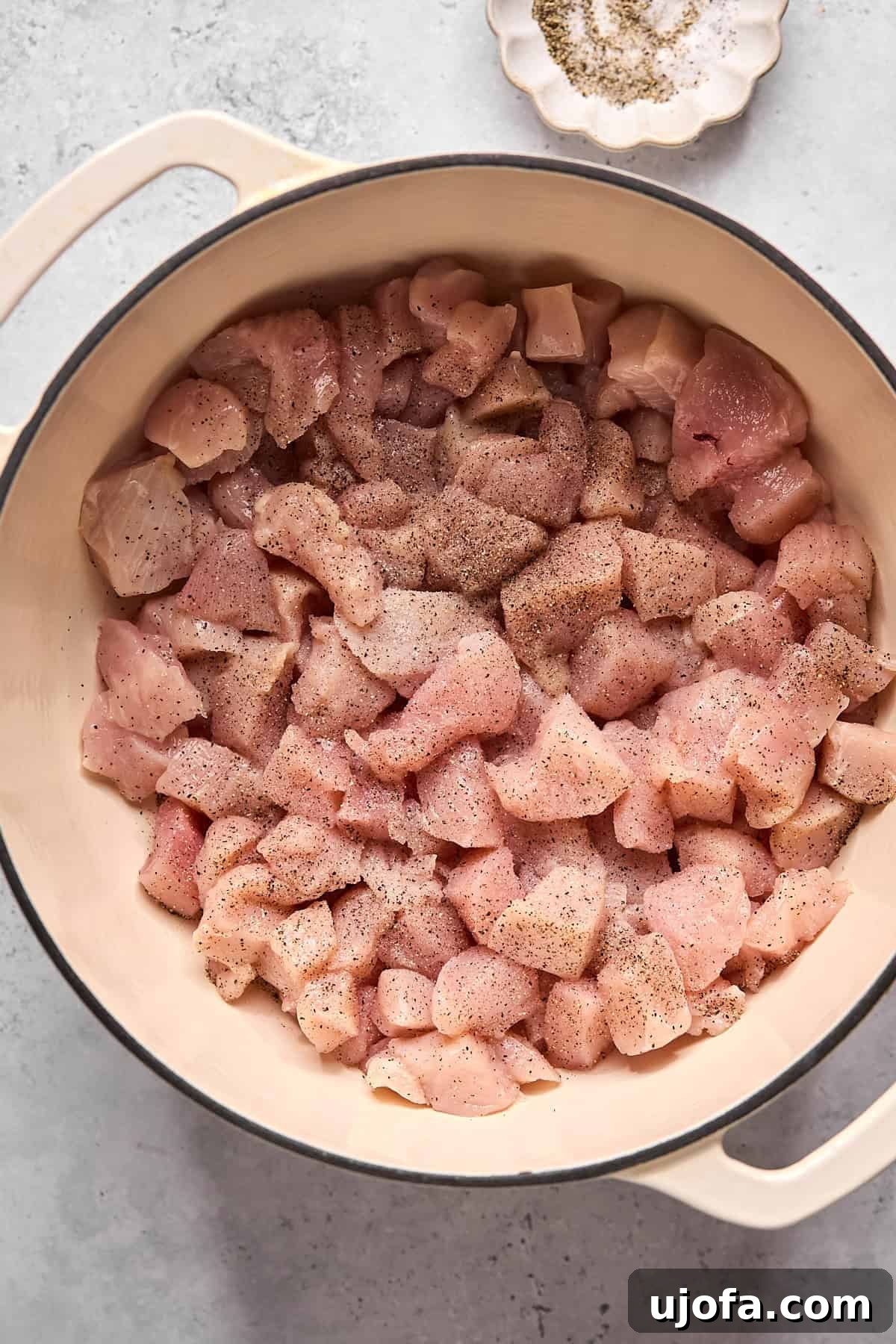
Step 1: Sear the Chicken. Begin by heating a tablespoon of olive oil in a large Dutch oven or a heavy-bottomed saucepan over medium heat. Once the oil is shimmering, add your 1-inch cubed chicken pieces to the pot. Season them generously with a pinch of salt and black pepper. Sauté the chicken for approximately 4-5 minutes, stirring occasionally, until it is mostly cooked through and beautifully browned on the exterior. This searing step helps to lock in flavor and create a rich base for your soup.
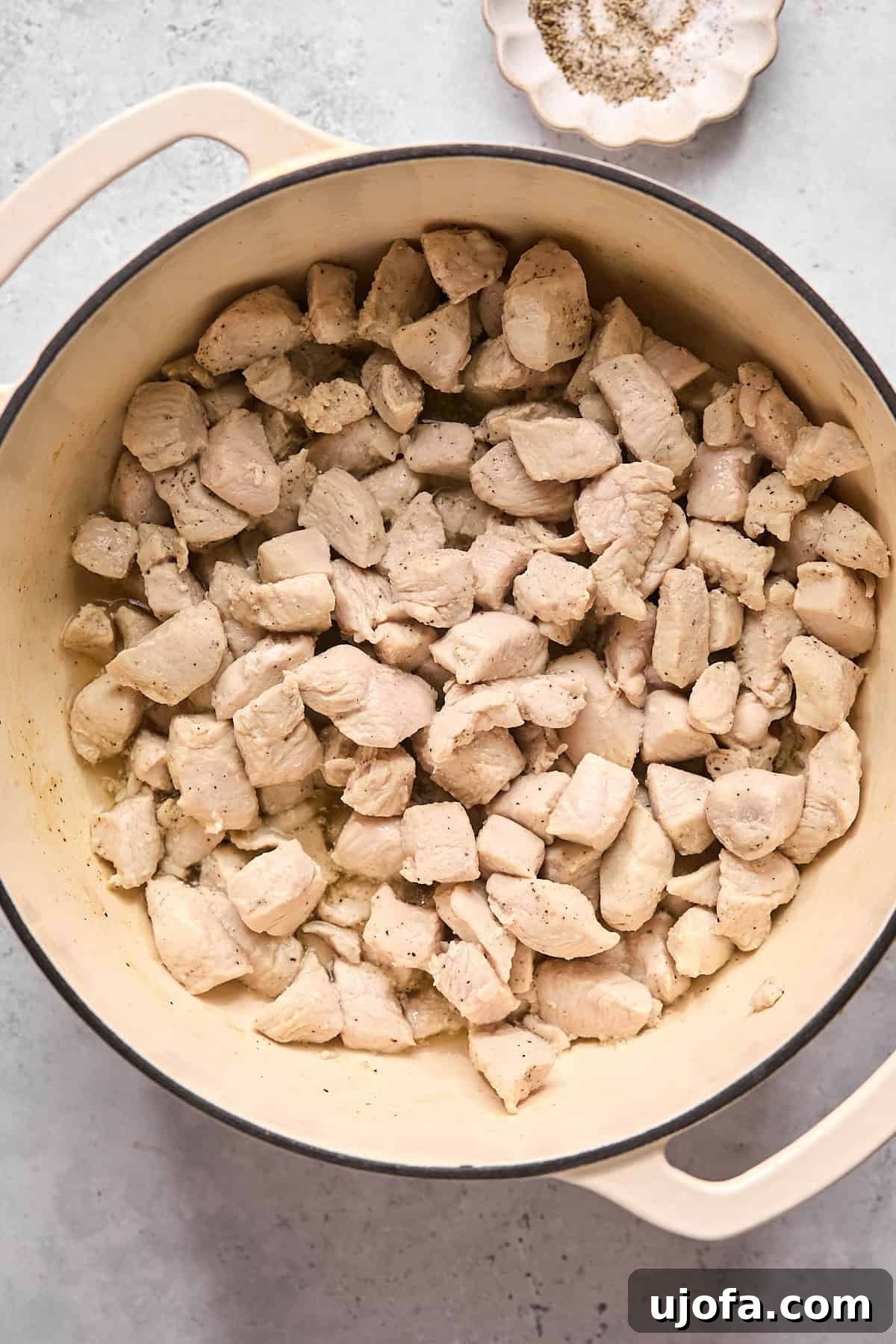
Step 2: Remove Chicken. Once the chicken is sufficiently browned and cooked through, use a slotted spoon to carefully remove the chicken pieces from the pot. Transfer them to a clean plate or bowl and set them aside for a moment. This allows you to cook the vegetables without overcrowding the pot, ensuring they get properly sautéed, and also prevents the chicken from overcooking and becoming tough.
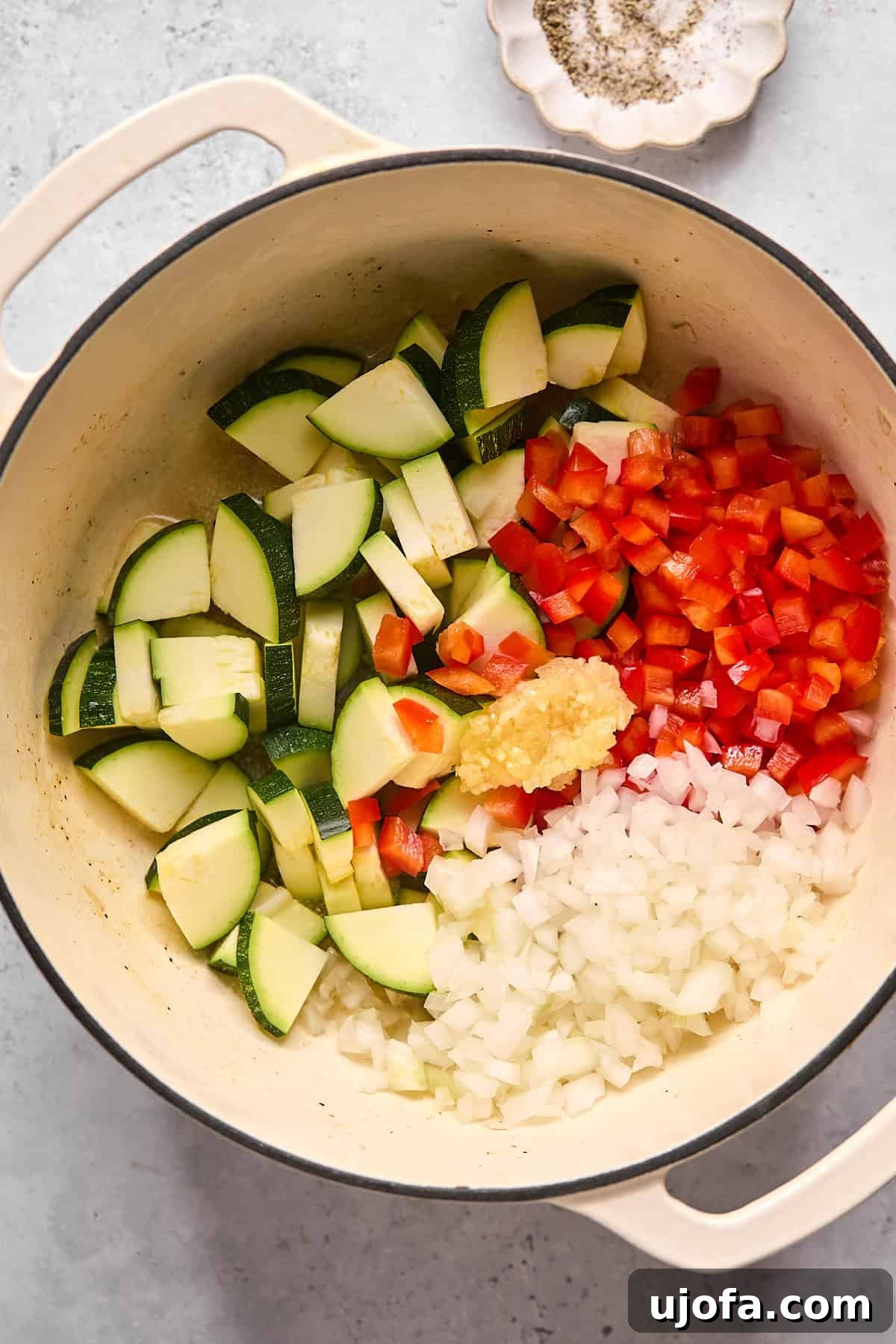
Step 3: Sauté the Aromatics and Vegetables. In the same pot, which should still have a little residual oil and chicken drippings (adding to the flavor!), add your minced garlic, diced onion, red bell pepper, and sliced zucchini. Sauté these vegetables for about 2-3 minutes, stirring continuously, until they begin to soften slightly and become fragrant. You want them tender-crisp, not mushy, as they will continue to cook in the soup.
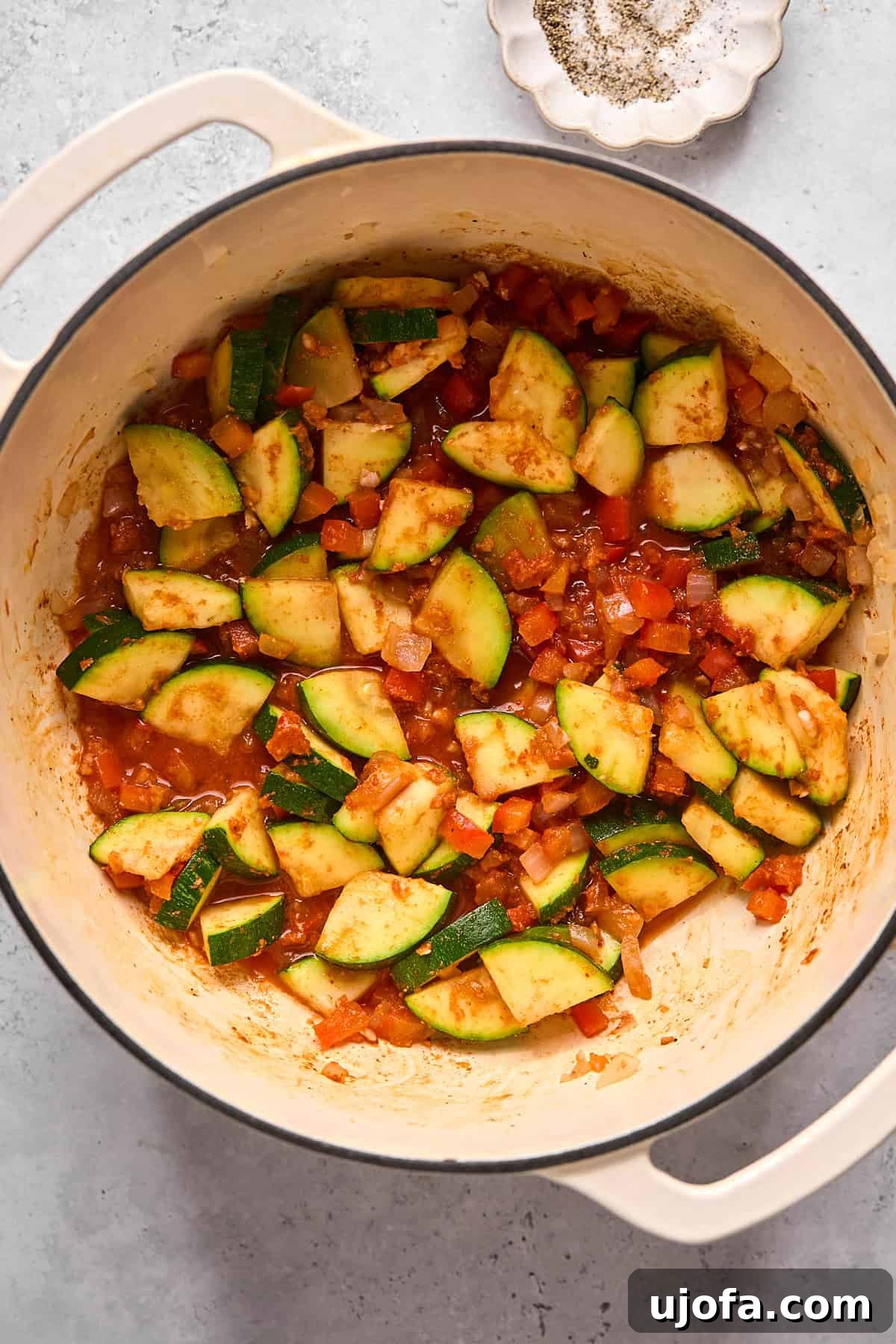
Step 4: Bloom the Curry Paste. Now, add the Thai red curry paste and grated fresh ginger to the softened vegetables in the pot. Stir well, making sure the paste thoroughly coats the vegetables. Continue to sauté for another 1-2 minutes until the curry paste becomes incredibly fragrant. This “blooming” step is vital as it toasts the spices in the paste, intensifying their flavors and aromas, creating a richer and more complex curry base.
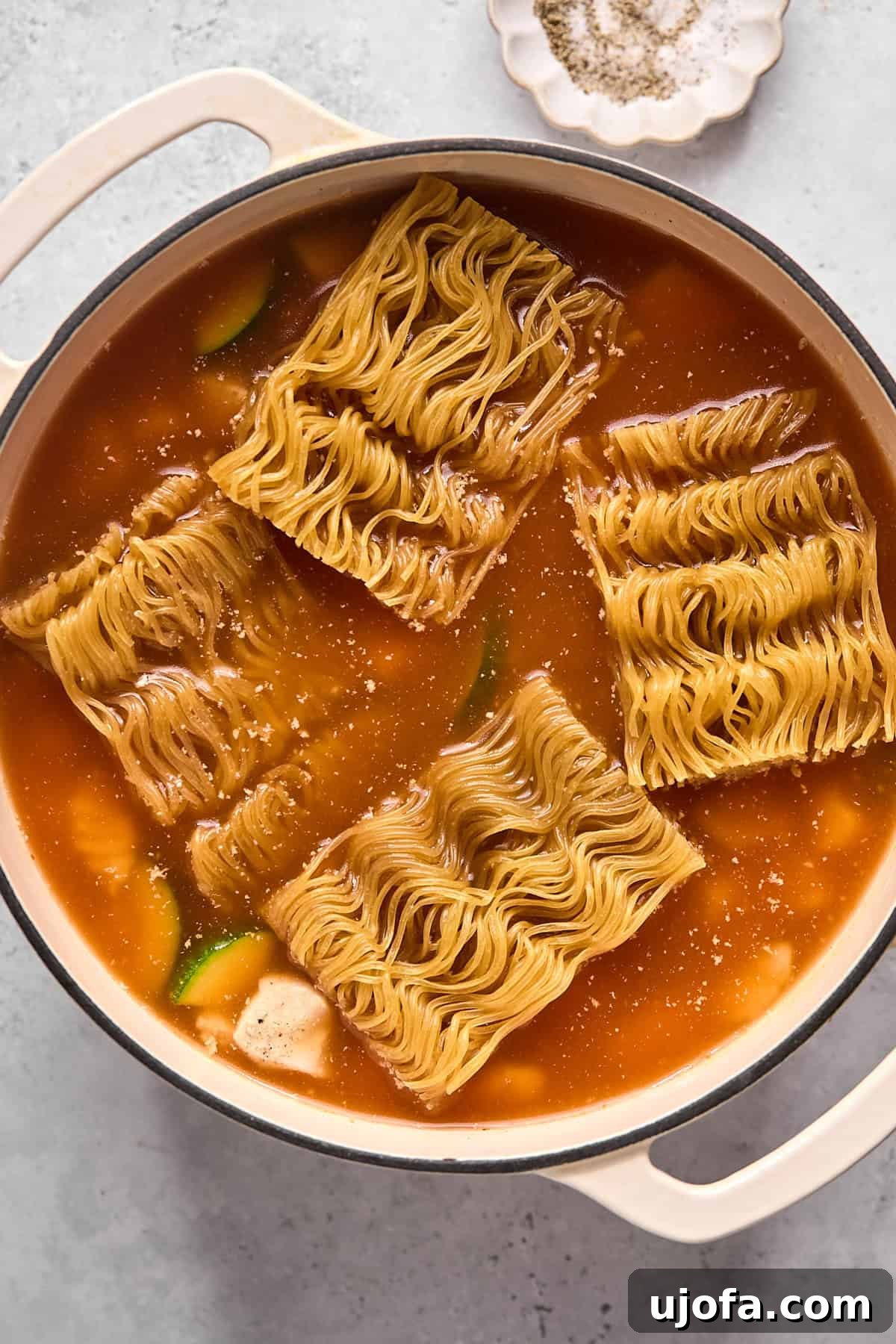
Step 5: Combine and Simmer. Return the cooked chicken pieces to the pot. Pour in the chicken broth and add the rice ramen noodles. Stir everything together gently to ensure the noodles are submerged in the liquid. Bring the mixture to a rolling boil over medium-high heat. Once boiling, reduce the heat to medium and allow it to simmer.
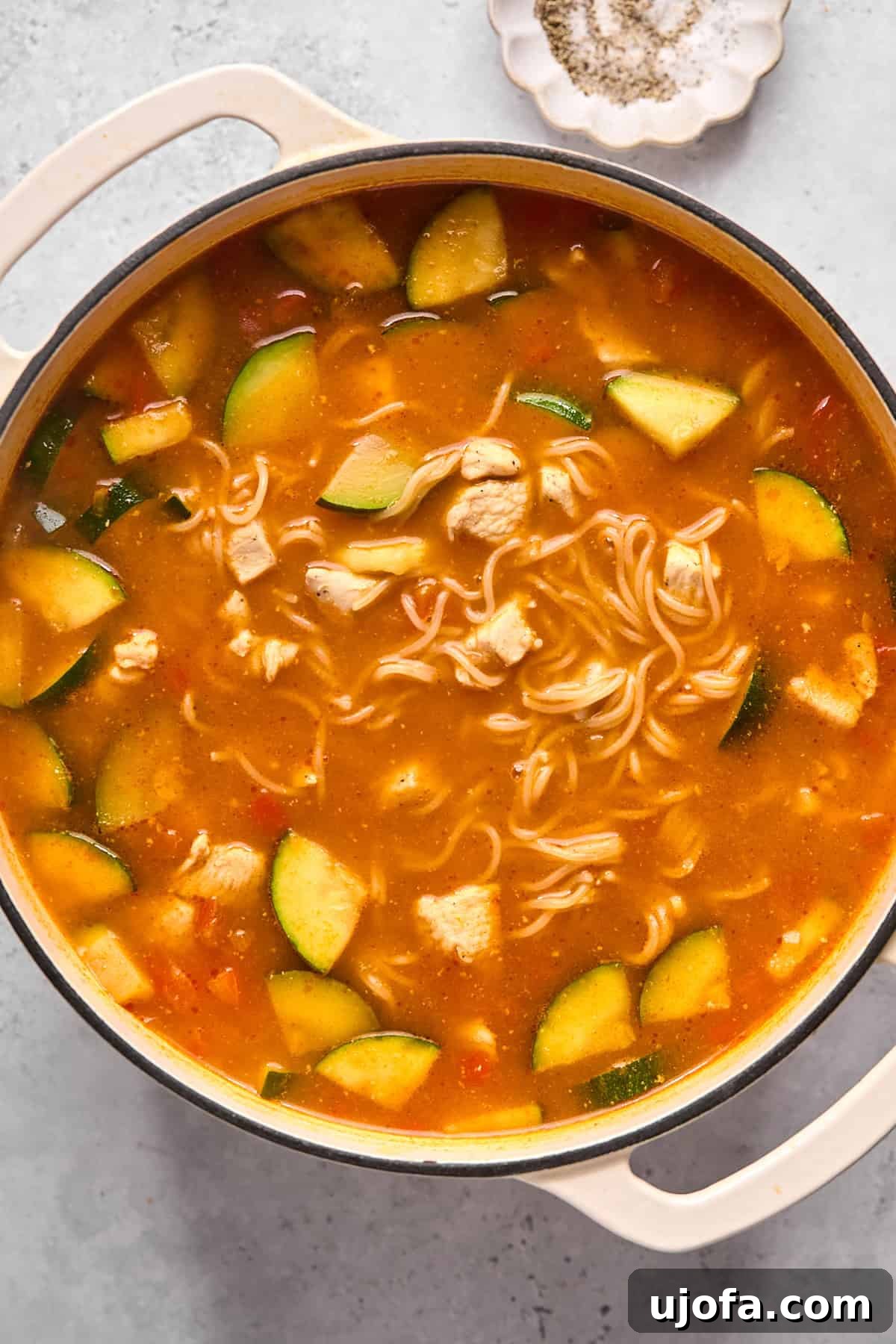
Step 6: Cook the Noodles. Continue cooking over medium heat for approximately 4-5 minutes, or until the rice ramen noodles are al dente. It’s important not to overcook them at this stage, as they will continue to soften slightly as they sit in the hot broth. Give it a taste test to ensure they reach your desired tenderness.
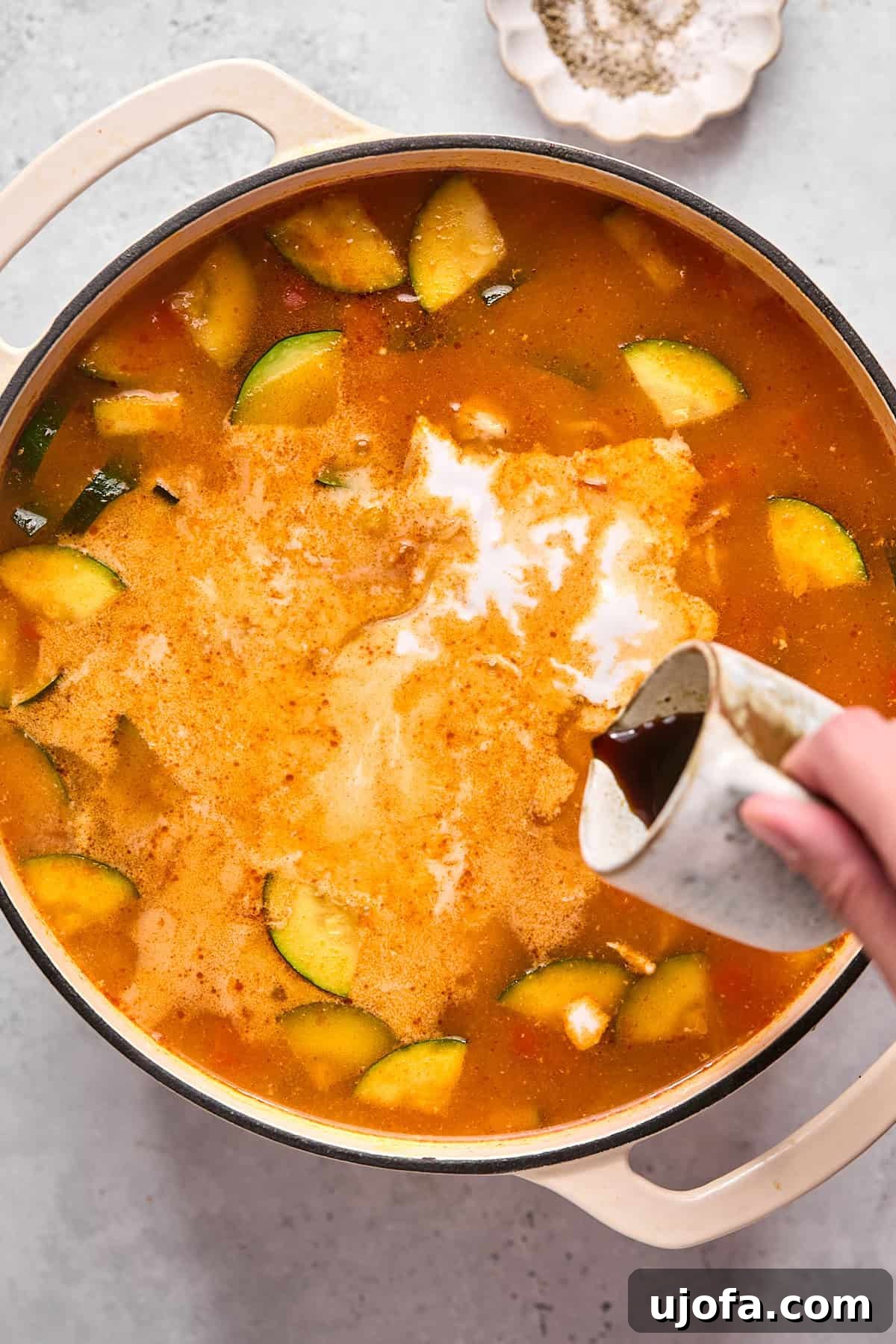
Step 7: Finish with Creaminess and Tang. Once the noodles are cooked, add the entire can of full-fat coconut milk, the coconut aminos, and the fresh lime juice to the pot. Stir gently until all ingredients are well combined and the soup reaches a uniform creamy consistency. Maintain the medium heat and continue to stir for a few minutes until the soup is thoroughly warmed through.
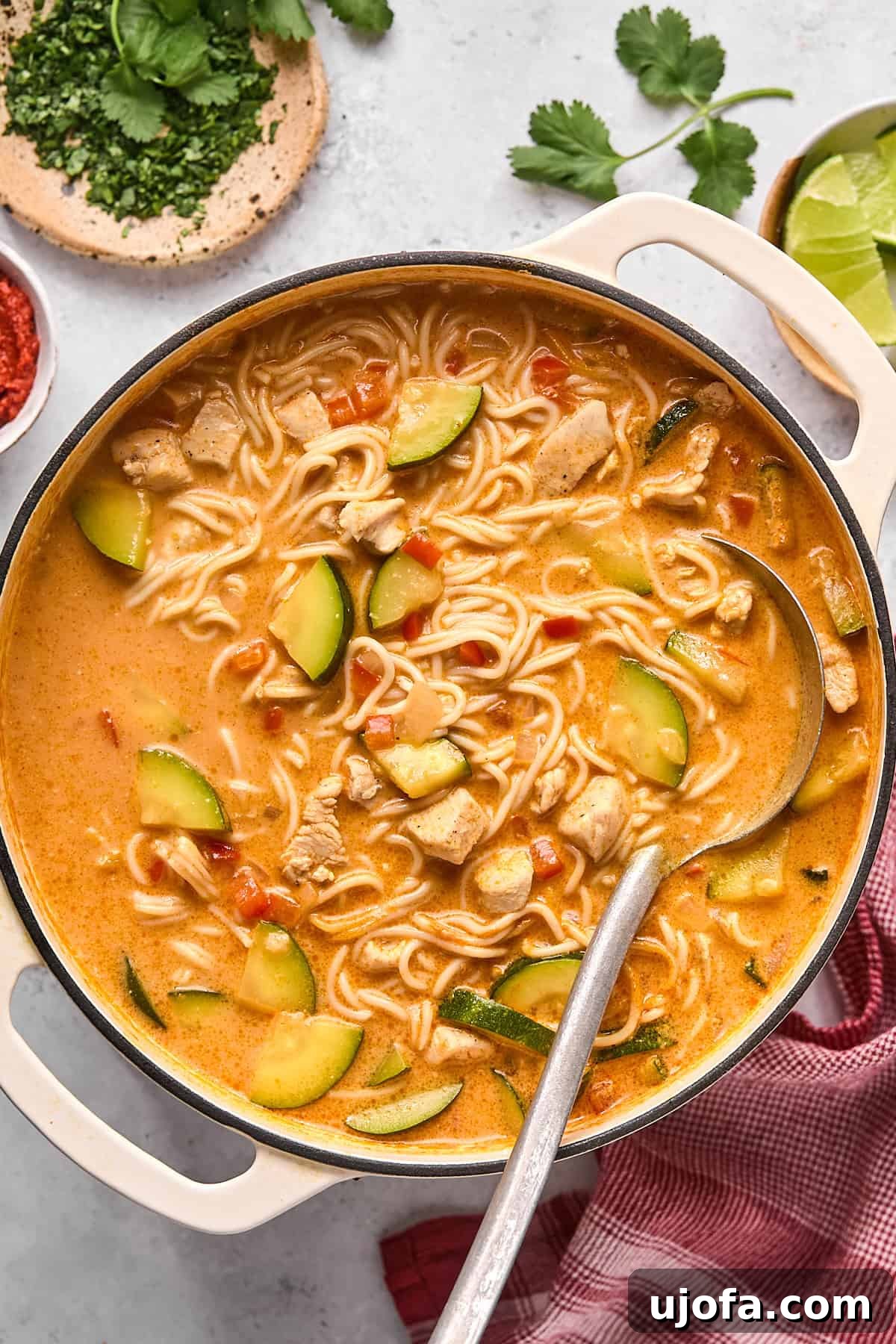
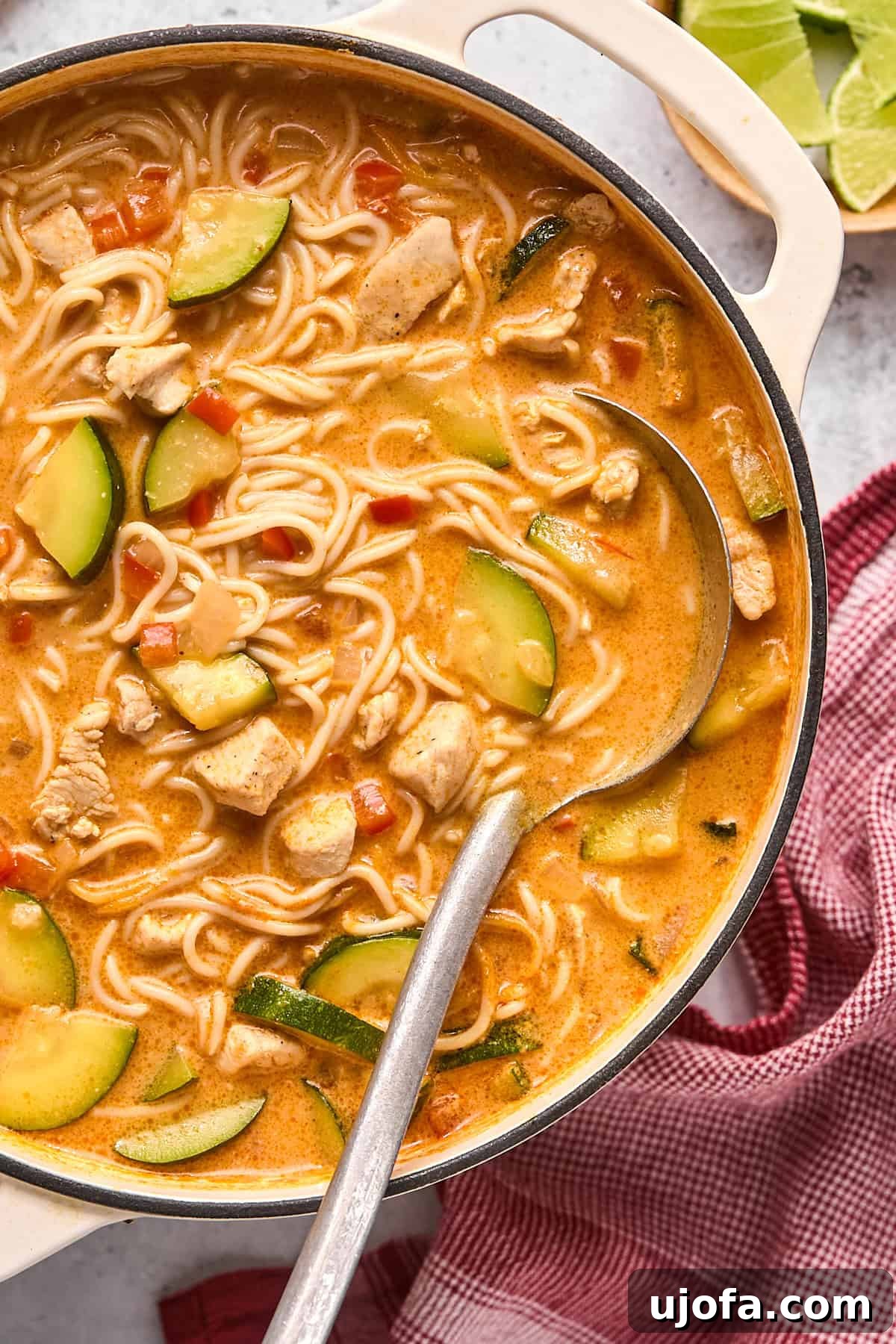
Step 8: Season and Serve. Taste the soup and season with additional salt and pepper as needed to enhance the flavors. Ladle the hot soup into individual bowls. For an extra layer of freshness and an authentic finish, generously top each serving with freshly chopped cilantro or even some Thai basil if you have it. A final squeeze of fresh lime juice just before serving will elevate the taste even further. Enjoy your homemade, comforting, and incredibly delicious Thai Red Curry Noodle Soup!
Expert Tips for the Best Thai Red Curry Noodle Soup
Elevate your homemade red curry soup with these tried-and-true tips:
- Choose the Right Coconut Milk: For a truly creamy and luxurious soup, always opt for full-fat canned coconut milk. The refrigerated versions or “light” coconut milk are much thinner and will result in a less rich and satisfying consistency. The fat content in full-fat coconut milk is what gives this soup its characteristic body and authentic mouthfeel. Shake the can well before opening to ensure the cream and liquid are fully combined.
- Customize Your Spice Level: Thai red curry paste comes in various spice levels, and personal preference varies greatly. Start with the recommended amount in the recipe. As you cook, taste the broth after adding the paste and broth. If you desire more heat, add a little extra curry paste, a pinch of red pepper flakes, or even a few slices of fresh chili like bird’s eye chilies. Remember, it’s easier to add spice than to take it away!
- Consider Fish Sauce for Authentic Umami: Many traditional Thai dishes incorporate fish sauce for an unmistakable depth of umami. If you enjoy its unique savory, slightly pungent flavor, feel free to add a teaspoon at a time to your pot of soup. Stir it in, let it simmer for a moment, and taste before adding more until it reaches your desired flavor profile. It can truly enhance the complexity of the broth.
- Don’t Overcook the Noodles: Rice ramen noodles cook quickly. Pay close attention to them in Step 6. They should be just al dente, meaning slightly firm to the bite. They will continue to soften as they absorb the hot broth, especially if you plan on having leftovers. Slightly undercooked noodles are preferable to mushy ones.
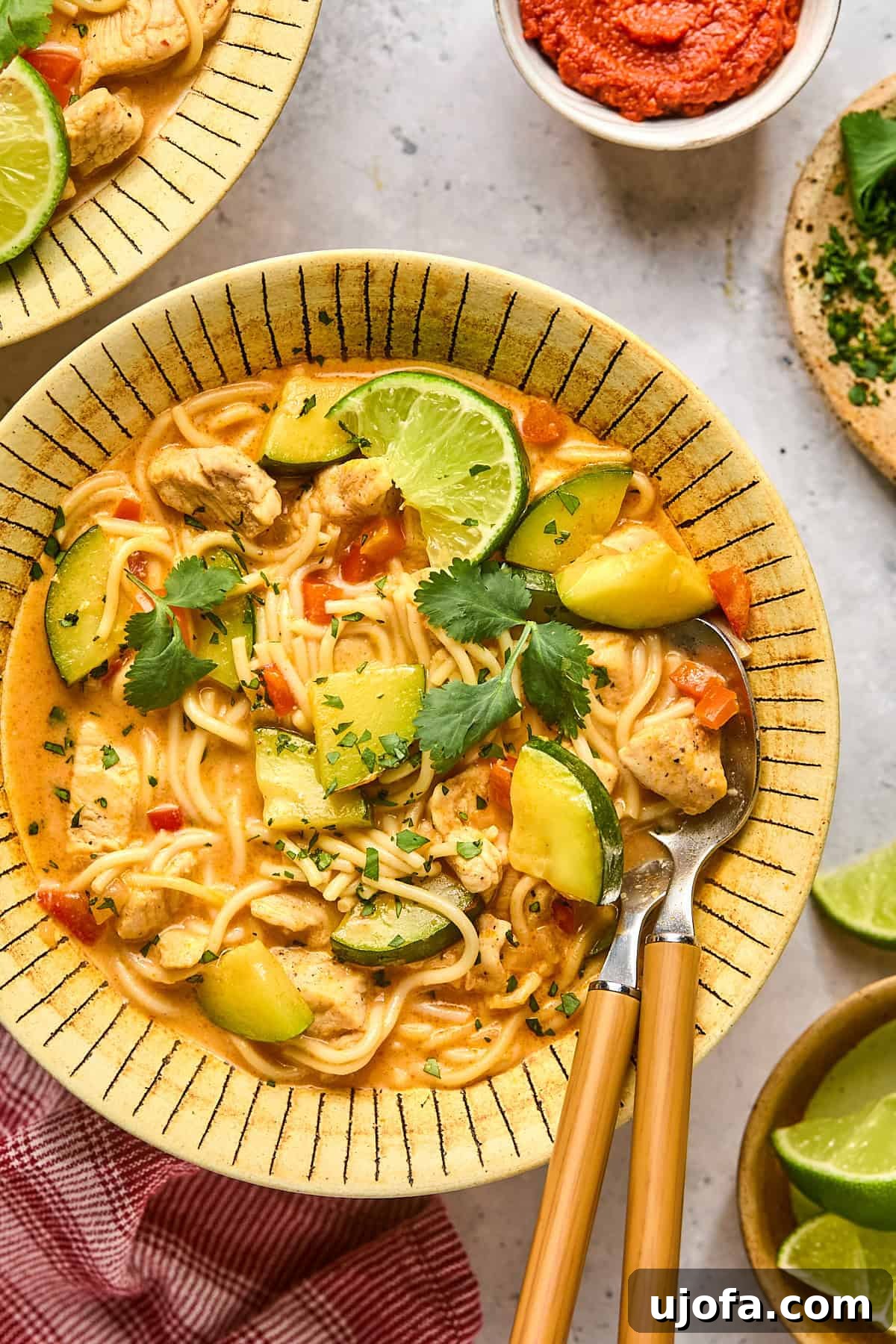
Serving Suggestions for Your Red Curry Noodle Soup
Enhance your Thai Red Curry Noodle Soup experience with these delightful serving tips:
- Fresh Lime Wedges: If you, like me, appreciate an extra zesty kick, serve your soup with a side of fresh lime wedges. A final squeeze of fresh lime juice over your individual bowl brightens the entire flavor profile and adds a refreshing tang that cuts through the richness of the coconut milk.
- Gluten-Free Bread for Dipping: This creamy soup is wonderfully satisfying, and even more so when paired with a good dipping companion. A warm, crusty gluten-free roll or a slice of gluten-free baguette is perfect for soaking up every last drop of the delicious broth.
- Garnish with Green Onions: Beyond cilantro, sliced green onions (scallions) are another excellent addition. Their mild oniony flavor and crisp texture provide a lovely contrast to the creamy soup, adding both visual appeal and an extra layer of freshness.
- Add a Protein Boost: While chicken is included, feel free to add other proteins like pan-seared tofu, shrimp, or even leftover cooked pork for variation.
- Extra Veggies: Serve with a side of steamed bok choy or blanched snap peas for added greens and crunch.
Storing and Reheating Your Thai Red Curry Noodle Soup
Proper storage ensures you can enjoy the delicious flavors of this red curry soup for days to come:
Noodle Separation for Best Leftovers: If you anticipate having a good amount of leftovers, a pro tip is to cook the rice ramen noodles separately and add them fresh to each serving as needed. Noodles, especially ramen, tend to absorb a significant amount of broth as they sit in the refrigerator, leading to a thicker soup and potentially mushy noodles. Cooking them just before serving ensures optimal texture and keeps the broth-to-noodle ratio perfect.
Refrigerator Storage: To store any leftover soup (with or without noodles), first allow it to cool completely to room temperature. Transfer the cooled soup to an airtight container. It will keep beautifully in the refrigerator for up to 4 days. When you’re ready to enjoy it again, reheat the soup gently in a skillet or saucepan over medium heat, stirring occasionally, until it is warmed through. If the soup has thickened, you can add a splash of chicken or vegetable broth to reach your desired consistency.
Freezer Storage: This red curry soup also freezes exceptionally well, making it a great meal-prep option. Once the soup has cooled completely, transfer it to an airtight, freezer-safe container or a heavy-duty freezer bag. It can be stored in the freezer for 2-3 months. To reheat from frozen, transfer the container to the refrigerator and allow it to thaw overnight. Once thawed, reheat it on the stovetop over medium heat until warmed through, adding a bit more broth if needed.
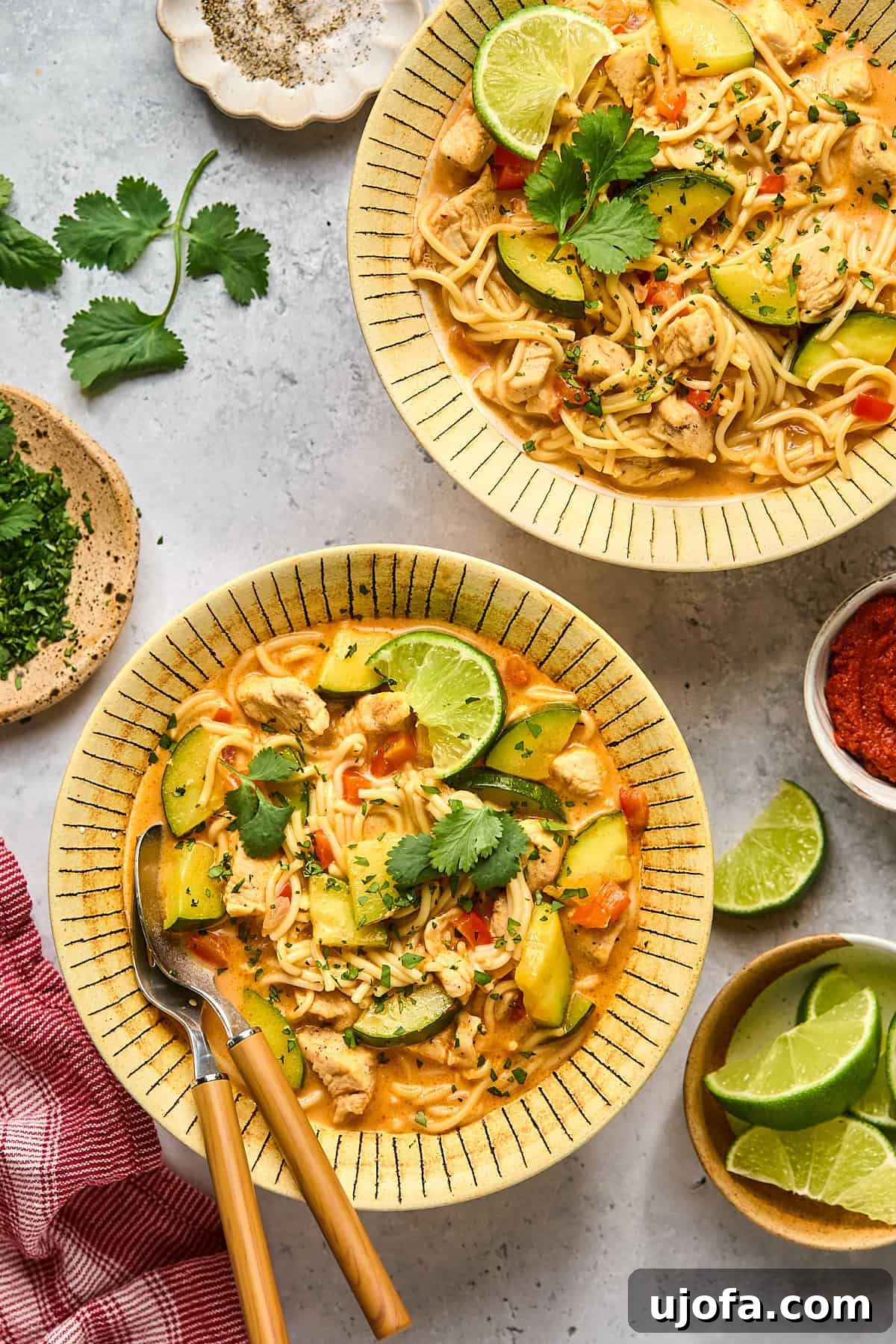
Frequently Asked Questions About Thai Red Curry Soup
While both rice noodles and rice ramen noodles are excellent gluten-free alternatives to traditional wheat noodles, they do differ slightly in shape, thickness, and resulting texture. Rice noodles often refer to thinner, flatter strands (like vermicelli or pad Thai noodles), while rice ramen noodles typically have a more rounded, wavy, and slightly chewier texture, designed to mimic the beloved bounce of traditional ramen. For this soup, rice ramen offers a heartier and more satisfying experience.
The inherent spice level of red curry soup primarily depends on the amount and brand of Thai red curry paste used. Many brands offer a moderate level of spice that is generally approachable. For this recipe, we recommend a starting amount that provides a pleasant warmth without being overwhelmingly hot. However, customization is easy! If you prefer a spicier kick, you can gradually add more Thai red curry paste during Step 4. Alternatively, stir in some crushed red pepper flakes or a few slices of fresh bird’s eye chili when you add the coconut milk for an extra fiery punch. Always taste as you go to find your perfect heat level.
Absolutely! This recipe is incredibly versatile and works wonderfully with tofu as a protein substitute. For the best results, I recommend using extra-firm tofu. Press the tofu thoroughly to remove excess water, then cut it into 1-inch cubes. You can pan-fry or air-fry the tofu until golden and crispy before adding it to the soup in Step 5, alongside the broth and noodles. Ensure you also use vegetable broth instead of chicken broth to keep the entire dish vegetarian or vegan.
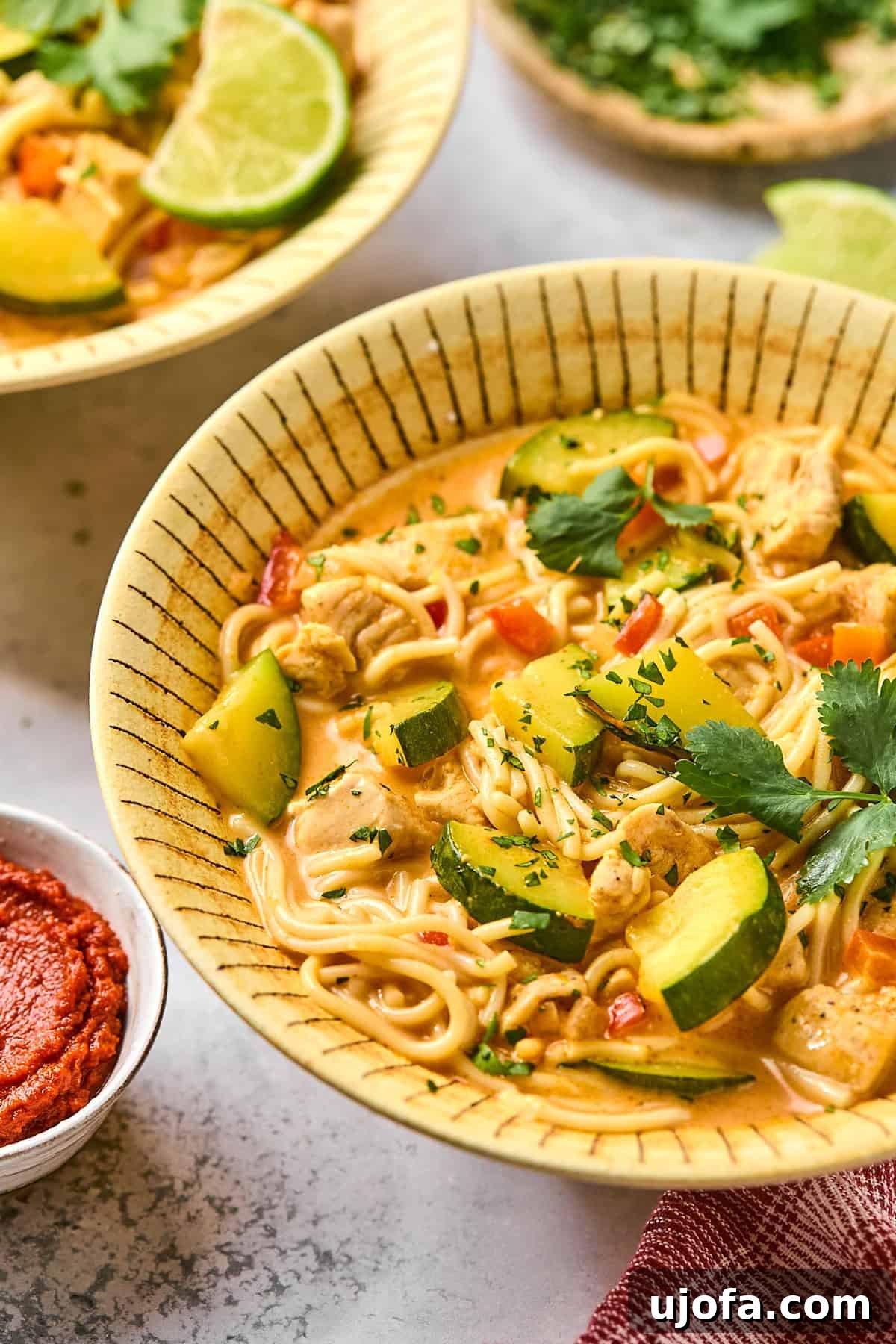
More Flavorful Recipes You’ll Love
Thai Coconut Curry Shrimp Bowls {Whole30, Keto, Paleo}
Instant Pot Chicken and Sweet Potato Curry
Thai Curry Salmon Gluten Free Ramen
Easy Gluten Free Dumpling Bake (One-Pan Dinner)
Love this recipe? Please leave a 5-star 🌟🌟🌟🌟🌟 rating in the recipe card below & a review in the comment section. Or, follow me on Facebook, Pinterest or Instagram today!

Thai-Inspired Red Curry Soup Recipe
Equipment
-
Dutch Oven
Ingredients
- 1 tbsp olive oil
- 2 lbs chicken breasts, cut into 1-inch cubes
- 4 cloves minced garlic
- ½ onion, diced
- 1 red bell pepper, diced
- 1 zucchini, cut into ¼ inch thick ¼ moon slices
- 2.5 tbsp Thai red curry paste
- 2 tsp fresh ginger, grated
- 6 cups chicken broth
- 4 blocks rice ramen noodles, I like Lotus Foods brand
- 1 can full-fat coconut milk
- 2 tbsp coconut aminos
- 2 tbsp lime juice
- fresh cilantro, for garnish
Instructions
-
Heat the olive oil over medium heat in a dutch oven or large pot.
-
Add the chicken pieces and sprinkle with salt and pepper. Saute for 4-5 minutes until mostly cooked through and browned. Remove using a slotted spoon and set aside.
-
Add the garlic, onion, bell pepper, and zucchini to the pot. Saute for 2-3 minutes.
-
Add the curry paste and ginger and stir until fragrant.
-
Add the chicken back to the pot along with the chicken broth and the rice ramen noodles. Bring to a boil, then cook over medium heat until the noodles are al dente (they will soften as they sit in the broth), about 4-5 minutes.
-
Add the can of coconut milk, coconut aminos, and lime juice. Stir over medium heat until warmed through.
-
Season with salt and pepper. Serve topped with some fresh cilantro and enjoy!
Notes
- For best results, use canned full-fat coconut milk instead of the refrigerated version. The refrigerated version tends to be too thin and doesn’t give your soup a creamy consistency.
- Fish sauce is used frequently in Thai dishes, so if you like it, feel free to add it to your pot of soup a teaspoon at a time until it reaches your desired taste!
- Taste as you go to make sure the spice level is perfect for you. Feel free to add in some crushed red pepper for extra spice.
- To store leftovers, first let them cool to room temperature and then store them in an airtight container in the refrigerator for up to 4 days. Heat up in a skillet over medium heat until warmed through.
- This soup can also be frozen for 2-3 months in an airtight container or freezer bag. When you’re ready to eat it, thaw it in the refrigerator overnight before reheating.
- If you plan on having lots of leftovers, I recommend cooking the rice ramen separately and adding it fresh as needed. The noodles absorb a lot of the broth as it sits in the broth/containers in the fridge.
Nutrition
All nutrition facts are an estimate and automatically calculated. While I fact check them using My Fitness Pal, please note that they may not always be 100% accurate and depend on ingredients used. Weigh your total and divide by the number of servings for the most accurate grams per serving size.
This post may contain affiliate links