
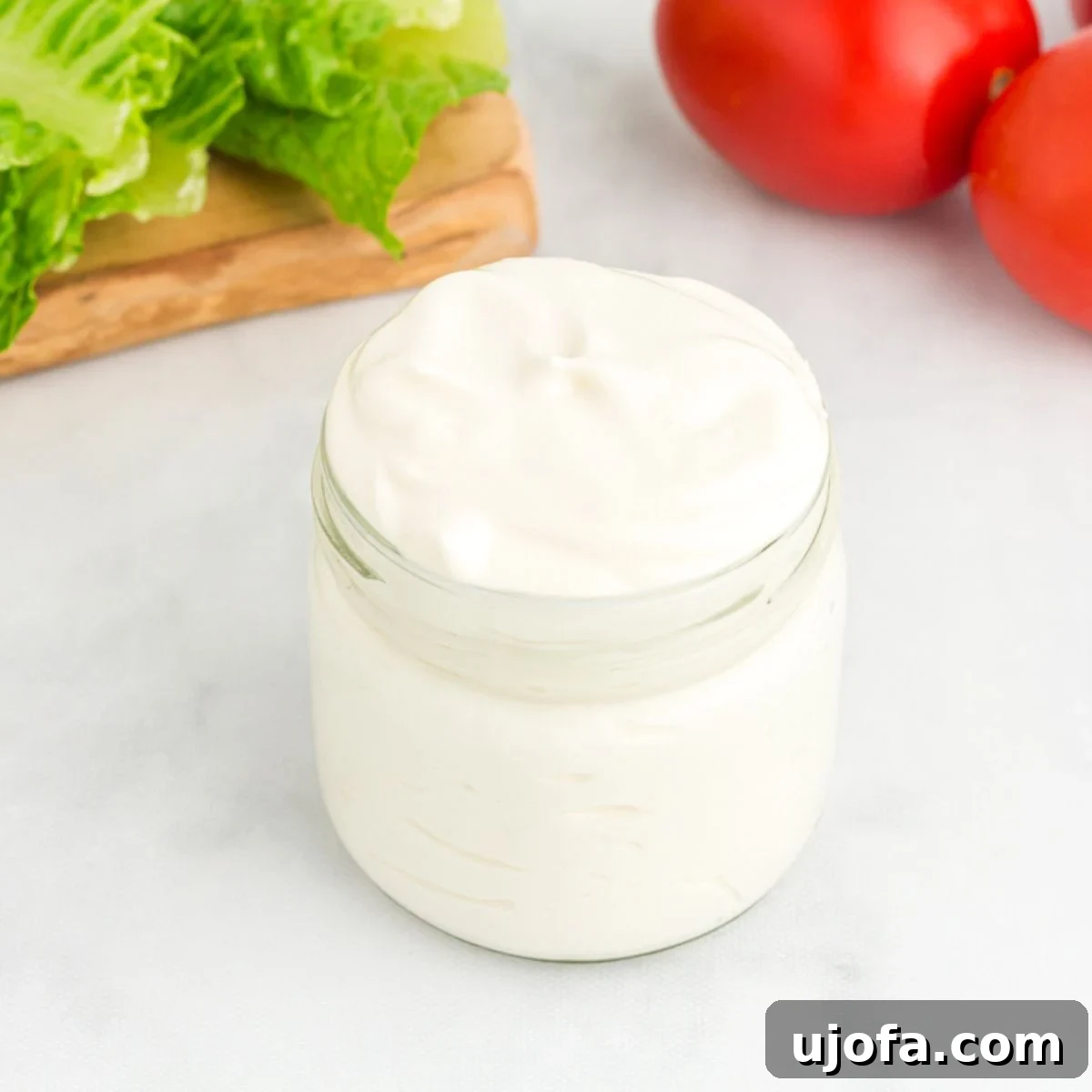
Get ready to transform your culinary experience with the simplest and most delectable homemade vegan mayonnaise recipe you’ll ever encounter! Say goodbye to pricey, store-bought alternatives laden with preservatives; this plant-based marvel comes together with just 5 essential ingredients in mere minutes. It’s completely dairy-free, egg-free, and boasts that irresistible creamy texture and tangy flavor we all cherish in traditional mayo. Whether you’re spreading it generously on your favorite sandwiches, crafting rich dressings or dips, or enjoying the delight of your children happily dipping their french fries, this recipe is an absolute game-changer. Even your most skeptical non-vegan friends will be utterly amazed by how effortless and incredibly delicious this vegan mayo truly is. It’s time to upgrade your pantry with a fresh, wholesome, and truly satisfying condiment.
Why Choose Homemade Vegan Mayonnaise? Beyond Just Egg-Free!
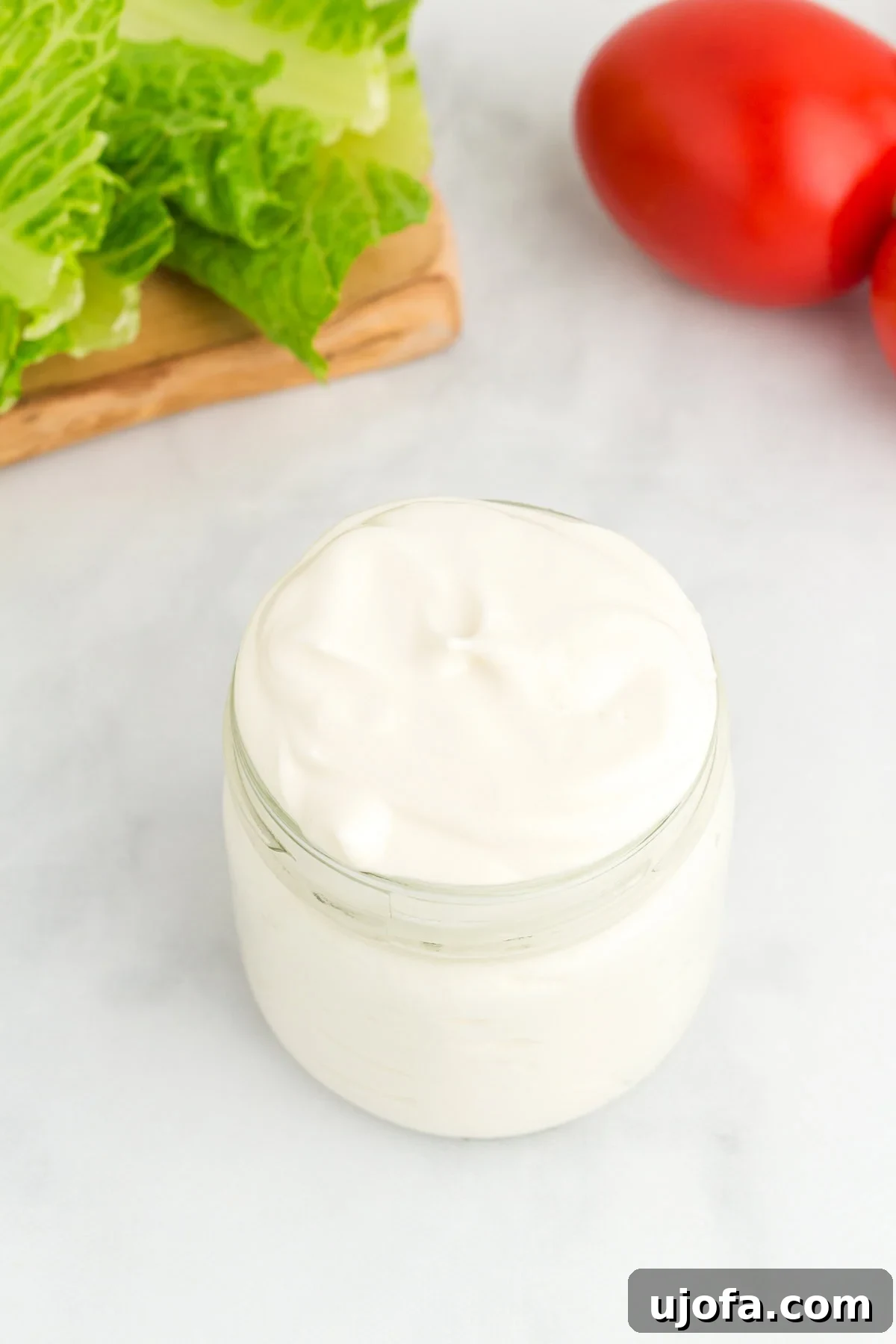
Have you noticed the ever-increasing price tag on products labeled ‘vegan’ or ‘plant-based’ at the grocery store? Mayonnaise is a fundamental kitchen staple for many, yet its traditional preparation involves eggs, making it unsuitable for those adhering to a vegan lifestyle or avoiding eggs due to allergies or dietary preferences. This exceptional homemade vegan mayonnaise recipe offers a brilliant solution, not only saving you money but also delivering a superior taste and texture that truly competes with, if not surpasses, conventional varieties. By cleverly substituting eggs with plain soy milk and blending it meticulously with a neutral vegetable oil, bright apple cider vinegar, a touch of savory Dijon mustard, and a pinch of salt, you achieve a remarkably thick, perfectly emulsified, and delightfully creamy mayo. It’s perfectly suited for any culinary application, from a simple spread to a complex sauce. Furthermore, it serves as a healthier alternative, being naturally cholesterol-free and typically containing fewer additives than many commercial brands, affording you complete control over every ingredient that goes into your food. This homemade version ensures freshness and purity, making it a conscious choice for a wholesome diet.
The Magic 5 Ingredients for Perfect Vegan Mayo
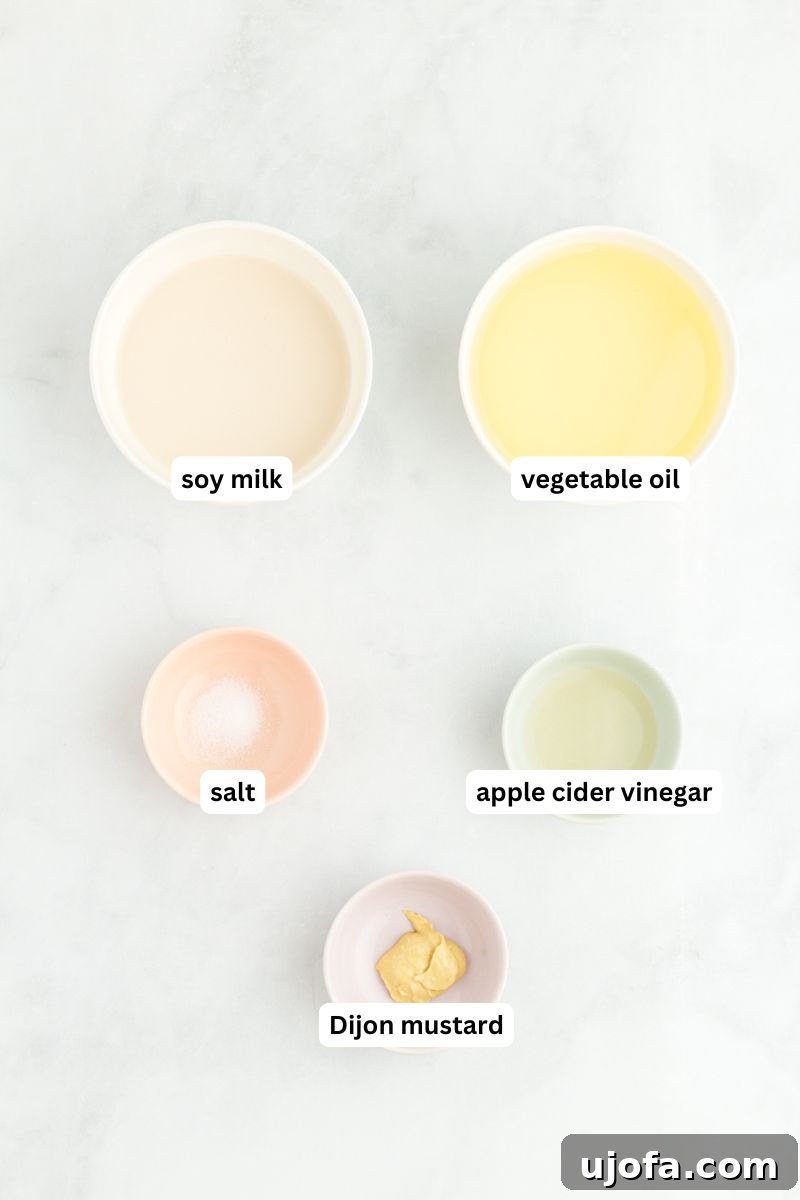
Crafting this smooth and luscious vegan mayonnaise is astonishingly simple, thanks to a carefully selected group of everyday ingredients that collaborate to create a truly magical emulsion. Each component plays a vital role in achieving the desired taste, texture, and lasting stability of your homemade condiment. Let’s explore the individual contributions of these essential ingredients:
- Soy Milk: This is unequivocally the star ingredient in our egg-free mayonnaise! It is absolutely critical to use plain, unsweetened soy milk and ensure it is at room temperature. Soy milk is naturally rich in emulsifiers, particularly lecithin, which are fundamental for effectively binding the oil and water components together, thus creating that famously creamy and stable texture. Other non-dairy milks, such as almond or oat milk, unfortunately lack these specific emulsifying properties and will not thicken adequately in the same manner, often leading to a runny or separated mixture. While aquafaba (the viscous liquid found in canned chickpeas) is recognized as another potent vegan emulsifier, this particular recipe has been specifically formulated and thoroughly tested with soy milk to guarantee optimal results and consistency.
- Vegetable Oil: To ensure your mayonnaise possesses a truly neutral and versatile flavor profile, it is best to opt for a mild-flavored vegetable oil. Excellent choices include canola oil, sunflower oil, grapeseed oil, or a general vegetable oil blend. These oils are preferred because their subtle taste will not overpower or clash with the other delicate flavors present in your mayo. We strongly advise against the use of extra virgin olive oil; its characteristically robust and often peppery flavor can be quite overwhelming and may also cause the mayonnaise to solidify into an undesirable texture when refrigerated. Maintaining a consistent and neutral base oil is key to creating a smooth, adaptable condiment for all your culinary needs.
- Apple Cider Vinegar: Beyond simply imparting a tangy note, apple cider vinegar is indispensable for both its flavor contribution and its crucial role in stabilization. Its inherent acidity actively aids in the emulsification process, expertly binding the oil and soy milk and preventing them from separating. Simultaneously, it delivers that distinctively bright and tangy kick that is universally expected in a high-quality mayonnaise. Fresh lemon juice can be utilized as an alternative, offering a slightly different citrusy zest, but apple cider vinegar typically provides a more traditional and familiar mayonnaise flavor profile.
- Dijon Mustard: This ingredient is not to be overlooked! Dijon mustard functions as a powerful natural emulsifier, much like the soy milk itself. It significantly contributes to stabilizing the oil-water emulsion, ensuring your mayonnaise remains consistently thick, smooth, and creamy. Beyond its essential functional role, Dijon mustard imparts a subtle, savory depth and a pleasing sharpness that perfectly complements the other ingredients, effectively elevating the overall taste and complexity of your homemade vegan mayo.
- Salt: A fundamental and indispensable seasoning, salt is absolutely essential for enhancing and harmonizing all the other flavors within the mayonnaise. It effectively balances the acidity derived from the vinegar and mustard, bringing all the components into perfect equilibrium. It is advisable to start with a quarter teaspoon of salt and then adjust the quantity according to your personal taste preference, ensuring a beautifully balanced and utterly delicious final product.
Essential Tips for Flawless Homemade Vegan Mayonnaise
While this vegan mayonnaise recipe is remarkably simple and forgiving, adhering to a few key tips can guarantee your success every single time, resulting in a consistently creamy, stable, and perfectly emulsified condiment.
- Temperature is Paramount: This is arguably the single most critical piece of advice! It is imperative to ensure that all your ingredients – especially the soy milk and oil – are at the exact same room temperature before you even begin the blending process. If the soy milk is too cold, it will significantly hinder its ability to properly emulsify with the oil, inevitably leading to a thin, watery, or separated mixture. Conversely, if it’s too warm, it might slightly curdle when introduced to the acidic components. Proactive planning by removing your ingredients from the refrigerator 30-60 minutes before you intend to start blending can make an enormous difference in the final outcome.
- Stick to Soy Milk for Best Results: As previously emphasized, soy milk possesses unique properties that make it exceptionally well-suited for this specific recipe, thanks to its natural emulsifying agents. While there is a vast array of delicious plant-based milks available, they simply do not share the same protein and fat structure required to create a stable and robust emulsion in this context. For optimal results and guaranteed thickness, it is strongly recommended not to substitute soy milk with any other type of vegan milk.
- Blend with Precision, Not Just Power: A high-powered blender is undoubtedly the ideal tool for this recipe, efficiently and quickly handling the emulsification process. However, exercising caution to avoid overblending your mayonnaise is equally important. Blending for an excessive duration can incorporate too much air, leading to a lighter, less dense texture, or, more critically, it can cause the emulsion to ‘break’ and separate into an unappetizing oily, curdled mess. The key is to stop blending the moment the mixture achieves a smooth, thick, and creamy consistency – this often takes as little as a minute, or even less, in a powerful blender.
- Adjusting Sweetness to Taste: For those who appreciate a delicate hint of sweetness in their mayonnaise, you have the option to incorporate approximately ½ tablespoon of agave nectar or pure maple syrup (ensuring it is truly vegan). It is best to stir the sweetener in gently after the mayonnaise has reached its desired thickness, rather than blending it initially, to avoid any potential impact on the emulsification process.
- Thoroughly Check Labels for Dietary Needs: If you are preparing this mayonnaise for specific dietary requirements, such as maintaining a strictly gluten-free diet or addressing other allergen concerns, always make it a habit to meticulously double-check the labels of all your ingredients. This includes items like Dijon mustard and your chosen soy milk, to verify that they fully comply with your specific dietary needs. Always be vigilant for any cross-contamination warnings printed on product packaging.
Immersion Blender vs. High-Powered Blender: What to Use?
While an immersion blender (also known as a hand blender) can indeed be utilized for this vegan mayo recipe, I have consistently achieved significantly superior results and a more robust emulsion with a high-powered, stand-alone blender. High-powered blenders are designed to create a more consistent and powerful vortex, which is crucial for rapidly and efficiently emulsifying the ingredients. If you choose to use an immersion blender, a slightly modified technique is highly recommended: introduce the vegetable oil as the very last ingredient. Slowly and gradually pour the oil into the mixture in a thin, steady stream while the immersion blender is running at a consistent speed. Begin with the blender resting at the bottom of the container, then slowly draw it upwards as the emulsion visibly forms, gently pushing it back down, and repeating this motion until all ingredients are thoroughly combined and the desired thickness is achieved. This gradual addition of oil is absolutely critical for preventing the emulsion from failing and ensuring a smooth, creamy result.
Troubleshooting: Why Your Vegan Mayo Isn’t Thickening
It can be disheartening if your vegan mayo doesn’t thicken as anticipated, but don’t despair; it’s a surprisingly common issue with straightforward solutions! The two primary culprits are typically incorrect ingredient temperature and improper emulsification technique. Here’s a comprehensive guide on how to diagnose and effectively resolve these challenges:
- Incorrect Temperature: As repeatedly highlighted, the imperative is that all ingredients must be at room temperature. Cold soy milk or oil will significantly resist the emulsification process. If your mixture remains stubbornly thin, try very gently warming the entire mixture (perhaps by placing the blender container in a warm water bath for a few minutes, taking care not to overheat) and then re-blending. This slight temperature adjustment can often kickstart the emulsification.
- Emulsification Issues: If you’ve poured all the oil into the blender at once, particularly when using an immersion blender, the emulsion may not have had a chance to form correctly. For stand blenders, ensure it’s operating at a high speed to create a strong, consistent vortex, which is essential for binding the ingredients. If using an immersion blender, remember that a slow, thin, and steady stream of oil is the non-negotiable key to successful emulsification.
- Blender Type Matters: A powerful, high-speed stand blender generally yields results much faster and more consistently. If you are using an immersion blender, patience is a virtue; it may simply require a longer blending time and more focused technique to achieve the desired thickness.
- How to Rescue a ‘Broken’ Mayonnaise: If your mayo has unfortunately separated into an unappetizing oily, curdled mess, do not immediately discard it! You can often attempt a rescue mission. In a clean, separate blender or bowl, add a fresh tablespoon of room-temperature soy milk. Then, very slowly, drop by drop, begin adding your “broken” mayo mixture back into the fresh soy milk while the blender is running on high speed. This method can sometimes effectively re-emulsify the mixture, bringing it back to a creamy state.
- Patience and Refrigeration: Occasionally, the mayonnaise simply needs time to fully set. Transfer your thinned mayo to a clean, airtight container and refrigerate it overnight. As it cools, the oil components will firm up slightly, which very often leads to a significantly thicker and more stable consistency by morning.
- Adjusting Consistency Post-Blending: If your mayonnaise turns out too thick after chilling, you can easily thin it out by stirring in a very small amount of cold water or an additional splash of apple cider vinegar or lemon juice. Add these liquids one teaspoon at a time, stirring well after each addition, until you achieve your preferred consistency.
Endless Ways to Enjoy Your Homemade Vegan Mayo
Once you’ve mastered the art of making this incredibly versatile homemade vegan mayonnaise, you’ll discover an endless array of applications for its creamy, tangy, and rich goodness. Feel free to use it exactly as you would traditional mayonnaise, or unleash your culinary creativity and explore new, exciting possibilities! Its adaptability makes it an absolutely indispensable staple in any well-equipped plant-based kitchen.
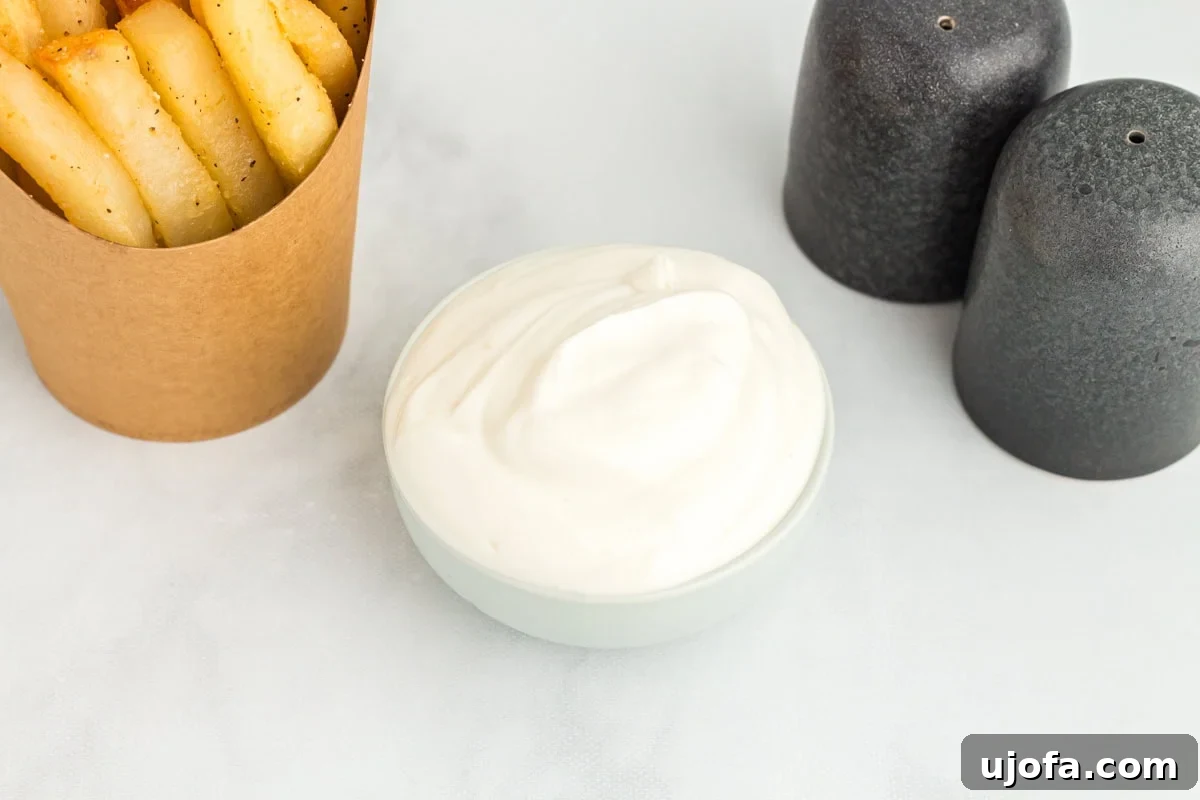
- Delicious Dips and Sauces: This mayo serves as the perfect base for an assortment of delectable dips. It’s an ideal companion for crispy french fries, perfectly roasted potato wedges, fresh and crunchy vegetable sticks, or as the foundation for creamy favorites like a decadent spinach artichoke dip or a savory French onion dip.
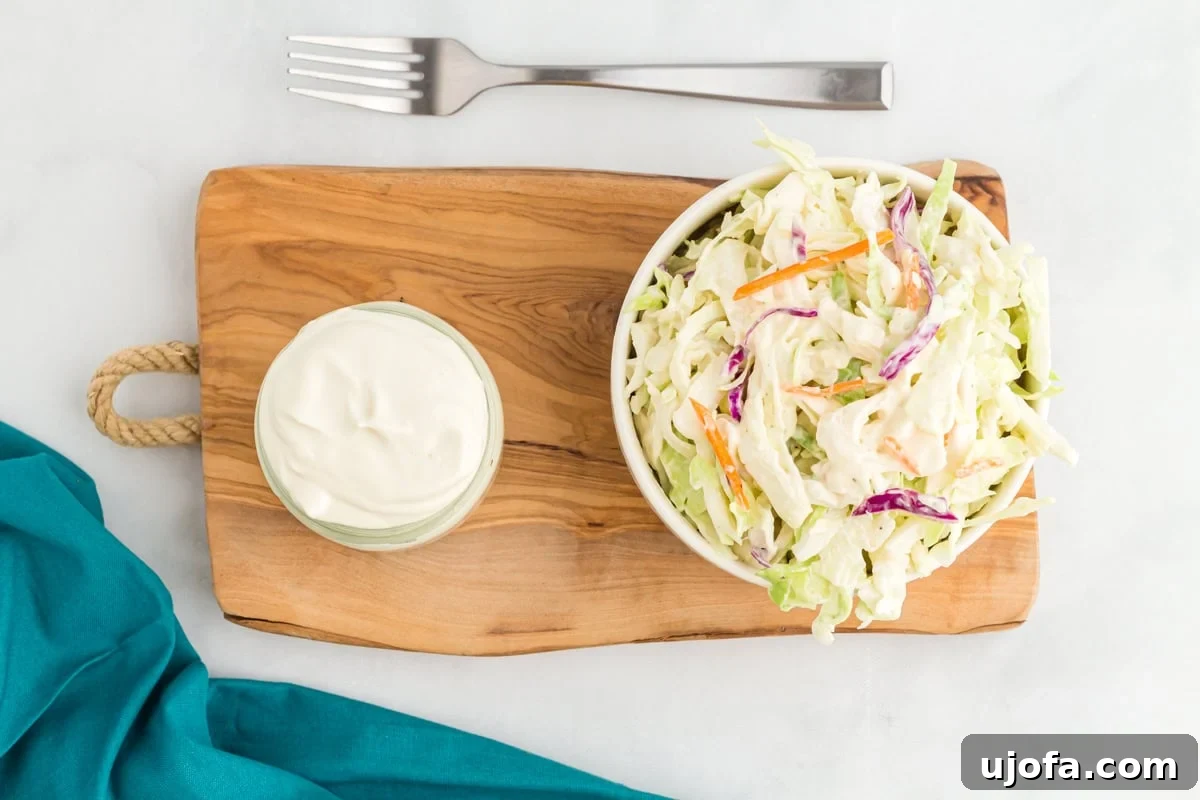
- Creamy Salad Enhancements: Elevate your classic salads to new heights! Utilize this vegan mayo to craft wonderfully rich dairy-free coleslaw, a hearty and satisfying potato salad, or a refreshing and flavorful creamy Italian pasta salad. It also performs exceptionally well in vegan chicken salad or a plant-based “tuna” salad for sandwiches.
- Superior Sandwich and Wrap Spreads: Transform your everyday sandwiches and wraps into gourmet delights. Spread this homemade vegan mayo generously onto your bread or tortilla for an extra layer of moisture, flavor, and luxurious creaminess that significantly enhances the overall experience.
- Flavorful Dressings and Specialty Sauces: This versatile mayo is an unparalleled base for creating a wide variety of homemade dressings and specialty sauces. Whip up your own dairy-free ranch dressing, a zesty tartar sauce perfect for plant-based “fish” alternatives, a rich and aromatic aioli infused with garlic, or even a spicy sriracha mayo for an exciting kick.
Storage Best Practices for Optimal Freshness
To ensure your homemade vegan mayonnaise remains deliciously fresh and safe to consume, proper storage is absolutely paramount. Once prepared, transfer your freshly made mayo into a clean, airtight, and food-safe container. Store it promptly in the refrigerator, where it will maintain its quality for up to a week. While some individuals may attempt it, freezing is generally not recommended for vegan mayonnaise. The emulsion is delicate and can easily break, causing the ingredients to separate once thawed, which typically results in a less desirable and often grainy texture. If, by necessity, you do freeze it and find that it has separated upon thawing, you can try to rescue it by re-blending it in a high-powered blender with a tiny splash of fresh soy milk or water to attempt to reincorporate the oil and restore its creamy consistency.
Explore More Delicious Vegan Sauce Recipes!
If you thoroughly enjoyed the process of making this delightful vegan mayonnaise, you’re in for a treat as you explore other fantastic plant-based sauces that can effortlessly elevate your meals. Broaden your culinary repertoire and add more flavor to your dishes with these wonderful vegan sauce options:
- Dairy-Free Alfredo Sauce: A rich and creamy pasta sauce that rivals its dairy counterpart.
- Dairy-Free Ranch Dressing: (Hint: this homemade vegan mayo is the perfect creamy base for it!)
- Gluten-Free Teriyaki Sauce: A sweet and savory sauce perfect for stir-fries and marinades.
Homemade Vegan Mayonnaise
By: Cheryl Johnson
Servings: 12 servings (approx. 1 ½ cups total)
Prep Time: 10 mins
Total Time: 10 mins
This incredibly easy vegan mayonnaise recipe requires only 5 simple ingredients. It’s wonderfully creamy, perfectly tangy, and entirely egg-free. An ideal condiment for enhancing sandwiches, dips, dressings, and so much more!
Equipment
- Blender (high-powered recommended for best results)
Ingredients
- 1 cup vegetable oil (ensure it’s neutral flavored, such as canola, sunflower, or grapeseed oil)
- ½ cup plain, unsweetened soy milk (must be at room temperature)
- ½ tablespoon apple cider vinegar
- 1 teaspoon Dijon mustard
- ¼ teaspoon salt (adjust to your personal taste)
Instructions
- Crucially, ensure all your ingredients are at the same room temperature before you begin combining them. This is vital for achieving proper emulsification and a thick texture.
- Carefully add the vegetable oil, soy milk, apple cider vinegar, Dijon mustard, and salt into the pitcher of a high-powered blender. Secure the lid.
- Blend on high speed until the mixture visibly thickens and becomes smooth and creamy. This process typically takes about a minute or even less. Be diligent not to overblend, as this can cause the emulsion to break.
- Your freshly made vegan mayonnaise is now ready to be served and enjoyed! For an even firmer and more luscious consistency, transfer it to an airtight container and chill it in the refrigerator for at least an hour before use.
Notes
- This recipe yields approximately 1 ½ cups of vegan mayonnaise, which equates to about 12 servings (each serving being 2 tablespoons).
- It cannot be stressed enough: all ingredients must be at room temperature for the mayonnaise to thicken correctly and achieve a stable emulsion.
- Do not attempt to substitute soy milk with any other type of vegan milk, as other plant milks lack the necessary emulsifying properties for this recipe.
- If you desire a sweeter mayonnaise, gently stir in ½ tablespoon of agave nectar or maple syrup after the blending process is complete.
- While an immersion blender can be used, a high-powered stand blender typically offers the best and most consistent results. If opting for an immersion blender, add the oil slowly and steadily as the very last ingredient while blending.
- Storage: Store your delicious homemade vegan mayonnaise in a clean, airtight container in the refrigerator for up to 7 days. Freezing is strongly discouraged as it almost always causes the emulsion to separate and the texture to become undesirable upon thawing.
- Mama knows best: Always check all ingredient labels to ensure they are vegan and meet any other specific dietary requirements, such as being gluten-free.
Nutrition Information (Approximate per serving)
Serving Size: 1 serving (2 tablespoons)
- Calories: 165 kcal
- Carbohydrates: 0.4g
- Protein: 0.3g
- Fat: 18g
- Saturated Fat: 3g
- Polyunsaturated Fat: 11g
- Monounsaturated Fat: 4g
- Trans Fat: 0.1g
- Sodium: 58mg
- Potassium: 15mg
- Fiber: 0.1g
- Sugar: 0.3g
- Vitamin A: 39 IU
- Vitamin C: 1mg
- Calcium: 14mg
- Iron: 0.1mg
Please note: Nutrition information provided is automatically calculated and should therefore only be used as an approximation.
Additional Info
Course: Condiments
Cuisine: American
Tried this recipe? We’d love to see your creations! Mention @mamaknowsglutenfree or tag #mamaknowsglutenfree when you share on social media!
How to Make Vegan Mayonnaise: A Simple Step-by-Step Visual Guide
Achieving perfectly creamy and stable vegan mayonnaise is astonishingly quick and straightforward when you diligently follow these easy, visualizable steps:
- Step 1: Prepare Ingredients to Room Temperature. Your first and most crucial step is to ensure that all your measured ingredients, especially the vegetable oil and the soy milk, have been brought to and stabilized at room temperature. This fundamental preparation step is paramount for preventing any separation and guarantees the formation of a smooth, perfectly stable emulsion. Gather all your precise measurements: 1 cup of your chosen neutral vegetable oil, ½ cup of plain unsweetened soy milk, ½ tablespoon of crisp apple cider vinegar, 1 teaspoon of piquant Dijon mustard, and ¼ teaspoon of fine salt.
- Step 2: Combine All Ingredients in Blender. With your ingredients at the correct temperature, carefully pour all the measured components into the main pitcher of your high-powered blender. Once everything is inside, make certain that the blender lid is securely fastened into place to prevent any spills during blending.
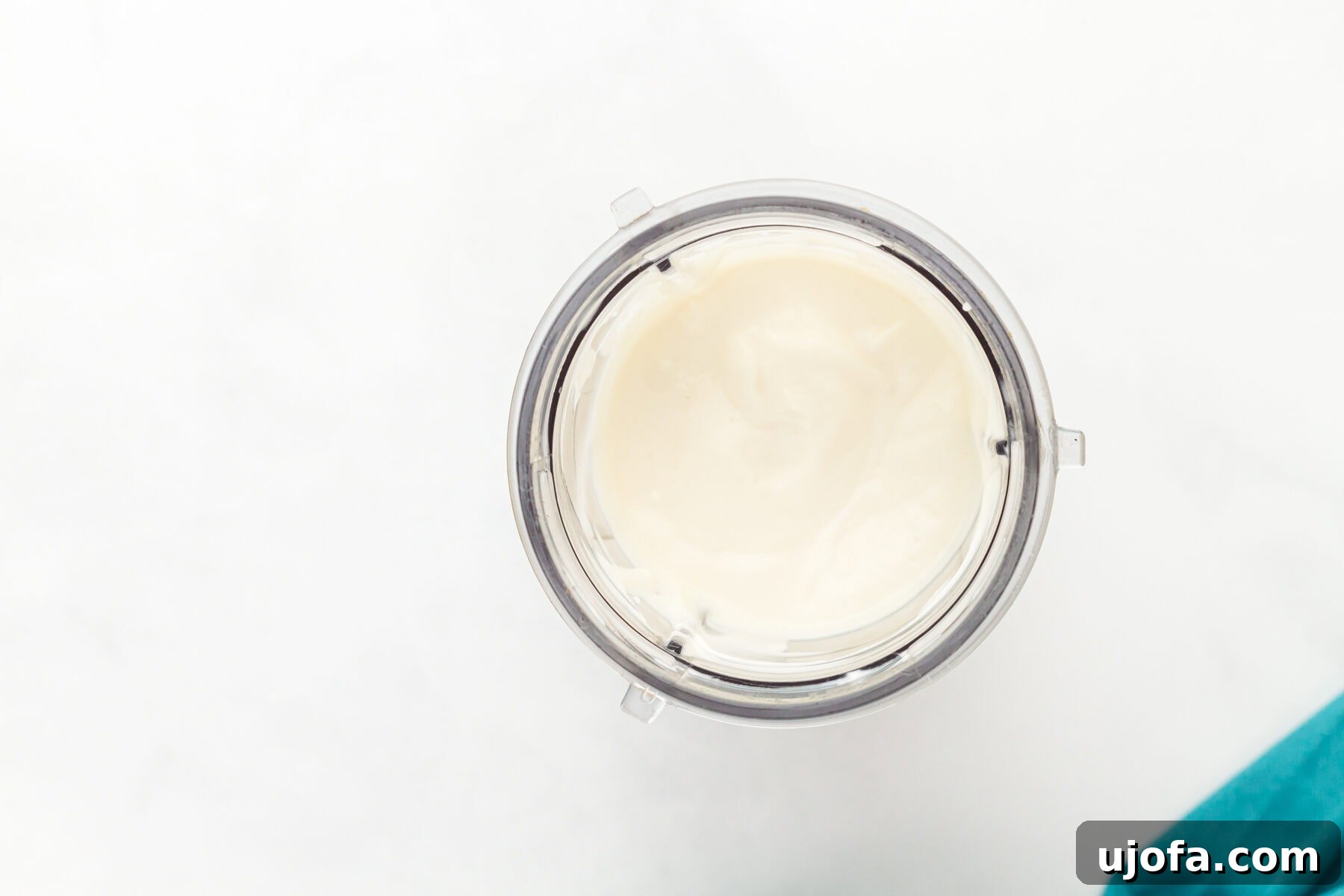
- Step 3: Blend Until Thickened to Creamy Perfection. Initiate the blending process on a low speed, then smoothly and steadily increase the speed to high. Observe closely as the mixture rapidly transforms from a liquid state into a wonderfully thick, uniform, and creamy mayonnaise. This fascinating metamorphosis typically occurs within a remarkably short timeframe, often ranging from just 30 seconds to a mere 1 minute. It is vital to cease blending immediately once your desired creamy consistency is achieved, as excessive blending can unfortunately cause the delicate emulsion to break.
- Step 4: Serve Immediately or Chill for Enhanced Thickness. Your freshly prepared homemade vegan mayonnaise is now ready for immediate enjoyment! If you prefer a firmer, more set consistency or intend to use the mayonnaise at a later time, transfer it into a clean, airtight container and refrigerate it for at least an hour. The chilling process will further aid in thickening the mayonnaise, significantly enhancing its spreadability and rich texture.
Revel in the wholesome goodness of your freshly made, utterly delicious vegan mayonnaise in all your favorite dishes!